A car crash can change your life in seconds — but you don’t have to face recovery alone. The chaos and confusion are overwhelming, but the steps you take next are critical. They lay the groundwork for your entire car accident settlement process and protect your right to get the compensation you and your family deserve.
Your First Moves After a Texas Car Wreck
Whether you’re on a packed Houston freeway like I-45 or a quiet residential street, the moments after a crash are a blur. Your top priority is always your safety, but what you do next can make or break your physical and financial recovery. It’s all about protecting yourself, preserving crucial evidence, and understanding your rights from the very beginning.
Seek Medical Attention Immediately
Your health is everything. Even if you think you feel fine, adrenaline from the crash can easily hide serious injuries like whiplash, a concussion, or even internal bleeding.
Getting checked out by a doctor right away does two vital things:
- It ensures you get the treatment you need to start healing.
- It creates an official medical record that ties your injuries directly to the crash.
This medical documentation is non-negotiable evidence in your auto insurance claim. An insurance adjuster will look for any delay in treatment to argue your injuries weren’t caused by the accident. Don't give them that chance.
Document Everything at the Scene
If you are physically able, start gathering information immediately. The evidence you collect at the scene becomes the building blocks of a strong claim.
- Photos are your best friend: Take pictures of everything. Get shots of the damage to all vehicles from different angles, skid marks on the road, nearby traffic signs, and any visible injuries you have. You cannot have too many photos.
- Exchange the essentials: Get the other driver's name, address, phone number, driver's license number, and their insurance company and policy number.
- Find witnesses: Did anyone see what happened? Ask for their name and phone number. An independent witness can be incredibly persuasive when determining who is at fault.
- Insist on a police report: Always call the police. The officer's official report provides an initial, neutral assessment of the accident, which is a powerful piece of evidence for your Texas injury attorney.
This infographic breaks down the simple, crucial flow of what to do right after a wreck.
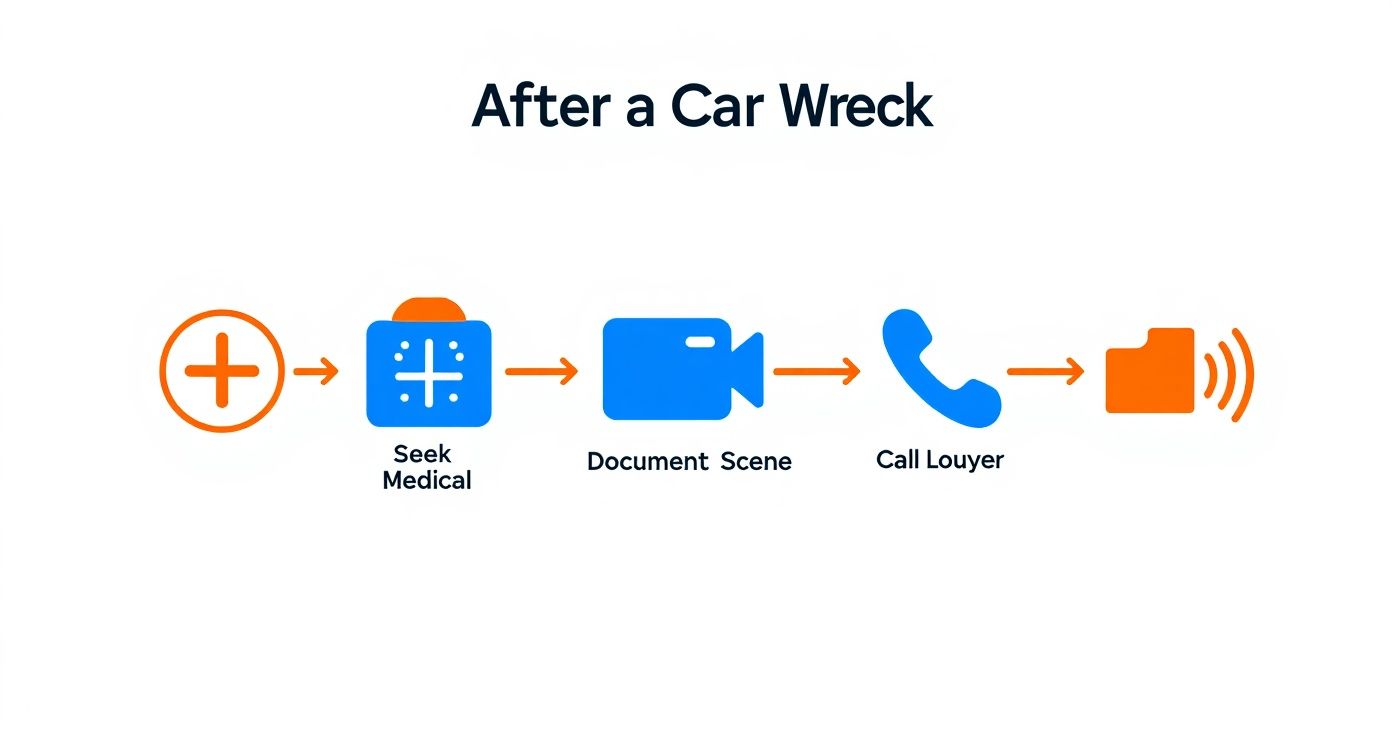
As you can see, these first moves create a clear path from the crash scene toward building a solid foundation for your case.
Understanding the Legal Groundwork
In Texas, your personal injury claim hinges on the concept of negligence. In plain English, this means we must prove the other driver failed to act with reasonable care—for example, they were speeding, texting, or ran a red light—and that their carelessness directly caused your injuries and losses.
This is the legal basis for holding them financially responsible for the harm they've caused. When you hire an attorney, this is where we start. We’ll begin gathering all the initial paperwork, which is why understanding the necessary legal client intake documents can give you a head start.
For a more detailed checklist, check out our complete guide on the steps after a car accident.
Who Is Liable in a Texas Car Accident?
After a crash, one of the first questions on your mind is, "Who was at fault?" In Texas, the answer to that question is everything. It directly controls whether you can recover money for your losses. We call this legal fault liability, and it’s the foundation of your entire insurance claim.

To get a settlement, you have to prove the other driver’s carelessness—their negligence—caused the accident and your injuries. But Texas law knows that real-world accidents are rarely black and white. It's not always one person being 100% right and the other being 100% wrong.
How Texas Handles Shared Fault: Comparative Fault Explained
Texas operates under a legal rule called modified comparative fault, also known as proportionate responsibility. You can find this law in Chapter 33 of the Texas Civil Practice & Remedies Code.
In plain English, this rule means you can still get financial compensation even if you were partially to blame for the crash. A judge or jury assigns a percentage of fault to each person involved. Your total settlement is then simply reduced by your percentage of fault.
The 51% Bar in Texas: This is the critical part. You can only recover damages if your share of the blame is 50% or less. The moment you are found to be 51% or more at fault, Texas law bars you from receiving any compensation at all.
Let’s look at a real-world example. Imagine a Houston driver rear-ended you on I-45. They were clearly following too closely, but perhaps one of your brake lights was out. The other driver’s insurance company will use that fact to argue you are, say, 10% at fault. If your total damages are $50,000, your settlement would be cut by 10% ($5,000), leaving you with $45,000. This is exactly why we fight so hard against any unfair blame they try to place on our clients.
What Compensation Can You Claim? Understanding Damages
The money you receive from a settlement is meant to make you whole again by covering your losses. Legally, these losses are called damages. Understanding what qualifies as a "damage" is key to figuring out what a fair settlement looks like for you.
You can generally pursue three types of damages:
- Economic Damages: These are the straightforward financial costs you have because of the accident. Think medical bills, lost wages from being unable to work, and car repairs—anything with a clear price tag.
- Non-Economic Damages: These are the personal, human losses. They are just as real, but they compensate you for things like physical pain, emotional suffering, and mental anguish.
- Exemplary (Punitive) Damages: These are rare and are explained in Chapter 41 of the Texas Civil Practice & Remedies Code. They aren't meant to compensate you but to punish the at-fault driver for extreme recklessness, such as in a severe drunk driving case that leads to a wrongful death.
Disputes over fault and damages can stretch out the car accident settlement process timeline. A simple case might wrap up in a few months, but a complex one can easily take over a year. If you want to discover more insights about settlement timelines on cghlawfirm.com, it's a great resource.
A Closer Look at Recoverable Damages
To give you a clearer picture, it helps to see what these damage categories actually cover. A good Houston car accident lawyer will help you identify and document every single loss to ensure your demand letter reflects the full impact this crash has had on your life—from the initial ambulance ride to the long-term emotional fallout.
Here is a breakdown of the different categories of damages you can pursue.
Types of Compensation in a Texas Car Accident Claim
| Type of Damage | What It Covers | Examples |
|---|---|---|
| Economic | Tangible financial losses with a clear dollar value. | Medical bills, lost wages, property damage, future medical expenses, loss of earning capacity. |
| Non-Economic | Intangible, personal losses that don't have a specific price tag. | Pain and suffering, emotional distress, mental anguish, physical impairment, disfigurement, loss of consortium. |
| Exemplary (Punitive) | A penalty designed to punish the at-fault party for extreme recklessness. | Damages awarded in cases involving a drunk driver, street racing, or other acts of gross negligence. |
Properly calculating and proving each of these damages is what turns a lowball offer from an insurance company into a fair settlement that truly accounts for everything you’ve been through.
Building a Powerful and Persuasive Claim
Once you're safely on the road to recovery, the focus shifts to building a claim so strong that the insurance company can't ignore it. This is where the real work begins, turning the chaotic aftermath of a wreck into a structured, persuasive case backed by undeniable proof.
This isn't just about collecting a stack of papers. It's a strategic process of weaving together every piece of evidence to prove the other driver was at fault and show the true, full extent of your losses.
Gathering the Essential Evidence
A strong claim is built on a foundation of solid evidence. We leave no stone unturned, systematically gathering every piece of proof available.
This investigation always includes:
- The Official Police Report: This is the first official story of what happened. It gives us a neutral account of the crash, often with the officer's initial thoughts on who was at fault and a diagram of the scene.
- Complete Medical Records: We collect everything—every bill, doctor’s note, therapy summary, and MRI scan. These documents create a clear timeline that connects your injuries directly to the crash and details your recovery.
- Proof of Lost Income: We get documentation from your employer that shows the exact amount of wages, overtime, and benefits you lost because you couldn't work. For serious injuries, we often bring in experts to calculate the impact on your future earning capacity.
For a claim to be effective, it needs to show not just what happened, but how it has impacted every corner of your life. For instance, to show the physical limitations your injuries caused, your doctors might use specific range of motion measurement tools to get objective data. That kind of detail makes your claim undeniable.
Telling Your Story Through a Demand Letter
After we’ve gathered all the evidence and your medical treatment has stabilized, it’s time to draft one of the most critical documents in your case: the demand letter. This is the centerpiece of the car accident settlement process before a lawsuit is filed. It’s more than a simple letter asking for money; it's a formal, strategic presentation of your entire case, sent directly to the at-fault driver's insurance company.
Think of it as our opening argument. It lays out the facts, applies Texas negligence laws, and makes a clear, justified demand for a specific settlement amount.
Key Components of an Effective Demand Letter
A persuasive demand letter is organized, detailed, and compelling. It tells your story in a way an insurance adjuster can’t just brush aside, clearly outlining why their client is responsible and exactly what it will take to make things right.
This document is our first real opportunity to show the insurer we are prepared to win. It details the crash, proves liability, documents every single loss, and justifies the settlement figure we're demanding. It's a comprehensive legal argument designed to maximize your recovery from day one.
Every effective demand letter we send has these core sections:
- A Clear Summary of the Crash: We present a factual narrative of how the accident happened, using evidence from the police report and witness accounts to lock in the sequence of events.
- A Firm Declaration of Liability: This section explains exactly why the other driver was negligent under Texas law. If someone was texting on the Katy Freeway and caused a pileup, we cite the specific traffic laws they broke.
- A Comprehensive List of Damages: We carefully list all your economic losses (medical bills, lost income) and then describe your non-economic damages—like pain and suffering—in powerful detail.
- A Justified Settlement Figure: Finally, we state a specific dollar amount for settlement and show our math, explaining how we calculated that figure based on all the evidence.
This formal demand officially kicks off negotiations. To learn more about the first steps, see our guide on how to file a car accident claim.
Steps to File an Insurance Claim and Negotiate a Settlement
The first settlement offer from the insurance company often arrives quickly. It may seem like a helpful, fast solution to let you move on.
Do not be fooled. It is almost always a lowball offer, strategically calculated to close your car accident settlement process for the smallest amount of money possible.

This is where negotiation begins. The insurance adjuster's job is to protect their company's bottom line. Your well-being is not their priority. Taking that first offer is one of the biggest mistakes you can make, as it rarely accounts for your future medical needs or long-term pain and suffering.
How to Deal with Insurance Companies
Insurance adjusters are trained negotiators. They use a playbook of tactics to devalue claims like yours. They might sound friendly on the phone, but their goal is to find any reason to pay you less. A skilled Texas injury attorney knows these tactics and how to counter them.
Here are a few common tactics to expect:
- Questioning Your Injuries: The adjuster will go through your medical records, questioning if a treatment was necessary or arguing that your injuries aren't as bad as your doctor says.
- Shifting the Blame: They'll use any detail—maybe you were going a few miles over the speed limit—to assign a percentage of the fault to you. This is a direct attempt to use Texas's comparative fault rule to reduce their payout.
- Requesting a Recorded Statement: This is a classic tactic. They'll ask for a recorded statement about the accident, hoping you'll say something innocent that they can twist and use against you later.
Knowing how to deal with insurance adjusters is critical. Our guide on this topic gives you more in-depth advice to protect yourself.
The Art of the Counteroffer
Never accept the first offer. Once your attorney submits the demand letter, that low number from the adjuster is just their opening bid. Our response is a strategic counteroffer.
Your lawyer will draft a detailed response that takes apart the adjuster’s arguments. Did they question your injuries? We'll point them to the physician's notes and expert medical opinions. Did they try to shift the blame? We'll use the police report and witness statements to prove their client's liability.
The negotiation is a patient, strategic process. It’s not about aggression; it’s about presenting a logical, evidence-backed case that makes it impossible for them to justify their low offer. Every communication is a deliberate step toward a fair resolution.
This back-and-forth can take time. Patience is your greatest ally. Rushing to a settlement almost always means leaving money on the table—money you’ll need for your recovery.
The Statute of Limitations as a Negotiation Tool
One of the most powerful tools in our negotiation arsenal is the Texas statute of limitations. In plain English, this is the legal deadline for filing a lawsuit. For most car accident cases in Texas, you have two years from the date of the crash to either settle your claim or file a lawsuit. This deadline creates a very real sense of urgency for the insurance company.
As that two-year mark gets closer, the insurer knows the clock is ticking. They have to either make a fair offer or prepare for the higher costs of a lawsuit. Your attorney uses this deadline to apply pressure and prevent the insurance company from dragging things out.
Finalizing Your Settlement or Taking the Next Step
https://www.youtube.com/embed/81C3rd5XjZk
After negotiations, your case arrives at a fork in the road. You’ll either accept a fair settlement offer or make the strategic decision to file a lawsuit. Both paths are designed to get you the compensation you deserve.
When the insurance company finally makes a reasonable offer that covers your losses, the car accident settlement process shifts into its final stage. It’s a moment of relief, but it’s critical to handle these last steps with precision.
Signing the Settlement Release
To make the settlement official, you’ll sign a legal document called a release of all claims or a settlement agreement. This is a binding contract with permanent consequences.
By signing, you agree to accept the payment in exchange for giving up your right to ever pursue more legal action against the at-fault party for this accident. This means you can't come back later asking for more money if you find out your injuries are worse than you first thought. This is why we fight to make sure the settlement amount covers not just your current bills but all potential future medical needs before you sign anything.
When the Insurance Company Refuses to Be Fair
What happens when the insurer refuses to offer a settlement that comes close to what your case is worth? This is where having a strong Houston car accident lawyer who isn't afraid to go to court makes all the difference.
Filing a lawsuit is not a sign of failure. It is a powerful tool we use to force an unreasonable insurance company to take your claim seriously. It moves the case from informal negotiation into the formal court system, but it does not mean you are automatically headed for a dramatic trial.
The truth is, the vast majority of personal injury cases—well over 90%—still settle long before a jury ever hears them. Filing a lawsuit is often the catalyst needed to make a fair settlement possible.
What Happens After a Lawsuit Is Filed
Once the lawsuit is filed, we enter a phase called discovery. This is a formal process where both sides are required to exchange all information and evidence. We'll use legal tools like depositions (sworn testimony) to get every fact from the other side.
It's usually during discovery that the insurance company finally sees the strength of our evidence. Suddenly, they become much more willing to negotiate in good faith. Many of these cases settle during mediation, which is a structured negotiation session led by a neutral third party.
The threat of a large jury verdict is a powerful motivator for insurers. For instance, some catastrophic car accident cases can result in multi-million dollar verdicts to cover a victim's future pain, suffering, and long-term medical care. When the stakes are high, filing a lawsuit is often the most effective path to a fair outcome. You can learn more about how settlement amounts are determined in severe cases.
Whether we get there through a negotiated settlement or after filing a lawsuit, our goal is always the same: securing the best possible result so you can focus on rebuilding your life.
Common Questions About the Settlement Process
When you're trying to heal, the legal path forward can seem confusing. It’s natural to have questions about the car accident settlement process. We hear these same concerns from our clients every day, so we've put together clear answers to help you.

How Long Does a Texas Car Accident Settlement Take?
There is no magic number—every case is unique. The timeline depends on the specific facts of your crash.
A straightforward claim with minor injuries and clear liability might settle within a few months after your medical treatment is complete. However, a complex case involving serious injuries or disputes over who was at fault can easily take a year or more to resolve through negotiations.
If we have to file a lawsuit, the timeline can stretch longer. The most important thing is not to rush. A quick settlement is almost always a cheap settlement. Our only goal is to get you the full and fair compensation you are owed, no matter how long it takes.
Should I Give a Recorded Statement to the Other Driver's Insurance?
Our advice is simple: do not do it. The at-fault driver's insurance adjuster may sound friendly, but their job is to protect their company, not you. They are trained to ask tricky questions designed to get you to say something they can use to damage your auto insurance claim.
They hope you will:
- Downplay your injuries.
- Sound unsure about what happened.
- Accidentally admit you were even a tiny bit at fault.
The best thing you can do is politely decline. Simply say, "I'm not comfortable giving a recorded statement right now," and refer them to your Houston car accident lawyer. Once you have an attorney, we handle all communications to protect your rights.
How Is Pain and Suffering Calculated in a Settlement?
Unlike a medical bill, "pain and suffering" doesn't have a clear price tag. It is a non-economic damage, meant to compensate you for the physical pain and emotional trauma the crash caused. Since it's subjective, calculating it requires a strategic approach.
Attorneys and insurers often use two methods as a starting point:
- The Multiplier Method: This involves adding up your total economic damages (medical bills, lost wages) and multiplying that figure by a number, usually between 1.5 and 5. The multiplier depends on how severe your injuries are and the impact on your life.
- The Per Diem Method: This approach assigns a daily dollar amount for your suffering and multiplies it by the number of days you were in pain or recovering.
A skilled Texas injury attorney will build a powerful argument for your pain and suffering using medical records, expert testimony, and personal stories from you and your family to justify the highest value possible.
These methods are just starting points. The final amount always comes down to the strength of the evidence your lawyer presents and their skill in fighting for the true value of what you’ve been through.
What if the At-Fault Driver Has No Insurance?
It’s a scary thought, but it happens often in Texas. If the driver who hit you is uninsured, you are not out of options. The most important place to look is your own auto insurance policy.
This is where Uninsured/Underinsured Motorist (UM/UIM) coverage becomes a lifeline. If you have this coverage, you can file a claim with your own insurance company to cover your damages. This is exactly why we tell every driver in Texas that UM/UIM protection is a must-have. If a loved one was killed in the crash, this coverage can also provide wrongful death compensation.
If you don't have that coverage, an attorney can still investigate whether the at-fault driver has personal assets that could be used to pay for your damages. It's a tougher road, but it's an avenue worth exploring.
A car crash is overwhelming, but you don't have to navigate the complex settlement process by yourself. The compassionate and experienced attorneys at The Law Office of Bryan Fagan, PLLC are here to fight for you. Contact us today for a free, no-obligation consultation to discuss your rights and legal options. Let us handle the insurance companies so you can focus on your recovery.