A DWI arrest can turn an ordinary night into a very long week. You may be worried about jail, your license, your job, your family, and what happens if there was also a crash. Those worries are real, but so is the fact that a first DWI in Texas doesn't always end with time behind bars.
The better question is not just, “Will I go to jail for a first DWI in Texas?” It's, “What kind of case is this, what facts make it worse, and what can I do right now to protect myself?” If your arrest involved a wreck, there may also be a second problem unfolding at the same time: an injury claim or wrongful death compensation case from the people who were hurt.
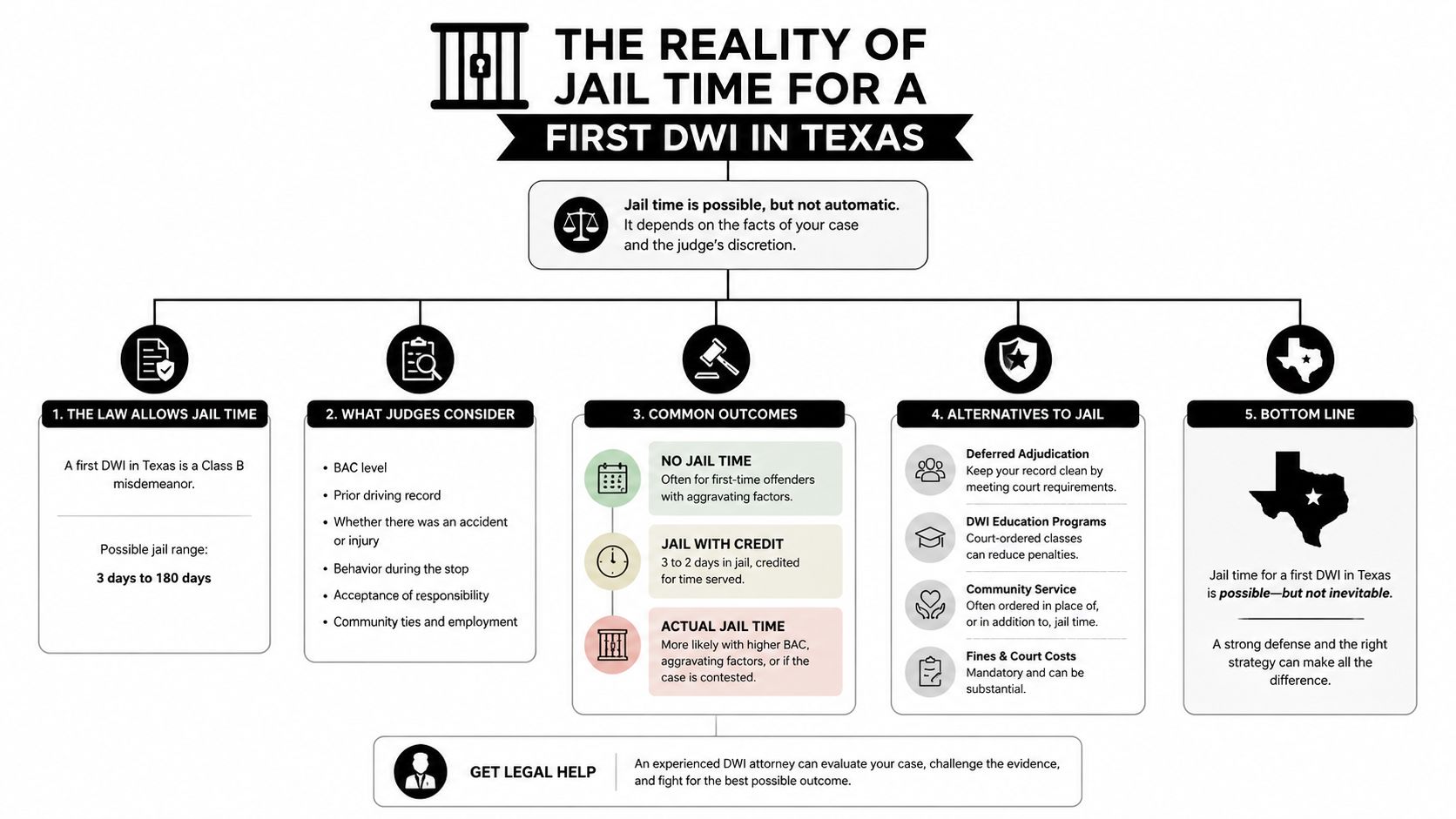
The Reality of Jail Time for a First DWI in Texas
You get booked, spend hours wondering whether you are going home, and then the next question hits hard: am I going to jail over this? For a first DWI in Texas, the answer is yes, jail is a legal possibility. It is also true that many first-offense cases are resolved without a sentence that requires more time behind bars after the arrest.
For most first-offense cases, Texas treats DWI as a Class B misdemeanor. The usual punishment range includes 3 days to 180 days in jail, up to a $2,000 fine, and a driver's license suspension of up to one year, according to the Texas Department of Transportation impaired driving penalties page. If the allegation is a BAC of 0.15 or higher, the case can be filed as a Class A misdemeanor, which raises the possible punishment to up to 1 year in jail and a $4,000 fine.
What that means in plain English
The key word is exposure. It means the judge can order jail if there is a conviction. It does not tell you what will happen in your case.
That difference matters. I regularly explain to clients that a first DWI is serious from day one, but the result often turns on details such as the stop, the testing, the paperwork, the county, and whether anyone was hurt. A weak stop and clean facts can produce a very different result from a case with a bad accident scene and damaging statements.
A first DWI also creates two problems at once if there was a wreck. One is the criminal case, where the court looks at punishment, conditions of bond, and the risk of jail. The other is civil exposure. If another driver, passenger, or pedestrian was injured, you may also be dealing with a personal injury claim seeking money for medical bills, lost income, pain and suffering, or worse if the crash involved a death.
Practical rule: Treat a first DWI like a case that can affect your record, license, finances, and any accident claim tied to the same event.
What clients should focus on right away
The first concern is usually jail, and that makes sense. But jail is only one part of the pressure. A first DWI can also trigger:
- Criminal consequences: jail exposure, fines, probation conditions, court costs
- License consequences: a separate process that can affect your ability to drive
- Work and insurance problems: missed work, higher premiums, background issues
- Civil liability after a crash: a lawsuit or insurance claim from anyone injured in the incident
That last point gets missed all the time. A person can avoid a harsh jail outcome and still face serious financial risk if the DWI involved injuries. The criminal case and the civil case are separate, but what happens in one can affect the other, especially when statements, test results, and crash facts overlap.
If you want a clearer sense of how defense issues can affect the outcome, this article on the chances of beating a DWI in Texas explains what lawyers look at early.
Aggravating Factors That Increase Jail Likelihood
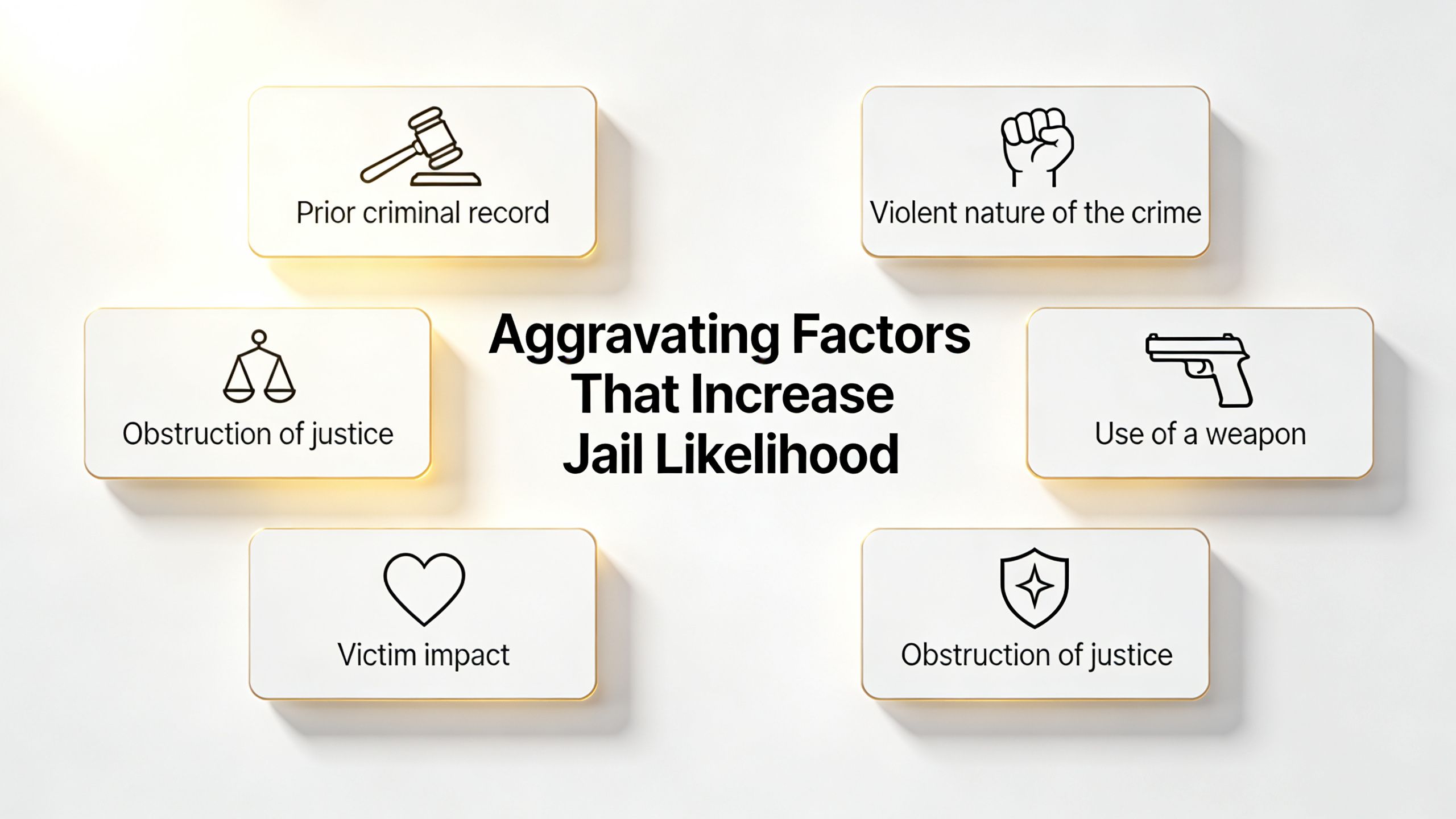
Not every first DWI is treated the same. Two people can both be arrested for a “first offense” and face very different outcomes because one case has facts that make prosecutors and judges treat it as a greater public-safety threat.
The facts that change the case
One major dividing line is BAC. A higher BAC can push the charge into a more serious classification, which changes the sentencing range and usually changes the prosecutor's approach as well.
Another dividing line is whether the case involved people at risk besides the driver. According to Smith & Vinson's discussion of first-offense DWI aggravating factors, a child passenger can turn the case into a state jail felony, and a crash causing serious injury or death can lead to intoxication assault or intoxication manslaughter, with multi-year prison exposure.
Common aggravators in real life
Courts tend to view these facts as warning signs that increase the chance of confinement or harsher conditions:
- High BAC: This can move the case into a more severe misdemeanor category.
- Child passenger in the vehicle: That can move the case out of ordinary misdemeanor territory.
- Crash with injuries: Once another person is hurt, the case often stops looking like a “simple first DWI.”
- Crash with death: That takes the matter into a completely different level of exposure.
- Open container or other bad facts: Even when not charged as a separate major enhancement here, it can affect how the case is viewed.
- Poor conduct after the stop: Being combative, refusing to follow orders, or creating damaging statements can make negotiations harder.
A “first offense” label only tells you how many prior DWIs the state alleges. It doesn't tell you how dangerous the case looks on paper.
Why these details matter
Prosecutors don't evaluate a file by asking only whether it's your first arrest. They also ask what happened, who was endangered, whether there was a collision, and whether the facts suggest especially risky conduct.
That's why two first-time cases can move in opposite directions. One may be handled with an eye toward probation and conditions. Another may be approached as a case where the state wants real jail time because the surrounding facts are harder to explain away.
Are There Alternatives to Jail for a First DWI
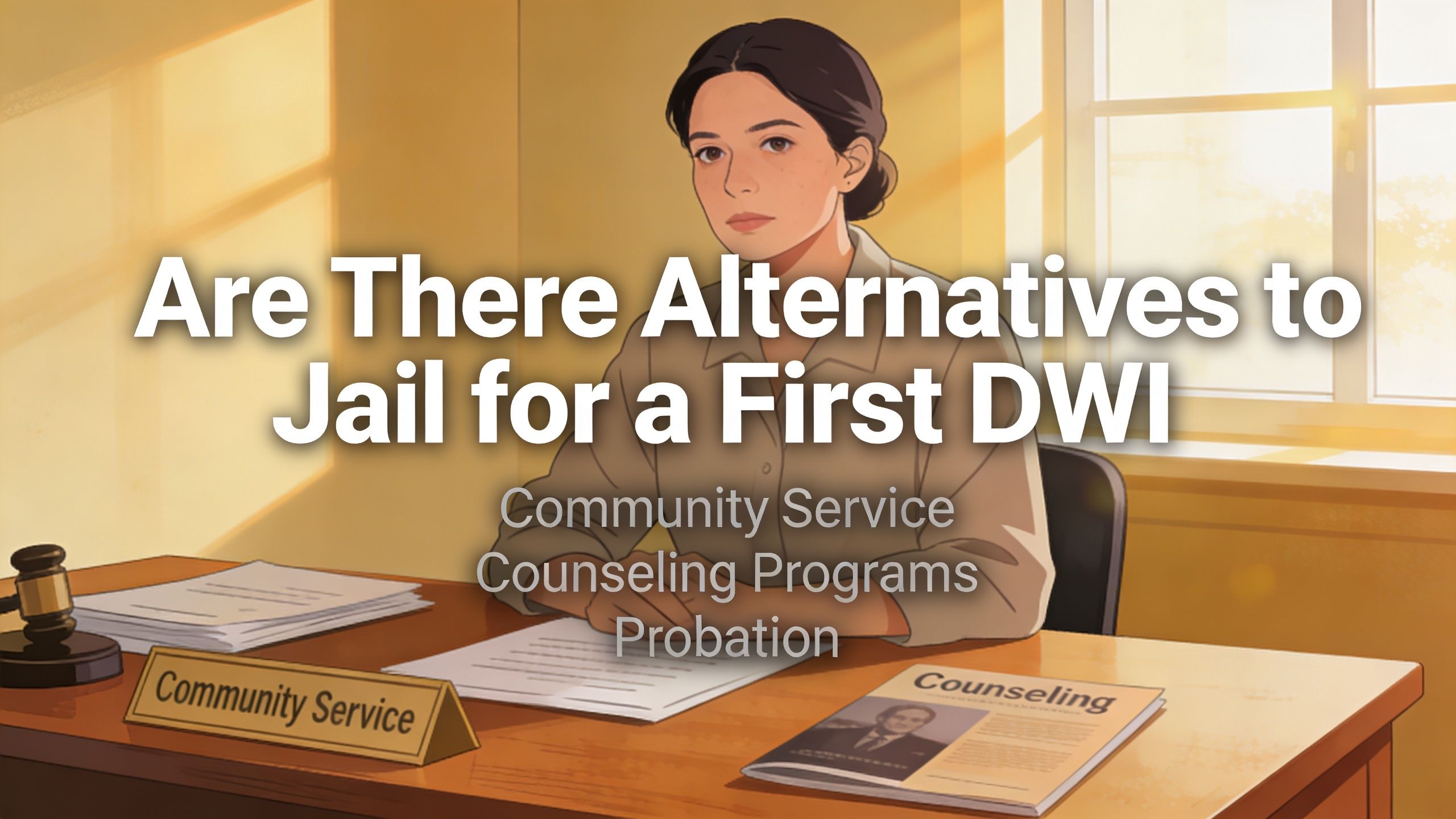
For many first-time defendants, the most productive question is not “How do I escape this overnight?” It's “What outcome can realistically keep me out of jail and limit the long-term damage?” In a standard first-offense case without major aggravating facts, alternatives often matter more than courtroom drama.
Community supervision and similar outcomes
A useful baseline comes from this Texas first-offense DWI overview, which notes that while jail exposure is real, many first-offense cases are resolved with probation or community supervision rather than actual confinement, especially when the case does not involve a crash, child passenger, or high BAC.
Community supervision is the formal term many people mean when they say probation. Instead of serving jail time, you may be ordered to comply with conditions set by the court.
Those conditions often include things like:
- Reporting requirements: checking in as directed and staying compliant
- Classes or intervention: DWI education, counseling, or similar programs
- Community service: work hours assigned by the court
- Financial obligations: fines, fees, and court costs
- Behavior rules: no new arrests and close attention to alcohol-related restrictions
Why treatment and compliance can matter
Courts respond better when a person takes the case seriously early. If alcohol use is part of the larger picture, it can help to understand how treatment and legal obligations may overlap. This resource on Tru Dallas Detox legal treatment advice is useful because it focuses on how people can seek help while still dealing responsibly with court requirements.
A related issue is charge reduction. In some cases, defense counsel may pursue a lesser outcome if the facts and evidence support it. This discussion of whether a DWI can be reduced to reckless driving in Texas helps explain why that possibility depends heavily on the proof, not just your hope for a break.
Early damage control works better than late explanations. Judges and prosecutors notice when someone starts addressing the problem instead of pretending it will disappear.
The Two Battles You Face License Suspension and Civil Lawsuits
A first DWI often creates two different legal problems at once. One is the criminal case. The other may involve your right to drive and, if there was a wreck, your financial exposure to the people who were injured.
Your license is a separate fight
Many people are surprised to learn that the driver's license issue does not wait for the criminal case to end. The license process can move on its own track, with its own deadlines and hearings.
That matters because losing your license can affect work, school, medical appointments, and family responsibilities even before the criminal case is resolved. From a practical standpoint, protecting your ability to drive is often one of the first urgent tasks after arrest.
If there was a crash, civil liability may follow
If your DWI involved a collision, you may also face a personal injury claim. In civil law, liability means legal responsibility for harm. Damages means the money a person asks for because of that harm, such as medical bills, lost income, property damage, and pain and suffering.
Texas civil cases also involve comparative fault, which is the rule that looks at whether more than one person shares blame for a crash. And the statute of limitations is the filing deadline for bringing a lawsuit. In any collision case, those rules matter because the criminal charge does not replace the injury claim.
Here is a simple example. A Houston driver on I-45 is arrested for DWI after rear-ending another car. The state may prosecute the DWI. Separately, the injured driver may file an auto insurance claim and, if needed, a lawsuit for compensation. If someone died, surviving family members may pursue wrongful death compensation.
Why Texas counties take these cases seriously
Public-safety data helps explain why even a first DWI can draw a firm response from the state. The Texas DPS crime records and statistical reporting page notes that Harris County has had an annual snapshot showing 3,229 DUI crashes and 113 fatalities. Those numbers help explain why prosecutors in large counties often treat first-offense DWI cases seriously, even when no one was hurt.
Where personal injury law fits in
If you were the person injured by an intoxicated driver, the case looks very different from your side. A Houston car accident lawyer or Texas injury attorney may investigate fault, preserve evidence, deal with insurers, and pursue payment for your losses under Texas negligence rules, including Chapters 33 and 41 of the Texas Civil Practice & Remedies Code. Insurance companies may sound cooperative early, but they still evaluate exposure, credibility, and fault. That's why a civil claim needs its own plan, separate from the criminal file.
How a DWI Attorney Can Protect Your Future
The hours after a DWI arrest often shape the case more than people realize. One bad decision, calling the officer to explain, posting online, missing a license deadline, can turn a manageable case into a harder one. A DWI lawyer protects your future by reviewing the evidence early, controlling avoidable damage, and building a plan for both the criminal case and any civil exposure tied to a crash.

What a lawyer looks for first
The first review is usually practical, not dramatic. Was the stop legal. Does the video match the report. Were the field sobriety tests explained and scored correctly. Was the breath or blood evidence collected and preserved the way the state must prove it was?
Those details matter because first-offense DWI cases are rarely built on one piece of proof. They are built on a chain of observations, testing, paperwork, and statements. If one link is weak, the defense may gain room to challenge the stop, the arrest, the testing, or the prosecutor's settlement position.
A lawyer also looks beyond the criminal file. If there was a collision, the same facts can affect an insurance claim or lawsuit for injuries and property damage. The criminal court decides guilt and punishment. A civil case focuses on fault and money. You need a plan for both.
Strategy includes more than trial
A good result can come from several places. Sometimes it comes from a suppression issue. Sometimes it comes from a weak video, a testing problem, or a negotiated outcome that reduces jail risk and protects your record as much as the facts allow.
It also includes bond conditions, occupational driving issues, court settings, and the choices you make while the case is pending. The Law Office of Bryan Fagan, PLLC handles Texas accident and related legal matters, and that overlap matters in a DWI crash case because criminal defense strategy can affect how an injury claim develops.
Reputation also matters. Employers, licensing boards, insurers, and opposing civil lawyers may all form impressions early, so case presentation has real value. For firms thinking about that broader issue, this guide to reputation management for attorneys covers how legal professionals manage public-facing trust.
What not to do while the case is pending
Do not try to fix the case yourself.
People often make things worse by contacting police again, discussing the arrest in texts, posting on social media, or assuming an apology will help. In practice, those choices often create evidence the state did not have before.
If you are unsure how to handle police contact after arrest, read this article on whether you should talk to police after a DWI arrest in Texas.
A DWI lawyer's job is broader than courtroom argument. It includes protecting deadlines, reviewing reports and video, challenging weak evidence, advising you on conduct while the case is open, and accounting for the long tail of the arrest, including work consequences, license problems, insurance issues, and any related injury lawsuit.
Frequently Asked Questions About a First DWI in Texas
Can my first DWI be dismissed completely
Yes, some cases are dismissed, but dismissal depends on the facts and the proof. Weak stops, poor testing procedures, missing evidence, and credibility problems can all matter. A first offense by itself does not guarantee dismissal.
What's the difference between probation and deferred adjudication
Both are alternatives to straight jail sentences in many situations, but they are not the same. Probation or community supervision usually means the court enters a result and then supervises compliance. Deferred adjudication generally means the court postpones a final finding while you complete conditions. Whether that option is available depends on the case and the county.
Will I need an ignition interlock device
Possibly. Courts may use conditions aimed at reducing risk while the case is pending or after resolution. Whether you will need one depends on the specific facts, local practice, and the terms of any bond or court order.
How long will a DWI stay on my record
That depends on how the case ends and what post-case relief may be available under Texas law. Record consequences are very case-specific, which is why it's important to ask about them before accepting any plea.
If there was an accident, does the criminal case decide the injury claim
Not by itself. The criminal case and the civil case are separate. A conviction can matter, but an injury case still has to address liability, damages, insurance coverage, and comparative fault under Texas law.
What should I ask when choosing a lawyer
Focus on process, not slogans. Ask who will review the video, who handles the license issue, how the office approaches plea negotiations, and whether the lawyer also understands crash-related civil exposure. If you're comparing firms, this guide to reputation management for attorneys offers a practical way to think about reviews, credibility, and what online reputation can and cannot tell you.
If you're asking, “will i go to jail for a first dwi in texas,” the honest answer is that you might, but many first-time cases have alternatives to confinement. The outcome often turns on details that aren't obvious from the booking sheet alone.
If you're dealing with a first DWI, a license problem, or a crash involving an intoxicated driver, The Law Office of Bryan Fagan, PLLC offers free consultations to help you understand your options. You don't have to guess your way through the criminal process, an auto insurance claim, or a possible injury lawsuit. A clear plan can protect your rights, your finances, and your future.