A car crash can change your life in seconds, but you don't have to face recovery alone.
If you were hit by a drunk driver in Houston or anywhere in Texas, you may be dealing with pain, car damage, missed work, medical appointments, and a lot of unanswered questions. Many people in this situation also feel stuck watching the criminal case move forward while wondering what it means for their own financial recovery.
That's where understanding how prosecutors prove DWI in Texas can help you. The criminal case won't pay your bills by itself. But the evidence gathered by police and prosecutors can become a powerful part of your auto insurance claim and injury lawsuit.
The Two Battles After a Drunk Driving Crash in Texas
A drunk driving crash usually creates two separate legal battles.
First, the criminal case belongs to the State of Texas. The prosecutor tries to prove the other driver committed DWI. If the driver is convicted, the result may include criminal penalties.
Second, your civil case belongs to you. That's the claim where you seek payment for medical bills, lost income, property damage, pain and suffering, and in fatal cases, wrongful death compensation.
What the State has to prove
Under Texas law, the basic theory is that the driver was operating a motor vehicle in a public place while intoxicated. Intoxication can be shown either by a BAC of 0.08% or higher or by proving the driver lost the normal use of mental or physical faculties because of alcohol or drugs, as explained in this discussion of Texas DWI proof.
That matters to you because prosecutors usually don't rely on just one fact. They build a layered case. They may combine driving behavior, officer observations, field sobriety testing, and chemical testing.
Practical rule: A criminal DWI case and a civil injury case are different, but they often depend on much of the same evidence.
A real-world example
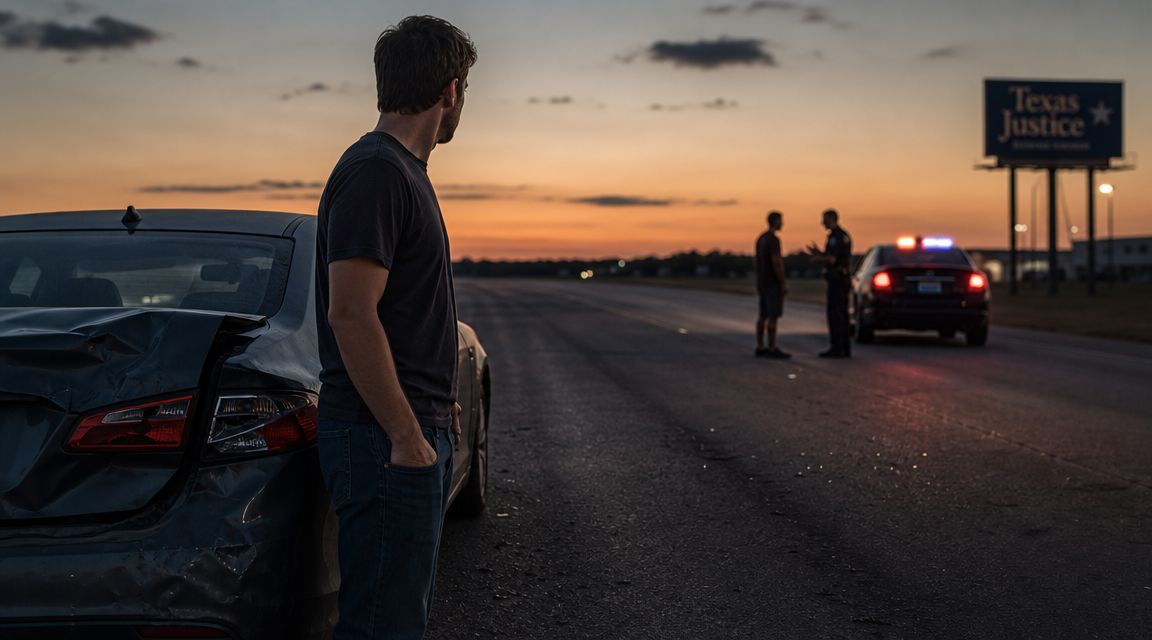
A Houston driver is rear-ended on I-45 at a stoplight. The other motorist stumbles when getting out of the car, smells like alcohol, and struggles to answer basic questions. Police begin a DWI investigation. Later, the injured driver learns the district attorney has filed charges.
The injured driver often assumes, “If the prosecutor handles the DWI, I don't need to do anything else.” That's a common misunderstanding.
You still have your own case to pursue. The prosecutor represents the public. Your Texas injury attorney represents your personal recovery.
Why victims get confused
Many families hear words like liability, damages, and fault and aren't sure how they fit together. Here's the plain-English version:
- Liability means legal responsibility. If the drunk driver caused the crash, they may be liable for your losses.
- Damages means the harm you suffered, such as medical bills, lost wages, pain and suffering, and vehicle damage.
- Comparative fault means Texas can reduce your recovery if the defense argues you were partly responsible.
- Statute of limitations means the legal deadline for filing a lawsuit.
Your civil claim doesn't wait for life to calm down. Evidence can fade quickly. Witness memories change. Video may be erased. That's why victims often benefit from early legal help, even while the criminal case is still pending.
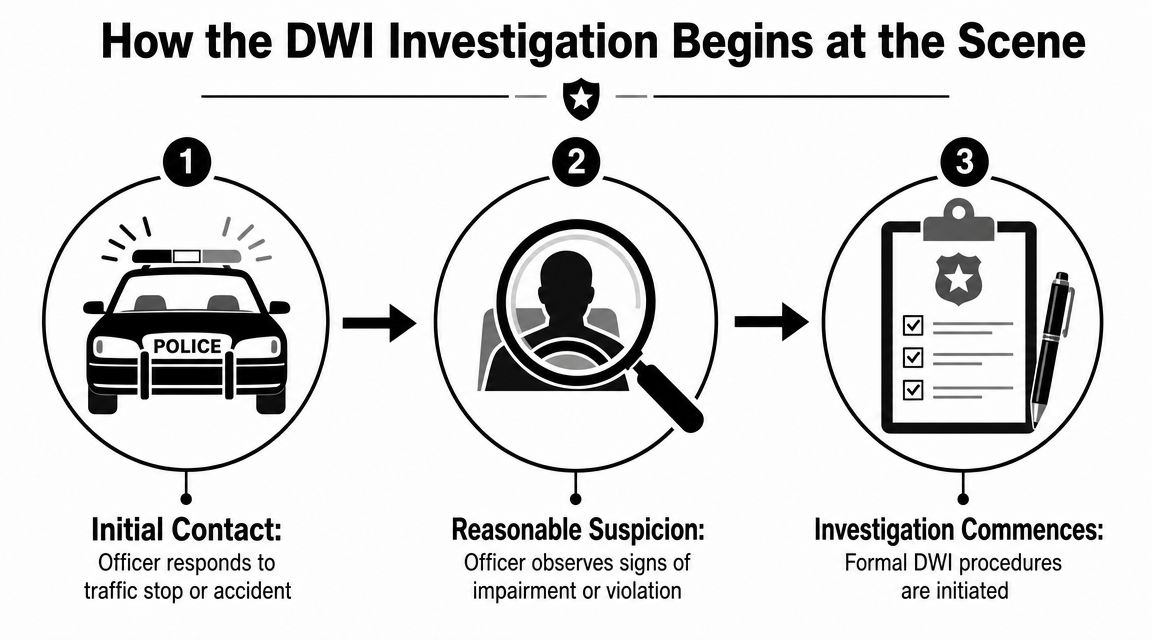
How the DWI Investigation Begins at the Scene
The DWI case usually starts in a chaotic place. A roadside stop. A crash scene. A hospital. For victims, these first minutes can feel like a blur. For police, they're the beginning of an evidence file.
The first signs officers look for
An officer usually needs a lawful reason to begin the stop or expand the investigation. After a crash, that may come from what the officer sees at the scene. In other cases, it may start with swerving, unsafe lane changes, or another traffic problem.
Once the officer makes contact, the focus shifts to signs of impairment. Officers often look for:
- Speech problems such as slurring or delayed responses
- Physical signs like bloodshot eyes, poor balance, or confusion
- Alcohol clues including an odor of alcohol or open containers
- Driving behavior that suggests impaired judgment
These details matter because they help explain why the officer took the next steps.
Why the roadside interaction matters to your claim
If you were injured by a driver who drifted across lanes on I-10 in Houston and hit your vehicle, the officer's first observations may later support both the criminal case and your injury claim. The same facts can appear in the police report, bodycam footage, and officer testimony.
If you're wondering what drivers are or are not required to say during these encounters, this guide on answering questions during a Texas DWI stop helps explain the roadside process.
After the initial contact, officers decide whether they have enough to move forward with a formal DWI investigation. That may include asking the driver to step out, observing how they walk, and beginning field sobriety testing.
Here's a short visual explanation of that process:
A strong DWI case often starts before any breath or blood result exists. The officer's first observations can shape the entire case.
What you should do at the scene if you're the victim
You don't need to investigate the drunk driver yourself. But there are a few smart steps that can protect your rights:
- Get medical care first. Your health comes before paperwork.
- Cooperate with police carefully. Give accurate facts about what you saw and felt.
- Take photos if you can. Vehicles, skid marks, debris, injuries, and road layout can matter later.
- Save names and contacts. Witnesses can become important if the driver denies drinking or denies causing the crash.
Those early details can support both liability and damages in your civil case.
The Evidence Used to Prove a Driver Was Intoxicated
Texas prosecutors usually build DWI cases around officer observations, field sobriety tests, and chemical testing, with 0.08% BAC serving as the key statutory threshold in many cases, as outlined in this Texas DWI evidence overview. But no single item automatically wins the case. The state still has to prove guilt beyond a reasonable doubt.
For crash victims, this is useful to understand because the same proof can support your argument that the other driver acted negligently and caused your injuries.
Officer observations
Jurors often hear first from the officer who made contact with the driver. That officer may describe the scene, the driver's behavior, and what happened during the investigation.
Common observations include slurred speech, bloodshot eyes, an odor of alcohol, trouble following directions, poor balance, or confusion. On paper, these may sound simple. In court, they become part of a timeline.
If bodycam or dashcam footage exists, it may either reinforce or weaken the officer's description. That's one reason your lawyer should obtain and review the file early.
Field sobriety tests
Field sobriety tests are roadside exercises meant to help officers evaluate impairment. Many people have heard of them but don't know what they involve.
The common standardized tests include:
- Horizontal Gaze Nystagmus checks for certain eye movements.
- Walk-and-Turn asks the driver to follow instructions while walking heel-to-toe.
- One-Leg Stand tests balance, attention, and ability to follow directions.
A prosecutor may use these results to argue the driver showed signs of intoxication before any chemical test was taken.
Important point: Field sobriety tests are not the same as a medical diagnosis. They are pieces of evidence that prosecutors place alongside everything else.
Chemical testing
Chemical testing usually means a breath or blood test. In many cases, this becomes the most talked-about evidence because it gives the jury a number.
Breath and blood evidence can be powerful, but only if the testing process is reliable. Texas prosecutors often need to show that the machine or lab process was handled correctly. Challenges can focus on calibration, maintenance records, chain of custody, preservation, and whether proper procedures were followed, as explained in this discussion of DWI testing reliability.
For ordinary drivers, a BAC of 0.08% allows the state to argue per se intoxication. For commercial drivers, the benchmark can be 0.04%, according to that same explanation.
Why this helps your civil case
Your injury lawyer doesn't just look at whether the state can convict. Your lawyer looks at how the evidence supports fault, causation, and damages in your civil claim.
A straightforward way to understand this is:
| Evidence Type | What It Shows | How It Helps Your Civil Case |
|---|---|---|
| Officer observations | Signs of impairment at the scene | Supports the claim that the driver was unsafe and impaired when the crash happened |
| Field sobriety tests | Problems with balance, coordination, attention, or following instructions | Helps show impaired functioning, even if the defense attacks later test results |
| Breath or blood test | Chemical evidence of alcohol concentration | Gives objective support for intoxication and may increase pressure in settlement talks |
| Video footage | Driver behavior and officer interaction | Lets insurers, juries, and lawyers see the condition of the driver firsthand |
| Witness statements | Driving pattern and crash details | Connects intoxication to the actual collision |
If you want to understand how these details are often recorded in official paperwork, this guide on reading a police accident report can help.
Where the defense pushes back
A DWI case often turns on attacks against reliability. The defense may argue the driver was tired, injured, nervous, or affected by something other than alcohol. They may also challenge the test process itself.
That doesn't mean the case falls apart. It means prosecutors and civil lawyers both need to build a complete picture, not just point to one number.
Building the Case The Prosecutor's Courtroom Strategy
After a drunk driving crash, many victims assume the prosecutor walks into court, shows a blood test, and the case is proved. Real cases are rarely that tidy. A prosecutor has to connect many small facts so a judge or jury can see one clear picture: the driver was intoxicated at the time of the crash, and that impairment caused danger on the road.
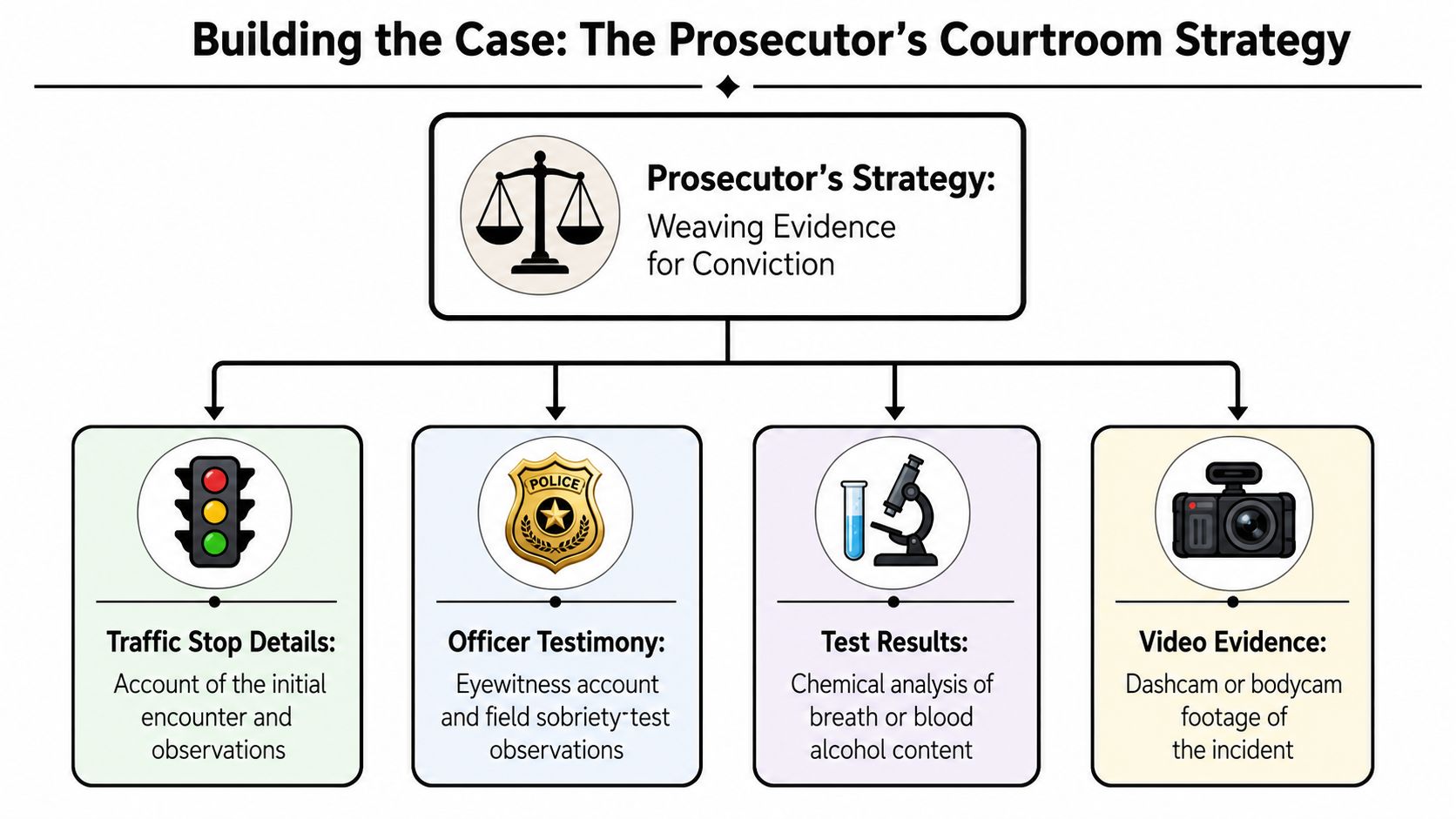
A good way to understand the courtroom strategy is to picture a chain. One link might be weak by itself. Several links connected together can still hold. Prosecutors usually build that chain in a careful order so the jury can follow it without getting lost.
How the story is built in court
In many Texas DWI cases, the prosecutor presents the evidence in a sequence like this:
- What happened on the road. The jury hears about weaving, speeding, drifting, running a light, or the crash itself.
- What the officer saw in person. Slurred speech, poor balance, confusion, bloodshot eyes, or the smell of alcohol help explain the driver's condition.
- What the recordings and tests show. Bodycam, dashcam, field sobriety testing, and breath or blood evidence can support the officer's observations.
- When it all happened. The prosecutor ties those facts to the period when the driver was operating the vehicle.
That timing issue matters. The state does not just need to show that the driver had been drinking at some point. It has to show intoxication while driving. For a victim, that same timeline can become very useful later because it helps connect the driver's impairment directly to the collision that injured you.
Why prosecutors use a layered approach
Some cases have a chemical test over the legal limit. Some do not. A refusal case, a delayed blood draw, or a hospital crash case may still move forward if the prosecutor can show impaired driving through the surrounding facts.
That is often confusing for victims. People hear "no breath test" and assume the criminal case is weak. Texas law does not require one particular piece of evidence in every case. Prosecutors often rely on the whole picture instead of one dramatic item.
Defense lawyers know this, so they usually challenge the links in that chain one by one. They may question the traffic stop, the field sobriety instructions, the timing of the blood draw, or whether an injury from the crash affected the driver's behavior. The prosecutor's job is to answer those attacks with a consistent timeline and witnesses the jury finds believable.
What this can mean for your civil case
The criminal case is about public accountability. Your injury case is about compensation. Even so, the prosecutor's work can strengthen your position in ways that matter outside the criminal courtroom.
For example, witness testimony locked in early can later help show fault in your injury claim. Video introduced in the DWI case may give an insurer or civil jury a much clearer view of the driver's condition than a written report alone. If the facts suggest a bar, restaurant, or provider contributed to the danger, a civil lawyer may also examine a potential Texas dram shop claim against an alcohol provider.
Insurance adjusters pay attention to these details. A Houston car accident lawyer can use the criminal evidence to show that liability is strong and that the defense may have trouble explaining away the driver's conduct. That can affect negotiations over medical bills, lost income, pain and suffering, and, in fatal cases, wrongful death damages.
For a victim, the main takeaway is simple. The prosecutor is not presenting random pieces of evidence. The prosecutor is building a timeline that shows impairment, dangerous driving, and harm. When that timeline is well supported, it can also give your civil claim a stronger foundation.
How a DWI Conviction Strengthens Your Injury Claim
A criminal conviction can give your civil case momentum, but it doesn't replace it. You still need to prove your losses and pursue compensation directly.
Liability and negligence in plain English
In a personal injury case, liability means who is legally responsible for the crash. Negligence means failing to use reasonable care. A drunk driver often creates a strong negligence argument because driving while intoxicated is dangerous by its nature.
If the criminal case results in a conviction, that can strengthen your civil position. It may support arguments that the driver broke the law and acted unreasonably. It can also make it harder for the defense to minimize what happened.
Texas civil cases also involve damages, which are the losses the law allows you to recover. These may include:
- Medical expenses for emergency care, follow-up treatment, therapy, and medication
- Lost wages if you missed work or can't return to the same job
- Pain and suffering for physical pain and daily disruption
- Property damage to your vehicle and personal items
- Wrongful death compensation for certain surviving family members after a fatal crash
Comparative fault and punitive damages
Texas follows a comparative fault system under Texas Civil Practice & Remedies Code Chapter 33. In simple terms, if the defense claims you were partly at fault, your recovery can be reduced based on your share of responsibility. That's why crash reconstruction, witness statements, and vehicle damage all matter, even when the other driver was intoxicated.
Texas law also addresses exemplary damages, often called punitive damages, in Chapter 41. These damages are not meant to repay a bill. They are meant to punish especially serious conduct and discourage similar behavior. In drunk driving injury cases, that issue may become important depending on the facts.
The timing problem that can affect both cases
One issue that surprises many victims is the timing of alcohol testing. Prosecutors must prove the defendant was intoxicated while operating the vehicle, not just later when the breath or blood sample was taken. Defense lawyers may argue the driver's BAC was still rising and was below the legal limit at the time of the crash, as discussed in this Texas DWI prosecution article about proving intoxication at the time of driving.
That same issue can appear in your injury case. If the defense tries to blur the timeline, your lawyer may use witness statements, driving behavior, admissions, receipts, open-container evidence, and crash details to tie impairment to the moment of impact.
Key takeaway: A DWI conviction helps, but your civil lawyer still needs to prove how the drunk driving caused your injuries and losses.
Don't wait too long to act
The statute of limitations is the deadline for filing a lawsuit. If that deadline passes, you can lose the right to seek compensation in court. Even before that deadline, delay can hurt your case because video can disappear, vehicles get repaired, and witnesses become hard to locate.
If alcohol service by a bar or restaurant may have contributed to the crash, you may also need to explore a possible Texas dram shop claim. That can open another path to recovery in some cases.
Take Control of Your Recovery Contact Our Team Today
After a drunk driving crash, many victims feel like the criminal court process is happening around them, not for them. That feeling is understandable. The prosecutor is focused on the state's case. You still need someone focused on your health, finances, and future.
A civil claim can help you pursue payment for treatment, lost income, property damage, and the human impact this crash has had on your life. It can also protect your family if injuries become long-term or if a loved one died because of an impaired driver.
Here are practical next steps:
- Keep every record related to treatment, prescriptions, repair estimates, and missed work
- Avoid quick insurance statements before you understand the full extent of your injuries
- Follow your doctor's care plan so there's a clear record of your recovery
- Ask for the criminal case information so your lawyer can track charges, hearings, and evidence
- Speak with a Texas injury attorney early so key evidence can be preserved
If you're searching for a Houston car accident lawyer after a drunk driving wreck, you don't need to figure this out alone. A lawyer can help with the auto insurance claim, investigate liability, respond to blame-shifting, and build a case for full damages under Texas law.
If a drunk driver injured you or your family, contact The Law Office of Bryan Fagan, PLLC for a free consultation. Our team helps Texas crash victims understand their rights, deal with insurance companies, and pursue compensation with clear, compassionate guidance.