A car crash can change your life in seconds, but you don’t have to face recovery alone.
A Houston driver gets rear-ended in stop-and-go traffic. She was wearing her seat belt. Even so, her head snaps forward, her chest slams hard against the belt, and later she learns that one small part of the restraint system may not have worked the way it should have. That small part is often overlooked. It’s the seat belt pretensioner.
Your Seat Belt Is More Than Just a Strap
A seat belt is often perceived as simple webbing and a buckle. In modern vehicles, that’s only part of the story. Your belt is tied into the car’s larger safety system, and one of its most important hidden parts is the pretensioner.
A pretensioner tightens the belt at the start of a crash. That matters because even a properly worn belt can have a little slack. In a violent impact, that slack gives your body room to move before the belt fully restrains you. A pretensioner is designed to remove that extra movement right away.
That’s why this isn’t just a mechanical detail. It can shape the injuries you suffer and the legal claim you bring afterward. Federal crash data analyzed by NHTSA found that, in passenger vehicles, seat belt pretensioners and load limiters are associated with a 12.8% lower fatality risk for front-seat occupants compared with standard belts alone, according to NHTSA crash data analysis.
Why injured drivers often miss this issue
After a wreck, the focus is often on the other driver, the police report, the ambulance bill, and the insurance claim. That makes sense. But a safety device can also become part of the case if it failed, deployed improperly, or did not reduce your movement the way it should have.
A failed pretensioner can matter in several kinds of claims:
- Negligence claims against another driver if the crash itself was caused by speeding, distraction, intoxication, or unsafe lane changes
- Product liability claims if a defective safety system made your injuries worse
- Repair-related claims if a shop or prior service provider did work that affected the restraint system
A seat belt can save your life and still leave behind important evidence about why you were hurt as badly as you were.
Practical rule: If your injuries seem worse than the crash damage suggests, it’s worth asking whether the restraint system performed correctly.
Why this matters to your recovery
Texas injury claims are about more than who hit whom. They’re also about what caused your damages, meaning the losses the law may allow you to recover, such as medical bills, lost income, pain, and the cost of future care.
For some crash victims, that means looking closely at chest injuries, neck trauma, facial injuries, and brain injuries linked to seat belt loading and forward movement. If you want to understand those injury patterns better, this guide on seat belt syndrome injuries is a useful companion.
When families learn that a pretensioner may have changed the outcome of the crash, they often feel two things at once. Relief that there may be an explanation, and frustration that nobody mentioned it sooner. Both reactions are valid.
How Seat Belt Pretensioners Protect You in a Crash
A crash happens in stages, and the first stage is brutally short. Before your mind has even caught up, your body is still traveling forward at the speed the car was moving a split second earlier. The seat belt is supposed to catch you early in that motion, not after you have already lunged toward the steering wheel or dashboard. A pretensioner helps make that early catch happen.
A good way to picture it is a towing strap with a little slack in it. If the strap tightens late, the object at the other end jerks hard after it has already built momentum. A seat belt pretensioner addresses that same problem inside the restraint system. It removes slack almost immediately so your torso is held sooner and in a safer position.
What happens in those first moments
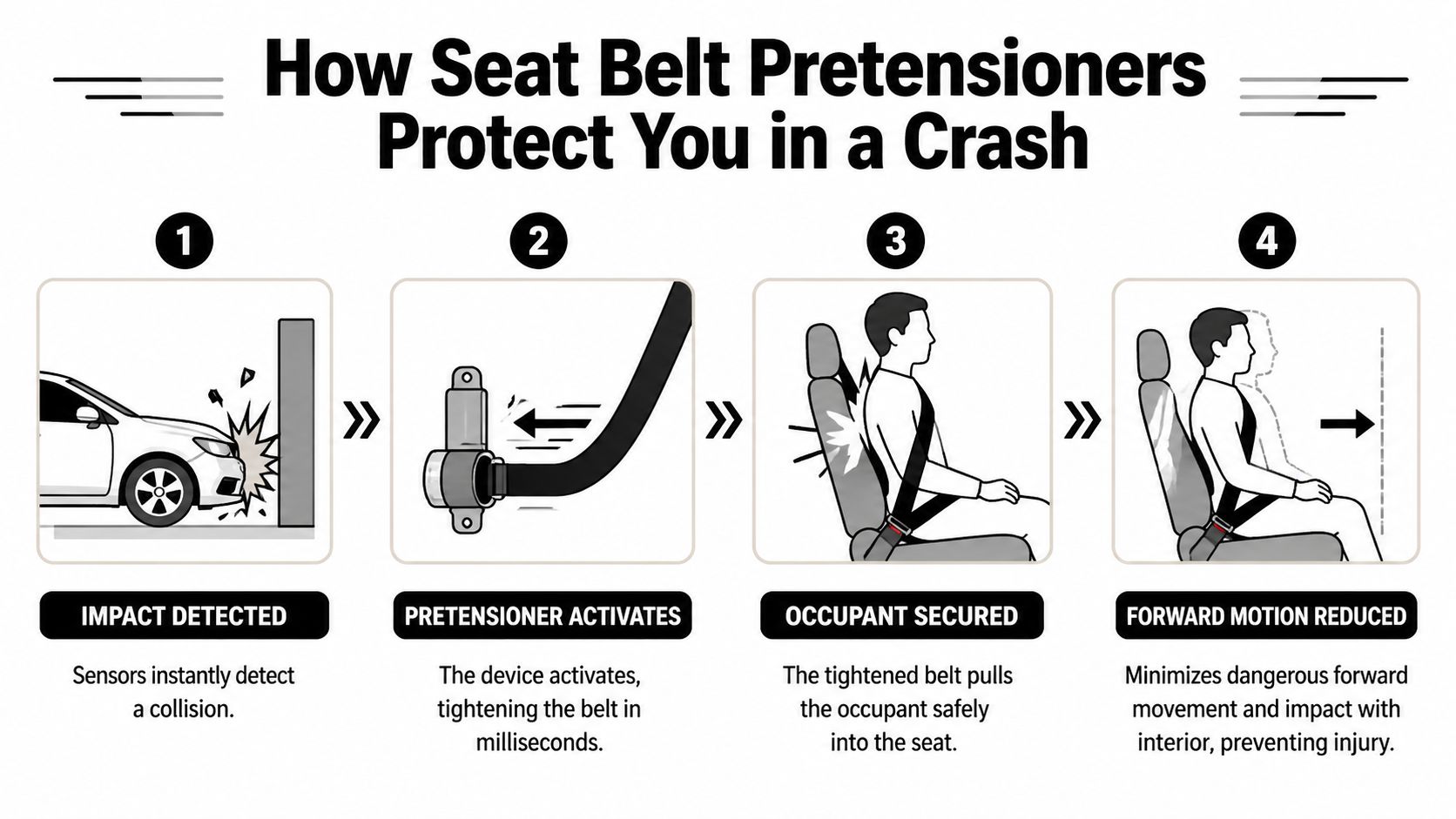
In many vehicles, a pyrotechnic pretensioner uses a small charge to trigger a rapid tightening action after crash sensors detect a serious deceleration. The exact design varies by manufacturer, but the goal is the same. Pull the belt snug before the occupant moves too far forward.
That sequence usually looks like this:
- Sensors detect a sudden crash event and send a signal through the restraint system.
- The pretensioner activates and quickly removes slack from the belt.
- The belt contacts the body sooner across the chest and lap areas.
- The occupant stays in a better position for the rest of the crash forces.
- The airbag meets the body more as intended, instead of catching someone already too far out of position.
The timing matters because even a small amount of extra forward travel can change how the head, neck, chest, and knees strike the interior or load against the belt.
Why a little slack changes the outcome
People often hear “just a few inches” and assume it cannot matter much. In crash mechanics, those inches can be the difference between controlled restraint and a harsher stop. If the belt tightens late, your body has more time to gain forward momentum before the restraint system fully engages.
Researchers at IRCOBI reported in early crash testing on pretensioners that reducing belt slack improved occupant kinematics and lowered head injury measurements in certain test conditions, as discussed in early IRCBI crash testing on pretensioners. In plain English, a belt that grabs sooner can reduce how violently the body moves.
That is also why ordinary belt fit matters. If you want a practical, non-technical explanation of how a belt should sit and feel in daily use, this article on understanding seat belt tension is a helpful primer.
A pretensioner does one simple but important job. It helps the belt restrain you at the start of the crash instead of later in the crash.
How pretensioners work with airbags
Airbags are not meant to do the whole job alone. They work best when the belt has already started controlling your position. If the pretensioner fails and your body moves too far forward too soon, the airbag may strike you at the wrong point in your motion or fail to cushion you the way the system was designed to do.
That helps explain why out-of-position occupants can suffer serious injuries even when the airbag deploys. This discussion of whether an airbag can kill you shows why body position at the moment of deployment is so important.
Why this technical detail matters in a Texas injury claim
For an injured person, this is not just engineering trivia. If a pretensioner failed to tighten the belt when it should have, that failure can help explain why your injuries were worse than the crash alone would suggest. It may support a claim that the restraint system did not perform as intended.
That can affect who may be responsible. The at-fault driver may still be liable for causing the wreck, but a manufacturer, parts supplier, or repair shop may also come into the case if a defective or improperly serviced pretensioner increased your harm. In other words, the belt system can become evidence, not just equipment.
A simple comparison
| Situation | What your body does |
|---|---|
| Standard belt with slack | Your torso moves farther before the belt fully restrains you |
| Belt with working pretensioner | The belt tightens sooner and limits early forward movement |
If you remember one point from this section, remember this: pretensioners help hold your body where the safety system expects it to be. When that does not happen, the injury pattern can tell an important story, and in Texas, that story may become part of how you prove liability and recover compensation.
Types of Pretensioners and Why They Might Fail
A pretensioner problem often starts with a simple question after a wreck. Did the belt tighten the way it was supposed to, or did one part of the system fail at the worst possible moment?
That question matters because pretensioners are not all built the same way. Different designs tighten different parts of the belt, and each design tends to fail in its own pattern. In a Texas injury case, that pattern can help show whether your injuries came only from the crash, or from a safety device that did not do its job.
Retractor pretensioners
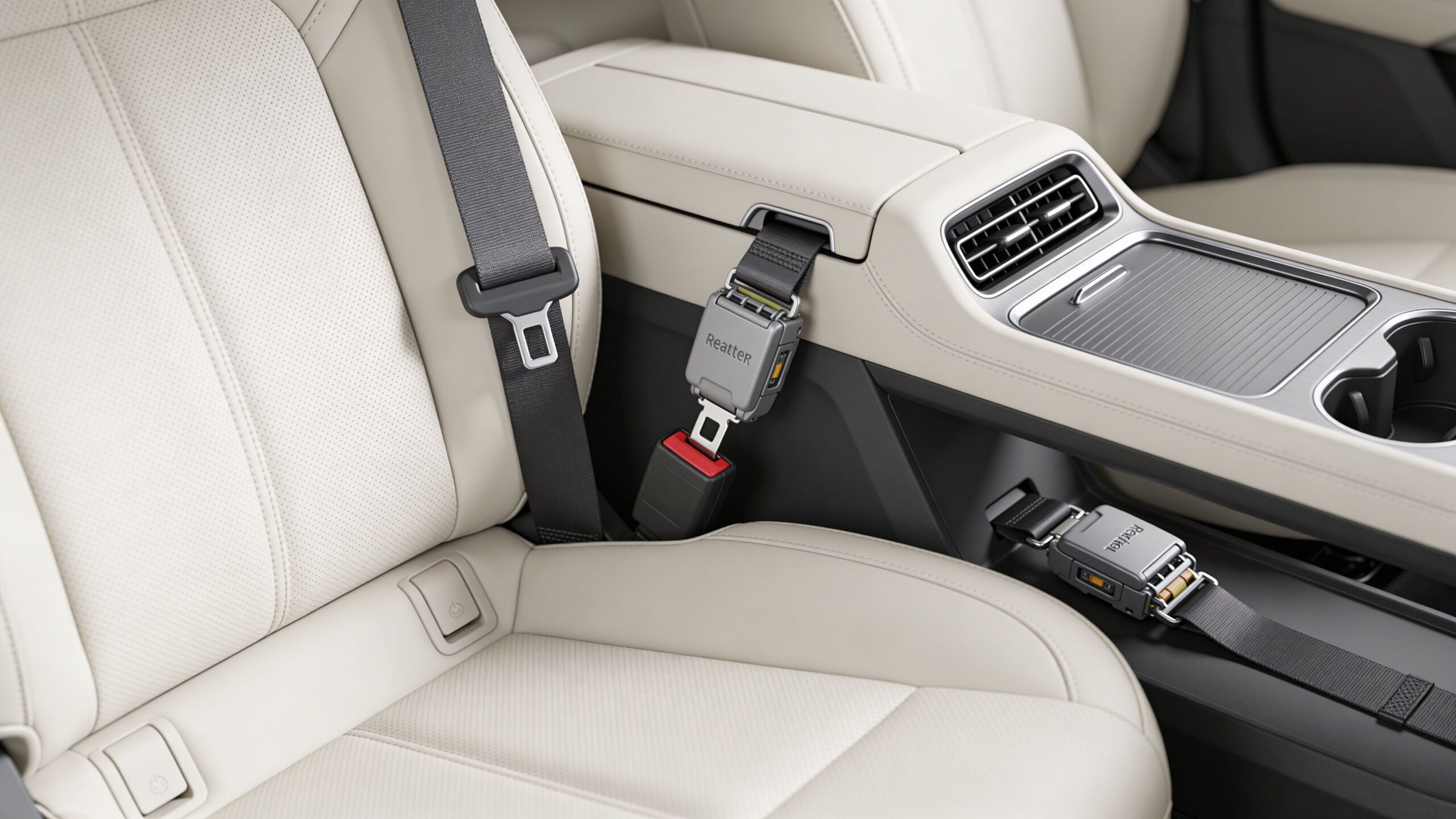
A retractor pretensioner sits where the belt spool winds and unwinds. In plain terms, it works like a fast take-up mechanism. At the start of a crash, it pulls excess webbing back into the retractor so your torso is restrained sooner.
Failures here often involve the moving parts inside the retractor. Wear, prior collision damage, poor repairs, or an internal jam can keep the spool from rotating the way it should. If that happens, the belt may look normal in everyday driving but still fail to remove slack during the collision.
From a legal standpoint, that difference is important. A damaged retractor can point toward a product defect, a bad post-collision repair, or a salvage-history problem that was never properly addressed.
Buckle pretensioners
A buckle pretensioner works on the latch side of the belt system. Instead of pulling in webbing, it draws the buckle downward so the lap belt sits tighter across the strong bones of the pelvis.
That position matters. When the lap belt rides too high, the body can slide forward under it, a motion commonly called submarining. In injury cases, that can be tied to abdominal trauma, pelvic injuries, or body movement that should have been limited.
Buckle pretensioners may fail because of wiring faults, damaged connectors, sensor problems, or physical damage inside the buckle assembly. If the buckle side does not move when the system commands it to, the belt may leave the occupant in the wrong position at the exact moment the rest of the restraint system activates.
Anchor pretensioners
Anchor pretensioners tighten the belt at a lower mounting point near the seat or floor. They pull the anchor location to tighten the lap and shoulder portions together.
This design can work well, but it has a weak spot. Components mounted low in the cabin are more exposed to moisture, debris, corrosion, and damage from prior floor-area repairs. A vehicle can look fully restored after a crash while hidden restraint hardware near the anchor point remains compromised.
That kind of hidden damage shows up in lawsuits more often than people expect.
Why the design difference matters
Each pretensioner type leaves a different mechanical trail when it works and a different warning sign when it does not. A retractor problem may show up in the spool or webbing behavior. A buckle problem may leave the lap belt too loose or too high. An anchor problem may involve damaged mounting hardware or corrosion near the floor.
Those details are not just for engineers. They help a lawyer and a qualified expert connect the injury pattern to a specific failure point. That connection can strengthen a claim against a manufacturer, a parts supplier, or a repair shop, in addition to the driver who caused the wreck.
Why pretensioners fail
Pretensioner failure is often less dramatic than people assume. Many problems build gradually over time, then become visible only after a collision.
Common causes include:
- Crash sensor faults that prevent the system from triggering
- Electrical problems in wiring, connectors, or control modules
- Aging parts that no longer respond correctly
- Prior collision damage that was repaired cosmetically but not mechanically
- Improper service work involving airbags, belts, seats, or interior trim
- Corrosion, dirt, or contamination in low-mounted components
The pattern is similar to other safety systems in a car. Drivers understand that brake wear can stay hidden until stopping distance gets worse. This guide on when to replace your car brakes covers a different part of the vehicle, but the lesson carries over. Safety equipment can deteriorate long before the danger becomes obvious.
Older damage, weak repairs, and hidden electrical problems can leave a pretensioner unable to protect you when the crash begins.
A Texas example
Consider a driver struck in a side-impact collision at a Dallas intersection. The door damage is obvious. The injury to the driver’s head, chest, or abdomen is obvious too. What may be less obvious is that the belt never tightened the way a properly functioning system should have.
If the pretensioner failed, that failure can become a separate source of proof. It may help explain why the body moved farther than expected, why the injuries were more severe, and why more than one party may be responsible for the harm. In Texas, that can change the value and direction of the claim.
Investigating Pretensioner Failure After a Texas Accident
A pretensioner case is part engineering question and part legal question. The engineering question is whether the system deployed, failed, or functioned improperly. The legal question is who is responsible for the added harm.
What investigators look for on the vehicle
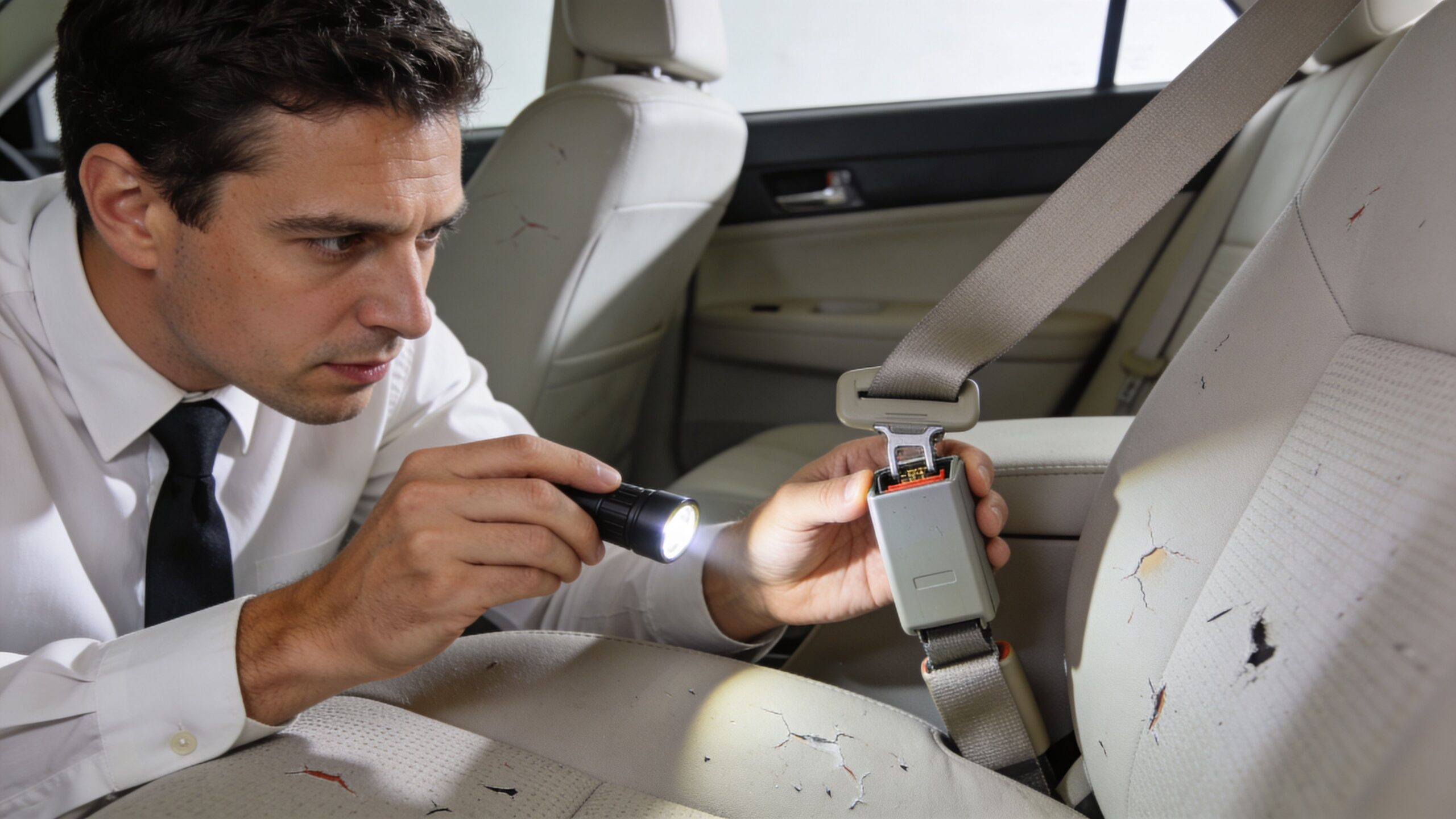
A strong case starts with the physical evidence. Post-crash forensic review looks for signs such as burnt propellant residue and piston scoring, and that evidence can be compared with the vehicle’s Event Data Recorder, or EDR, as described in this discussion of post-crash forensic evidence for pretensioner deployment.
That may sound abstract, so here’s what it means in plain language. If the pretensioner is supposed to fire, it often leaves traces. If those traces are missing when the crash conditions suggest deployment should have occurred, that gap can become powerful evidence.
The key evidence sources
Lawyers and experts often focus on a combination of proof, not just one clue.
The belt assembly itself
Investigators inspect the retractor, buckle, anchor points, webbing condition, and the surrounding trim.Vehicle download data
The EDR, often called the black box, may hold information about crash timing and restraint-system events.Crash damage pattern
The point of impact, cabin intrusion, and occupant movement help experts judge whether the restraint response fits the crash.Medical records
Injury patterns can support or contradict what the safety system supposedly did.
A San Antonio example
Suppose a driver is T-boned on a city street in San Antonio. The police report places fault on the other driver for running a light. That establishes one layer of the claim, but not the whole case.
If the injured driver suffered a severe head injury despite wearing the belt correctly, the legal team may ask deeper questions. Did the pretensioner deploy. Did the restraint system help position the driver before impact forces threw the body sideways and forward. Did the EDR show a deployment event. Did the hardware show physical signs consistent with activation.
Those questions can open a second path of liability.
What liability means in this context
Liability means legal responsibility for harm. In a Texas car crash, the at-fault driver may be liable for causing the collision. But if a defective pretensioner made the injuries worse, another party may also share liability, such as a manufacturer, parts supplier, or repair facility.
That matters because a case can involve more than one wrongdoer. Texas law allows fault to be examined across multiple parties. In real life, that means the person who caused the wreck and the company responsible for a failed safety device may both become part of the case.
Here’s a short visual summary:
| Evidence | Why it matters legally |
|---|---|
| Burnt residue or piston marks | Can support that the pretensioner did deploy |
| No expected deployment signs | Can support a failure theory |
| EDR data | Can help confirm timing and system response |
| Injury pattern | Can help connect the failure to your damages |
After the initial inspection, many cases benefit from technical review. This video gives general background on crash-system investigation and why details in the vehicle matter:
Why timing matters
Insurance companies often move fast to total a vehicle, transfer it, or sell it for salvage. Once that happens, critical evidence can disappear. A pretensioner case is hard to build if the seat belt system is gone, altered, or handled without documentation.
The vehicle is not just damaged property. In a defect case, it may be the most important piece of evidence you have.
That’s why early action matters. Not because every crash includes a defect, but because you only get one chance to preserve proof if it does.
Your Legal Rights When a Safety Device Fails in Texas
Texas law gives you the right to seek compensation when someone else’s conduct causes your injuries. If a safety device failure made your injuries worse, the legal analysis becomes more layered, but your rights still matter.
Negligence and who may be at fault
Negligence means a person or company failed to use reasonable care, and that failure caused harm. In traffic cases, negligence often involves a driver who was speeding, texting, following too closely, or turning without yielding.
When a pretensioner issue is involved, the case may also raise product-related questions. A manufacturer may be accused of selling a defective system. A repair shop may be accused of faulty work. A rideshare or fleet context may add another layer if the vehicle’s maintenance history is unclear.
Comparative fault under Texas law
Texas uses a comparative fault system under Chapter 33 of the Texas Civil Practice and Remedies Code. In plain English, that means responsibility can be divided among different people or companies. It also means your own actions can affect your recovery.
The rule many people need to know is the 51% bar. If you are found more than half responsible, you generally cannot recover damages from the other side. If you are 50% or less responsible, your recovery is usually reduced by your percentage of fault.
A simple example helps. A Houston driver is rear-ended on I-45. The other driver clearly caused the crash, but the defense argues the injured driver was leaning forward, adjusting a phone mount, and not seated properly just before impact. In a newer vehicle with a pre-pretensioner system, that posture could become part of the argument over how the injury happened.
That issue is becoming more complicated. An emerging issue in accident claims involves pre-pretensioners, which are designed to reposition leaning occupants before a crash. The lack of clear standards about their real-world availability and function, especially in rideshare vehicles, shows why these cases need careful review, as discussed in this article on pre-pretensioner research and crash implications.
What comparative fault means for you
Insurance companies may try to shift blame onto you because it saves them money. They may argue:
- You were sitting improperly
- You failed to wear the belt correctly
- Your injuries came from your posture, not the defective system
- A preexisting condition caused your symptoms
That doesn’t mean they’re right. It means you should be careful about casual statements after a wreck.
If the insurer asks questions that seem simple, remember that simple questions often shape fault arguments later.
Damages and what you may recover
Damages means the losses you seek money for in a legal claim. In Texas car accident cases, that can include:
- Medical bills for emergency care, surgery, therapy, medication, and follow-up visits
- Lost wages if you missed work
- Loss of earning ability if your injuries affect future work
- Pain and suffering for physical pain and day-to-day disruption
- Mental anguish when the trauma has emotional effects
- Property damage and related out-of-pocket losses
In fatal cases, families may also pursue wrongful death compensation. Those claims have their own rules and can involve both the crash itself and questions about whether a failed restraint system contributed to the death.
Texas also addresses certain damages issues in Chapter 41 of the Texas Civil Practice and Remedies Code, which covers rules tied to damages in civil cases.
The statute of limitations
The statute of limitations is the legal deadline to file suit. If you miss it, you can lose your right to recover. That deadline matters in any injury claim, but it matters even more in a pretensioner case because evidence can disappear long before the filing deadline arrives.
A vehicle may be repaired, salvaged, or destroyed. Electronic data may be lost. Witness memories fade. Service records become harder to locate.
That’s why waiting can hurt you twice. It can threaten your deadline and weaken your proof.
What to Do After a Crash to Protect Your Defect Claim
After a crash, people often do what seems natural. They call family, answer the insurer, and let the tow yard or carrier move the vehicle along. If a pretensioner may have failed, that normal routine can cost you valuable evidence.
Your first priority is health
Get medical care right away. Follow ambulance advice, emergency room instructions, and doctor follow-up plans. Some pretensioner-related injuries involve the neck, chest, abdomen, or brain, and symptoms may worsen after the adrenaline wears off.
Then report the crash through the usual channels. Call law enforcement if needed, notify your carrier, and start the basic auto insurance claim process. Keep your statements factual and brief.
Protect the vehicle before it disappears
If you suspect the restraint system may not have worked correctly, preserving the vehicle is one of the most important steps you can take.
Take these actions as early as possible:
Tell the insurer in writing not to destroy, sell, or alter the vehicle
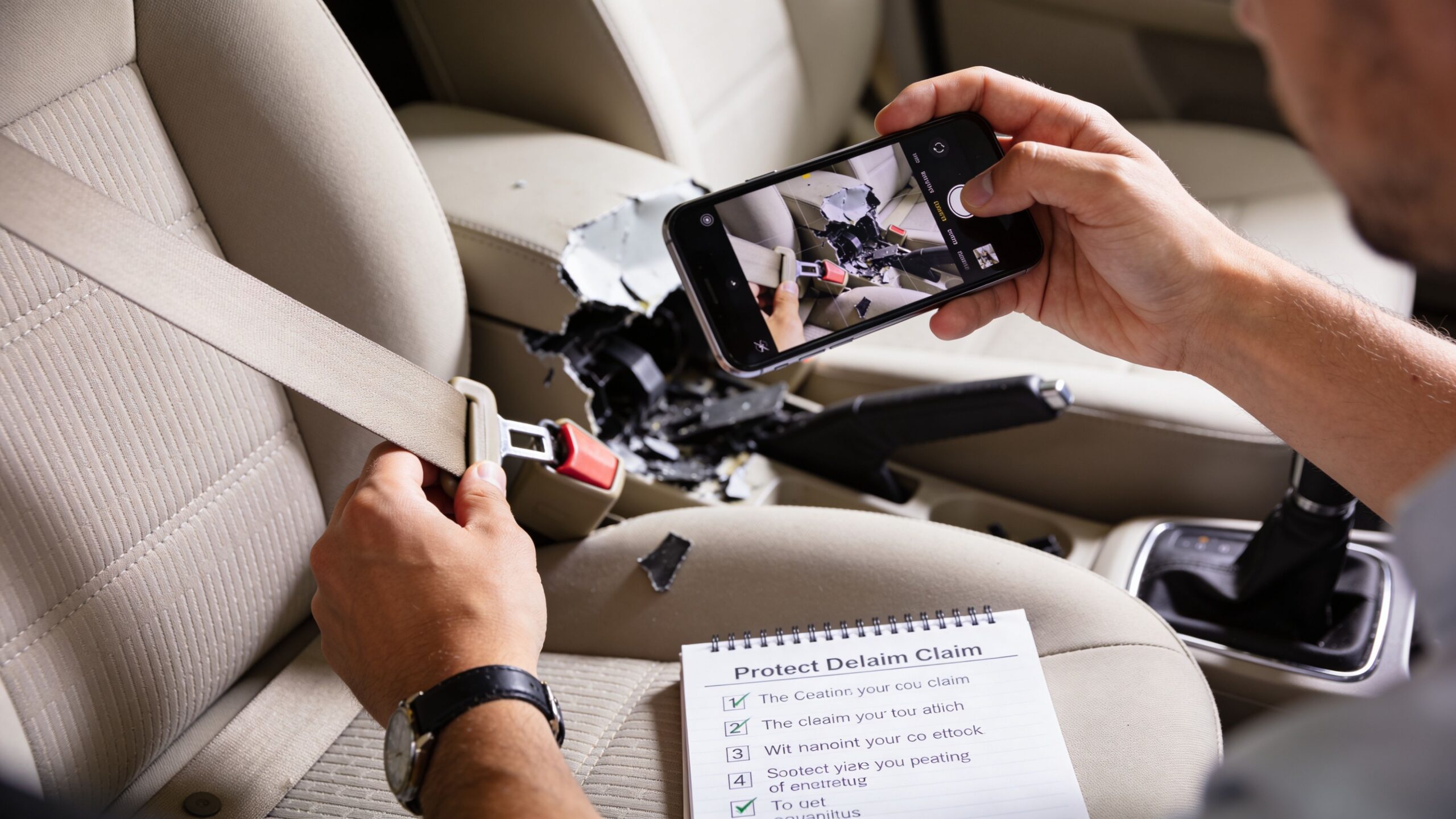
The car may be evidence, not just a repair estimate.Photograph the belt system closely
Include the buckle, belt webbing, anchor area, seat position, and any dashboard warning lights.Do not authorize repairs too quickly
Repairs can change or erase evidence tied to deployment and restraint performance.Keep every towing, storage, and repair document
Paperwork helps establish chain of custody.
Deal carefully with insurance adjusters
Adjusters often sound friendly. They may ask for a recorded statement early, before you know the full extent of your injuries or whether a product issue exists.
You are usually better off getting legal advice before giving detailed recorded statements, especially if the insurer starts asking about your seating position, belt use, posture, or prior vehicle damage. If you want to understand how legal representation changes those communications, this overview of a lawyer letter of representation is a helpful place to start.
A practical checklist
- Save the vehicle: Ask that it be preserved in its post-crash condition.
- Keep the belt untouched: Don’t let anyone “test” or disassemble it informally.
- Document injuries daily: Notes, photos, and symptom changes can help show how the crash affected your life.
- Gather recall information: Check whether your vehicle had relevant safety recalls through official vehicle safety resources.
- Avoid social media debate: Posts about how you were sitting or what happened can be pulled into the claim.
The strongest defect claims usually begin with ordinary steps taken early and taken carefully.
Why this helps your case
A Texas injury attorney can only work with the evidence that still exists. If the car is gone, the belt has been replaced, or the module data was never preserved, the case becomes harder. Not always impossible, but harder.
That’s true whether you’re dealing with a Houston car accident lawyer, a truck wreck case, an uninsured driver claim, or a wrongful death investigation. Good claims are built on details saved early.
How The Law Office of Bryan Fagan Can Fight for You
A pretensioner case can feel overwhelming because it blends crash law, product evidence, medical proof, and insurance tactics. You shouldn’t have to sort that out while you’re trying to heal.
An experienced Houston car accident lawyer can move quickly to preserve the vehicle, demand key records, review the EDR issue, and work with the right experts when a hidden restraint failure may have made your injuries worse. That’s often the difference between a case built on assumptions and a case built on evidence.
The same is true if your claim also involves a commercial vehicle, a rideshare trip, an uninsured driver, or a fatal collision. A strong legal team looks at the full picture. Who caused the crash. Whether any safety device failed. How Texas comparative fault rules may affect recovery. What damages should be pursued now and in the future.
If you’re searching for a Texas injury attorney after a serious wreck, you need more than general advice. You need a clear plan, careful evidence preservation, and someone ready to deal with the insurance company while you focus on recovery. In fatal cases, families also need direct guidance about wrongful death compensation and the steps required to protect their claim.
If you or someone you love was hurt in a Texas crash and you suspect a seat belt pretensioner failed, contact The Law Office of Bryan Fagan, PLLC for a free consultation. Our team helps injured Texans protect evidence, handle the auto insurance claim process, investigate liability under Texas law, and pursue compensation for medical care, lost income, pain and suffering, and wrongful death claims. You pay nothing unless we win your case.