Skip to content
A car crash can change your life in seconds, but you don’t have to face recovery alone. After a serious accident, a personal injury demand letter is one of the most important documents in your case. It is your formal written request for compensation from the at-fault party’s insurance company, and it often shapes every negotiation that follows.
In plain English, a demand letter tells the insurer four things. First, liability, meaning who caused the crash. Second, damages, meaning the losses you’ve suffered, such as medical bills, lost income, and pain and suffering. Third, comparative fault, which is Texas’s rule for shared blame under Texas Civil Practice & Remedies Code Chapter 33. If the insurer tries to say you were partly at fault, that can reduce what you recover. Fourth, the statute of limitations, which is the deadline to sue. Texas personal injury claims generally have a two-year filing deadline under Texas Civil Practice & Remedies Code §16.003, and missing that deadline can destroy an otherwise strong case.
A well-written demand letter doesn’t beg. It documents. It uses records, bills, treatment notes, wage proof, photos, and legal analysis to give the adjuster a clear path to paying fairly. It also needs to be legally serious enough to matter. If you want background on understanding what makes a document legally binding, that helps explain why wording, signatures, and supporting documents matter so much.
Texas also adds its own pressure points. Demand letters that ignore state-specific deadlines and coverage issues often leave victims exposed. Existing examples often underserve Texas nuances, including the state’s strict two-year deadline and common problems involving PIP, UM/UIM, and rideshare claims, as discussed in this Texas demand letter overview.
1. Motor Vehicle Accident Demand Letter Template
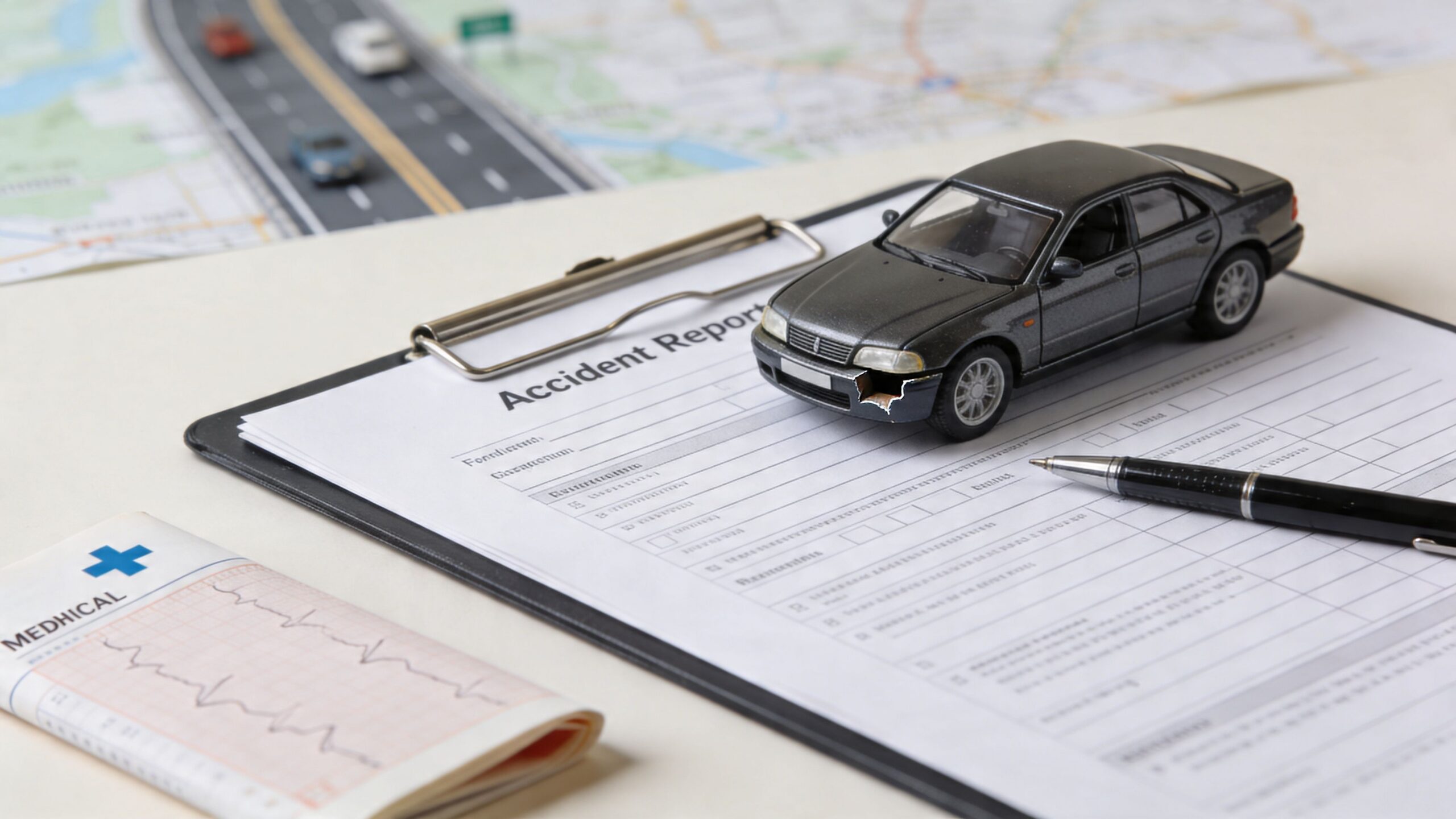
A rear-end crash on I-45 can look straightforward at the scene. Two weeks later, the adjuster is questioning whether your back pain really came from the collision, whether you missed that much work, and whether you stopped too suddenly. That is why the motor vehicle demand letter matters. It puts the claim into a form the insurance company has to evaluate seriously.
In a Texas car wreck case, the best demand letters do more than summarize events. They frame the evidence in the order the adjuster will test it. First, why their insured caused the crash. Second, how the crash caused the injuries. Third, what the case is worth, backed by records, billing, wage proof, and a fair explanation of pain, limitations, and future care. That sequence matters because a weak causation section can drag down even a clear liability case.
What a strong Texas auto demand letter does
A good letter starts with the basics: date of loss, location, parties, claim number, and the insured driver’s identity. Then it gives a concise liability statement based on facts that can be verified. Roadway, lane position, traffic control, vehicle damage, witness observations, and the investigating officer’s findings all belong here if they help.
After liability, the letter should walk the adjuster through treatment in chronological order. I prefer that structure because it cuts off a common defense argument that the client “gapped” care or treated out of proportion to the impact. If an MRI, orthopedic referral, physical therapy course, work restriction, or injection is part of the story, the letter should explain why it happened and what symptoms led to it.
The damages section needs discipline.
- Crash facts: Identify where the collision happened, how it happened, and what physical evidence supports your version.
- Fault evidence: Use the police report, photos, witness statements, vehicle damage, and any statements against interest by the at-fault driver.
- Medical chronology: Match each provider, diagnosis, bill, and recommendation to the symptoms that appeared after the wreck.
- Income loss: Support missed work and reduced earning ability with pay records, employer verification, and medical restrictions.
- Settlement demand: State a firm number and give a reasonable deadline for a written response.
Practice point: Adjusters discount vague claims fast. Specific facts with attached proof hold value better than broad descriptions and inflated adjectives.
Strategy behind the template
The essential work involves more than filling blanks in a form; it is about deciding what to emphasize, what to document now, and what to leave out until it can be proven. A soft-tissue case with six weeks of therapy should not be written like a surgical case. A clear rear-end collision should not spend two pages arguing fault if the actual dispute is medical necessity or duration of treatment.
That trade-off is where many template letters fail. They give every case the same tone. A seasoned lawyer adjusts the letter to the pressure point in the file. If liability is contested, the letter leads with scene evidence and witness proof. If fault is obvious but treatment is disputed, the letter spends more time tying symptoms, imaging, referrals, and limitations directly to the wreck.
Here is a practical template structure:
Intro and representation
Identify the claimant, insured, claim number, date of loss, and purpose of the letter.Liability summary
State how the collision occurred and why the insured failed to use ordinary care under Texas negligence principles.Injury and treatment summary
Explain what injuries were reported, where the client treated, what doctors found, and whether future care is expected.Economic damages
List medical expenses, lost wages, out-of-pocket costs, and any other documented financial loss.Non-economic damages
Describe pain, physical limitations, disruption to work and family life, sleep problems, missed activities, and lasting symptoms in concrete terms.Demand and deadline
Make the settlement demand, set a response deadline, and invite written acceptance or a substantive counter.
What usually helps recovery, and what usually hurts it
The strongest auto demands sound measured. They do not overstate minor property damage. They do not pretend every sprain is permanent. They also do not apologize for real pain or underprice a claim just to appear reasonable. Credibility and pressure have to work together.
The most common mistakes are predictable. Sending the demand before the medical picture is clear. Claiming treatment that is not supported by records. Using generic pain language instead of describing actual limits on driving, lifting, sleep, childcare, or job duties. Ignoring bad facts the insurer will raise anyway.
A better approach is to address those problems directly. If there was a treatment gap, explain it with documentation. If there was a prior injury, separate the old condition from the post-collision aggravation. If property damage was modest, focus on medical findings and functional loss instead of arguing from bumper photos alone.
For a practical look at structure, tone, and how these letters are assembled in real cases, review these personal injury demand letters. The best Texas demand letters show the insurer exactly what a jury will see if the claim is not resolved fairly.
2. Uninsured Underinsured Motorist UM UIM Demand Letter Template
A different kind of stress hits when the driver who hurt you has no insurance, too little insurance, or disappears after a hit-and-run. Now you’re not just proving injury. You’re also proving coverage under your own policy. That changes the letter’s tone and its legal focus.
A UM/UIM demand still explains liability and damages, but it also has to address policy language. In plain English, uninsured motorist coverage may apply when the other driver has no insurance or can’t be identified. Underinsured motorist coverage may apply when the other driver’s policy isn’t enough to cover your losses.
Why these letters are more technical
Your own insurer may sound friendly, but it still evaluates your claim with the same financial self-interest as any other carrier. The adjuster may ask whether the other driver’s policy was exhausted, whether contact occurred in a hit-and-run, or whether your injuries are worth more than the available third-party coverage.
That means your letter should treat the policy like a contract dispute and an injury claim at the same time.
- Coverage position: Identify the UM/UIM policy, the named insured, and the basis for coverage.
- Third-party proof: Show the at-fault driver was uninsured, underinsured, or unknown.
- Damages package: Present the same medical and wage documentation you would use against an at-fault driver.
- Reservation issues: Watch for requests that could limit rights before damages are fully known.
A Texas example
Take a San Antonio rideshare passenger injured by a driver with minimal coverage. The at-fault driver’s insurer offers policy limits, but the medical care keeps growing, and the passenger still can’t return to normal work. A UM/UIM demand to the passenger’s own carrier should show why the third-party payment doesn’t make the victim whole and why additional contractual benefits are owed.
Texas auto claims also raise practical questions about PIP and UM/UIM interactions. Existing examples often don’t address Texas-specific concerns such as PIP minimums of $2,500 or disputes in rideshare claims, which leaves injured people unsure how to demand against an underinsured driver without giving up protections, as noted in this Texas uninsured motorist coverage resource.
Your own insurance company isn’t your lawyer. If coverage is contested, every sentence in the demand should be written with future litigation in mind.
The trade-off here is timing. If you send the UM/UIM demand before the third-party claim is clearly developed, the carrier may say the file is premature. If you wait too long, key evidence can get stale, and the insurer gains room to argue that delays weakened your proof. A careful Texas injury attorney manages both tracks together.
3. Wrongful Death Demand Letter Template

A wrongful death demand letter carries a different burden than any other injury demand. The injured person is gone. The lawyer has to prove liability, establish the family’s legal claim, and show the full value of what was taken without overstating a single point.
That takes discipline.
In Texas, wrongful death claims are generally brought by the surviving spouse, children, or parents of the person who died because of another party’s wrongful act, neglect, carelessness, unskillfulness, or default. A strong letter does more than attach medical bills and funeral invoices. It explains who the deceased was in daily life, how the death happened, why the defendant is legally responsible, and how the loss has changed the household in concrete terms.
The strategy matters because carriers often treat these claims in two separate buckets. They may concede that a death occurred and still fight hard over causation, earning capacity, household services, or the value of companionship and guidance. A well-built demand closes those openings before the adjuster uses them.
What a strong wrongful death demand actually does
The best letters are organized like a trial outline. They start with liability and causation. Then they move to damages with enough proof that the insurer understands the file was prepared for settlement and, if necessary, for a jury.
That usually includes:
- Liability proof: crash report, incident report, witness statements, photos, video, vehicle data, OSHA materials, or company records, depending on the case
- Medical and causation proof: emergency records, hospital records, operative reports, death certificate, and any records tying the fatal condition to the event in question
- Family and life evidence: marriage records, children’s information, work history, education, caregiving duties, and the person’s role at home
- Economic loss support: earnings records, tax returns, employment benefits, retirement contributions, health insurance value, and replacement cost for household services
- Human loss evidence: statements showing the loss of companionship, counsel, care, guidance, and day-to-day presence
- Final expenses: funeral, burial, probate-related, and other out-of-pocket costs tied to the death
A template helps with structure. It does not choose the right emphasis. That judgment call is where good lawyering shows.
For example, if the deceased parent earned modest wages but handled school pickup, meals, home maintenance, and daily supervision of the children, a demand that focuses only on income leaves money on the table. On the other hand, if the proof on future earnings is unusually strong, the letter should support that claim carefully and avoid turning the personal loss section into broad, unsupported rhetoric.
Proof problems that shape the letter
Wrongful death cases often turn on proof gaps that do not appear in ordinary crash claims. Defense carriers may argue the death was caused by a prior condition, that life expectancy was limited for unrelated reasons, or that the family is overstating financial dependence. Those arguments should be addressed directly, with records and expert support where needed.
Families dealing with those issues can start with this guide on how to prove wrongful death. In more contested cases, a wrongful death expert witness can help connect the mechanism of death, disputed medical issues, and future loss calculations.
A Texas example makes the point. A father is killed in a commercial vehicle collision outside Fort Worth. The insurer may admit its driver caused the wreck but still try to reduce value by treating the claim as lost wages plus funeral costs. A serious demand letter will document his benefits, retirement path, household labor, parenting role, transportation duties, and the guidance he provided to his children. That is how the case is valued properly.
A wrongful death demand letter should sound careful, documented, and credible. The goal is to make denial expensive and underpayment hard to defend.
The common mistakes are predictable. Lawyers send the demand before the family’s loss picture is fully documented. They rely on generic grief language instead of specific proof. They underdevelop the deceased person’s work inside the home because there was no paycheck attached to it.
Insurance companies understand grief. They challenge proof. This letter has to answer both.
4. Distracted Intoxicated Driver Demand Letter Template
Some crashes involve more than ordinary carelessness. A driver was texting at the light. A driver left a bar and crossed the center line. A driver caused a wreck, then tried to deny obvious misconduct. In those cases, the demand letter should still stay professional, but it needs a sharper edge.
Texas negligence law already allows recovery when a driver fails to act reasonably. But where intoxication or distracted driving is involved, the letter can do more than argue simple fault. It can frame the conduct as a serious safety violation and, in the right case, raise punitive or exemplary damages under Texas Civil Practice & Remedies Code Chapter 41.
The evidence that changes the case
A standard crash demand often relies on the report, photos, and medical records. A distracted or intoxicated driver demand may add criminal records, toxicology results, bodycam footage, dashcam video, witness statements about impairment, bar receipts, or phone-use evidence.
The legal point is simple. You are not only showing that the other driver caused a collision. You are showing a conscious disregard for the safety of others, when the evidence supports that position.
A Houston example is easy to imagine. A driver is stopped at a red light on Westheimer. Another driver slams into the rear of the vehicle and police later arrest that driver for DWI. In the demand letter, the arrest itself isn’t the whole case. The lawyer still needs to connect the misconduct to the injuries, treatment, wage loss, and long-term impact.
Drafting choices that make these letters stronger
Keep the tone disciplined. Angry writing weakens strong facts.
- Name the misconduct clearly: Texting, intoxication, failure to control speed, or leaving the scene.
- Cite the proof: Police observations, criminal charges, field evidence, admissions, and video.
- Tie misconduct to damages: Explain how this reckless choice changed your client’s health, work, and family life.
- Preserve Chapter 41 themes: If exemplary damages may be available, don’t oversell them, but don’t ignore them either.
A useful Texas-specific move is citing the relevant transportation rule or criminal conduct where the facts support it, because insurers pay attention when the demand signals trial readiness. That’s especially true when the defense will try to minimize the severity of the behavior and treat it like an ordinary fender-bender.
Professional language is stronger than emotional language. The documents should carry the outrage.
One trade-off here is whether to push hard on punitive exposure before the criminal case is resolved. Sometimes that pressure helps. Sometimes waiting for a conviction, plea, or fuller investigative file gives you a cleaner record. A seasoned Houston car accident lawyer will usually tailor timing to the evidence already available and the risk of losing momentum.
5. Catastrophic Permanent Disability Injury Demand Letter Template
A catastrophic injury demand letter has one job. It must show, with proof, that the collision did not just cause treatment. It permanently changed the client’s body, earning capacity, and daily life.
That changes how the letter is built. A routine demand can summarize care and ask for payment. A paralysis, amputation, severe burn, or traumatic brain injury claim needs a tighter strategy. The carrier will study future damages, search for gaps in causation, and argue that any projection beyond current bills is too uncertain. The letter has to close those gaps before the adjuster raises them.
Why permanent disability cases require a different strategy
In Texas, the value of a catastrophic injury case often turns on what happens after the hospital discharge. The demand should explain permanence in concrete terms. What restrictions did the treating doctors assign? What work can no longer be done? What care will the client need at home, in therapy, or through future procedures? Those answers matter more than dramatic language.
Traumatic brain injury cases show the problem clearly. A client may look functional in a short office visit and still be unable to manage deadlines, follow multi-step tasks, regulate emotions, or return to skilled work. If the letter relies only on ER records and imaging, the insurer will say the file does not prove real-world impairment. Strong TBI demands use neuropsychological testing, treating physician opinions, rehabilitation records, and statements from family members, coworkers, or supervisors who can describe the before-and-after change in plain facts.
A good catastrophic demand also gives the adjuster a timeline that makes sense. Before the incident, the client worked, drove, parented, handled finances, or lived independently. After the injury, those functions changed in identifiable ways. That is how you turn a stack of records into a damages story the defense cannot dismiss as speculation.
What to include in the demand package
The best letters are selective, organized, and heavily supported.
- Proof of permanence: treating doctor opinions, operative reports, impairment findings, restrictions, and prognosis
- Functional evidence: mobility limits, cognitive deficits, pain limits, inability to perform prior job duties, and need for supervision or assistance
- Future medical needs: therapy, medications, mobility equipment, prosthetics, home modifications, transportation support, attendant care, and follow-up procedures when supported by the records
- Economic loss support: wage loss records, employment files, vocational analysis, and life care planning if the case justifies it
- Human damages evidence: changes in sleep, marriage, parenting, independence, social function, and emotional health
Organization matters as much as substance. I have seen valid high-value claims lose momentum because the demand buried the strongest opinions in hundreds of pages of unindexed records. The better approach is to lead with a clear theory of damages, then attach records in an order that tracks that theory.
Defense themes to address before they harden
Carriers defend catastrophic cases aggressively because the numbers are large and the future component is vulnerable to attack. If there was a preexisting back condition, prior concussion, missed therapy visit, or surveillance risk, the demand should address it directly. Silence invites the insurer to define the issue first.
That does not mean arguing every possible point. It means choosing the issues that could reduce value and answering them with medical support and common sense. If a client had prior neck pain but now needs a wheelchair after a spinal cord injury, say so plainly and separate the old complaint from the new permanent loss. If a brain-injured client can attend a family dinner but cannot return to project management, explain the difference between brief social function and sustained executive function.
The primary trade-off is detail versus usability. Catastrophic injury files can become massive. A stronger demand does not merely include more paper. It shows the insurer, mediator, or defense lawyer exactly how the evidence connects diagnosis, long-term limitation, future care, and financial loss. That is what puts real settlement pressure on the case.
6. Commercial Trucking Accident Demand Letter Template
A family on I-35 gets hit by a tractor-trailer during a lane change. The police report may say unsafe movement. The demand letter has to say much more. In a truck case, value often turns on what the carrier allowed before impact, not just what the driver did in the final seconds.
That changes how the letter is built. A strong trucking demand does not read like a larger version of a car wreck claim. It identifies the safety rules that governed the trip, the business records that should confirm what happened, and the companies that may share responsibility for putting that truck on the road.
Why trucking demands are built differently
Start with the liability map. Depending on the facts, the proper targets may include the driver, the motor carrier, the employer, the tractor owner, the trailer owner, a maintenance vendor, or the company that loaded the cargo. If the trailer was overloaded, the brakes were overdue for service, or dispatch pushed an unrealistic schedule, the demand should frame those facts as part of the cause of the crash.
Preservation matters early and often. In many truck cases, the best evidence sits in records the injured person will never see unless counsel asks for them quickly. That can include the driver qualification file, hours-of-service records, electronic logging data, pre-trip and post-trip inspection reports, maintenance histories, onboard event data, dispatch messages, and bills of lading. A demand letter is not a discovery request, but it should show the insurer that counsel understands what records exist and why they matter.
To help readers understand the kinds of crash dynamics involved, this video gives useful visual context.
What a persuasive trucking demand needs to prove
The best letters tie three points together.
First, they explain the specific safety failure. Fatigue, distracted driving, improper lane control, poor maintenance, bad loading, and weak supervision are different theories. Each needs its own proof.
Second, they connect that failure to the physical mechanics of the wreck. A late-braking rear-end collision raises different questions than a rollover, underride event, or wide-turn crash.
Third, they document damages in a way that matches the seriousness of a commercial case. Hospital records alone are rarely enough. Wage records, employer confirmation, future treatment opinions, and photographs often do more to move negotiations than a stack of unorganized medical charts.
A useful drafting lesson appears again and again in truck claims. Specificity creates pressure. If the letter merely says the truck was large and the injuries were severe, the carrier has room to minimize the case. If the letter explains that the driver had been on duty too long, failed to maintain lane position, struck a smaller vehicle at highway speed, and caused injuries supported by imaging, surgery records, and lost-income proof, the adjuster has a valuation problem, not an information gap.
- Name the safety issue clearly: Fatigue, maintenance failure, cargo problems, and negligent hiring should not be blended into one vague accusation.
- Identify the right defendants: The carrier and trailer owner may be different entities, and that can affect liability and coverage.
- Use records that fit the theory: Hours-of-service evidence helps a fatigue claim. Inspection and repair records help a maintenance claim.
- Show the full loss: Commercial limits may be higher, but insurers still challenge causation, treatment, and wage loss.
- Send it at the right time: Too early means missing proof. Too late can make key evidence harder to secure and harder to explain.
Truck insurers and defense counsel usually respond fast because exposure can be large from day one. The demand letter should show equal preparation. In my experience, that is what separates a file that gets a serious review from one that gets routed into the standard settlement process.
7. Workplace Commercial Vehicle Accident Demand Letter Template
When you’re hurt while driving for work, the legal picture gets messy fast. A company vehicle, a delivery route, a rideshare trip, or a work errand can create overlapping claims involving your employer, a third-party driver, a commercial policy, and sometimes workers’ compensation.
That doesn’t mean recovery is impossible. It means the demand letter has to sort out who owes what before anyone signs a release.
Where these claims get complicated
A workplace driving claim may involve a third-party negligence claim against the driver who caused the crash, while a separate workers’ compensation issue affects medical or wage benefits. Gig work creates another layer. Uber, Lyft, DoorDash, and similar platforms often have coverage questions that turn on app status, trip stage, and policy language.
A practical Texas scenario is a Houston delivery driver struck by another motorist while making scheduled stops. The worker may have immediate wage disruption, ongoing treatment, and uncertainty about whether the employer, the other driver, or a commercial insurer is the main source of recovery. The demand letter has to be precise enough to avoid double-counting losses and careful enough not to compromise rights in another claim.
How to structure the letter
This type of demand usually works best when it separates the issues instead of blending them.
- Employment status: Clarify whether you were an employee, contractor, or app-based driver.
- Crash liability: Show who caused the collision and why.
- Benefit coordination: Identify any workers’ compensation payments, liens, or reimbursement claims.
- Net loss picture: Explain what losses remain unpaid even after any benefits received.
The mistake I see most often is assuming the insurer will sort this out fairly on its own. It won’t. If a workers’ compensation lien exists, the demand has to account for it. If a rideshare or delivery platform policy may apply, the letter should preserve that issue rather than ignore it.
Texas law also makes comparative fault important here. If the carrier can argue you were speeding, distracted, or outside the course of work, it may use that to cut value or deny coverage. Chapter 33 still matters, even when employment issues sit in the background.
A well-built workplace vehicle demand letter doesn’t just ask for payment. It protects your position across all related claims so one settlement doesn’t create a second problem.
7 Personal Injury Demand Letter Templates Compared
| Template | Implementation Complexity 🔄 | Resource Requirements ⚡ | Expected Outcomes ⭐📊 | Ideal Use Cases 💡 | Key Advantages ⭐ |
|---|---|---|---|---|---|
| Motor Vehicle Accident Demand Letter Template | Moderate, standard drafting process; evidence assembly required | Low–Moderate: police report, medical records, photos | Solid recovery for clear-liability cases; initial demands often discounted | Rear-end, intersection, multi-vehicle crashes with evident fault | Aligns with insurer evaluation criteria; organizes claim for negotiation |
| Uninsured/Underinsured Motorist (UM/UIM) Demand Letter Template | High, requires policy interpretation and procedural compliance | Moderate: insurance policies, proof of exhaustion, possible counsel | Recovery possible where at-fault uninsured; limits often lower than liability claims | Hit-and-run; at-fault with low limits or no insurance | Accesses own policy coverage; can stack limits in some Texas cases |
| Wrongful Death Demand Letter Template | Very High, sensitive, detailed valuation of economic/non‑economic loss | High: life documentation, expert witnesses (economist, life expectancy) | Potentially large awards for survivors; non-economic valuations contested | Fatal collisions with significant earning loss or dependent survivors | Allows full family damages recovery; supports punitive claims in egregious conduct |
| Distracted/Intoxicated Driver Demand Letter Template | High, evidence-driven (toxicology, phone records) and may tie to criminal records | Moderate–High: toxicology reports, cell records, video, witness statements | Strong leverage; higher likelihood of full-limits offers and punitive components | DUI/DWI, texting-while-driving, hit-and-run with impairment evidence | Demonstrates reckless conduct; increases settlement pressure and jury sympathy |
| Catastrophic/Permanent Disability Injury Demand Letter Template | Very High, complex causation and lifetime valuation required | Very High: multiple experts, life care plan, vocational analysis | High-value recoveries reflecting lifetime care; subject to intensive negotiation | Paralysis, severe TBI, amputation, permanent disfigurement | Life care and vocational experts quantify long-term needs and costs |
| Commercial/Trucking Accident Demand Letter Template | Very High, federal regs, multiple defendants, complex causation | High: FMCSA records, ELD data, maintenance files, regulatory experts | Potentially large recoveries due to high commercial limits; complex defenses | 18-wheeler, delivery truck crashes, cargo‑related incidents | FMCSA violations provide objective proof; higher insurance limits available |
| Workplace/Commercial Vehicle Accident Demand Letter Template | High, integrates workers' comp, subrogation, and third‑party claims | Moderate–High: workers' comp files, employer records, lien documentation | Mixed net recovery (benefits vs. offsets); multiple sources increase gross recovery | Rideshare/delivery drivers, employees driving for work | Combines workers' comp continuity with third‑party recovery opportunities |
Don't Face the Insurance Companies Alone Take the Next Step
These examples of demand letters for personal injury show one thing clearly. A demand letter is not a formality. It is the document that frames liability, organizes damages, and tells the insurance company whether your case is being handled casually or seriously.
In Texas, that matters from the first day. Liability means who caused the collision. Damages means what the crash has cost you in money, health, daily function, and peace of mind. Comparative fault under Texas Civil Practice & Remedies Code Chapter 33 means the insurer may try to shift part of the blame to you in order to reduce what it pays. Chapter 41 may also matter in cases involving especially dangerous conduct, including some drunk driving or reckless behavior claims. And the statute of limitations under Texas Civil Practice & Remedies Code §16.003 means your window to act is limited.
The strongest letters don’t rely on broad claims. They rely on proof. That includes medical records, billing records, imaging, employer statements, photographs, witness accounts, policy language, and where needed, expert support. In complex cases such as TBI, wrongful death, or permanent disability, the letter must also connect the diagnosis to real-world losses in work, family life, and future care needs.
Step by step, the process usually looks like this.
- Get medical care first: Your health comes before the claim, and your records begin documenting causation.
- Report the crash: Make sure there is an official report when possible and keep the incident information.
- Preserve evidence: Save photos, discharge papers, bills, prescriptions, wage records, and repair information.
- Avoid casual insurance statements: Don’t guess about fault, injuries, or recovery time.
- Wait until the case is developed: A premature demand can undervalue your claim.
- Build the letter around documents: Every major claim in the demand should be traceable to evidence.
If you’re dealing with an auto insurance claim after a crash in Houston, Dallas, Austin, or San Antonio, the practical reality is this. Insurance companies handle claims every day. They know how to question treatment gaps, downplay pain, challenge future losses, and use comparative fault arguments to shrink a settlement. If your letter leaves openings, they will use them.
A seasoned Houston car accident lawyer or Texas injury attorney doesn’t just draft a demand and send it out. The lawyer investigates liability, anticipates defenses, addresses Texas-specific coverage problems, and presents the claim in a way that gives the adjuster a reason to settle now instead of fight later. That can be especially important in trucking claims, UM/UIM disputes, fatal crashes involving wrongful death compensation, and severe injury cases with long-term loss of earning capacity.
Compassion matters too. After a serious crash, those affected aren’t thinking like litigators. They are thinking about pain, missed work, surgery, rehab, childcare, transportation, and whether life will ever feel stable again. A good demand letter should reduce chaos, not add to it. It should bring order to the facts and move your case toward a fair result.
The experienced Texas injury attorneys at The Law Office of Bryan Fagan are ready to help. We prepare powerful demand letters, deal directly with insurance companies, and fight for the compensation you deserve after a serious crash. If your family is facing a fatal accident claim, we can also pursue wrongful death compensation with care and determination. Contact us today for a free consultation. You won’t pay unless we win your case.
If you were hurt in a crash and need clear answers about your rights, contact The Law Office of Bryan Fagan, PLLC. Our team helps accident victims across Texas handle the insurance process, prove liability, document damages, and pursue fair compensation with skilled, compassionate representation. Your consultation is free, and you don’t pay unless we win.