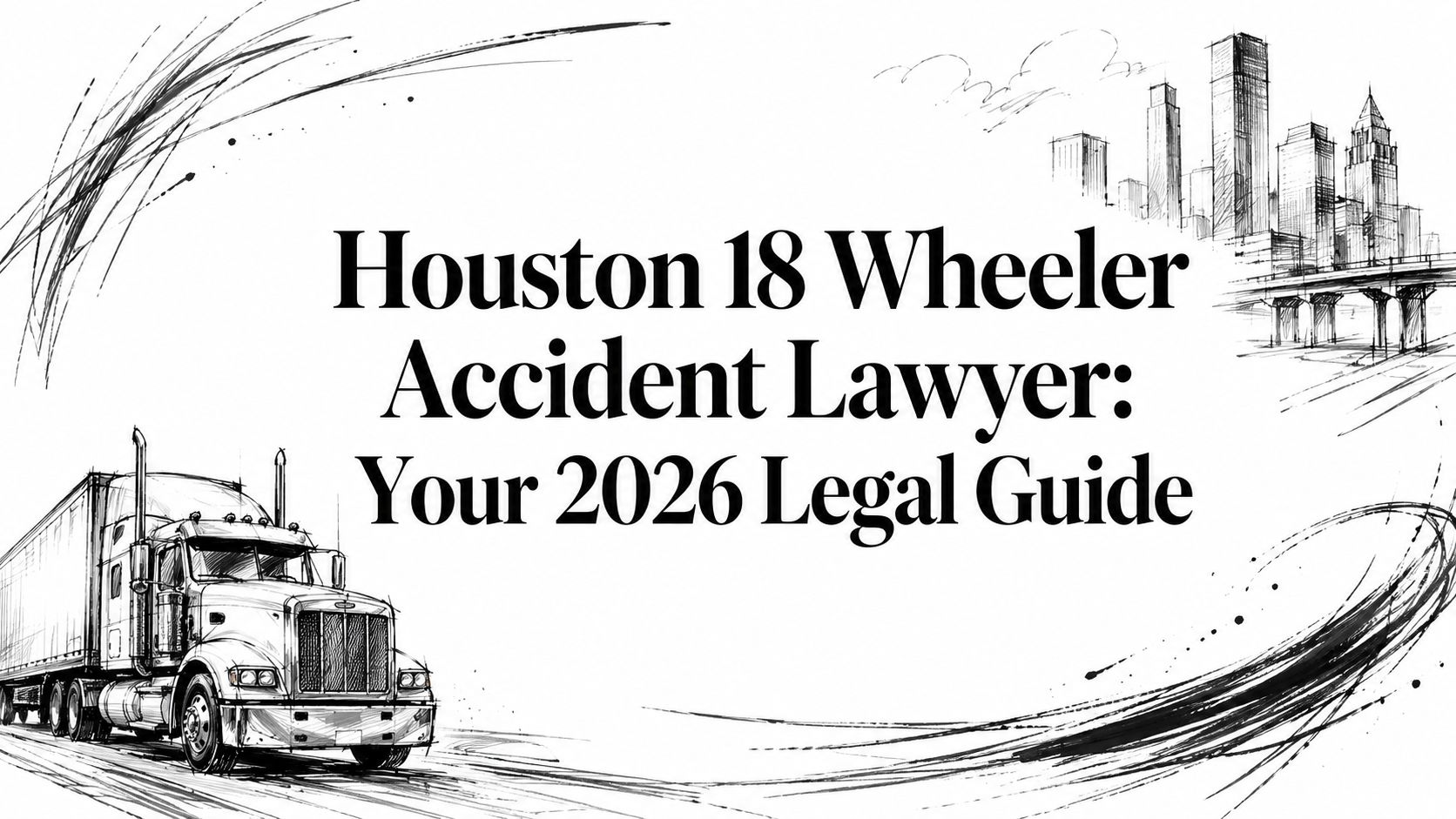
A crash with an 18-wheeler isn’t just a bigger car accident—it’s a catastrophic event that can change your life in seconds. But you don’t have to face recovery alone. These collisions are fundamentally different from other wrecks, often stemming from serious violations of federal and state safety laws.
Holding a negligent trucking company and its driver accountable is possible. This guide is your first step toward understanding your legal rights and recovery options after a crash.
Your Life Changed in an Instant. What Happens Now?
The screech of tires, the violent impact, the sudden chaos—it’s a scene no one is ever prepared for. One moment you were driving down a familiar Texas highway like I-45, and the next, you’re left dealing with devastating injuries, a wrecked vehicle, and a future that feels completely uncertain.
The shock and trauma are overwhelming, but you don’t have to navigate this alone. We wrote this guide to bring clarity to one of life’s most difficult moments. We’ll walk you through the first critical steps, explain your legal rights in plain English, and show you how to protect your family’s future.
Your Roadmap to Justice
Think of this article as a roadmap. It was created to help you—a person dealing with a life-altering crash—understand the complex road ahead. We will cover the essentials, including:
- Your Rights Under Texas Law: Learn how negligence laws apply specifically to commercial truck accidents.
- Holding All Negligent Parties Accountable: Discover how to identify everyone responsible, from the driver to the multi-million dollar corporation they work for.
- Dealing with Insurance Companies: Get practical advice for handling aggressive adjusters trained to pay you as little as possible.
- Securing Your Family’s Future: Understand the full compensation you may be entitled to for medical bills, lost income, and your pain and suffering.
A collision with an 80,000-pound truck is nothing like a standard car wreck. The legal fight is also far more complex, involving dense federal regulations, multiple at-fault parties, and powerful corporate legal teams.
Making your way through this process takes more than just legal knowledge; it demands a real understanding of what you and your family are going through. The moments after a semi-truck crash are disorienting, but having the right information can give you back a sense of control.
Our goal is to provide that for you, starting right now. If you’ve been injured or lost a loved one, a compassionate Houston car accident lawyer is ready to listen to your story.
Why 18 Wheeler Crashes Are So Devastating
There's no such thing as a "fender bender" with an 18-wheeler. A collision involving a massive commercial truck is fundamentally different from any other crash on the road, and the consequences are often permanent. The sheer physics involved create a level of destruction that can shatter lives in an instant.
It’s not about fear-mongering; it's about reality. Understanding why these crashes are so catastrophic is key to understanding why the law holds trucking companies and their drivers to a much higher standard of safety.
Think of it this way: a typical passenger car is like a soda can on the highway. A fully loaded, 80,000-pound semi-truck is a bowling ball hurtling toward it at full speed. The difference in size and weight is so staggering that even a low-speed impact can completely crush the smaller vehicle and everyone inside.
The Physics of Catastrophe
A few key factors are responsible for the terrifying force of a big rig crash. These aren't just technical details—they are often the central facts that prove negligence and determine the outcome of a personal injury claim.
- Immense Weight and Size: A loaded tractor-trailer can weigh up to 80,000 pounds, while the average car weighs around 4,000 pounds. This massive disparity in mass creates an overwhelming force that passenger vehicles simply cannot absorb.
- Longer Stopping Distances: Because of their weight, big trucks need far more room to slow down. At highway speeds, a semi can take up to 40% more distance to stop than a car. That gap can turn a preventable near-miss into an unavoidable tragedy.
- Massive Blind Spots: Commercial trucks are surrounded by large blind spots—often called "no-zones"—on all four sides. If a car is driving in one of these zones, the truck driver might not see it at all, leading to horrific lane-change or merging collisions.
When these factors combine on a busy Texas highway, the results are devastating. The aftermath leaves victims and their families reeling in shock, facing an uncertain future, and staring down a long, painful road to recovery.
The infographic below shows the emotional journey that so many crash survivors face.
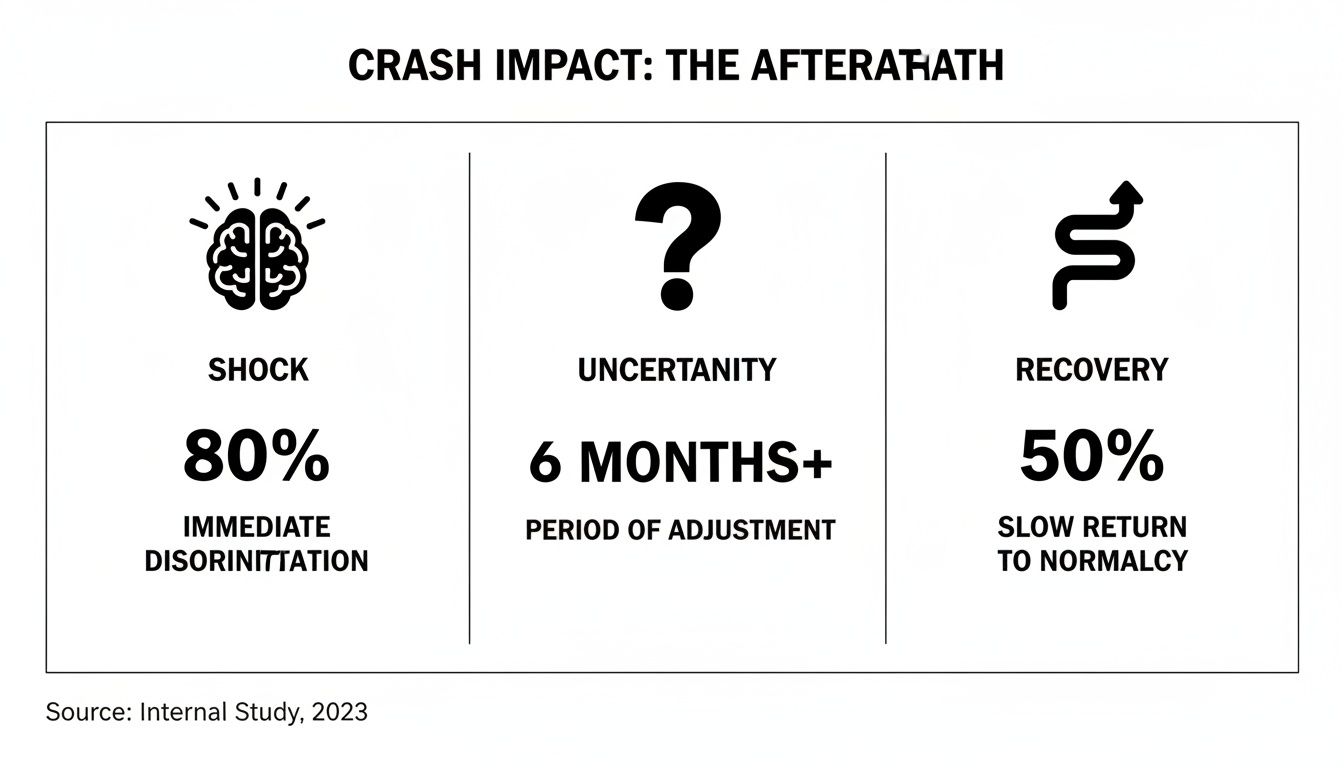
Navigating this journey from the initial shock to long-term recovery is precisely why understanding your legal rights is so critical after a crash.
The Sobering Reality on Texas Roads
Imagine you're driving down a Texas highway when an 18-wheeler barrels into you from behind. According to the National Highway Traffic Safety Administration (NHTSA), tractor-trailers need 20-40% more stopping distance than cars—a terrifying reality that can turn a split-second decision into a life-altering tragedy.
The numbers don't lie. In 2021, over 5,788 people lost their lives in big truck crashes across the country. A staggering 72% of those fatalities were people in passenger vehicles, just like yours.
Here in Texas, the problem is especially severe. Our state recently led the nation with more than 17,400 large truck crashes in a single year, far outpacing any other state. Each one of those statistics represents a family shattered in an instant. You can review more research about these dangerous truck accident trends to see the full scope of the problem on our roads.
Who Is Liable in a Texas Truck Accident?
After the chaos and trauma of an 18-wheeler wreck, one of the first questions on your mind is simple: who is to blame? With a normal car accident, the answer might be just one other driver. But when a massive commercial truck is involved, the web of responsibility is much wider and more complicated.
Liability is a legal term for responsibility. In a personal injury case, we work to prove who is liable for causing the accident and your injuries.
To establish liability, we have to prove negligence—a legal concept that boils down to a failure to act with reasonable care to keep others safe.
Think of it this way: if a trucking company pushes its driver to skip a mandatory rest break to make a delivery deadline, and that exhausted driver causes a pileup on I-10, the company was negligent. A Texas injury attorney's job is to pull on every thread to find every single party who failed in their duty.
Multiple Parties Can Share the Blame
A single truck accident can have many causes, and that means several different parties could be held legally responsible for your injuries. A skilled lawyer knows to look past the driver and investigate the entire chain of command. This is absolutely critical for pursuing the full compensation you’ll need to recover.
To give you a better idea of who could be on the hook, we've put together a table outlining the most common parties we investigate.
Who Can Be Held Liable in a Texas Truck Accident
| Potentially Liable Party | Common Examples of Negligence |
|---|---|
| The Truck Driver | Speeding, distracted driving, driving while fatigued, or driving under the influence. |
| The Trucking Company | Negligent hiring of unsafe drivers, poor training, or creating impossible schedules that force drivers to break safety rules. |
| The Cargo Loader | Improperly loading or securing cargo, causing it to shift, and leading to a jackknife or rollover. |
| A Maintenance Company | Performing shoddy brake repairs, failing to replace worn-out tires, or skipping required inspections. |
| The Truck/Parts Manufacturer | A defective tire blows out, a steering component fails, or brakes malfunction due to a design or manufacturing flaw. |
As you can see, the driver is often just the final link in a chain of failures.
Imagine you're driving down I-10 near San Antonio when a speeding semi suddenly changes your life forever. Speeding isn't just a bad habit; it's a primary factor in big rig crashes, responsible for about 32% of all large truck accidents in the country.
The Federal Motor Carrier Safety Administration (FMCSA) reports a staggering 494,000 crashes involving large trucks every year. The most tragic part? 82% of the people killed in these wrecks aren't the truck occupants—they are people in smaller passenger cars, just like you. Texas has the devastating distinction of being the deadliest state in the nation for truck accidents. You can discover more insights about these large truck accident statistics on texas-truckaccidentlawyer.com.
Understanding Texas's Modified Comparative Fault Rule
Texas operates under a rule called modified comparative fault, sometimes called the 51% Bar Rule. This law, found in Chapter 33 of the Texas Civil Practice & Remedies Code, has a huge impact on whether you can recover money for your injuries.
Comparative Fault in Texas means you can only recover damages if you are found to be 50% or less at fault for the accident. If a jury decides you are 51% or more to blame, you get nothing. If you are partially at fault (but less than 51%), your compensation is simply reduced by your percentage of fault.
For example, if a jury awards you $100,000 but finds you were 20% responsible for the crash (perhaps for changing lanes without signaling), your award would be cut by 20%, and you would receive $80,000.
You can bet the trucking company and its powerful insurance carrier will do everything they can to shift as much blame as possible onto you. It’s a common tactic to reduce or completely deny what they have to pay. This is precisely why having an experienced Houston car accident lawyer is so vital—we fight to build a rock-solid case that protects you from unfair blame. The specific regulations that apply can also impact liability, and you can learn more about the differences between interstate and intrastate trucking regulations in our other guide.
Steps to Take After an 18-Wheeler Crash

The moments after a collision with a big rig are pure chaos. You’re terrified, confused, and running on adrenaline. It’s tough to think straight, but what you do right then and there can have a significant impact on your ability to get fair compensation for your injuries and losses.
Your top priority is always safety. After that, it’s all about protecting your rights and gathering evidence. The steps you take at the scene are the foundation for your auto insurance claim and any legal action you may need to take.
Step 1: Secure the Scene and Call 911
First things first: safety. If you can, move your car to the shoulder, well away from traffic. Turn on your hazard lights. Then, before you do anything else, check yourself and your passengers for injuries.
Call 911 immediately. Don't second-guess this, even if the crash seems minor. A police report is an official record of what happened, and it's a critical piece of evidence. When you call, give your location and make it clear that a commercial truck was involved. This detail often prompts a more specialized emergency response.
Step 2: Seek Medical Attention Right Away
Even if you feel okay, you need to see a doctor. The adrenaline coursing through your body after a wreck is a powerful painkiller, and it can easily mask serious issues like internal bleeding, soft tissue damage, or a concussion.
A documented trip to the ER or an urgent care clinic creates an undeniable link between the 18-wheeler crash and your injuries. If you wait, the trucking company’s insurer will argue that your injuries happened somewhere else or were a pre-existing condition.
This is not the time to be tough. Go to the hospital. Tell the medical staff exactly what happened and describe every ache and pain, no matter how small it seems. That medical record becomes the cornerstone of your entire injury claim.
Step 3: Document Everything at the Scene
Evidence has a short shelf life at a crash scene. The trucking company will have its own response team heading your way, and their job is to control the scene and the narrative. You need to capture everything you can before it’s cleaned up or altered.
Use your phone and be thorough.
Key photos to take:
- The final positions of all vehicles.
- The damage to your car and the truck, from every possible angle.
- The truck's license plate, company name, and USDOT number (usually on the cab doors).
- Any skid marks, debris on the road, and nearby traffic signs or signals.
- Your own visible injuries.
Get the driver's name, contact info, insurance details, and the name of their employer. If there are any witnesses, politely ask for their names and numbers. Their objective account of what they saw can be incredibly powerful. Our guide on what to do after a car accident offers more tips on gathering crucial evidence.
Step 4: Watch What You Say
In the high-stress moments after a crash, it's natural to want to be polite. But you must be extremely careful.
Never admit fault or apologize. A simple, reflexive "I'm so sorry" can be twisted by an insurance company to mean you took full responsibility for the accident. When talking to the driver or the police, stick to the facts. Don’t guess or speculate about what caused the crash.
When the trucking company's insurance adjuster calls—and they will call quickly—you are not obligated to give a recorded statement. You can politely decline and tell them your attorney will be in touch. Their only goal is to get you on record saying something that weakens your claim and saves them money.
The Compensation You Can Recover After a Crash
When you're hit by an 18-wheeler, the conversation quickly turns to money—not out of greed, but out of necessity. It’s not just about paying the immediate medical bills. It’s about securing the resources you and your family need to put your lives back together.
In Texas law, this financial recovery is called damages. These are designed to cover every single loss you’ve suffered, from tangible costs to the profound personal losses that don’t have a price tag. The goal is to restore what was taken from you and hold the negligent parties accountable for the immense toll the crash has taken.
The Three Types of Damages in a Truck Accident Claim
Compensation in a Texas truck accident case is generally broken down into three categories. A seasoned Texas injury attorney’s job is to build a powerful case that maximizes your recovery across all of them. These are Economic, Non-Economic, and Punitive Damages.
1. Economic Damages
Think of these as the tangible costs. They are the most straightforward losses because they come with a clear, documented dollar value. Economic damages cover all the direct financial hits you took because of the crash.
- All Medical Bills: This isn't just the first ambulance ride and ER visit. It includes everything—surgeries, hospital stays, physical therapy, prescriptions, and any future medical care you’ll need.
- Lost Wages and Income: This covers the paychecks you missed while you were out of work. If your injuries are so severe that you can't go back to your old job, it also covers this “loss of earning capacity.” If the crash resulted in a fatality, this could include a claim for wrongful death compensation.
- Property Damage: This is the cost to either repair or completely replace your vehicle and any personal items destroyed in the collision.
For example, a Houston driver rear-ended on I-45 suffers a serious back injury. Their economic damages wouldn’t just be the surgery costs. They would include the estimated cost of lifelong physical therapy and the massive income loss from being unable to continue their physically demanding construction job.
2. Non-Economic Damages
These damages are for the devastating personal losses that don't come with an invoice. They are every bit as real as the medical bills—and often, they are far more significant. This is where the human cost of a crash is truly valued.
This category includes compensation for:
- Pain and Suffering: For the physical pain and discomfort you've had to endure and will continue to live with.
- Emotional Anguish: This covers the deep mental trauma from the crash, like anxiety, depression, terror, and PTSD.
- Loss of Enjoyment of Life: Did the crash take away your ability to play with your kids, go fishing on the weekends, or work in your garden? That has value, and you deserve to be compensated for it.
- Disfigurement and Impairment: For permanent scars, amputations, or other physical limitations that change your life forever.
Because these losses are subjective, they are almost always fiercely contested by insurance companies. This is exactly where having an experienced attorney who can effectively tell your story becomes absolutely critical.
3. Punitive Damages
In certain, rare cases, a Texas court might award punitive damages. These aren't about compensating you for a loss. They are meant to punish the trucking company or driver for truly outrageous behavior and to send a clear message that their conduct will not be tolerated.
Under Chapter 41 of the Texas Civil Practice & Remedies Code, punitive damages are only available if we can prove with "clear and convincing evidence" that the harm was caused by fraud, malice, or gross negligence. A classic example would be a trucking company that knowingly keeps a driver with multiple DUI convictions on the payroll, who then causes a fatal wreck while drunk on the job.
Why You Need a Specialized Truck Accident Lawyer

Trying to face a multi-million-dollar trucking company and its massive insurance carrier alone after an 18-wheeler crash is a true David vs. Goliath battle. You’re injured, overwhelmed, and just trying to figure out what to do next. On the other side, they have teams of lawyers, investigators, and adjusters whose only job is to protect the company’s bottom line by paying you as little as possible.
Hiring a specialized truck accident lawyer isn’t just a good idea; it's a necessity. Your attorney is your advocate in this fight, bringing the knowledge and resources to level the playing field and hold these powerful corporations accountable for the harm they’ve caused.
Acting Fast to Preserve Critical Evidence
One of the most important things a lawyer does happens right after you hire them. They immediately send a legal notice called a spoliation letter to the trucking company, demanding that all evidence related to the crash be preserved.
This single letter is powerful. It legally stops the trucking company from “losing” or destroying key evidence that could make or break your case. Without it, invaluable data can be gone forever in just a few days.
This evidence is the key to proving what really happened. It includes things like:
- The truck’s electronic data recorder, or “black box,” which logs speed, braking, and hours of service.
- The driver’s logbooks, which can expose illegal driving hours and fatigue.
- The truck’s complete maintenance and inspection records.
- GPS data and internal company communications about the trip.
This is the information that often proves negligence after devastating 18-wheeler crashes.
Navigating Complex Federal and State Laws
Truck accident claims are far more complex than a typical car wreck case. They are tangled in a dense web of both federal and state regulations that don't apply to regular drivers.
An experienced truck accident attorney understands the Federal Motor Carrier Safety Administration (FMCSA) rules inside and out. We use violations of these strict safety standards—like improper driver training or faulty equipment—to build a powerful negligence case. For crashes involving severe injuries, having a litigation attorney with complex personal injury experience is critical for navigating this intricate legal landscape.
You can learn more about how a dedicated semi-truck accident lawyer can protect your rights. Our team works to identify every responsible party—from the driver to the corporate office—to give you the best chance at a full recovery.
You Pay Nothing Unless We Win
Worried about how you’ll afford a top-tier lawyer? Don’t be.
At The Law Office of Bryan Fagan, PLLC, we handle all truck accident cases on a contingency fee basis. This means you pay absolutely nothing unless we win your case and secure compensation for you.
There are no upfront costs, no surprise hourly fees, and no financial risk to you. This model lets you get the powerful legal help you need right away, no matter your financial situation. Your focus should be on healing; our focus is on fighting for you.
Don't wait. Contact our firm today for a free, no-obligation consultation to discuss your case and protect your rights.
Frequently Asked Questions About Texas Truck Crashes
When you're trying to pick up the pieces after an 18-wheeler crash, the questions can feel endless and overwhelming. Getting clear, straightforward answers is the first step toward taking back control.
Here, we’ve answered some of the most urgent concerns we hear from victims and their families across Texas. Our goal is to give you the practical knowledge you need right now and show you why expert legal guidance is so critical to protecting your future.
How Long Do I Have to File a Truck Accident Lawsuit in Texas?
In Texas, the law sets a strict deadline for filing a personal injury lawsuit. This is known as the statute of limitations. For nearly all 18-wheeler crashes, you have just two years from the date of the accident to file a lawsuit.
Two years might sound like a lot of time, but it disappears quickly. Building a strong truck accident case means acting fast to preserve critical evidence—like the truck’s black box data and the driver's logs—before the trucking company can legally destroy them.
If you miss that two-year window, you will almost certainly lose your right to recover any compensation for your injuries, forever.
Should I Accept an Early Offer From the Trucking Company's Insurance?
You should never accept an initial settlement offer from an insurer without speaking to an experienced Texas truck accident attorney first. Insurance adjusters are trained negotiators whose job is to protect their company’s bottom line by paying you as little as possible.
Their first offer is almost always a lowball amount that doesn't come close to covering the true, long-term costs of your injuries. It won't account for future medical care, all your lost wages, or the immense pain and suffering you’ve been forced to endure.
Important: If you accept their offer and sign a release, you give up your right to seek any more money for this claim, forever. It doesn't matter if your injuries turn out to be far more serious than you first thought.
What If the Truck Driver Was an Independent Contractor?
This is a classic move. Trucking companies often try to dodge responsibility by claiming the driver wasn't their employee, so they aren't liable for the crash. This defense is rarely as solid as they want you to believe.
An experienced truck accident lawyer knows how to push back. We can often hold the trucking company liable anyway by proving things like:
- Negligent Hiring: They hired a driver with a terrible driving record that they knew about, or should have known about.
- Company Control: The company still dictated the driver's schedule, route, and work methods, making them an employee in everything but name.
It can make the case more complex, but it absolutely does not mean your fight for justice is over. A proper investigation will uncover the real relationship between the driver and the company.
The aftermath of a semi-truck crash is a painful and confusing time, but you don’t have to navigate the legal battle by yourself. The dedicated team at The Law Office of Bryan Fagan, PLLC is here to answer your questions, stand up for your rights, and fight for the full compensation you are owed.
Contact us today for a free, no-obligation consultation to talk about your case. Let us handle the fight so you can focus on what truly matters: your recovery.