Skip to content
A car crash can change your life in seconds—but you don’t have to face recovery alone. When you're hit by a driver who breaks the law by driving without insurance, you might feel hopeless, wondering how you'll ever cover your medical bills and lost wages. This is where your own Uninsured Motorist (UM) coverage steps in.
Think of it as a critical safety net. Uninsured Motorist coverage is a part of your own auto insurance policy designed to protect you financially. It’s there to cover your expenses—like medical bills, lost income, and vehicle repairs—when you’re hit by a driver who has no insurance at all.
Who Is Liable in a Texas Car Accident?
When another driver causes a wreck, their liability insurance is supposed to cover your damages. But what happens when they have no coverage? Your own Uninsured Motorist (UM) coverage is designed to shield you and your family from a devastating financial blow.
This infographic breaks down how UM coverage acts as a barrier between you and the at-fault driver.
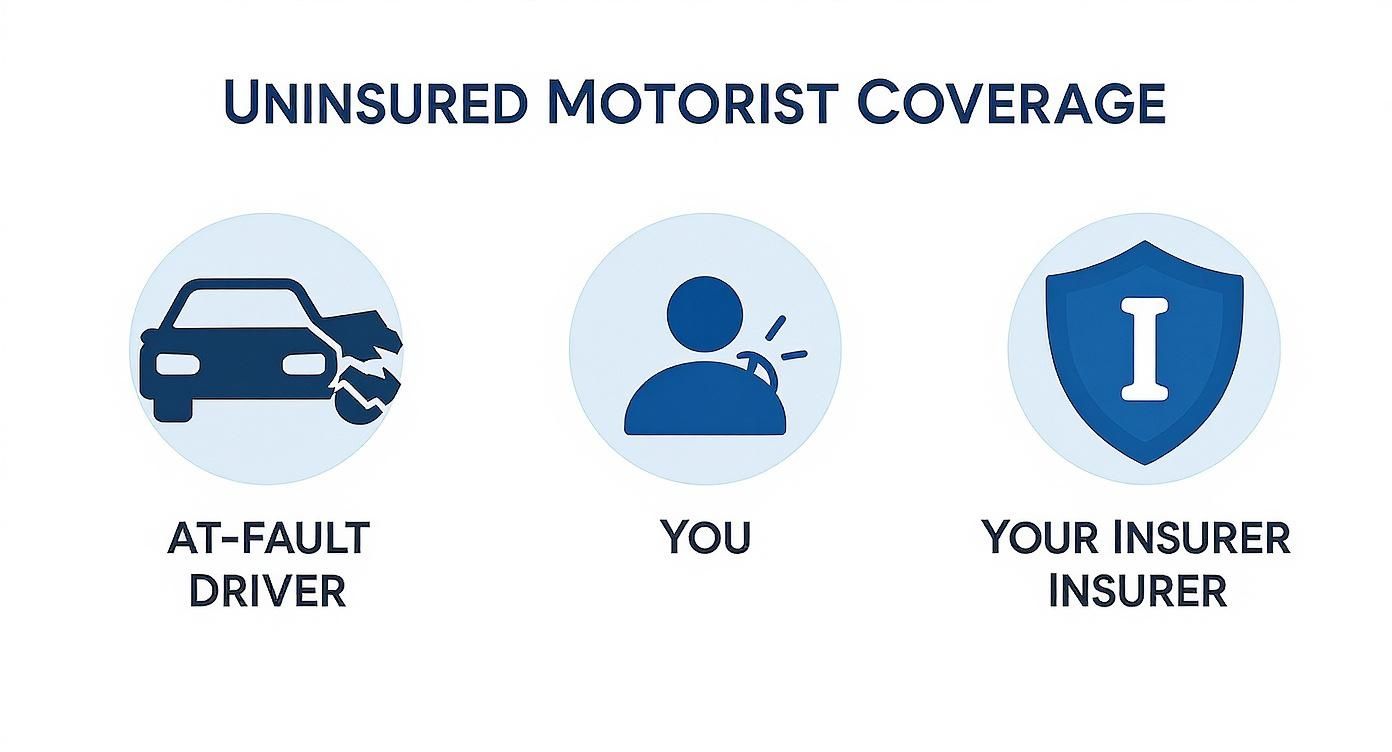
As you can see, instead of trying to sue an uninsured driver for money they likely don't have, you can file a claim directly with your own insurance company. A Houston car accident lawyer can help you navigate this process.
Why This Protection Matters in Texas
Relying on every other driver to be responsible is a huge gamble. The reality is, a shocking number of people are on Texas roads illegally. Recent studies from the Insurance Research Council show that roughly one in seven drivers in the United States is uninsured. In Texas, the numbers are often even higher.
That means you have a very real chance of getting into a crash with someone who can’t pay for the harm they’ve caused.
Without UM coverage, you could be left holding the bag for everything after a crash you didn’t cause. This coverage isn’t just an optional add-on; it’s essential protection against the carelessness of others. It’s there to cover a wide range of costs, making sure your path to recovery isn’t blocked by financial stress.
UM coverage helps pay for critical expenses that your health insurance may not touch, such as lost wages, long-term rehabilitation, and compensation for pain and suffering.
Here’s another way to look at it: you buy liability insurance to protect others from your own mistakes. You buy UM coverage to protect yourself from the mistakes of others. A Houston car accident lawyer can help you make sense of your policy and file an effective auto insurance claim.
Understanding Your Rights Under Texas Law
When you're hurt in a crash, knowing your legal rights is the first step toward protecting yourself and your family. Texas law provides a clear framework to help accident victims, especially when the other driver has no insurance. Understanding these rules is the key to seeking the compensation you deserve.
One of the most important things to know is that Texas law requires every auto insurance company to offer you Uninsured/Underinsured Motorist (UM/UIM) coverage. You don’t have to buy it, but if you want to turn down this critical protection, you must reject it in writing.
This "opt-out" system exists because the state knows just how financially devastating a collision with an uninsured driver can be.
Key Legal Concepts You Need to Know (in Plain English)
If you're navigating an insurance claim, you’re going to run into some specific legal terms. They might sound complicated, but understanding them empowers you to protect your rights. A Texas injury attorney builds a strong claim on your behalf using these core ideas.
Here are the key terms, explained simply:
- Liability: This is a plain-English term for legal and financial responsibility. In a Texas car accident, the person whose carelessness caused the crash is liable for the harm that results. For example, if a Houston driver runs a red light and hits you, they are liable for your injuries.
- Comparative Fault: Texas follows a "modified comparative fault" rule (also called the 51% bar rule). This means you can recover money for your injuries as long as you are not found to be 51% or more at fault for the accident. Your final compensation is then reduced by your percentage of fault. You can find this law in Chapter 33 of the Texas Civil Practice & Remedies Code.
- Damages: This is the legal term for all the harm and losses you've suffered because of the accident. Damages are what you seek compensation for, and they include everything from your medical bills and lost paychecks to your physical pain and emotional distress.
- Statute of Limitations: This is a strict legal deadline. In Texas, you generally have two years from the date of the car accident to file a lawsuit. If you miss this deadline, you will almost certainly lose your right to seek compensation forever.
What Damages Does UM Coverage Pay For?
After being hit by an uninsured driver, your UM coverage is designed to step in and pay for the same damages that the at-fault driver’s insurance should have covered. This isn't just a small patch; it's meant to help make you whole again.
This can include:
- Medical Expenses: Every cost related to your treatment, from the ambulance ride and ER visit to future physical therapy and surgeries.
- Lost Wages: Compensation for the paychecks you missed while you were out of work recovering.
- Pain and Suffering: This compensates you for the physical pain and emotional trauma the accident and your injuries have put you through.
- Property Damage: The cost to fix or replace your vehicle. In Texas, this part of your coverage typically comes with a standard $250 deductible.
Understanding these rights is your first line of defense. A skilled Texas injury attorney can help you meticulously document your damages and prove the other driver's liability, ensuring you get access to the full benefits of the uninsured motorist coverage you’ve been paying for.
Why This Coverage Is a Lifeline for Texas Drivers
Picture this: you’re a Houston driver rear-ended on I-45. The other driver is clearly at fault. But when you exchange information, they admit they don’t have insurance.
In that gut-wrenching moment, a hard reality sets in. Who is going to pay for your medical bills? Your car repairs? The time you’re forced to take off work?
Without uninsured motorist (UM) coverage, the answer is often devastating: you are. This is exactly why UM coverage isn't just another line item on your policy—it’s essential financial protection against the irresponsible choices of others.
The number of drivers on the road without proper insurance is alarmingly high. Recent reports show that the number of uninsured drivers is on the rise, partly because rising insurance costs are pushing more drivers to skip coverage altogether. You can get more insights on this growing problem and why this coverage is more critical than ever on robertsonryan.com.
What Does UM Coverage Actually Pay For?
Your personal health insurance might cover some of the initial hospital bills, but it often leaves massive gaps that can lead to financial strain. It won’t cover your lost income, vehicle repairs, or compensate you for the physical pain and emotional trauma you’ve been forced to endure.
This is where UM coverage becomes a true lifeline.
Your UM policy is specifically designed to cover a wide range of damages that the at-fault driver should have paid for, including:
- All related medical expenses, from the emergency room visit to ongoing physical therapy.
- Lost wages if your injuries keep you from working.
- Future lost earning capacity if you can no longer do your job.
- Compensation for pain and suffering, which acknowledges the very real physical and emotional toll of the accident.
- Vehicle repairs (usually after a small deductible).
Without UM coverage, your only option is to sue the at-fault driver personally—a long and often fruitless process if they don’t have any assets to begin with. Your UM policy lets you recover these costs directly from your own insurance company instead.
The Financial Reality of an Uninsured Motorist Accident
Facing a mountain of bills after a serious crash is completely overwhelming. Your focus should be on healing, not stressing about how you’re going to pay for it all. UM coverage acts as the financial shield you need, ensuring one person's bad decision doesn't get to destroy your financial stability.
By paying for this coverage, you are really investing in peace of mind. You’re making sure that if the worst happens, you have a clear path to get the resources you need to recover. Understanding how these benefits fit in with your other policies is key, and you can learn more by navigating insurance policy limits after a car accident in Texas.
Steps to File an Insurance Claim
After getting hit by a driver with no insurance, it’s easy to feel lost. The good news is that your Uninsured Motorist (UM) coverage is there for this exact situation. Filing a claim isn't just about paperwork; it’s about building a solid case for your own insurance company, proving the other driver was at fault and showing the true extent of your damages.
What you do in the hours and days right after the crash is absolutely critical. The evidence you gather and the deadlines you meet will be the bedrock of your entire claim.
A Practical, Step-by-Step Guide
The chaos after a collision can be disorienting, but following these practical steps will give you a clear path forward and protect your rights.
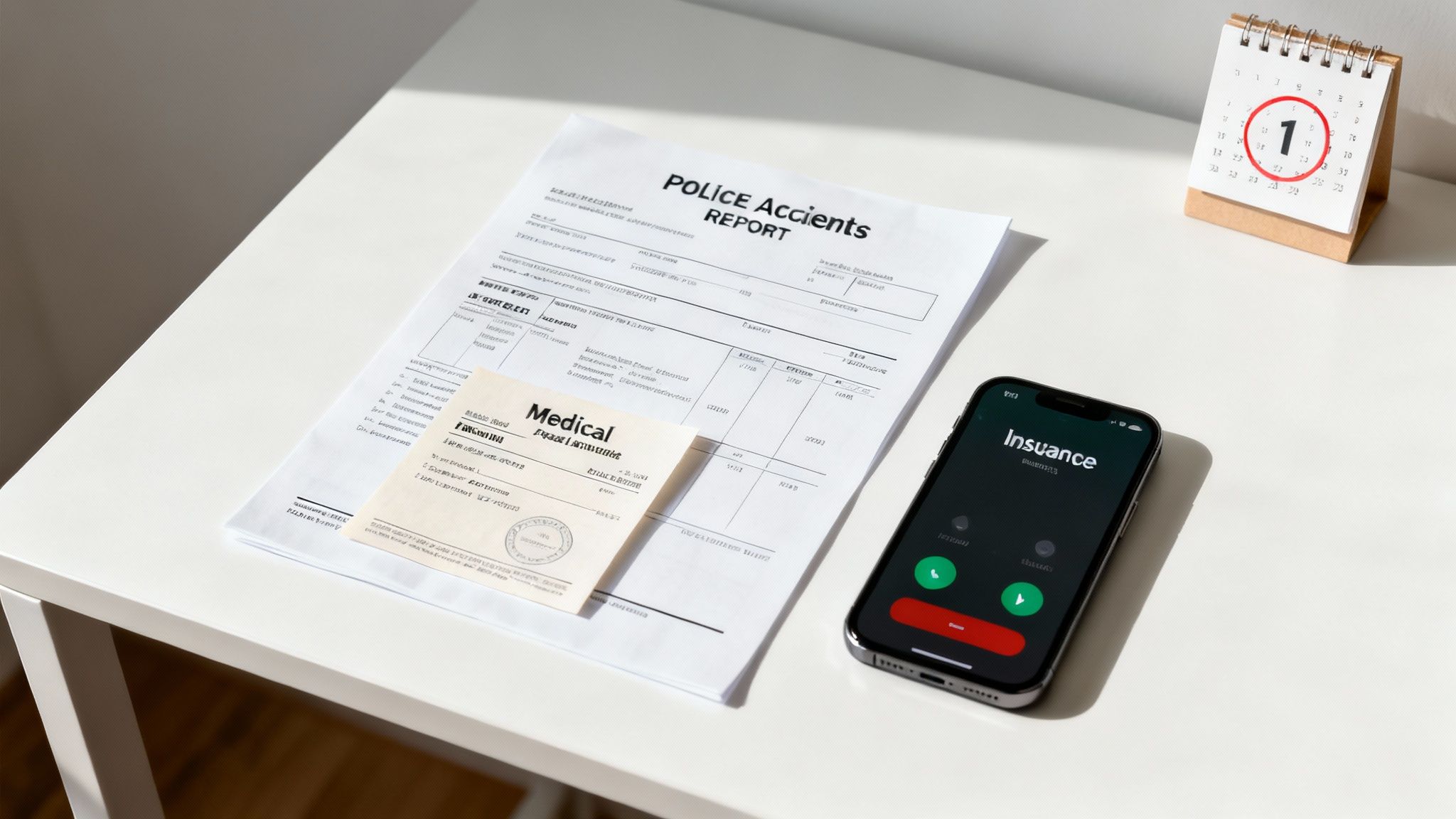
- Call 911 and Report the Accident: A police report is an official, unbiased record of the accident. It locks in crucial details, witness accounts, and often includes the officer’s initial assessment of who was at fault—an invaluable piece of evidence for your claim.
- Seek Medical Attention Immediately: Go to an ER, urgent care, or your family doctor right away, even if you think you’re okay. Some serious injuries, like whiplash or internal bleeding, don’t show symptoms for hours or even days. Creating a medical record immediately links your injuries directly to the crash.
- Notify Your Own Insurance Company: Call your insurer as soon as you can to let them know about the accident. Be very clear: you were hit by an uninsured driver and you need to open a claim under your Uninsured Motorist coverage. For more tips, check out our guide on how to report an accident to your insurance company.
- Document Everything: Start a file and keep everything related to the accident. This includes photos of the crash scene, your car, and your injuries. It also includes every medical bill, repair estimate, pay stub showing lost wages, and contact information for any witnesses.
Don't Miss the Texas Statute of Limitations
In Texas, the clock starts ticking immediately. You have a strict legal deadline, known as the statute of limitations, to file a personal injury lawsuit. For nearly all car accident cases, that deadline is two years from the date of the wreck.
Under the Texas Civil Practice & Remedies Code, if you miss that two-year window, you almost certainly lose your right to seek compensation in court forever.
Even though you’re filing a claim with your own insurance company, this deadline is still a massive factor. Insurers know all about it. They might intentionally drag out negotiations or make lowball offers, hoping you’ll run out of time to sue them if they refuse to pay fairly.
Your best defense is to act quickly. Speaking with a Houston car accident lawyer early on ensures every deadline is met and that your claim is handled professionally from day one. This frees you up to focus on what matters most—your recovery.
How to Deal with Insurance Companies
You’d think filing a claim with your own insurance company would be simple. After all, you’ve paid your premiums on time, every time. Unfortunately, the reality can be a rude awakening.
Your insurance company is still a business, and its main goal is protecting its bottom line. Even though you’re their customer, when you file a UM claim, their objective can quickly shift to minimizing how much they have to pay you.
Suddenly, the friendly provider you’ve trusted for years can feel like an adversary. It’s frustrating and shocking to have them question the details of your accident or downplay the severity of your injuries.
When Your Insurer Puts Up Roadblocks
To devalue or deny your claim, an insurance adjuster might use a few common tactics. They could suggest your injuries aren't as bad as you say or even try to pin some of the blame for the crash on you. This is where knowing Texas law becomes critical.
These roadblocks often include:
- Disputing Injury Severity: The adjuster will dig through your medical history, looking for any excuse to argue your injuries were pre-existing or less serious than your doctor says.
- Making a Lowball Offer: They might rush to offer a quick settlement that’s far below what your claim is actually worth, hoping you’re desperate enough to take it.
- Arguing You Were Partially at Fault: This is a classic move, and it has major legal consequences here in Texas.
How Comparative Fault Affects Your Claim
Texas operates under a rule called modified comparative fault, also known as the 51% bar rule. You can find it in Chapter 33 of the Texas Civil Practice & Remedies Code.
In simple terms, this rule means you can recover damages from an accident as long as you are not found to be 51% or more responsible for causing it. Your final compensation is then reduced by whatever percentage of fault is assigned to you.
Let’s say you’re awarded $100,000 in damages but are found to be 20% at fault for the collision. Your award would be cut by 20%, leaving you with $80,000. But if the insurance company successfully argues you were 51% at fault, you get nothing. Zero.
You can see why they love this rule. Insurance companies will do everything they can to shift as much blame as possible onto you to slash or completely eliminate what they have to pay.
This is exactly why having a skilled Houston car accident lawyer in your corner is so crucial. An experienced attorney knows how to shut down these tactics, gather the evidence needed to prove the other driver was at fault, and force your own insurer to treat you fairly. They handle the legal fights so you can focus on what matters most: your recovery.
How a Houston Car Accident Lawyer Can Help
Trying to handle an uninsured motorist claim on your own can feel like an impossible task, even when it’s with your own insurance company. The process is confusing, the paperwork is a nightmare, and the adjuster you're speaking with is trained to protect their company's bottom line—not yours. This is exactly where a skilled Houston car accident lawyer from The Law Office of Bryan Fagan, PLLC, can change everything.
Our team is here to take that entire legal burden off your shoulders. We get to work immediately, launching a full investigation into the crash to gather clear, undeniable proof that the other driver was at fault.
From that moment on, we handle every single phone call, email, and letter from the insurance company. This stops them from twisting your words or pressuring you into accepting a quick, lowball settlement that doesn't even begin to cover your losses.
Building Your Case for Maximum Compensation
Our one and only goal is to build a powerful, airtight case that shows the true extent of your damages—physical, financial, and emotional. We meticulously track down and organize all the critical evidence, from police reports and medical records to expert testimony, leaving no room for doubt.
We fight to get you compensation for:
- All your medical bills, both current and future
- Lost wages from time off work and any impact on your future earning ability
- Pain and suffering
- The costs of rehabilitation, physical therapy, and any ongoing care
We know the insurance market is getting tougher for everyone, especially with the rising number of accidents and uninsured drivers on the road. Globally, the auto insurance market keeps expanding because of these growing risks, which just goes to show how critical it is to have strong legal support when you file a claim. You can read the full analysis of global insurance trends to see just how complex things have become.
An experienced Texas injury attorney levels the playing field. We make sure your rights are protected and that your insurance company honors the very policy you've been paying for.
We will aggressively negotiate for a fair settlement that covers everything you need for a complete recovery, so you can finally focus on what matters most: healing. Whether you're dealing with a standard car insurance claim or need help with a tragic wrongful death case, our team is ready to fight for the justice and compensation you deserve.
Learn more about how we handle uninsured or underinsured motorist claims and let us help you today.
Common Questions About UM Coverage in Texas
Even after you get the basics down, you probably still have some specific questions about how uninsured motorist coverage really works in the real world. We get calls every day from people trying to piece this all together, and we want to give you clear, straight answers to help you feel more confident.
Here are a few of the most common questions we hear from accident victims.
Do I Need UM Coverage If I Have Health Insurance?
Yes, absolutely. This is one of the biggest misconceptions we see. While your health insurance is a critical piece of the puzzle for getting medical care, it only covers a fraction of the financial fallout from a serious car wreck.
Think about it—your health plan likely comes with high deductibles and copays that you'll have to pay out-of-pocket. More importantly, it will not cover other devastating financial losses. A UM claim is designed to fill those gaps and can provide money for things your health insurance will never touch, including:
- Lost wages from all the time you're forced to miss work.
- Fair compensation for your physical pain and emotional suffering.
- Money for future medical care you might need long after the accident.
How Does UM Coverage Work in a Hit-and-Run?
A hit-and-run is the classic, textbook example of why UM coverage is so vital. When the driver who caused your injuries flees the scene and can't be found, Texas law treats them as an uninsured motorist.
Your own UM policy is specifically designed to step in and cover your damages in this exact scenario. It provides a crucial path to getting compensated when the person responsible simply vanishes.
Will My Insurance Rates Go Up for a UM Claim?
No—and the law is firmly on your side here. Under Texas law, it is illegal for an insurance company to raise your premiums or otherwise penalize you for filing a UM claim for an accident that wasn’t your fault.
This protection is incredibly important. It ensures you can actually use the coverage you’ve been paying for without having to worry about being punished for it. You have every right to seek the compensation you deserve.
A car accident can leave you feeling completely overwhelmed and unsure of what to do next. You don’t have to figure this out on your own. The experienced Houston car accident lawyers at The Law Office of Bryan Fagan, PLLC are here to fight for your rights and help you get the compensation you need to get your life back on track. We'll handle the insurance companies so you can focus on healing.
Contact us today for a free, no-obligation consultation to talk about your case. Let us help you take the first step toward rebuilding.