Skip to content
A car crash can change your life in seconds, but you don't have to face recovery alone.
If you're reading this after losing a spouse, parent, or child in Houston, you may still be in shock. One moment you were answering a phone call, speaking with a doctor, or waiting for someone to come home. The next, you were thrust into funeral planning, family conversations, insurance calls, and questions no one should have to answer while grieving.
Texas law can't undo that loss. But it can give your family a path to seek accountability, protect your future, and pursue wrongful death compensation when someone else's carelessness caused a death. This guide explains that process in plain language, the way a compassionate Texas injury attorney would explain it to a family sitting across the desk, trying to make sense of a terrible week.
When a Tragic Accident Takes a Loved One
A family often remembers the small details first. A half-finished cup of coffee on the kitchen counter. A missed text. A jacket still hanging by the door. Then the practical burdens arrive all at once. Someone asks about the death certificate. An insurance adjuster leaves a voicemail. A relative asks whether there's “a case.”
That question can feel cold when your grief is still raw. But it doesn't have to be. A wrongful death claim isn't about reducing your loved one's life to paperwork. It's about asking whether a preventable act, such as a reckless crash, unsafe work condition, or dangerous property condition, took someone from your family too soon.
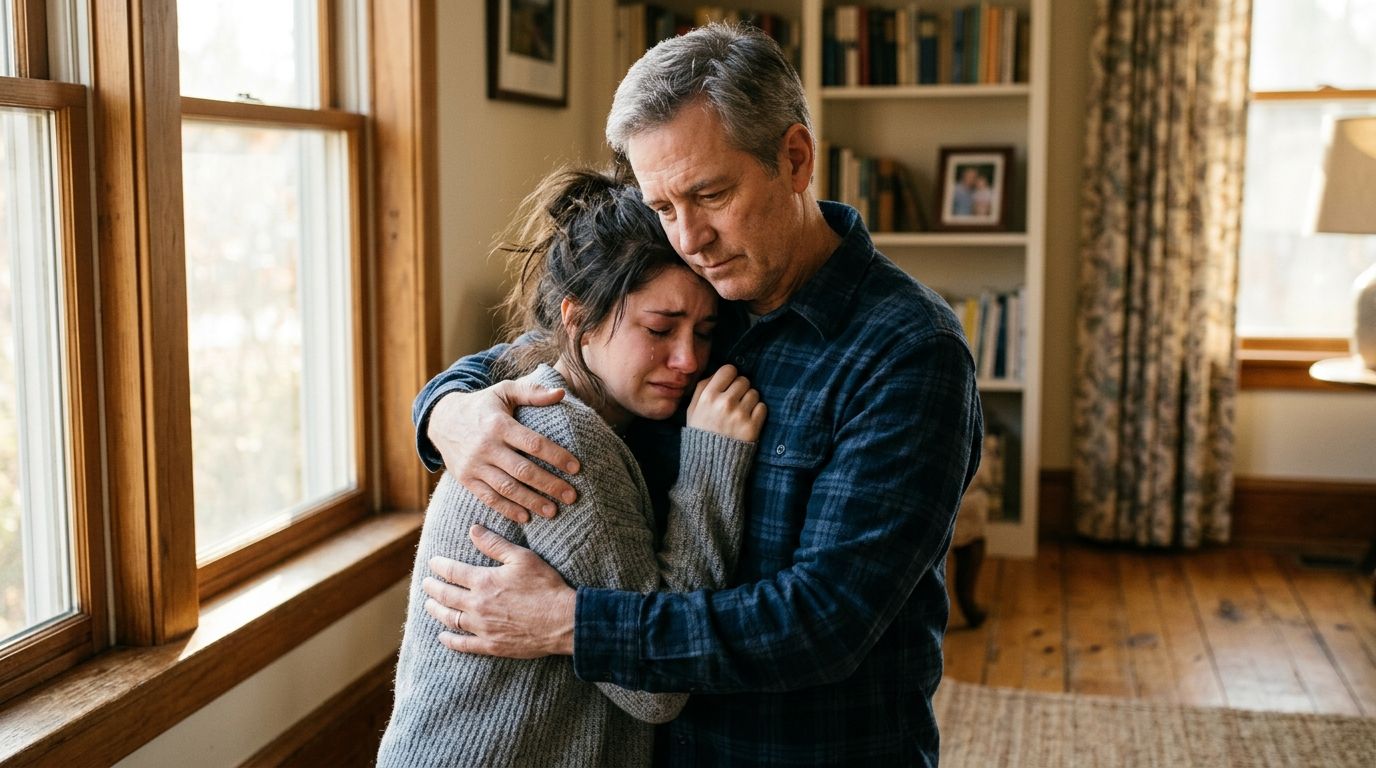
Take a common Houston example. A driver is rear-ended on I-45 by someone who wasn't paying attention. The injuries turn fatal. The surviving family is left with hospital records, funeral decisions, and a stream of calls from insurers. In that moment, legal help matters because families need space to grieve, not pressure to sort out fault on their own.
The first concern is often emotional, not legal
Many families worry that taking legal action is somehow “too aggressive.” In truth, many wrongful death cases begin with a simple need for answers. What happened? Who was responsible? What support is available for the people left behind?
Grief and legal action can exist at the same time. Seeking accountability doesn't mean you loved your family member any less. It often means you're protecting what they would have wanted for the family.
The practical side matters too. If the death happened in a home or involved a traumatic scene, families may also need guidance on safe cleanup and health concerns. In that situation, Restore Heroes' guide to safe cleanup is a useful resource for understanding cleanup issues in a careful, respectful way.
Legal help can restore a sense of control
Individuals seeking a Houston wrongful death lawyer are usually not looking for courtroom drama. They're looking for steadiness. They want someone to explain their rights, speak to the insurance company, and help them take the next step without making everything harder.
That's where a civil claim can help. It gives your family a lawful way to hold the at-fault party responsible and seek financial support for losses tied to the death.
Understanding Wrongful Death Claims in Texas
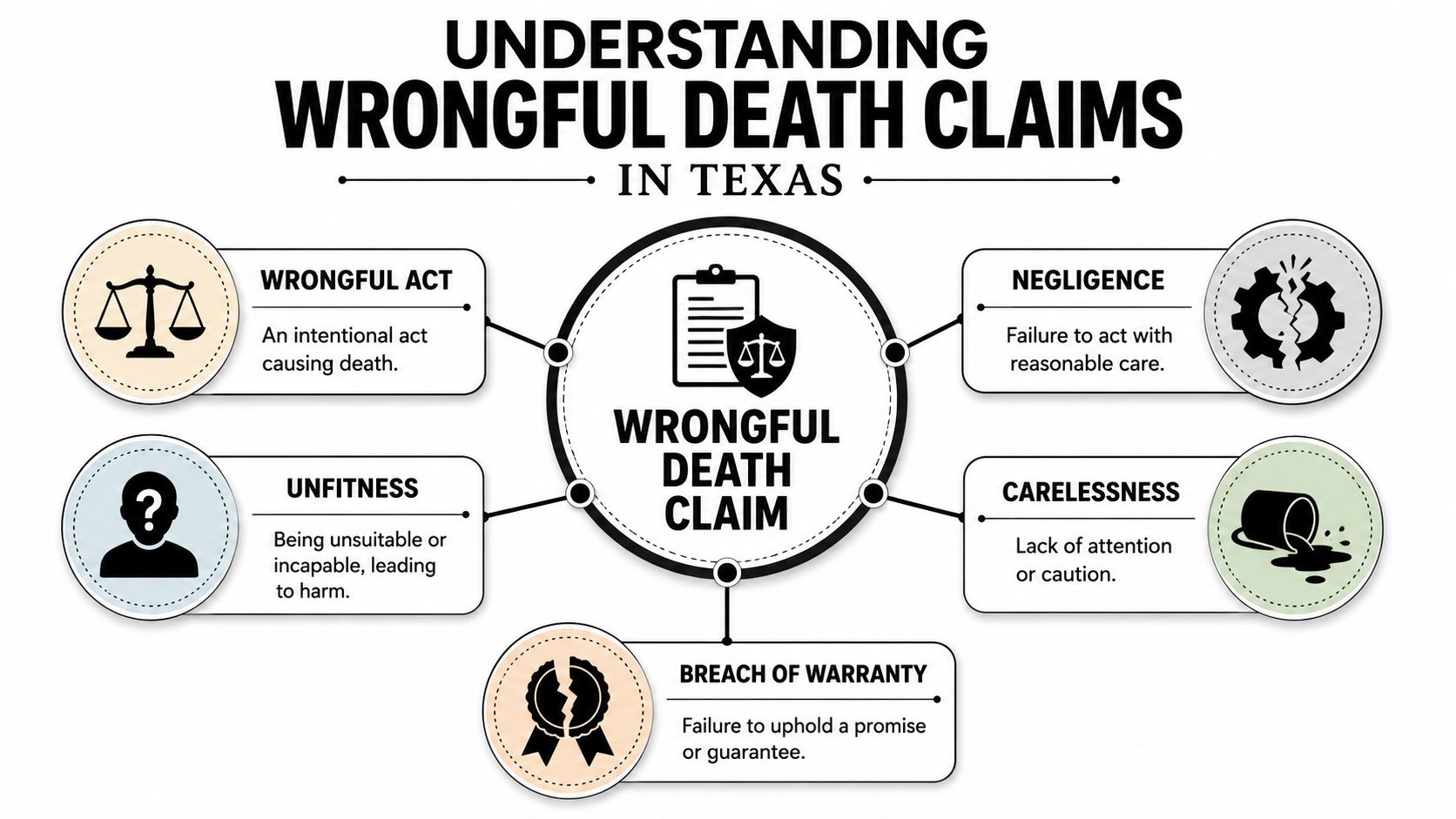
A wrongful death claim is a civil case brought when a person dies because of another party's wrongful act, neglect, carelessness, unskillfulness, or default. In plain English, it means someone's conduct caused a death, and the surviving family may have the right to ask for financial recovery.
A wrongful death claim resembles a personal injury claim that the injured person can no longer pursue on their own behalf. If your loved one had survived, they might have had a claim for medical bills, pain, and other losses. A wrongful death case addresses what the family lost because that life was taken.
Plain-English legal terms families need to know
A few terms come up often in these cases:
| Term | Simple meaning |
|---|---|
| Liability | Legal responsibility for what happened |
| Negligence | Failing to use reasonable care |
| Damages | The losses the law allows a family to recover |
| Comparative fault | A rule that looks at whether more than one party shares blame |
| Statute of limitations | The legal deadline to file a lawsuit |
Under Texas Civil Practice & Remedies Code Chapter 33, Texas uses a comparative fault system in injury and death cases. That means the defense may argue that the person who died shared some responsibility for the event. In wrongful death litigation, that issue can directly affect whether compensation is available.
Under Chapter 41, Texas law also addresses certain damage rules, including exemplary damages, which are meant to punish especially serious wrongdoing in limited situations.
A wrongful death case is different from a criminal case
Families often ask whether a criminal case has to come first. It doesn't. These are separate systems.
A criminal case is brought by the government and may focus on jail, probation, or other penalties. A wrongful death case is brought in civil court by the family and focuses on accountability through financial recovery.
Practical rule: Don't assume “no criminal case” means “no civil case.” The legal questions are different.
For readers who want a direct overview of representation options, Houston Wrongful Death Lawyer refers to representation for Houston families who lost a loved one to negligence.
What kinds of incidents can lead to a claim
Wrongful death claims often grow out of events families already understand as serious accidents:
- Fatal car crashes involving speeding, distraction, or intoxication
- Truck collisions where multiple parties may share responsibility
- Unsafe property incidents where hazards weren't corrected
- Product failures tied to a dangerous defect or breach of warranty
- Work-related events caused by unsafe practices or poor supervision
If you're also sorting out a crash-related insurance issue, the same basic negligence concepts that apply in a wrongful death case often appear in an auto insurance claim or other personal injury matter handled by a Houston car accident lawyer.
Who Is Eligible to File a Wrongful Death Claim
One of the hardest parts of this process is figuring out who has the legal right to act. Families are often trying to support one another, but Texas law gives that authority only to certain people.
In Texas, the people who may file a wrongful death claim are generally the surviving spouse, children, and parents of the person who died.

Who may bring the claim
That basic list sounds simple, but families often need more detail.
- A surviving spouse may have the right to file, whether the death followed a car wreck, work incident, or another negligent act.
- Children may also have rights, including adult children.
- Parents can usually pursue a claim for the death of a son or daughter.
When families want a closer look at this issue, who can file a wrongful death lawsuit in Texas offers more detail.
Who usually cannot file
Many people are surprised by this. Not every grieving relative has standing to sue.
In many cases, siblings cannot bring a wrongful death claim in Texas. An unmarried partner may also face serious limits, even if the relationship was long-term and committed. Grandparents, aunts, uncles, cousins, and close friends may have deep emotional loss, but that alone usually doesn't create the legal right to file this type of claim.
That can feel unfair. But standing is a legal rule, not a measure of love.
The law doesn't always track family life perfectly. If your family structure is complicated, get legal guidance before assuming who can or can't file.
Families often appreciate hearing the issue explained out loud. This video may help as you sort through eligibility questions.
Wrongful death claim versus survival action
There's another point that causes confusion. A wrongful death claim is not the same thing as a survival action.
A wrongful death claim focuses on the losses suffered by surviving family members because of the death. A survival action is tied to the harm the deceased person suffered before death. That can include things like conscious pain, medical care related to the final injury, or other losses that belonged to the injured person before they passed away.
A careful Texas injury attorney looks at both possibilities because they serve different legal purposes. One speaks to the family's loss. The other preserves the claim the deceased person would have had if they had lived long enough to bring it.
Compensation and Deadlines in a Texas Wrongful Death Case
Two questions come up quickly after a fatal accident. How long do we have to act? And what can a claim recover?
Both matter. Deadlines can close the courthouse doors, and a clear damages analysis helps families understand what the case is really about.
The statute of limitations in plain English
The statute of limitations is the legal deadline to file suit. In a Texas wrongful death case, the deadline is generally two years from the date of death, as discussed in this explanation of the wrongful death statute of limitations in Texas.
That doesn't mean you should wait. Important evidence can fade early. Witness memories change. Vehicles get repaired. Phone records, videos, and business records may become harder to obtain.
A family dealing with a fatal crash may also be trying to understand insurance issues at the same time. If the at-fault driver had little or no coverage, understanding uninsured motorist coverage can help you make sense of one part of that insurance picture.
What damages means in a wrongful death case
Damages is the legal word for losses that may be compensable in a civil claim. In a wrongful death case, those losses are often grouped into categories.
Here's a simple breakdown:
| Category | What it can include |
|---|---|
| Economic damages | Financial losses such as lost income or funeral-related costs |
| Non-economic damages | Human losses such as mental anguish or loss of companionship |
| Exemplary damages | In limited cases, damages aimed at punishment for especially serious conduct |
Economic damages are often the easiest for people to picture. If a father who paid the mortgage and supported children dies in a crash, the family may lose expected financial support and household services. If a spouse paid funeral expenses after a fatal collision, those costs may matter too.
Non-economic damages are different. They address the part of a loss that doesn't come with a monthly statement. The absence of a parent's advice. The loss of a spouse's companionship. The emotional suffering that follows a preventable death.
How Chapter 41 fits into serious misconduct cases
Texas Civil Practice & Remedies Code Chapter 41 is where families often hear the term exemplary damages. These are not available in every case. They are generally tied to especially serious conduct, such as gross negligence or other aggravated wrongdoing.
A common example is a fatal crash involving an intoxicated driver. In that situation, a lawyer may examine whether the facts support not only ordinary negligence damages, but also the type of proof needed for exemplary damages under Texas law.
Filing a wrongful death case is not about assigning a dollar figure to a life. It's about making sure the legal system recognizes the financial and human loss left behind.
Why comparative fault still matters here
Although comparative fault is often discussed in ordinary injury cases, it can affect wrongful death litigation too. Under Chapter 33, the defense may try to argue that the deceased person contributed to the accident. That's one reason these cases require careful investigation and a disciplined presentation of facts.
If your loved one died in a crash, a Houston car accident lawyer or other lawyer handling fatal injury cases should look closely at police findings, scene evidence, vehicle damage, witness statements, and any insurer effort to shift blame.
Your First Steps After a Fatal Accident in Houston
The first days after a fatal accident are a blur. Most families are trying to notify relatives, make arrangements, and get through each hour. You don't need a complicated legal checklist right now. You need a short list of smart steps that protect your rights without adding pressure.
A familiar Houston example helps. A family loses a loved one in a fatal crash on I-45. Before they've even finished making arrangements, an insurance adjuster calls asking for a recorded statement. That is not the time to guess your way through the process.

A simple checklist for the early days
Start with these practical steps:
- Gather official documents. Keep the police report, death certificate, medical records, insurance information, and any notices you receive.
- Preserve photos and messages. Save vehicle photos, scene images, texts, emails, and voicemails connected to what happened.
- Track expenses. Keep receipts and records for funeral costs and related out-of-pocket losses.
- Limit insurance communication. You don't have to handle recorded statements or broad document requests alone.
- Avoid social media discussion. Posts can be taken out of context and used later.
For crash-specific legal help, Houston Car Accident Lawyer refers to representation for car accident victims in Houston and Harris County.
What not to do after the loss
Sometimes protecting a claim is more about avoiding mistakes than doing more paperwork.
- Don't sign releases quickly. An insurer may ask for signatures before your family understands the full legal picture.
- Don't guess about fault. Even a polite statement like “maybe he didn't see the other car” can be twisted into an argument against your claim.
- Don't throw away paperwork. Keep every letter, bill, and email in one folder.
- Don't assume the police report settles everything. It matters, but it is only one piece of the case.
Important: If an insurance adjuster calls, it's okay to say you're not ready to speak and will respond after getting legal advice.
Give one person the job of handling documents
Large families often run into a practical problem. Five people are texting updates, three are saving papers, and no one knows where anything ended up.
Choose one trusted person to collect documents, keep a timeline, and store records in one place. That one step can reduce confusion and help a lawyer evaluate the case more efficiently later.
This is also the stage where self-care matters. Eating, sleeping, asking for help, and accepting support are not distractions from the legal process. They are part of surviving it.
How Our Wrongful Death Lawyers Build Your Case
Families often know they need legal help, but they're not sure what happens after that first call. A wrongful death case is built piece by piece. Good lawyering here is methodical, not theatrical.
The investigation begins with facts, not assumptions
Suppose a woman loses her husband in a nighttime crash at a Houston intersection. The other driver's insurer says her husband entered the intersection too fast. The family worries that means the case is over.
It usually isn't that simple.
A lawyer starts by collecting the underlying evidence. That may include crash reports, scene photographs, witness interviews, vehicle damage, medical records, and available video. In some cases, lawyers also work with outside professionals to understand visibility, road layout, timing, or the sequence of impact.
For a closer look at the proof side of these cases, how to prove wrongful death is a useful internal reference.
Comparative fault is often the defense playbook
Under Texas Civil Practice & Remedies Code Chapter 33, the defense may try to reduce or defeat a claim by shifting blame to the person who died. That rule is often called comparative fault.
In plain English, comparative fault asks whether more than one party shares responsibility. In practice, that means insurers may comb through the facts looking for anything they can use to say your loved one caused part of the event.
A careful lawyer pushes back by testing those claims against evidence, not assumptions.
Insurance companies often move quickly after a fatal crash. Your legal team should move carefully and deliberately.
Damages work is more detailed than most families expect
Once liability is being developed, the next job is proving damages in a way that reflects the life your family lost.
That doesn't mean tossing out a rough figure and hoping it sticks. It means building a grounded story through records, work history, family relationships, and testimony about the role your loved one played in the home.
A lawyer may organize the case around questions like these:
| Question | Why it matters |
|---|---|
| What support did your loved one provide? | Helps show economic and household loss |
| What relationship did they have with each family member? | Helps explain companionship and guidance losses |
| What expenses followed the death? | Helps document financial impact |
| What arguments is the defense likely to make? | Helps prepare for blame-shifting and undervaluation |
Communication is part of the work
Good representation also means managing contact with insurance companies and defense lawyers so you don't have to carry that burden while grieving.
In the right section of a case, The Law Office of Bryan Fagan, PLLC is one option families may consider for handling wrongful death and crash-related claims in Texas. The work typically includes investigating fault, organizing damages, and dealing with insurers while the family focuses on immediate personal needs.
Choosing a Compassionate Houston Wrongful Death Lawyer
A family often learns a lot in the first ten minutes of a consultation. You can usually tell whether a lawyer is listening for facts alone, or listening for the person your family lost.
That difference matters.
A wrongful death case is built on evidence, deadlines, and legal standards. It is also built on trust. Your lawyer will hear painful details, speak with insurers on your behalf, and help your family make decisions during one of the hardest periods of your life. A compassionate lawyer should be able to explain difficult issues in plain language, answer questions without rushing you, and treat your loved one's life as more than a case file.
Questions worth asking in the first conversation
Ask direct questions. Clear questions often lead to clear representation.
- Who will keep us updated? You should know whether calls and emails will come from the attorney, a case manager, or both.
- How do you handle disputes about fault? This helps you understand how the lawyer responds if the other side tries to blame your loved one.
- What should we gather first? A helpful lawyer can name practical items such as records, insurance information, or contact details for witnesses.
- How are fees explained to families? You deserve a plain answer before you agree to anything.
If your family's loss may involve elder neglect concerns as well as a fatal injury, practical steps for suspected nursing home abuse can help you understand another situation where quick, careful action matters.
A good fee explanation should be simple
Families should not have to decode legal billing language while they are grieving. In many wrongful death cases, lawyers work on a contingency-fee basis. That means the attorney's fee is paid only if compensation is recovered.
The Law Office of Bryan Fagan, PLLC handles wrongful death matters in Texas under that kind of fee arrangement. For many families, that eases one immediate worry. It allows them to get legal advice without adding upfront attorney's fees to funeral costs, lost income, and other financial strain.
Compassion also shows up in how a lawyer explains overlap with related claims. A fatal crash may involve negligence questions, insurance disputes, and the practical steps tied to an auto insurance claim. Some families begin by looking for help after a car wreck. Others start with questions about wrongful death compensation or a Texas injury attorney. The label matters less than the lawyer's ability to give your family calm, reliable guidance and a clear plan for what happens next.
If your family lost a loved one because of someone else's negligence, contact The Law Office of Bryan Fagan, PLLC for a free consultation. You can get clear answers about your rights, your next steps, and whether a wrongful death claim may be available. There's no pressure, and you do not have to sort through this alone.