Skip to content
A car crash can change your life in seconds, but you don’t have to face recovery alone.
If you were hit by a driver who says, “I wasn’t even speeding,” you may feel stuck. That statement sounds convincing. It also leaves many injured people wondering whether they still have a case.
In Texas, that question often turns on a rule most drivers have never really been taught. The basic speed law says that a driver must travel at a speed that is reasonable and prudent for the conditions. That matters because a person can be under the posted speed limit and still be legally at fault for a crash.
If you're dealing with medical bills, a wrecked vehicle, missed work, or an unfair auto insurance claim, this rule may be one of the most important parts of your case.
Understanding What the Texas Basic Speed Law Says
A driver can tell the officer, the insurance adjuster, and even you, “I was going the speed limit,” and still be legally wrong.
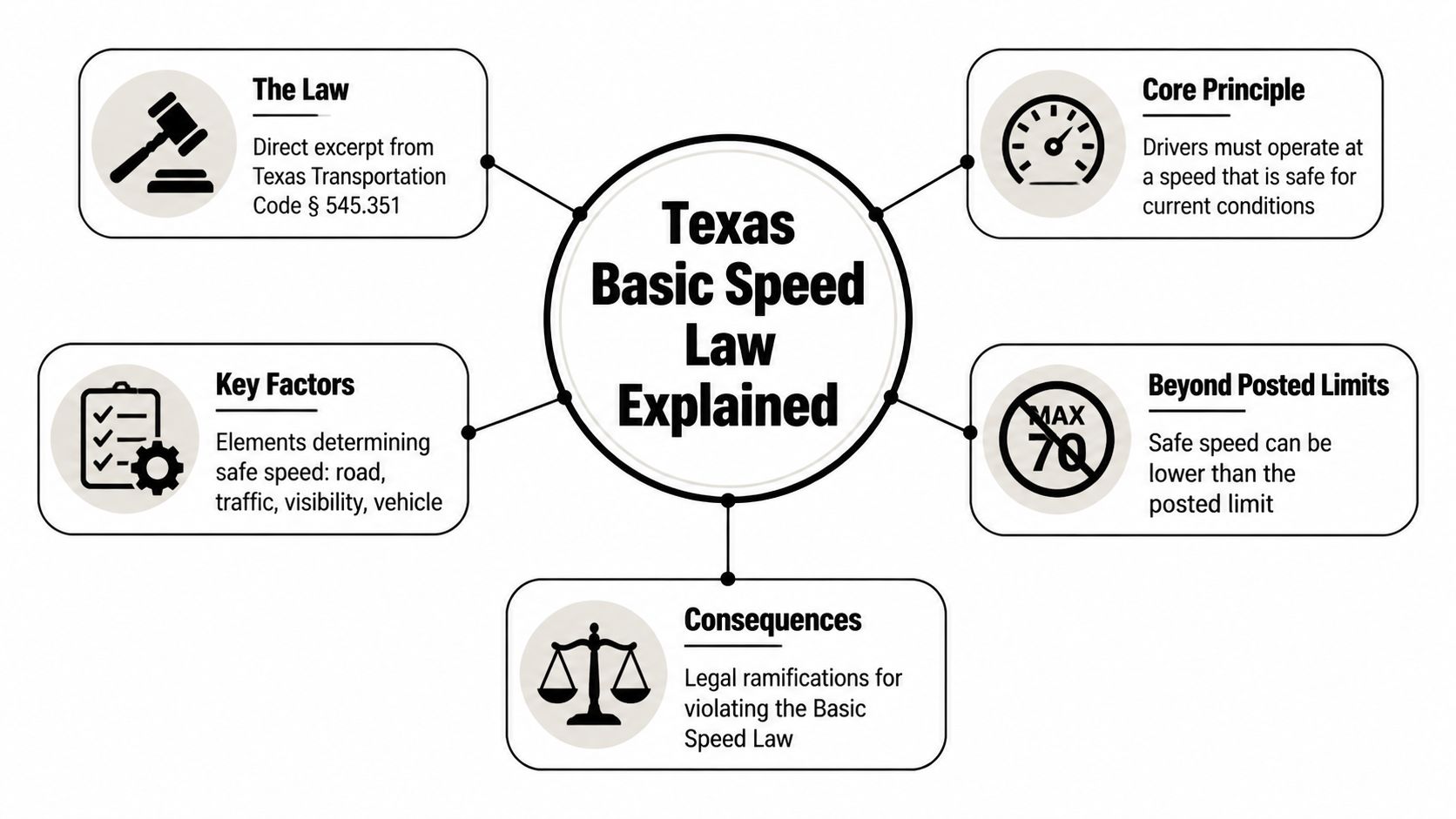
That is the heart of the Texas Basic Speed Law. Under Texas Transportation Code § 545.351, a driver must travel at a speed that is reasonable and prudent for the conditions then existing, as explained in Barrera Law Group’s overview of the Texas basic speed rule.
In plain English, the law asks a simple question. Was the driver moving at a speed that was safe for that road, in that traffic, in that weather, at that moment?
What “reasonable and prudent” really means
A speed limit sign works like a general ceiling under normal conditions. It does not give a driver a free pass when the road becomes dangerous.
If the pavement is wet, traffic is bunching up, visibility is poor, or a construction zone narrows the lane, a careful driver is expected to slow down. The law uses the phrase “reasonable and prudent” because safety changes with the situation. The same speed can be safe at noon on a dry road and careless ten minutes later in heavy rain.
That wording confuses people because it sounds vague. In practice, it is pretty practical. It asks whether an ordinary careful driver would have backed off the gas.
Texas also uses prima facie speed limits. That means a posted speed is presumed lawful in ordinary conditions, but it is not automatically lawful in every situation. The sign matters. The surrounding conditions matter more when a crash happens.
Why this rule matters so much after a crash
For an injury claim, this law does more than define a traffic violation. It helps show negligence.
Here is the key idea. Your case does not depend only on whether the other driver exceeded the number on the sign. It can also depend on whether that driver failed to adjust to the conditions any reasonable person could see.
That is a big deal in real cases. A driver who barrels through standing water, follows too closely in fog, or enters a work zone too fast may have violated the Basic Speed Law even while staying under the posted limit. For an injured person, that can open the door to proving fault and pursuing compensation for medical bills, lost income, vehicle damage, and pain caused by the wreck.
Conditions that can make a “legal” speed unsafe
Several common road conditions can turn an otherwise ordinary speed into an unsafe one:
- Rain, fog, or glare that cuts down reaction time
- Heavy traffic that leaves less room to stop
- Poor road surfaces such as slick pavement, debris, or standing water
- Low visibility at night or during storms
- Construction zones or lane shifts that require slower, more careful driving
For a practical, driver-level explanation of how road conditions should change speed choices, this guide on driving in adverse conditions is useful.
If the other driver ignored those conditions, the Basic Speed Law may become one of the strongest parts of your case. It gives you a way to show that “I wasn’t speeding” is not the same as “I was driving safely.”
Are Posted Speed Limits Different from the Basic Speed Law?
Yes. They are related, but they are not the same thing.
A posted speed limit is a number on a sign. The Basic Speed Law is the bigger rule that controls whether a driver’s speed was safe. If you remember nothing else, remember this. The posted limit is not a promise that the speed is safe.
The sign is a presumption, not a shield
Many drivers think, “If I was under the limit, I can’t be blamed.” That sounds logical, but it misses how Texas negligence works.
The basic speed law says that a driver must slow down when conditions call for it. So if a driver stays at the posted limit during rain, traffic backups, poor visibility, or a hazardous roadway, that driver may still have acted carelessly.
They were going the speed limit is never the end of the fault analysis in a Texas injury case.
A useful way to think about it is this:
| Situation | What the sign says | What the law asks |
|---|---|---|
| Clear, dry road | Maximum posted speed under normal conditions | Was the speed reasonable then? |
| Heavy rain | Same posted number | Should the driver have slowed down? |
| Traffic jam ahead | Same posted number | Did the driver leave enough time to react? |
| Construction area | Same posted number unless temporarily reduced | Was the driver moving too fast for lane changes and workers? |
Why lower or higher numbers don’t answer everything
The law can feel backward at first. But it makes sense once you focus on safety instead of signs.
The verified materials explain that the Basic Speed Law inverts the common logic about speed limits. Drivers may have to go below the posted speed when conditions demand it, and posted numbers are not a guarantee of safety. The same materials also cite a Nevada Department of Transportation finding that speed zones set 5 mph below reasonable speed limits had 5% more accidents, which shows that arbitrary numbers alone do not create safety, according to the Nevada legislative exhibit.
That does not mean speed limits don’t matter. They do. It means they are not the full legal analysis.
How this affects liability
Liability means legal responsibility for the crash and the losses that followed. In a Texas car accident case, liability depends on what the driver did, what conditions existed, and whether that conduct caused your injuries.
So when an insurer says, “Our driver was not speeding,” your response may be, “That doesn’t settle whether the speed was safe.”
That is especially important in rear-end crashes, pileups, intersection wrecks, and highway collisions where the other driver claims they were “within the limit” right before impact.
How Unsafe Speed Determines Fault in Texas Car Accidents
Unsafe speed shows up in everyday crashes all over Texas. You don’t need a race-car scenario for the law to matter. Ordinary driving decisions can become negligence when drivers ignore road conditions.
A Houston rear-end crash in heavy rain
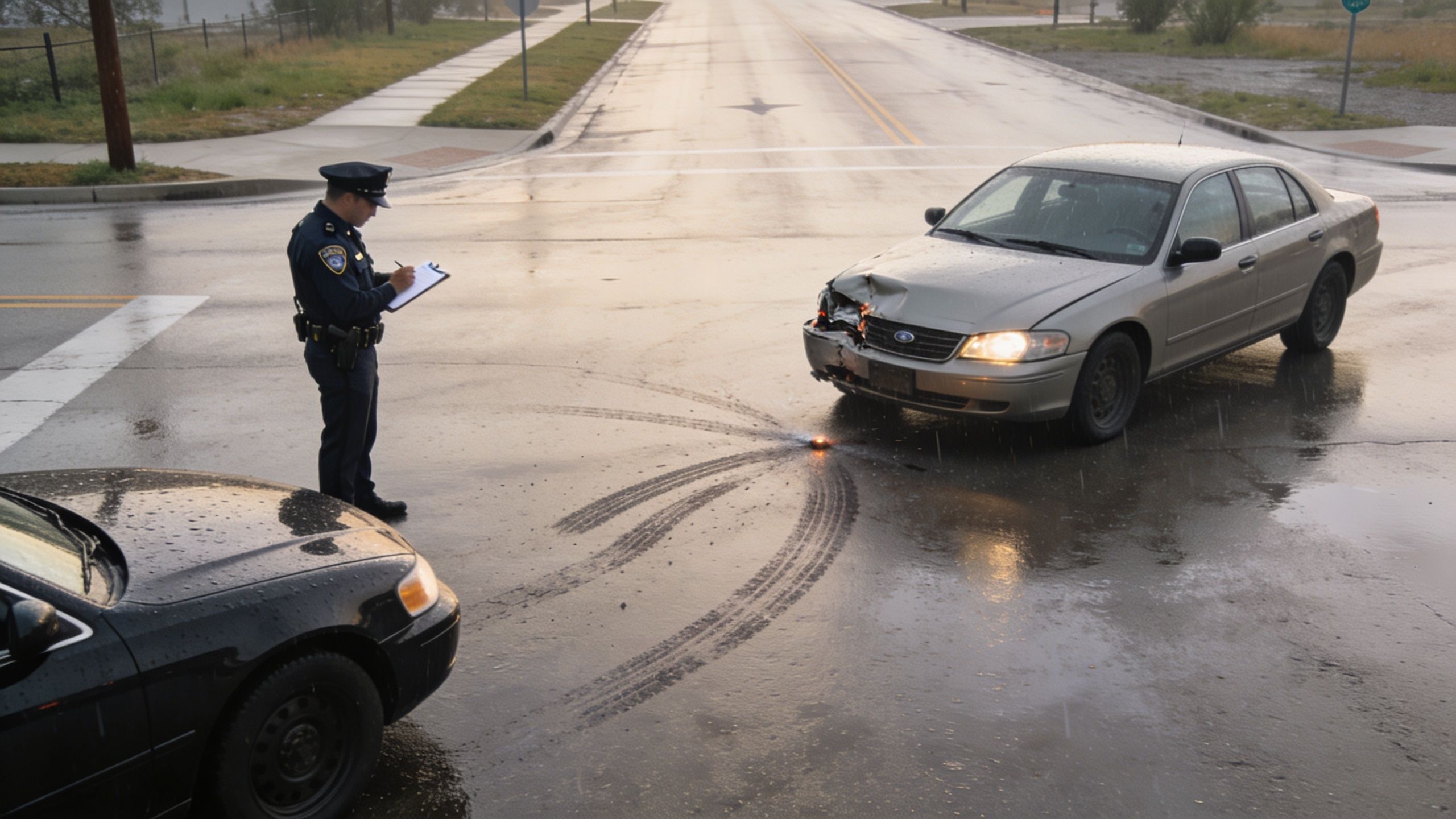
A Houston driver is rear-ended on I-45 during a sudden downpour. The striking driver says, “I was driving the posted speed.” But the pavement was slick, visibility was poor, and traffic was braking unpredictably.
That can still point to negligence. If a driver could not stop safely because they were moving too fast for the weather, the problem is not just the posted number. The problem is that the speed was unsafe for the conditions.
A Dallas construction-zone collision
A driver moves through a highway construction area near Dallas-Fort Worth. Lanes are narrow. Barrels and concrete barriers reduce space. Traffic shifts unexpectedly.
Even if that driver stays under the posted limit, a jury may still decide the speed was not reasonable and prudent. Construction zones shorten reaction time. A careful driver adjusts.
For a plain-language look at the kinds of conduct that often lead to citations and safety findings, this guide to unsafe driving violations can help frame why “under the limit” doesn’t always equal “safe.”
A family hit in dense morning fog near Austin
A family heads out early near Austin in thick fog. Another driver approaches too quickly, fails to see slowing traffic, and causes a chain-reaction crash.
That driver may argue there was no speeding ticket. But low visibility changes what a reasonable speed looks like. In cases like this, unsafe speed can be one of the strongest facts supporting fault.
When visibility drops, a safe speed drops too.
Comparative fault in Texas
Texas uses a rule called comparative fault, also called proportionate responsibility. This means more than one person can share blame for a crash. If you want a fuller explanation, see this page on comparative fault in Texas car accident cases.
Here is the plain-English version:
- Comparative fault means the blame can be divided between drivers.
- Your recovery can be reduced if you were partly at fault.
- You may still recover damages if the facts support your claim under Texas law.
Damages are the losses you suffered, such as medical bills, lost income, property damage, pain and suffering, and other harm tied to the crash.
Texas negligence law also includes rules found in Texas Civil Practice & Remedies Code, Chapter 33, which governs proportionate responsibility, and Chapter 41, which addresses certain limits and rules involving damages in civil cases.
If a defense lawyer or insurance adjuster argues that you “should have seen it coming,” comparative fault may become part of the dispute. That doesn’t mean your case is over. It means the facts have to be developed carefully.
Proving Negligence Using the Basic Speed Law
A lot of injury claims turn on one simple question. Was the other driver going at a speed that was safe for the conditions?
That question matters because negligence is about conduct, not just numbers on a speedometer. A driver can stay near the posted limit and still drive too fast for rain, traffic, darkness, glare, or stopped vehicles ahead. That is where the Texas Basic Speed Law often becomes one of the strongest tools for proving fault and protecting your right to compensation.
The evidence that matters
In plain English, your case is built by showing that a careful driver would have slowed down, and this driver did not.
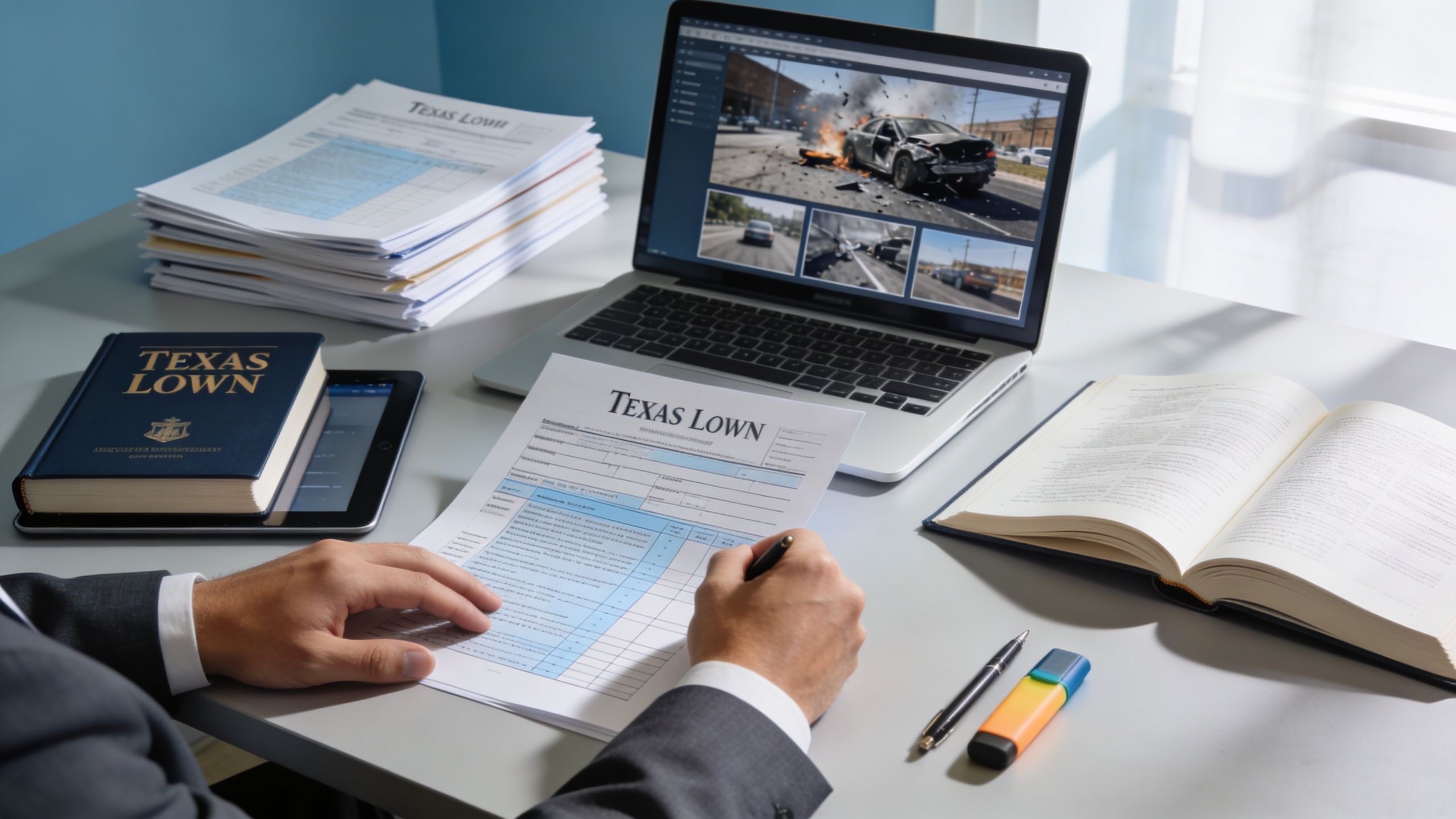
Lawyers prove that point the same way you would solve a puzzle. One piece by itself may not say much. Put enough pieces together, and the picture becomes clear. In a crash involving unsafe speed, those pieces often include:
- Police report details about road conditions, statements, skid marks, and officer observations
- Witness accounts from drivers, passengers, or bystanders who saw the traffic flow or weather
- Scene photos and video showing standing water, fog, damage angles, debris, and lane positions
- Weather records confirming rain, storms, or visibility problems at the time of impact
- Accident reconstruction to analyze braking, timing, vehicle movement, and stopping distance
If you already have the report, this guide on how to read a police accident report can help you spot the details that may support an unsafe-speed claim.
Why no speeding ticket does not end the case
Insurance adjusters often act like the lack of a ticket settles everything. It does not.
A traffic citation is one piece of evidence. It is not the whole case. Civil injury claims ask whether the driver used reasonable care under the circumstances and whether that failure caused your injuries. An officer may arrive after the crash, speak to shaken drivers, and decide not to write a ticket. That does not erase wet roads, short stopping distance, or the fact that the other vehicle could not stop in time.
Here is a useful way to look at it. The posted speed limit is like a ceiling in normal conditions. The Basic Speed Law asks a different question. What was a safe speed on that road, at that moment, with those hazards present?
How lawyers connect unsafe speed to negligence
To recover compensation, you usually need to show more than a bad result. You need to show a chain of cause and effect.
A lawyer often builds that chain in three parts.
First, identify the conditions. Maybe traffic was bunched up, visibility was poor, or the road was slick.
Second, match those conditions to the driver's choices. Maybe the driver followed too closely, braked late, drifted, hydroplaned, or slammed into slowed traffic.
Third, tie those choices to the crash and your injuries. If a safer speed would have given that driver time and distance to avoid the impact, that helps prove negligence.
That is the unique power of the Basic Speed Law in a Texas injury case. It gives you a legal path to show fault even when the other driver says, "I was under the limit." If the speed was unsafe for the conditions, that fact can support liability and strengthen the value of your claim.
What to Do After a Crash Involving an Unsafe Driver
The hours after a crash can feel blurry. You may be hurt, shaken, and unsure what to do first. If unsafe speed may have played a role, the steps you take right away can protect both your health and your claim.
What to do at the scene
Start with safety. Call 911, ask for medical help if anyone is hurt, and move out of traffic if you can do so safely.
Then focus on preserving facts, not debating blame.
- Call law enforcement so there is an official record of the crash.
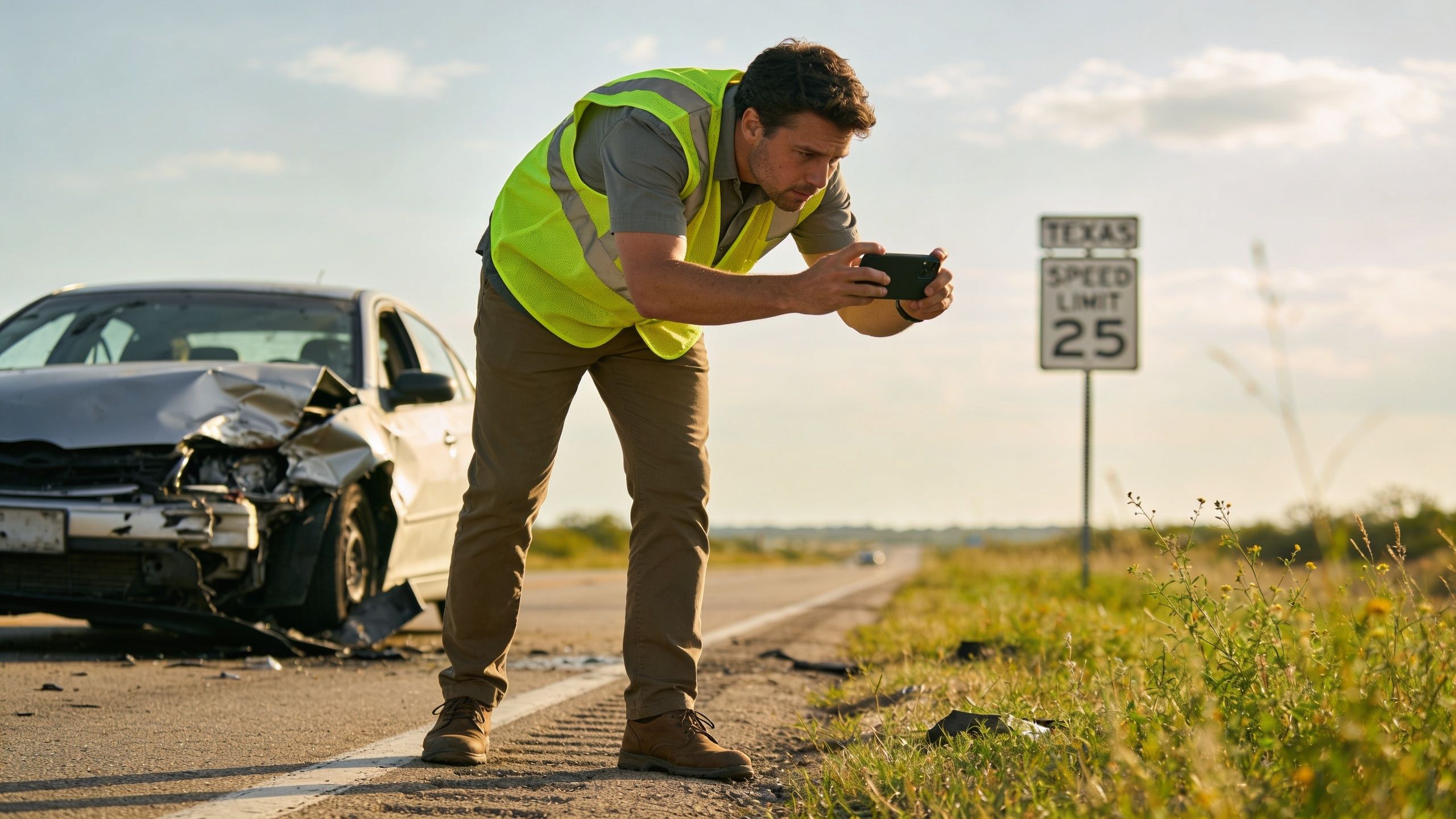
- Take wide and close photos of vehicle damage, skid marks, debris, lane positions, traffic signals, standing water, fog, puddles, and any construction signs.
- Record the conditions that made the speed unsafe. Rain, glare, backed-up traffic, poor lighting, or road narrowing can become important later.
- Get witness names and contact information before people leave.
- Exchange basic information only with the other driver, including insurance and vehicle details.
Do not apologize for the crash, guess about your speed, or say you are “fine” if you are not sure. Adrenaline can hide injuries.
What to do in the next few days
Medical care comes first. Even if you walked away, you should be evaluated if you have pain, dizziness, headaches, numbness, stiffness, or other symptoms.
Keep your paperwork organized. Save discharge instructions, prescriptions, repair estimates, tow invoices, and messages from the insurer.
This video gives a useful overview of what early post-crash steps can look like:
How to handle the insurance company
An auto insurance claim is your request for payment under an insurance policy after a crash. The adjuster may sound friendly, but their job is to evaluate and often minimize the company’s payout.
Use a simple approach:
- Stick to verified facts about where, when, and how the collision happened
- Do not guess about speed, injuries, or fault
- Do not give a recorded statement until you understand your rights
- Do not accept a quick settlement before you know the full extent of your injuries
If the crash caused a fatality, surviving family members may also have questions about wrongful death compensation. Those claims are separate from an injury claim and involve different losses and legal rights.
Get Help From a Houston Car Accident Lawyer
A common insurance argument sounds simple. “Our driver was under the speed limit, so speed was not the problem.” In an unsafe-speed case, that can be misleading.
The basic speed law works like a common-sense safety rule. A posted limit is the ceiling in normal conditions. It is not a free pass when traffic is stacked up, rain is falling, visibility is poor, or a driver is approaching a curve, intersection, or stopped vehicles. That is why these claims often turn on proof, not on the number printed on the speed limit sign.
A Houston car accident lawyer helps translate that rule into evidence an insurance company cannot brush aside. The job is to show what the other driver should have done under the conditions that existed at that exact moment, and how their unsafe speed caused your injuries. In many cases, that is the difference between a denied claim and a paid one.
Why legal help matters
Unsafe-speed claims often look straightforward at first and become disputed once the insurer gets involved. The adjuster may argue there is no speeding ticket, no clear admission, or no proof that speed caused the collision. A lawyer can build that missing chain by gathering scene photos, black box data when available, witness statements, crash reports, vehicle damage patterns, and medical records that match the force of the impact.
That matters because your case may involve:
Liability
Who is legally responsible for causing the crash.Comparative fault
Whether the insurer is trying to place part of the blame on you under Texas Civil Practice & Remedies Code Chapter 33.Damages
The money you may seek for losses such as medical care, lost income, property damage, pain and suffering, and other harm. Chapter 41 of the Texas Civil Practice & Remedies Code addresses rules that can affect certain damage issues in civil cases.Statute of limitations
The legal deadline to file a lawsuit. If you miss that deadline, you may lose the right to pursue your claim.
If you are weighing your options, this guide on working with a car accident lawyer in Houston explains what legal representation can do in a serious injury case.
You do not have to sort this out alone
These cases are rarely just about one fact. They are about the full story. How fast was the other driver going for the weather, traffic, road design, and distance available to react? Could they have avoided the crash by slowing sooner? Did the insurer skip over those questions because the posted limit sounds favorable to their side?
A Texas injury attorney can help answer those questions in cases involving passenger vehicles, trucks, rideshare crashes, uninsured drivers, and fatal collisions. If your family is grieving a loss, legal guidance may also matter in a wrongful death claim, where the evidence must connect the driver’s unsafe conduct to the harm that followed.
Good representation protects your claim and gives you room to focus on healing.
If you were hurt in a crash and the other driver insists they were “going the speed limit,” do not assume your case ends there. The Law Office of Bryan Fagan, PLLC helps injured Texans investigate unsafe-speed crashes, show why the basic speed law matters, and pursue compensation for medical bills, lost wages, pain and suffering, and other losses. If you need experienced legal help, contact The Law Office of Bryan Fagan, PLLC for a free consultation.