
A car crash can change your life in seconds, but you don't have to face recovery alone. One minute you're driving home on I-45 in Houston, and the next you're dealing with a smashed bumper, neck pain, a tow truck, and a stack of insurance questions you didn't ask for. If you're trying to make sense of the Harris County injury lawsuit process, the good news is that it follows a real path, even when it feels chaotic at first.
A rear-end crash can leave you shaken before you've even had time to pull over safely. If the vehicle is still drivable, getting it repaired quickly can help you move forward while the legal side is sorted out, and a local resource like restore your car in Whitby shows how collision repair is often part of the recovery process after a crash. In Texas, the legal side can be just as important as the physical repair, because your claim may move through filing, service, discovery, mediation, and maybe trial.
That process can feel overwhelming when you're hurting and trying to keep up with work, appointments, and family responsibilities. A Houston car accident lawyer can help you understand where your claim fits, what deadline matters most, and which court may hear the case. If you know the path early, you're less likely to make a mistake that hurts your compensation later.
A Car Crash Can Change Everything in Seconds
A Houston driver heading south on I-45 gets rear-ended in rush hour traffic. The car lurches forward, traffic backs up, and the driver steps out feeling stunned, sore, and unsure what to do next. That moment is where the Harris County injury lawsuit process begins for many people, even if they don't think of it that way right away.
The legal case doesn't start with a courtroom speech. It starts with a paper trail, medical care, witness information, and a decision about whether the other driver's insurance company is going to deal fairly. A Texas injury attorney looks at those first facts and starts building the claim while the injured person focuses on healing.
What the process really looks like
In plain English, liability means who's legally responsible for the crash. Damages are the losses you're asking to recover, like medical bills, missed work, and pain. Comparative fault means a court can reduce your recovery if it decides you share blame under Texas law, which is part of why the first version of your story matters so much.
Practical rule: the first version of a crash story should be accurate, brief, and consistent, because insurance adjusters and defense lawyers will compare it to later statements.
The system can feel cold, but it isn't random. In Texas, Civil Practice and Remedies Code Chapters 33 and 41 shape how fault and damages are analyzed in personal injury cases, and those rules affect negotiation from the start. If the crash was serious, families may also be thinking about wrongful death compensation, which follows its own grief-heavy path through the courts.
A body shop may handle the car. A lawyer handles the claim. When both move in the right direction, you have a better chance of getting your life back on track.
Critical First Steps After a Harris County Crash
A crash can leave you shaken, sore, and unsure what matters first. Start with the basics. If anyone may be hurt, call 911. If you can safely do it, take photos of the vehicles, the roadway, skid marks, traffic signals, and any visible injuries.
The first hour after a collision often feels blurry, so a simple checklist helps keep the important details from slipping away.

Protect the claim before it starts slipping away
Get medical care quickly, even if you think you are “just sore.” Insurance companies often search for gaps in treatment to argue that the crash did not cause the injury, or that the injury was not serious. Save discharge papers, imaging orders, prescriptions, and follow-up visit notes. Those records matter because they show the injury story from the first medical visit forward.
Do not give a recorded statement to the other driver's insurance company before you understand what is being asked. Adjusters may sound polite, but they work for the insurer, and that first conversation can shape how they evaluate your auto insurance claim. If someone already called, it is fine to say you are getting medical care and will follow up later through counsel.
Timing matters in two different ways. The general statute of limitations for personal injury claims is two years from the date of injury as described in Harris County rear-end collision guidance. If that deadline passes, the lawsuit can end before settlement talks ever become meaningful.
Claims against government entities create a separate problem. Harris County's notice policy under the Texas Tort Claims Act requires written notice to the Commissioners Court within 180 days of the occurrence, and the notice should include the date, time, location, injuries, witnesses, and documentation of damages according to county driver and vehicle safety guidance. If that notice is missed, a valid claim can disappear before anyone has a chance to litigate it.
If you need the crash paperwork, start with this guide on How to get a Harris County accident report. If you want help with the legal side of a collision claim, the firm's Houston Car Accident Lawyer page explains that practice area in plain terms.
Keep every medical appointment. A missed visit often gives the insurance company an argument, even when the actual reason was pain, transportation problems, or work conflicts.
Which Harris County Court Handles Your Injury Case
A Harris County injury claim usually starts with one practical question, where does this case belong? The answer depends on the amount in controversy, because the value of the claim helps determine which court will hear it first. That choice shapes filing steps, service, deadlines, and how formal the case feels once it enters the system.
The court level depends on the claim value
Justice Courts handle disputes up to $20,000 and are built for people who may file without an attorney, with limited procedural and evidentiary rules as described in Harris County filing guidance. County Courts at Law handle cases above $20,000 up to $200,000, while district courts handle higher-value matters, including catastrophic injury and wrongful death cases.
| Harris County Court Jurisdiction by Claim Value | ||
|---|---|---|
| Court Level | Claim Value Range | Key Features |
| Justice Court | Up to $20,000 | Simplified procedures, limited evidentiary rules, designed for self-represented filers |
| County Court at Law | Above $20,000 up to $200,000 | More formal civil process, intermediate-value claims |
| District Court | Higher-value matters | Formal litigation, serious injury and wrongful death cases |
For many injury claims, county civil court becomes the practical route when the value is under $250,000. That does not mean the case is minor. It means the court system assigns it to a different track, much like a crowded hospital sending patients to different departments based on the severity of the injury.
Why the forum changes the experience
The court you land in affects the pace of the case and the paperwork that comes with it. In district court, mandatory e-filing is part of the process, and the filing fee is roughly $300. Citation service also has to be handled within 90 days as described in Harris County filing guidance.
Justice Court looks much lighter by comparison, which is why some people can handle simpler disputes without counsel. The filing process is still formal, but the rules are narrower and the hearings usually feel less like full-scale civil litigation.
Important distinction: the size of the claim affects more than where it is filed, it also changes how formal the litigation feels, how much discovery you may face, and how long the case may sit before a hearing or trial date.
Medical stabilization matters too. A serious injury claim can look smaller than it really is if treatment is still unfolding, which is one reason the early valuation of a case can be misleading. For a plain-language overview of filing deadlines in Texas, see Texas statutes of limitations for injury claims.
Houston's court structure matters because a severe crash is rarely just a fender bender in legal terms. A catastrophic injury, a fatal wreck, or a disputed liability case usually belongs on a more formal track, and a Texas injury attorney can help file it in the right place the first time.
Filing the Lawsuit and Navigating Discovery
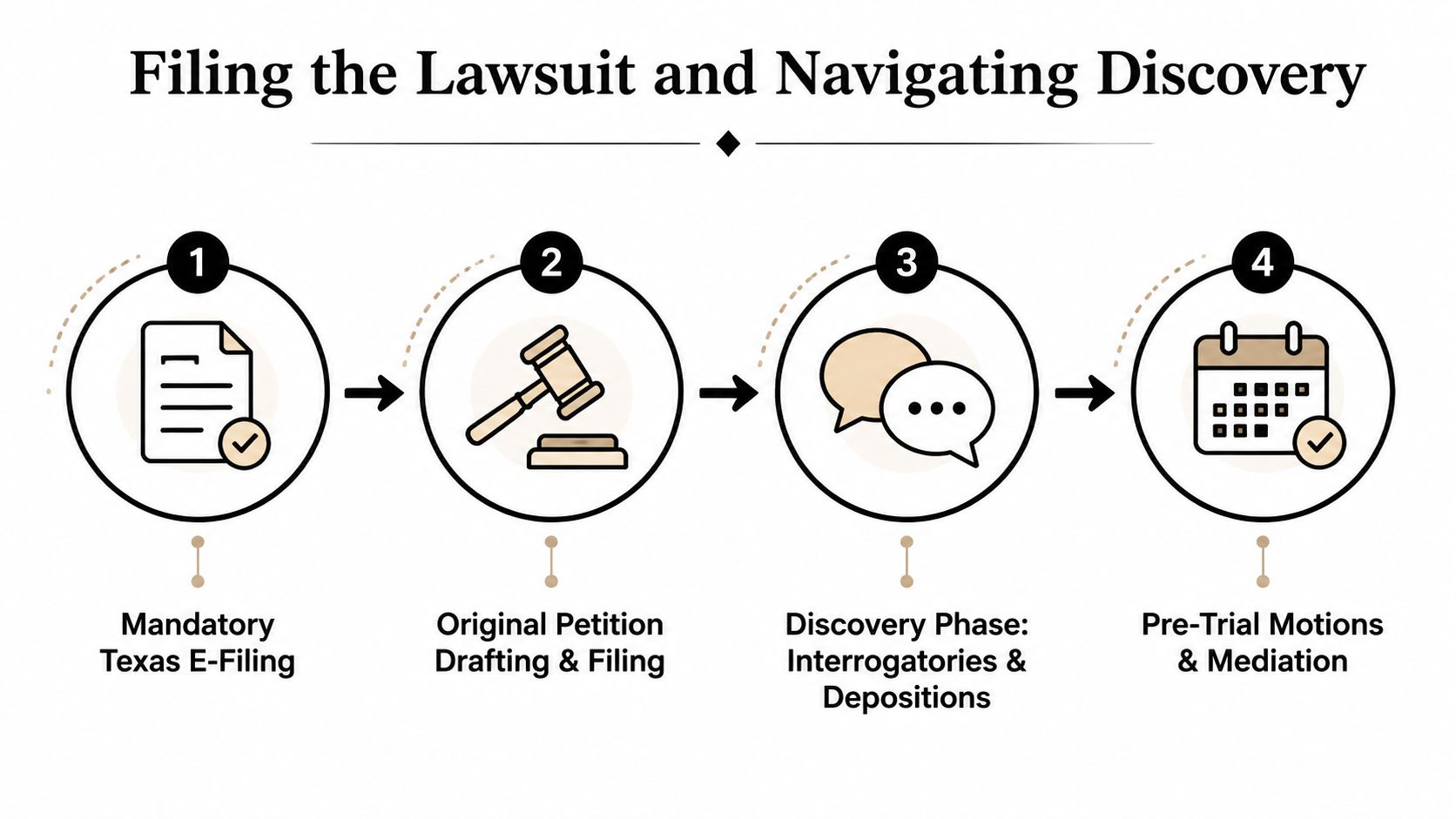
Once a case is ready for court, the paperwork has to be handled carefully. Harris County civil personal injury suits are filed through mandatory Texas e-filing, and the lawsuit begins when the original petition is submitted and the defendant is served with citation. If service drags, the case drags with it.
The filing stage is more than sending papers
A lot of people think the lawsuit starts when the complaint is drafted. In reality, it starts when the petition is filed correctly, routed to the right court, and served on the defendant so they're officially on notice. If the service packet sits too long, even a ready-to-file claim can stall.
The next stage is discovery. That's the part where both sides exchange information, request medical records, send written questions, and take depositions. In plain language, it's where each side checks the other side's story against the documents, witnesses, and medical evidence.
Why timing matters after filing
Discovery control plans create mandatory deadlines, so the case isn't open-ended once it enters court. That structure matters because a serious injury claim usually needs time for medical records to catch up with the condition of the injured person. Lawyers often wait until treatment settles enough to understand the full picture before pushing hard on settlement.
Harris County personal injury cases generally take one to three years from filing to resolution in many contested matters, with some sources describing the filing-to-trial window as 18 to 36 months as noted in Houston personal injury guidance. That doesn't mean every case takes that long, but it does mean patience is part of the process.
For deadline questions tied to a Texas filing timeline, this overview can help: Texas statutes of limitations in injury cases. A complaint filed too late, or served too slowly, can lose ground before negotiations even begin.
Settlement Negotiations Versus Going to Trial
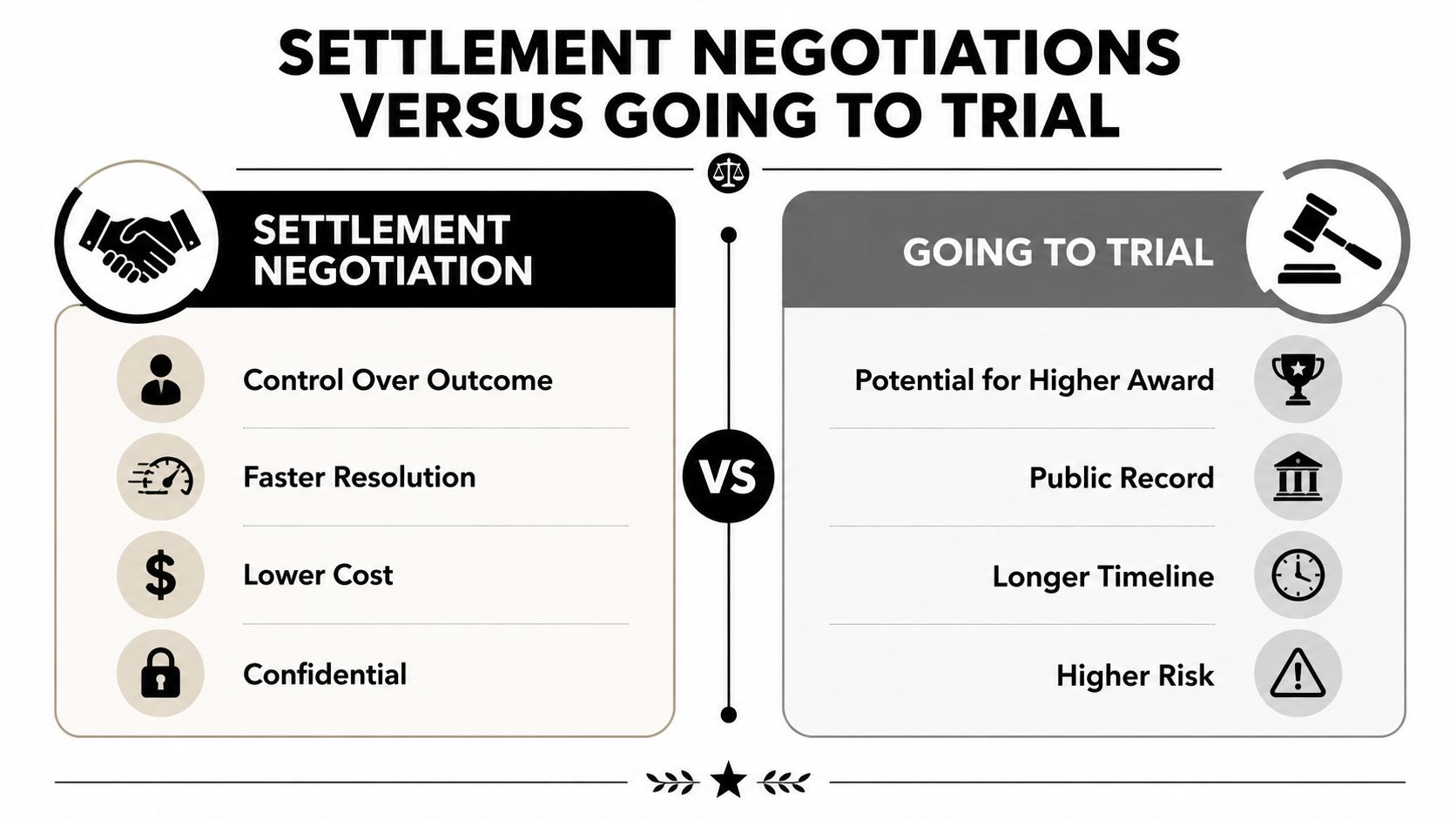
Most injury claims resolve without a jury ever hearing them. That still doesn't make trial irrelevant, because settlement and trial push the case in different ways, and the path you choose depends on evidence, medical care, and how the insurer is behaving.
Settlement usually starts with proof, not pressure
A demand letter is often the first serious settlement move. It lays out liability, injuries, treatment, and damages, then asks the insurer to pay a fair amount. The carrier responds with an offer, a counteroffer, or a request for more records, and many cases move through court-ordered mediation after that.
Mediation is a structured negotiation, not a verdict. If both sides want control and confidentiality, settlement can be a practical option. If the insurer won't deal fairly, trial stays on the table.
Why medical stability changes the bargaining power
Lawyers often wait until a client reaches maximum medical improvement before pushing for final settlement numbers. That's because future treatment, rehab, lost earning capacity, and long-term pain are much easier to value when the medical picture is clearer. If you settle too early, you may leave money on the table because the full cost of the injury isn't known yet.
Texas comparative fault rules under Civil Practice and Remedies Code Chapter 33 also affect negotiation dynamics. If the defense argues you were partly at fault, your compensation can be reduced by your percentage of responsibility, so every fact about the crash matters.
A Houston driver rear-ended on I-45 may have a fairly direct claim, while a multi-vehicle pileup can raise harder questions about who did what first. That's where the claim value, medical records, and fault analysis start shaping whether a settlement is realistic or whether the case needs to be tried.
Trial is slower and more public, but it can matter when the insurer refuses to value the injury honestly.
For readers comparing case resolution options, a helpful background piece is what happens at a mediation hearing.
Common Pitfalls That Can Derail Your Injury Claim
A claim can fall apart piece by piece, through small mistakes like saying too much, waiting too long, or posting something online that seems harmless but later hurts credibility. Insurance adjusters watch for those details, because they often shape how the defense values the case.
Recorded statements cause problems often. An adjuster may sound polite and ask simple questions, but those questions are usually designed to pull out words that can be used later to downplay the injury. Until you have spoken with counsel, it is usually wiser to keep communication narrow and deliberate.
Social media can create trouble just as quickly. A single smiling photo, a vacation update, or a casual remark about “feeling better” can be taken out of context and used against you, even if you were still in pain. Defense lawyers look for anything that appears inconsistent, even when the picture is incomplete.
Government claims deserve extra attention
Claims against Harris County or another governmental defendant follow a different notice path. The deadline discussed earlier can end a claim before the ordinary two-year filing deadline even becomes the main issue. That is one reason people should not assume every injury case follows the same track.
Claims against a government entity also need faster handling because the paper trail can matter before anyone reaches settlement talks. Service problems, internal review, and missed notice steps can all narrow the case before it ever reaches a courtroom. A case that would be strong in ordinary litigation can lose value fast if the required notice never goes out.
Delaying treatment causes its own damage. If you wait weeks to see a doctor, the insurer may argue the injury came from something else, or that it was not serious enough to justify immediate care. That argument shows up in settlement talks all the time, and it becomes easier for the defense to raise when the medical record has gaps.
The video below offers another way to think about the claim process.
Best habit: tell the truth, get medical care, and let your lawyer handle the insurer once the claim is underway.
If a crash involves a fatal outcome, the family may also need guidance on wrongful death compensation, which brings even more pressure on notice deadlines, evidence preservation, and court choice.
How The Law Office of Bryan Fagan Fights for Your Recovery
A strong injury claim starts with fast investigation, careful filing, and steady communication. The Law Office of Bryan Fagan, PLLC handles that process from the first call through negotiation and trial, including car accidents, trucking crashes, and fatal wrecks. The firm's work also covers related matters like truck accident claims and wrongful death cases, where the legal and emotional stakes are especially high.
The firm uses a contingency-fee structure, so you don't pay unless the case is won. That matters when medical bills are already piling up and you're trying to protect your family and your future.
The right lawyer should explain the court track, the deadline, the medical proof, and the likely next step in plain language. If you want help from a Houston car accident lawyer who understands Harris County procedure and can walk you through the filing, discovery, and negotiation stages, the team is ready to step in.
If you've been hurt in a crash, The Law Office of Bryan Fagan, PLLC can help you understand your options, deal with the insurance company, and protect the deadlines that control your case. Visit The Law Office of Bryan Fagan, PLLC to schedule a free consultation and get clear guidance on your next step.