
A car crash can change your life in seconds, but you don't have to face recovery alone.
If you're staring at a wrecked bumper on I-45, a stack of medical bills, and an insurance adjuster who already sounds ready to underpay you, you're in the same place a lot of Houston families land after a serious collision. The fear is real. You're hurt, you may be missing work, and now you're wondering how you can afford a lawyer on top of everything else.
That's where a Houston accident lawyer no win no fee arrangement matters. In plain English, it gives you a way to hire help without paying attorney's fees upfront, which is exactly why this model is so common in Texas injury cases. A contingency-fee lawyer takes the case with the understanding that the fee comes from a recovery, not from your pocket while the case is pending.
That sounds simple, but the fine print matters. The key question after a crash isn't just whether you can hire a lawyer, it's what you could still owe, how case expenses work, and what you take home at the end. If you want straight answers, keep reading, because that's the part most pages skip.
A Car Crash Can Change Everything in Seconds
A Houston driver gets rear-ended on Loop 610, walks away sore, and assumes the damage is minor. Two days later, the neck pain gets worse, the ER bill shows up, and the insurance company starts asking for a recorded statement. The car needs repairs, work shifts get missed, and the person who caused the crash suddenly acts like it's all up for debate.
That is when legal help starts to matter. A Houston accident lawyer no win no fee arrangement gives you access to representation without forcing you to pay attorney's fees up front while you are already under pressure. It is an access-to-justice tool, especially for people who cannot fund a lawsuit while trying to heal.
Why the fee model exists
The logic is simple. If a lawyer only gets paid when money is recovered, the lawyer has a reason to build the case carefully and push for the strongest result available. That is why contingency work has become the standard structure for many injury claims in Houston and across Texas.
The numbers behind represented claims help explain why this model exists. One widely cited survey reported that represented claimants recovered an average of $44,600 per case, compared with $13,900 for people who handled the claim themselves, and 74% of represented car-accident victims got a payout versus 54% of unrepresented victims. Those figures are part of the reason contingency representation is so widely used, because the lawyer's fee is tied to the recovery and the client does not have to fund the case alone. (Ramji Law)
Practical rule: if you are being pushed to sign something fast, slow down. A crash claim is a legal claim, not a favor from the insurer.
You need to know your rights, your deadline, and your real financial exposure before you sign anything. That includes the hidden costs that pages about “no win no fee” usually skim over, like case expenses and the amount you take home after the lawyer's fee comes out. That is what matters after a wreck, not the sales pitch.
How No Win No Fee Agreements Work in Texas
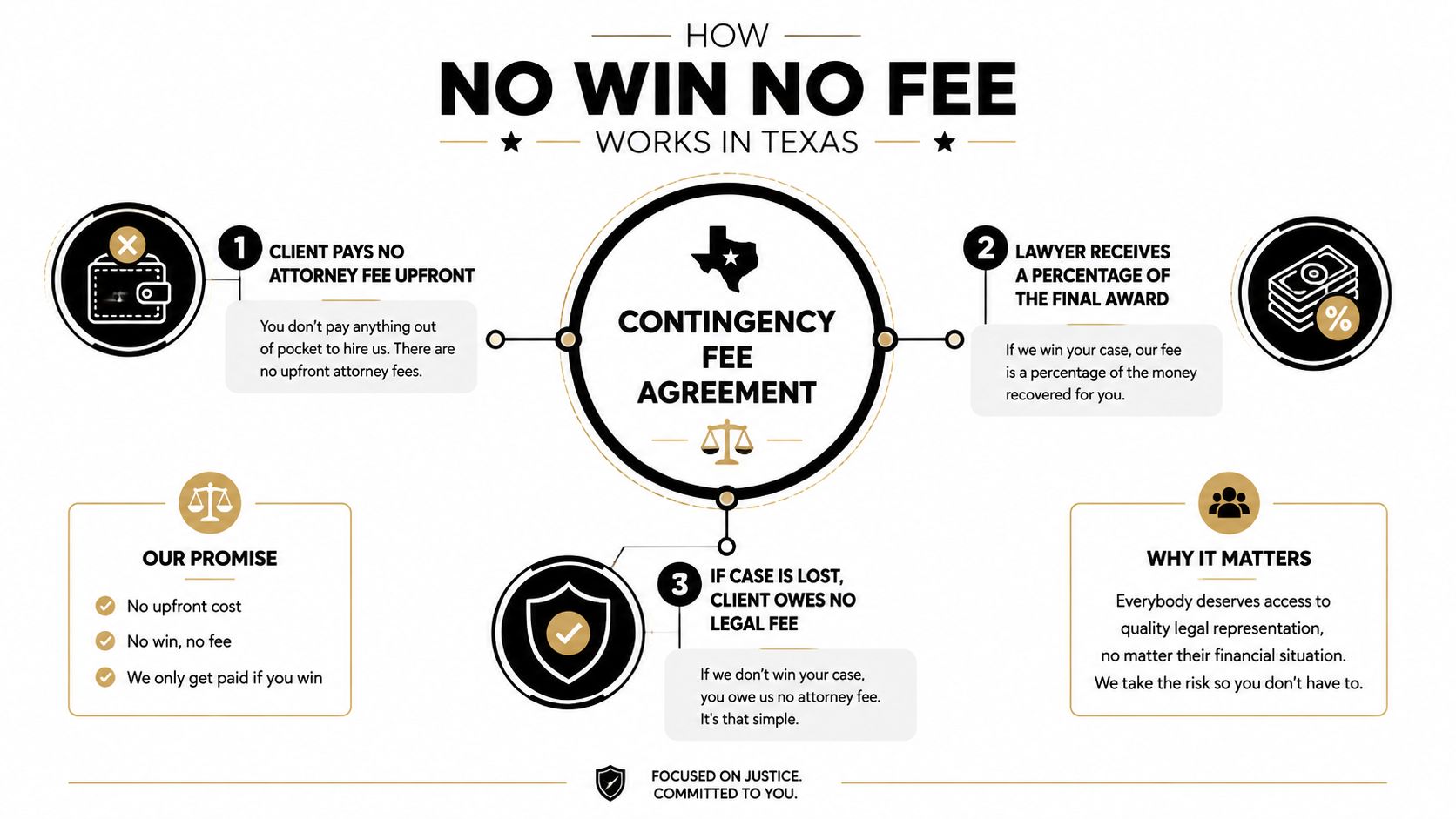
A contingency fee means the lawyer gets paid only if the case brings in money. You pay no attorney's fee upfront, and if there is no recovery, there is no legal fee. That is the basic meaning of no win, no fee in a Texas injury case. (Thomas J. Henry Law Houston)
What happens from the start
The process usually starts with a free consultation. If the firm takes the case, you sign an agreement that sets the percentage the firm will take from any settlement or verdict. In Houston, that percentage is commonly described as 33% before trial and 40% if the case goes to court, because trial work takes more time, more preparation, and more expense. The exact number matters because it directly affects what you keep from the recovery. Read more about auto accident attorney fees
Once the agreement is signed, the firm carries the financial risk during the case. The law firm is investing time, legal labor, and often case costs while the claim is being built. That matters in injury cases with medical records, liability disputes, expert analysis, or an insurance carrier that refuses to act reasonably.
The fee comes out of the recovery only if there is money to recover. That is why contingency arrangements are so closely tied to personal injury law in Texas. Under this setup, the fee is agreed to in advance, so you know how the payment structure works before the case starts.
Why this model helps injured people
The biggest advantage is straightforward. You do not need cash on hand to get legal help after a serious crash. That matters when the bills are already landing and your paycheck has stopped or shrunk.
Houston firms often pair contingency representation with a free consultation, and the fee comes from the final recovery rather than from your wallet during the case. That is the practical value of the model. It lets you keep the claim moving while you focus on treatment and getting your life stable again. (Call Amanda Demanda Houston)
Understanding Fee Percentages and Case Expenses
This is the part people really want answered. Not just “What's the fee?” but “What could I still owe, and what do I walk away with?” That is the right question to ask before you sign anything.
In Houston, contingency fees are commonly described in the 33% to 40% range, and the percentage often rises if the case has to be tried instead of settled. That means the lawyer's share can change depending on how hard the case becomes. If you do not ask about that up front, you are guessing about the number that matters most, your net recovery. If you want a closer look at how lawyer fees are usually structured, review this guide on auto accident attorney fees.
Attorney fee is not the same as case expenses
A lot of people lump everything together, but they should not. Attorney's fees are the lawyer's payment for handling the case. Case expenses are the out-of-pocket costs needed to move the claim forward, things like filing fees, expert witnesses, medical records, and depositions. Texas contingency agreements often mean the firm advances those costs during the case, and some Houston firms say they absorb them if the case is lost. (NALawTX FAQs)
That is why you need the agreement in writing before you sign. The fee percentage answers one question. The cost language answers another, and the fine print decides whether you owe anything after the case ends.
A useful way to look at it is this. If a claim settles, the lawyer is paid first from the recovery under the agreement, then costs are handled the way the contract says, then the remaining amount goes to you. That is the number that matters when you are trying to pay rent, cover care, and replace lost income.
| How a Houston Contingency Fee Breaks Down | Settlement Amount | Attorney Fee (33%) | Attorney Fee (40% if Trial) | Estimated Case Expenses | Client Net Recovery |
|---|---|---|---|---|---|
| Example breakdown | $100,000 | $33,000 | $40,000 | Varies by case | Depends on the agreement |
That table shows why the details matter. A case that looks large on paper can shrink fast once fees and expenses are applied, so you should always ask how the firm handles costs before you hire anyone. You should also ask whether the contract requires you to reimburse expenses if the outcome is poor. If a lawyer will not explain fees and expenses in plain English, keep looking. You are not buying confusion.
Advantages and Drawbacks of Contingency Representation
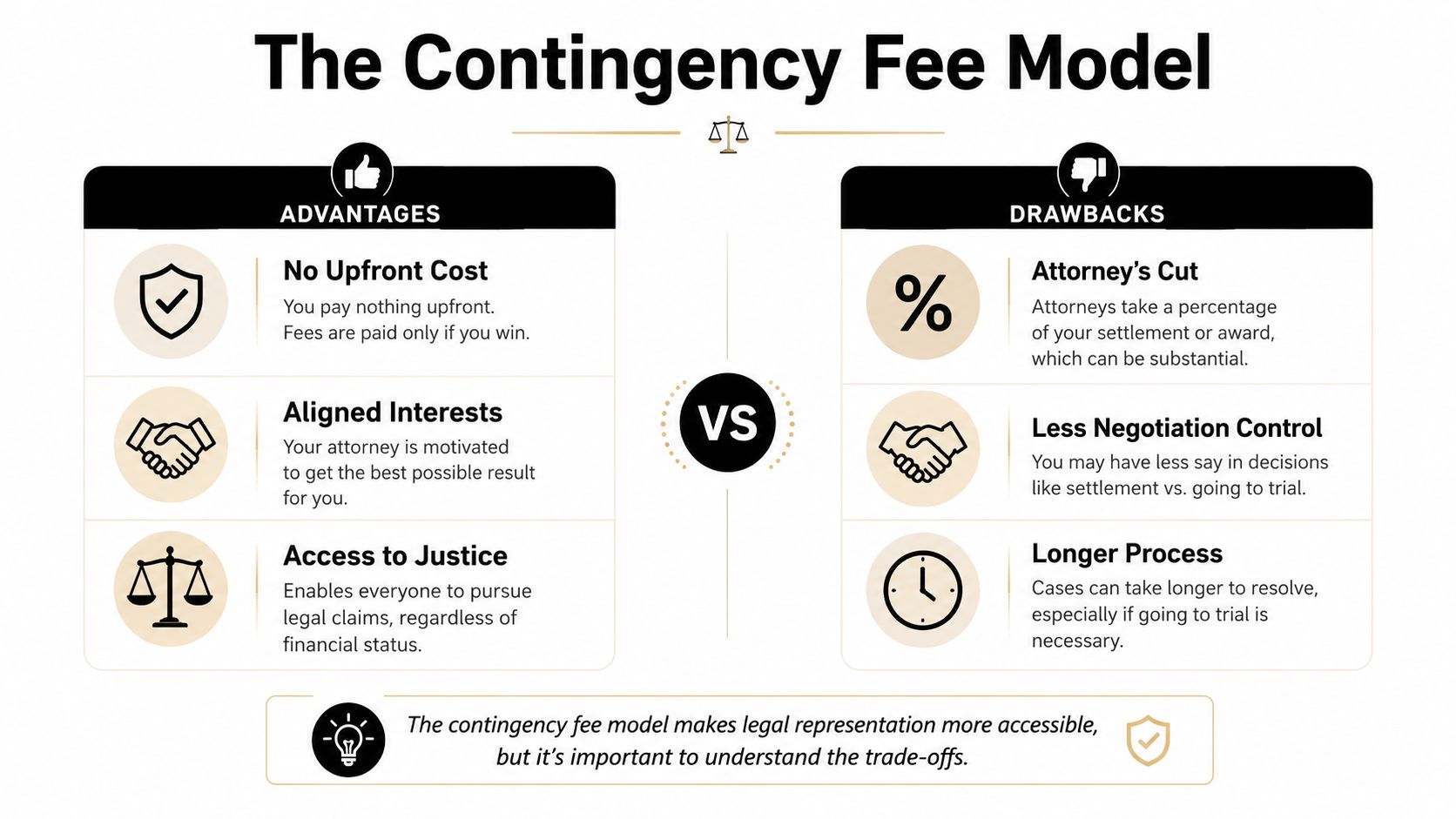
The no win, no fee model helps injured people get legal help without paying upfront, but the fine print still controls what you keep. If you are hurt in a crash, that is the part that matters.
The upside is real
The biggest advantage is simple, no upfront attorney's fee. You do not need a retainer to get help, which matters when medical bills are arriving and work has stopped. It also shifts the financial risk away from you and onto the firm while the case is being pursued.
The other strength is motivation. A lawyer who only gets paid if you recover has a direct reason to push for more compensation, not to run up hours. That lines up with why represented claimants often recover more than people who handle the claim alone, as noted earlier in the fee breakdown discussion.
The tradeoff is also real
The lawyer's fee comes out of the recovery, so the amount you take home will be lower than the gross settlement. That is the cost of legal representation. Some firms will also decline cases that are too small or too uncertain, because contingency work has to justify the time and expense involved.
Case expenses can change the math too. Filing costs, records, experts, and depositions may be paid during the case, but the agreement should say clearly who covers them and when. Read that part closely. It is where people get surprised.
You should also look at the contract language on expenses if the case does not end well. Some firms absorb those costs, some do not, and that difference can matter a lot. If the lawyer will not explain it in plain English, keep walking.
The right comparison is not between contingency representation and a perfect outcome. It is between contingency representation and doing nothing, or trying to negotiate with an insurer by yourself. In a serious injury case, that is usually a bad trade for the injured person. A skilled Texas injury attorney can handle the insurance fight while you stay focused on treatment and family.
If you want a plain explanation of how fee language affects your take-home recovery, review the fee discussion from this Houston settlement guide and read the contract before you sign.
Questions to Ask Before Signing a Contingency Agreement
Do not sign a fee agreement because you are tired, hurt, or relieved that someone finally picked up the phone. Ask direct questions and listen for direct answers.
Questions that should get answered in plain English
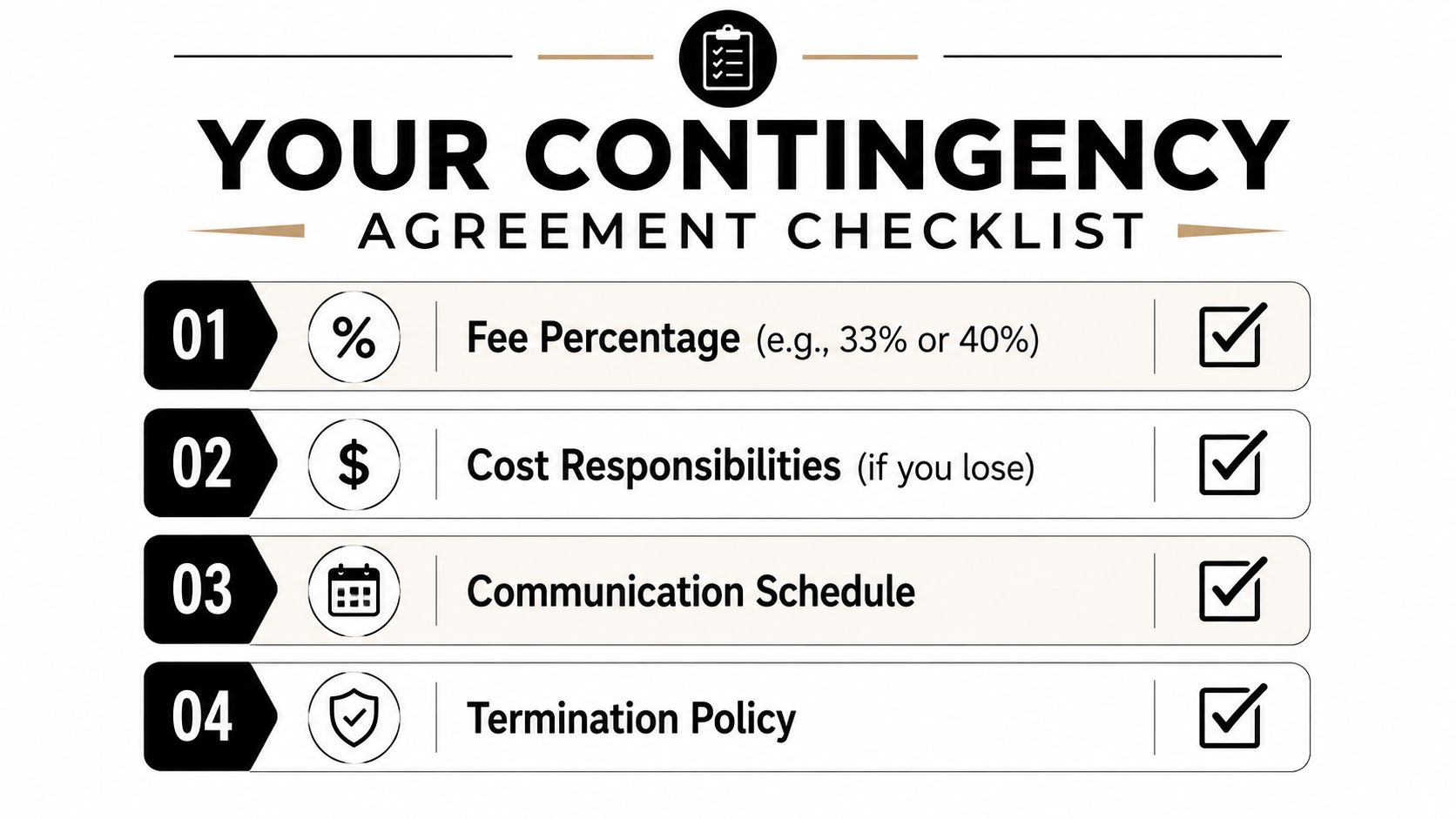
- What percentage do you charge? Ask whether the fee is 33%, 40%, or something else, and ask whether that percentage changes if the case goes to trial.
- How are case expenses handled? Get a straight answer on filing fees, records, experts, and depositions, and ask whether you owe anything if the case is lost.
- What experience do you have with my kind of crash? A rear-end claim is not the same as a trucking case or a wrongful death claim.
- How will you keep me updated? You deserve a communication plan, not silence.
- What is my deadline? Under Texas law, most personal injury claims must be filed within two years of the crash date. Miss that deadline, and you can lose the right to recover. (Charles Argento)
That two-year rule controls your ability to act. If you wait too long, the insurance company may not need to settle because your claim can be barred.
A good lawyer will answer those questions without stalling. A bad one will dodge them.
If you want a structured list of what to ask before hiring counsel, use these car accident lawyer questions and compare the answers carefully. That extra ten minutes can save you a lot of trouble later.
Bottom line: read the fee agreement before you hire anyone. If the language is fuzzy, the deal is not ready for your signature.
What to Expect During Your Houston Accident Claim
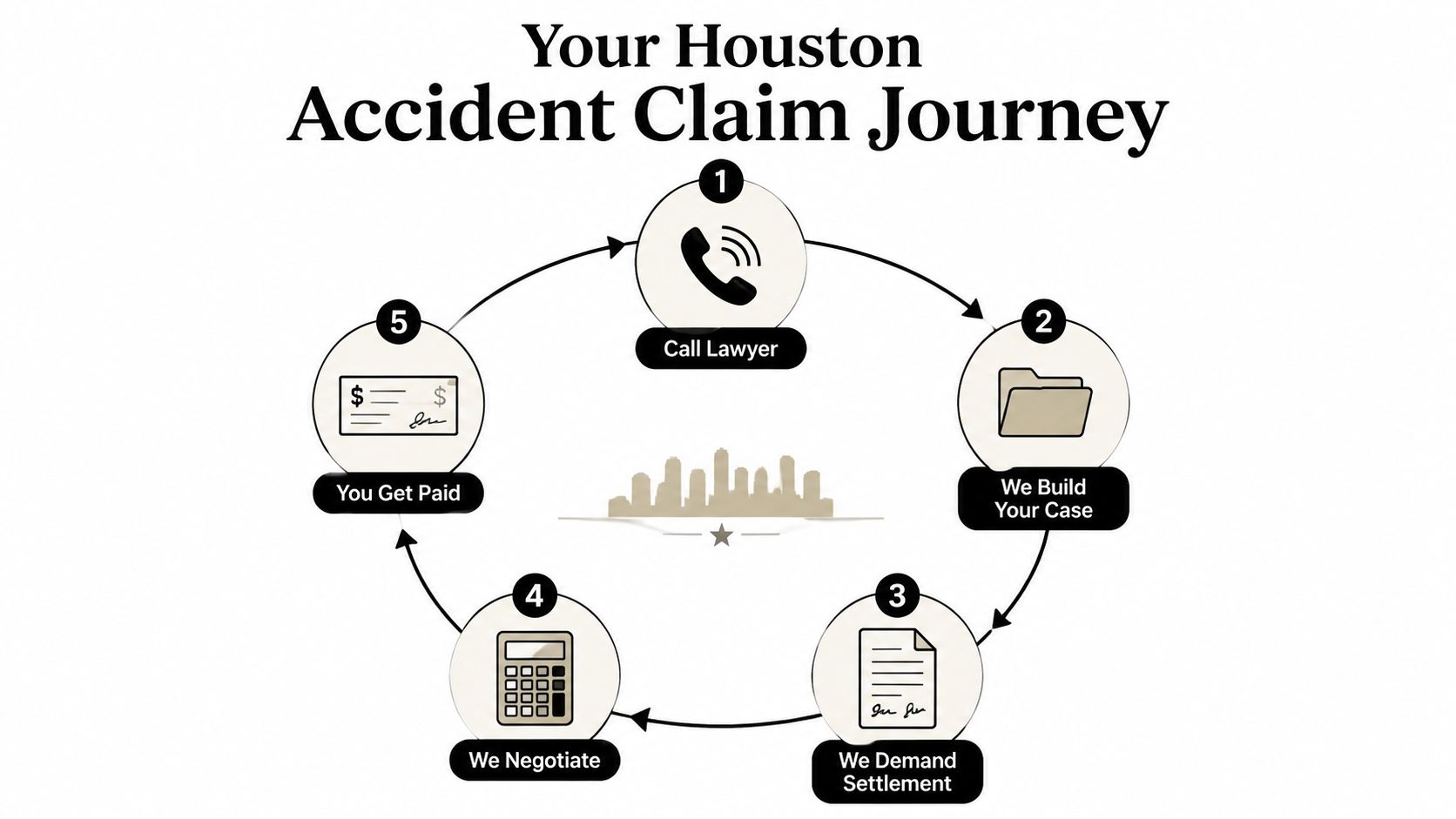
A claim should feel organized and transparent, not mysterious. If you were rear-ended on I-45, the process usually starts with a call, then your lawyer takes over the legal work so you can focus on healing.
How the claim usually moves
The first step is the free initial consultation. You tell the lawyer what happened, what injuries you have, and what the insurance company is doing. Then the firm investigates, gathers records, reviews the crash facts, and starts building the liability picture.
The next step is the insurance fight. Texas negligence cases turn on liability, which means legal responsibility for the crash, and comparative fault under Chapter 33 of the Texas Civil Practice & Remedies Code, which can reduce recovery if a person shares blame. Damages are the losses you can claim, such as medical bills, lost income, and pain-related harm. Your lawyer should explain those issues in plain English, with no fog and no filler.
Then comes negotiation. The firm sends the claim, presses for fair payment, and pushes back if the insurer blames you or tries to minimize the injuries. If the insurer refuses to be reasonable, the case can move toward litigation and trial.
As covered in the questions section above, Texas gives you two years from the crash date to file. Miss that deadline, and the court can dismiss the case, no matter how strong it looks.
For related crash types, you may also want to read about truck accident claims, wrongful death compensation, and insurance disputes. Those issues come up often when the crash is serious or the insurer starts playing games.
What you should do right away
- Get medical care: Your health comes first, and treatment records help your claim.
- Report the crash: Make sure the accident is documented.
- Save everything: Photos, bills, texts, and repair estimates can matter.
- Avoid guesswork with insurers: Don't speculate about fault on a recorded call.
- Call a lawyer early: The sooner the case is built, the better your chances of protecting evidence.
Here's the part many people do not realize. A contingency lawyer handles the heavy lifting, but you still need to give them accurate information and respond quickly when they ask for documents. That partnership is what moves the claim forward.
How The Law Office of Bryan Fagan Fights for Your Recovery
A crash can leave you staring at repair bills, medical appointments, missed work, and a stack of insurance paperwork. The Law Office of Bryan Fagan, PLLC handles Houston accident cases on a contingency-fee basis, so you do not pay attorney's fees upfront, and the firm advances case costs while the claim is pending. The fee comes from a recovery, and if the case does not recover money, you are not left carrying an attorney's fee bill.
That fee structure still leaves a real question for injured people, what could I owe if the case is not successful, and what do I take home if it is? The answer depends on the agreement, the expenses the firm advances, and the result in your case. You should ask for that explanation before you sign anything.
The firm works on a range of crash claims, including rear-end, T-bone, head-on, multi-vehicle, rideshare, trucking, distracted driving, and wrongful death cases. That matters because each crash brings different facts, different insurance defenses, and different pressure points. A seasoned Houston accident lawyer should be ready to challenge liability disputes, insurance delays, and low offers without wasting your time.
The firm also serves clients in Houston, Dallas-Fort Worth, Austin, and San Antonio, which gives injured people across Texas a place to start when a crash turns daily life upside down. In a serious case, you need a team that explains your rights clearly, builds the file properly, and keeps pressure on the insurer while you focus on healing.
Get a free consultation early. Ask about fees, case expenses, and how those costs come out of a settlement or verdict. That is how you find out what your claim may be worth and what you may keep.
If you've been hurt in a crash, The Law Office of Bryan Fagan, PLLC can review your case on a contingency basis, explain what you may owe, and spell out what your recovery could look like after fees and costs. Visit The Law Office of Bryan Fagan, PLLC to request your free consultation and get straight answers about your Houston accident claim.