A car crash can change your life in seconds, but you don't have to face recovery alone. If you're sitting at home after a wreck on I-45, your neck hurts, the phone won't stop ringing, and the other driver's insurer is already fishing for a recorded statement, you need straight answers now, not later. That's exactly where a Houston accident lawyer free consultation should help, it should tell you whether your claim is real, what evidence still exists, and what mistakes you need to avoid before they cut your case down.
The First 72 Hours After a Houston Crash and Why Timing Matters
A Houston driver gets rear-ended on the Katy Freeway, limps home, and thinks the damage is just a sore back and a crushed bumper. By the next morning, the adjuster has called twice, the repair shop wants a decision, and work is already asking when the driver can come back. That first stretch feels chaotic because it is chaotic, and the choices made there can shape the whole claim.
Why the first call matters
The smart move is to treat those first 72 hours like evidence preservation time, not waiting time. Get the crash time, location, police report number, insurer names, witness contacts, photos, and every symptom you feel, even if it seems minor. A prompt review can also flag whether the vehicle needs to be held for inspection before repairs start, because once the car is fixed, a lot of proof gets harder to recover.
Practical rule: Don't give the other driver's insurer a recorded statement before you've talked to counsel. You're trying to protect your claim, not help them build their defense.
A quick consultation is not a commitment to file suit. It's a risk screen, and in a high-volume market like Houston, that screen matters because the evidence window closes fast and the pressure from insurers starts almost immediately. If you want a plain checklist for those first steps, this guide is a useful companion: What to Do After a Car Accident.
What people often do wrong
The most common mistake is waiting until after a medical gap, a recorded statement, or a broad medical authorization has already weakened the file. Another mistake is letting the shop, the insurer, or a well-meaning relative rush the process before you know what your injuries are worth. If you're worried you've already made one of those mistakes, that's still a reason to call. It's not a reason to give up.
What Actually Happens During a Free Consultation
A real consultation usually feels more like a case review than a sales pitch. Somebody on the intake side gathers the basic facts first, then an attorney, sometimes with a paralegal or case manager, walks through what happened, what injuries you have, and who might be legally responsible. If the meeting is handled well, you leave with a clearer view of liability, coverage, and whether the case is worth pursuing.
What the lawyer is really checking
The lawyer is looking for three things. Liability, meaning who legally caused the crash. Causation, meaning whether your injuries connect to that crash. And coverage, meaning whether there's recoverable insurance money to pay the claim.
If any of those pieces is weak, a serious lawyer should say so directly. That doesn't mean you don't have a case, it means the lawyer should explain whether the path is third-party liability, UM or UIM coverage, or a bigger litigation strategy. A weak consultation is easy to spot because nobody asks about the police report, nobody mentions Texas comparative fault, and nobody explains how the contingency fee changes if the case goes from pre-suit to suit.
How long it should take
A focused review usually takes enough time to get through the facts, the injuries, the insurance issues, and the next steps without rushing you out the door. The point isn't to pressure you. The point is to tell you whether your facts line up with a claim that can be built.
If you want to compare the kind of questions a solid lawyer should answer, this resource is a good cross-check: Questions to Ask a Personal Injury Lawyer. A firm that can't explain its process in plain English usually can't explain your case in plain English either.
Documents and Information to Bring to the Consultation
Come prepared, and the consultation gets sharper fast. Bring the police crash report number, photos of the vehicles and injuries, insurance cards or declarations pages for both drivers if you have them, health insurance information, the names of every provider you've seen, and a simple timeline of pain, treatment, and missed work. Those items tell the lawyer what happened, who may pay, and how the injuries are developing.
What matters most and why
The declarations page matters because it shows coverage limits, and coverage is often the difference between a recoverable case and a frustrating one. The police report matters because it can lock in fault findings early, before someone starts changing their story. Your treatment timeline matters because gaps in care give insurers room to argue that the crash wasn't serious.
If you already have imaging or records, bring those too. A prompt diagnostic record usually helps more than vague follow-up visits because it shows the injury story early, while the facts are still fresh. If you don't have everything, that's fine. A good office can often pull the report, track down witnesses, and start building the file anyway.
Bring the facts first. The lawyer can help gather the rest, but they can't fix a file that was never organized around the right details.
If the crash happened on a property rather than a roadway, or if you're looking at a different kind of injury claim, a resource like Houston Slip and Fall / Premises Liability Lawyer covers injuries caused by unsafe property conditions in Houston. That's a separate category, but it's still useful to know where your problem fits.
For the crash report itself, this local guide can help when you need the official record: Harris County Accident Report How to Get.
Ten Questions Most Houston Accident Victims Forget to Ask
Walk into the consultation like you mean it. You are not there to thank a law firm for returning your call, you are there to find out whether that office can handle your case, protect your evidence, and improve your net recovery. A polished intake script can sound reassuring and still tell you almost nothing.
Ask about the people, the fee, and the courtroom plan
Who will handle my case day to day? You need a straight answer on whether the attorney is hands-on or whether your file will live with a paralegal after the first meeting.
How many cases are you carrying right now? A lawyer with too many open files can miss deadlines, overlook follow-up, and treat your case like routine paperwork.
Do you file suit and try cases, or mostly settle pre-suit? That answer tells you whether the firm knows the courtroom or mainly knows how to send demand letters.
What's the contingency percentage at each stage? In Houston personal injury matters, contingency pricing often moves from 33.33% pre-suit to 40% after suit is filed and up to 45% on appeal (source). That changes your take-home number, so get the percentage breakdown before you sign anything.
Will I owe case costs if we lose? Some firms advance costs differently, and you need that answer in plain English, not in intake-speak.
Ask about pressure points victims often overlook
What happens if the at-fault driver only has minimum coverage? That answer tells you whether the firm is thinking about uninsured or underinsured motorist coverage, or only chasing the easiest insurance check.
Can I switch attorneys if I'm unhappy? You should know how the transfer works before you ever need to use it.
How do you communicate, by phone, email, or portal? If the office cannot explain how updates will reach you, expect frustration later.
What evidence do you want from me this week? A serious lawyer gives tasks, not vague reassurance.
How will this case affect my net recovery? The settlement number is not the number you keep. Ask for the fee, the costs, and the take-home estimate together.
| Case Stage | Typical Contingency % | What This Stage Means |
|---|---|---|
| Pre-suit | 33.33% | The case is being negotiated before a lawsuit is filed |
| After suit is filed | 40% | Litigation has started, so cost and risk usually rise |
| On appeal | 45% | The case has moved into the appellate stage |
If you want a second opinion on what a consult should cover, read this practical overview before you call: Questions to Ask a Personal Injury Lawyer.
Texas Laws That Should Shape the Consultation Conversation
Texas law should steer the consultation from the first minute. Liability means who legally caused the wreck. Comparative fault means how blame gets divided. Damages means the money you may recover for losses like medical bills, lost wages, pain and suffering, and, in fatal cases, wrongful death compensation.
Chapter 33 and why fault matters
Texas uses a modified comparative responsibility rule under Chapter 33 of the Texas Civil Practice & Remedies Code. If you're found more than 50% responsible, you cannot recover. If you're 50% or less at fault, your recovery gets reduced by your share of fault, as explained in these Texas modified comparative fault guidelines. That rule shapes every demand letter, every negotiation, and every conversation about settlement value.
The deadline you can't ignore
The statute of limitations is the filing deadline. One Houston firm summarizes the usual Texas deadline for most personal injury claims as two years from injury. Miss it, and the court will usually shut the door. That is why the consultation should ask when the crash happened, what records already exist, and whether anything is close to disappearing.
Texas Civil Practice and Remedies Code Chapter 41 also matters when the crash causes serious losses, especially in a fatal case. The lawyer should explain what the family can pursue and who has standing to bring the claim. A Houston family dealing with a deadly freeway collision should not spend weeks guessing whether they can still pursue wrongful death compensation.
If the lawyer does not explain Chapter 33 in plain English, you are not getting a real strategy conversation.
A good consult turns the law into action. A weak one leaves you with buzzwords and no plan.
What to Expect After You Sign the Retainer
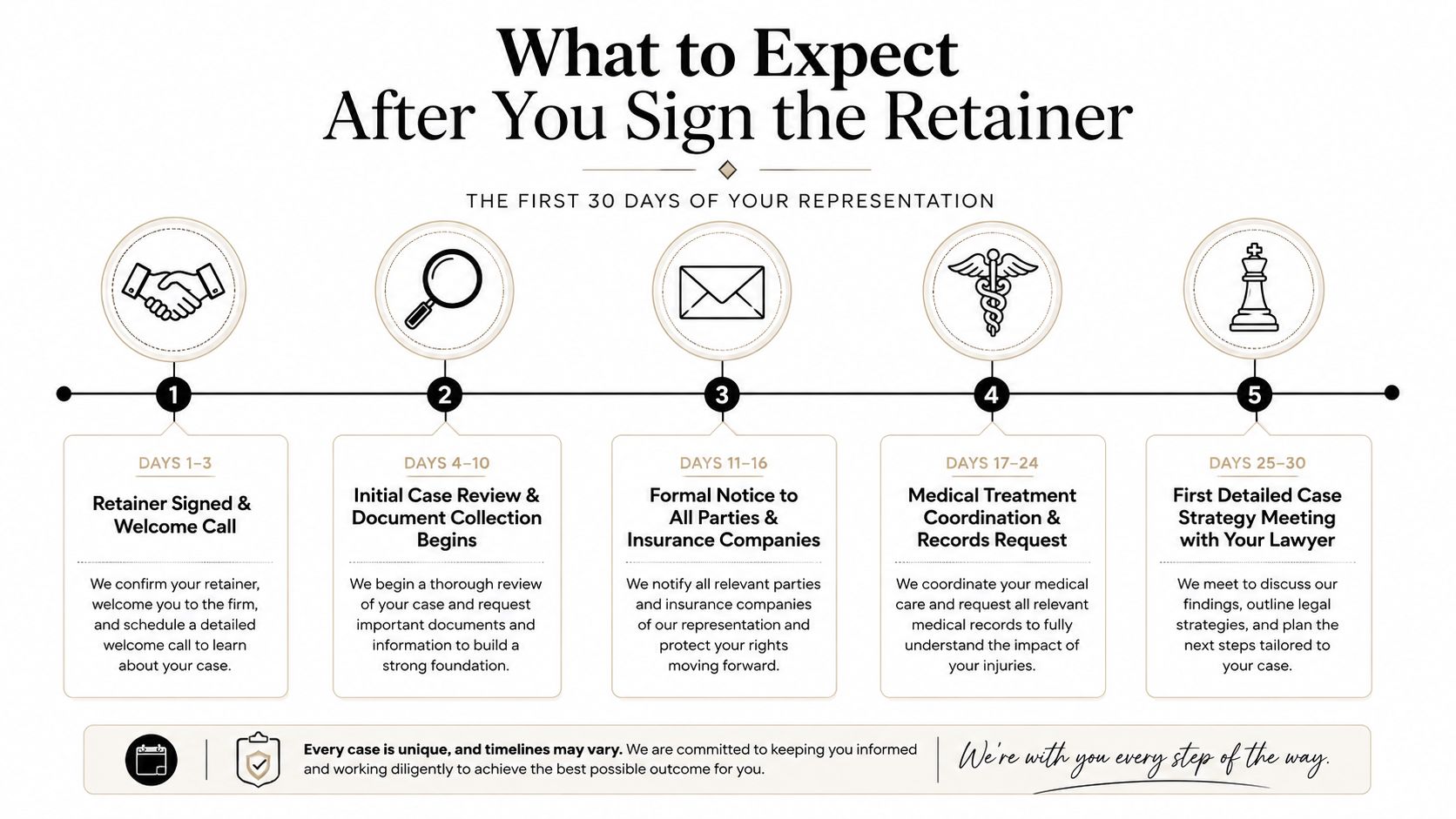
Once you hire counsel, the file should move fast. You'll sign a contingency-fee agreement, the office opens the claim with the at-fault insurer and any UM or UIM carrier, and evidence-preservation letters go out before footage, logs, or vehicle data disappear. That first stretch should feel organized, not vague.
The first month should have a rhythm
The strongest offices use the first days to gather records, confirm treatment, and set the theory of the case. If there's a trucking company, a rideshare platform, or a city entity involved, those preservation letters matter because video and internal records don't sit around forever. If your injuries keep you at home, a practical resource like DME Superstore home care advice can help you think through recovery logistics while your claim is being built.
What healthy communication looks like
You should know who your contact is, how often updates come, and what happens if the adjuster calls you directly. The answer should be simple, tell the insurer to speak to your lawyer, and don't sign or say anything new without guidance. A healthy file also moves through recognizable milestones, like the demand package, negotiation, possible suit, and resolution.
If the firm goes silent after the retainer, that's a warning sign. If nobody can tell you what the next step is, you're not being managed, you're being stalled.
Getting Your Free Case Review With the Law Office of Bryan Fagan
A good consultation should do one thing well, tell you the truth about your case. The Law Office of Bryan Fagan, PLLC handles Houston crashes, rear-end collisions, T-bone wrecks, head-on impacts, multi-vehicle pileups, rideshare cases, trucking claims, and wrongful death matters on contingency, which means you don't pay unless there's a recovery. The firm also serves clients across Houston, Dallas–Fort Worth, Austin, San Antonio, and surrounding Texas communities, so families don't have to guess whether they can get help close to home.
If you're comparing firms, it helps to understand how modern intake works. A practical article on lead gen tactics for attorneys shows why quick response and clear intake matter, but your focus should stay on one thing, whether the lawyer can hear your facts, spot the weak points, and tell you what happens next. That's the difference between a real case review and a sales funnel.
The right time to call is now, before adjusters shape the story without you in the room. If you want a Houston car accident lawyer who will talk through liability, damages, coverage, and timing in plain English, contact the firm and get the file reviewed while the evidence is still fresh. If you were hit on the freeway, a local team can also help you sort out the next steps through the I-10 Katy Freeway Accident Lawyer resource and the main Houston Car Accident Lawyer service page.
The Law Office of Bryan Fagan, PLLC helps Houston crash victims get clear answers, preserve evidence, and understand what a real consultation should cover. If you're dealing with pain, insurance calls, or questions about liability and recovery, visit The Law Office of Bryan Fagan, PLLC to request your free consultation and get a straight answer about your case.