In Texas, you generally have two years from the date of the slip and fall to file a lawsuit. That's the main rule, but some situations can shorten or extend that window, so the right deadline depends on the details of your case.
A car crash can change your life in seconds, but you don't have to face recovery alone. The same is true after a hard fall in a store, apartment complex, parking lot, or office building. One moment you're going about your day. The next, you're on the ground, in pain, embarrassed, and wondering how bad the injury really is.
Many people wait because they think the pain will pass, the manager already knows what happened, or the insurance company will “take care of it.” That's where good claims go off track. When people ask how long after a slip and fall can you sue, they usually don't just want a date. They want to know what to do right now so they don't lose their rights by accident.
If you're trying to get organized, it can help to review practical support resources such as HireParalegals for personal injury needs. You may also want to read more about injuries from falls so you can connect your symptoms, treatment, and legal options early.
Your Life Changed in an Instant What Happens Next
A slip and fall often feels minor in the first few minutes. Then your back tightens. Your wrist swells. You can't put weight on your ankle. By that night, you may be in the emergency room, missing work, or trying to explain to your family why a simple errand turned into a crisis.
That first stage is confusing because two things are happening at once. You're dealing with a physical injury, and a legal timeline has already started. Texas law gives injured people a limited period to bring a personal injury claim, and that deadline matters even when you're still figuring out how serious your condition is.
What most people worry about first
People usually ask the same practical questions:
- Do I have a case: Falling on someone's property doesn't automatically mean the owner is legally responsible.
- How much time do I have: Waiting too long can end your right to recover compensation.
- What should I save: Photos, witness names, medical records, and the incident report can become central evidence.
- Should I talk to insurance: You should be careful. Early statements can be used to shift blame onto you.
A delayed legal response can create problems even when the injury is real and serious.
If you're also dealing with a traffic injury, an auto insurance claim, or the loss of a family member after a fatal crash, the same lesson applies. Deadlines, evidence, and early decisions matter. A Texas injury attorney helps you sort out those moving parts before an insurance adjuster defines the story for you.
The Two-Year Deadline for Texas Slip and Fall Lawsuits
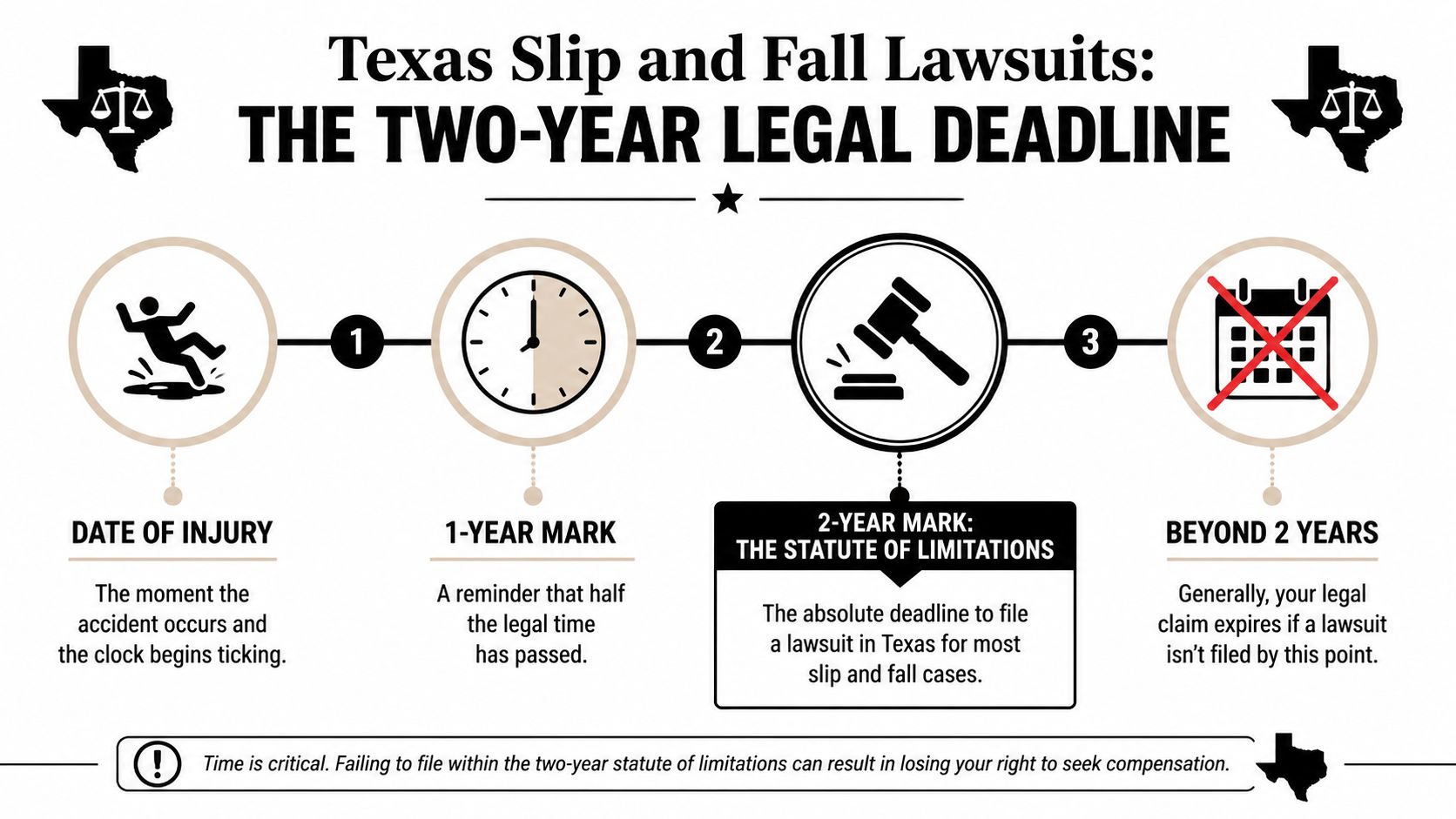
The legal term for this deadline is the statute of limitations. In plain English, it means the law gives you a set amount of time to file your lawsuit. Think of it as a filing clock. Once that clock runs out, the court can shut the case down even if you were badly hurt.
In Texas, that clock is exactly two years from the date of the injury for personal injury claims, including slip and fall cases, under Texas Civil Practice and Remedies Code § 16.003. If the complaint isn't filed before that deadline, the court will dismiss the case. You can read more about statutes of limitations in Texas.
What the deadline really means
This deadline applies to the filing of a lawsuit, not just calling a lawyer, opening a claim, or talking with insurance. Many people assume that if they've been negotiating with an adjuster, they're protected. They're not. Settlement talks do not replace filing suit.
Here's the hard part. Missing the deadline usually means losing the right to ask the court for compensation at all. That includes money for medical care, lost income, and pain-related losses.
Practical rule: If you're asking whether it's too early to speak with a lawyer, it probably isn't.
Why waiting hurts a case before the deadline arrives
Even if you're still within the two-year period, delay can weaken your position. Stores clean the spill. Property owners repair the broken step. Camera footage gets overwritten. Witnesses forget what they saw. Medical gaps give the defense room to argue that something else caused your symptoms.
That's why people often contact a Houston Slip and Fall / Premises Liability Lawyer when they need representation for injuries caused by unsafe property conditions in Houston. The timing issue isn't just about the last day on the calendar. It's also about preserving proof while it still exists.
A simple example
A Houston shopper slips on a wet grocery store floor and fractures a hip. If the lawsuit is filed within the two-year legal window, the court can hear the claim. If it's filed after that deadline, the court will dismiss it under Texas Civil Practice and Remedies Code § 16.003.
That's why the answer to how long after a slip and fall can you sue starts with two years, but shouldn't end there.
What You Must Prove to Win a Slip and Fall Case
Time matters, but filing on time isn't enough. You also have to prove liability. Liability means legal responsibility. In a slip and fall case, that usually means showing the property owner or manager was negligent, which is another way of saying they failed to use reasonable care.
Texas premises liability law does not treat every fall the same. An injury alone doesn't prove the owner did something wrong. You must show the owner had actual or constructive knowledge of the dangerous condition and failed to address it within a reasonable time.
Actual knowledge and constructive knowledge
Actual knowledge means the owner or manager knew about the hazard.
Example: a store manager sees a spilled drink in an aisle, walks away to handle something else, and no one cleans it up or warns customers.
Constructive knowledge means the hazard existed long enough that the owner should have found it through reasonable care.
Example: grease builds up on a restaurant kitchen walkway over time and no one corrects it, even though routine inspection would have revealed the danger.
If the dangerous condition was new and unforeseeable, the owner may argue they didn't have enough notice to fix it.
Why evidence matters so much
That notice issue is often where cases are won or lost. A business may admit you fell but deny that it knew about the condition. That's why photos, witness statements, surveillance requests, and incident reports matter so much in the first days after a fall.
A few forms of useful proof include:
- Scene photos: Show the hazard, lighting, warning signs, and surrounding area.
- Witness details: Other people may have seen the condition before you fell.
- Medical records: These connect the injury to the incident.
- Maintenance records: These may show whether the owner inspected or ignored the area.
Property owners who want to reduce falls should develop a fall prevention program. For injured people, that idea matters because inspection routines, cleaning policies, and safety practices can become part of the liability analysis.
How negligence fits into Texas law
Texas negligence law shapes how fault is analyzed in injury cases, including premises claims and motor vehicle wrecks. If you've ever searched for a Houston car accident lawyer after a rear-end crash on I-45, you've already seen the same core question in a different setting: who acted carelessly, and can that carelessness be proven?
Texas Civil Practice & Remedies Code, Chapters 33 and 41, also matter here. Chapter 33 deals with proportionate responsibility, which affects how fault is divided. Chapter 41 addresses damages, including when punitive damages may be available in more extreme cases.
Critical Exceptions That Can Change Your Filing Deadline
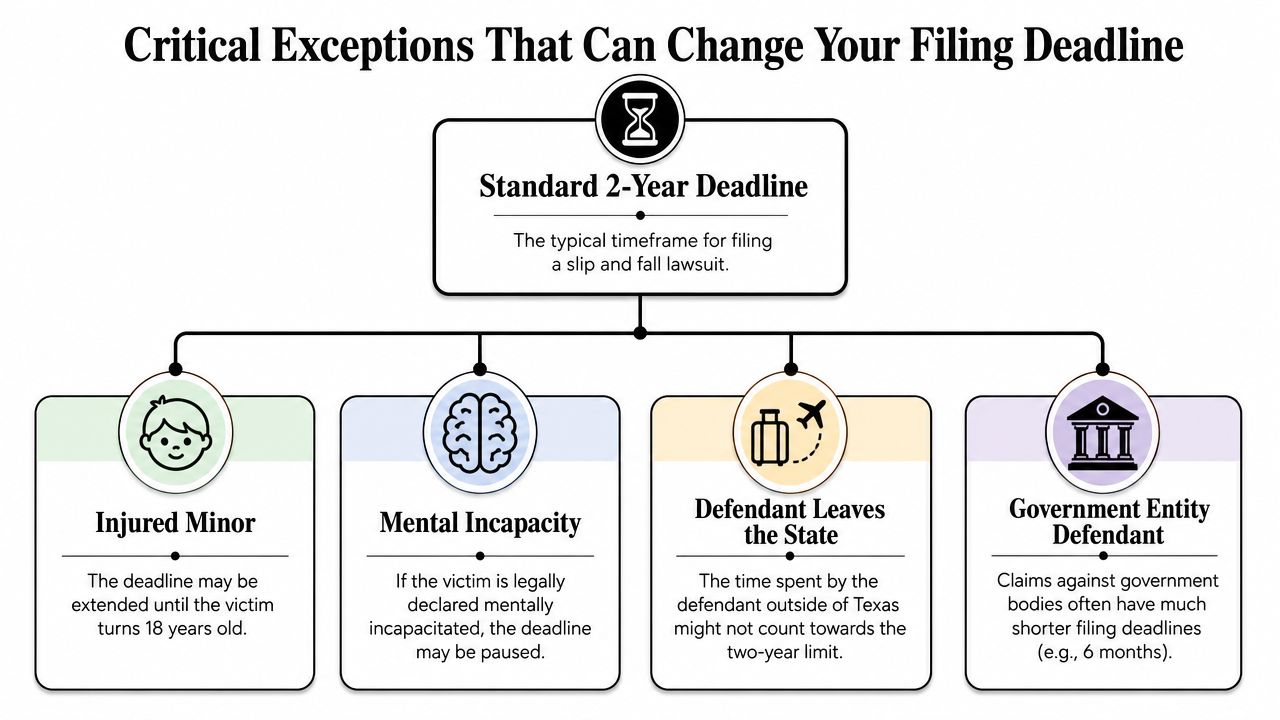
The two-year rule is the starting point, not the full answer. Some cases follow a modified clock. That's where people get into trouble. They assume every claim has the same deadline, or they assume every exception gives them more time. Neither is safe.
When the clock may pause
For minors and people with severe mental incapacities, the law can suspend the limitations clock until the disability is cured or the minor reaches adulthood. Lawyers call this statutory tolling.
That doesn't mean every case should wait. It means the timing rules may change because the injured person's legal capacity is different. If a child falls in an unsafe apartment stairwell or a person with severe mental incapacity is injured on dangerous property, the filing analysis may not be the same as it would be for a competent adult.
Government claims can move much faster
The most overlooked exception involves a government entity. If your fall happened on city, county, or other public property, there may be a required Notice of Claim long before the ordinary lawsuit deadline. In some cases, that notice period can be as short as 90 days.
That's a different legal step from filing a lawsuit. Missing that notice deadline can destroy the claim even if you would otherwise still have time under the general statute of limitations.
A fall at a private grocery store and a fall at a public building may look similar, but the filing rules can be very different.
Why people get confused here
Readers often hear “two years” and assume that number controls everything. It doesn't. The identity of the defendant matters. So does the legal status of the injured person.
Use this quick comparison:
| Situation | Why the deadline may change |
|---|---|
| Minor injured in a fall | Tolling may apply |
| Severe mental incapacity | The clock may be suspended |
| Government property claim | A Notice of Claim may be required much sooner |
| Private property case | The general Texas two-year rule often applies |
If you're unsure whether the property was privately owned, leased by a public entity, or maintained by a government body, don't guess. That's one of the fastest ways to miss a mandatory deadline.
How Your Own Actions Can Impact Your Compensation
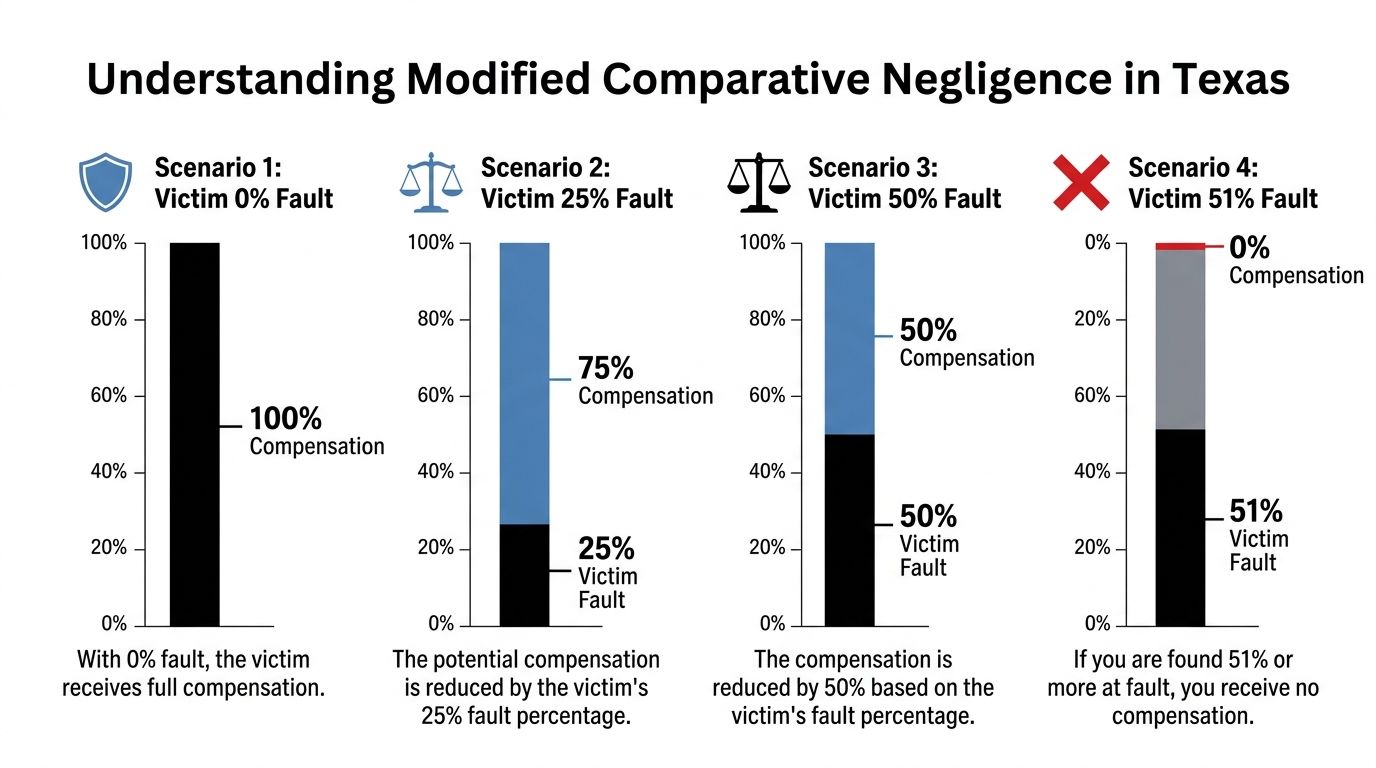
Even when a property owner was careless, your own conduct can still affect the value of your claim. In Texas, this is called comparative fault, and it falls under Texas Civil Practice & Remedies Code Chapter 33. In plain language, comparative fault means the law can divide blame between you and the other side.
If you were distracted, ignored an obvious warning, or ran through a clearly marked wet area, the defense may argue that you contributed to the fall. Insurance companies raise this issue often because reducing your percentage of recovery saves them money.
The Texas 51 percent rule
Under Texas law, if you are 51% or more responsible, you are barred from recovering compensation. If you are 50% or less at fault, your recovery is reduced by your percentage of responsibility. You can read a plain-language breakdown of comparative fault definition.
A simple example helps:
- You are 20% at fault: A $100,000 recovery would be reduced to $80,000.
- You are 51% at fault: You recover nothing.
Why this matters in real cases
Take a common scenario. A Houston customer slips near a recently mopped entrance. The property owner may argue warning signs were present and the customer was looking at a phone instead of the floor. The injured person may respond that the sign placement was poor, the surface remained dangerously slick, and the hazard was not reasonably safe.
That fight over percentages can shape the entire claim.
Don't assume “I might have been partly at fault” means you don't have a case. It may mean the defense is trying to frame the facts in a way that lowers payment.
Comparative fault also appears in car wreck cases. A driver rear-ended on I-45 may still hear arguments about following distance, braking, or distraction. Whether you need help with a slip and fall, an auto insurance claim, or a broader personal injury matter, the fault analysis can directly affect what you receive.
Steps to Protect Your Right to Sue After an Accident
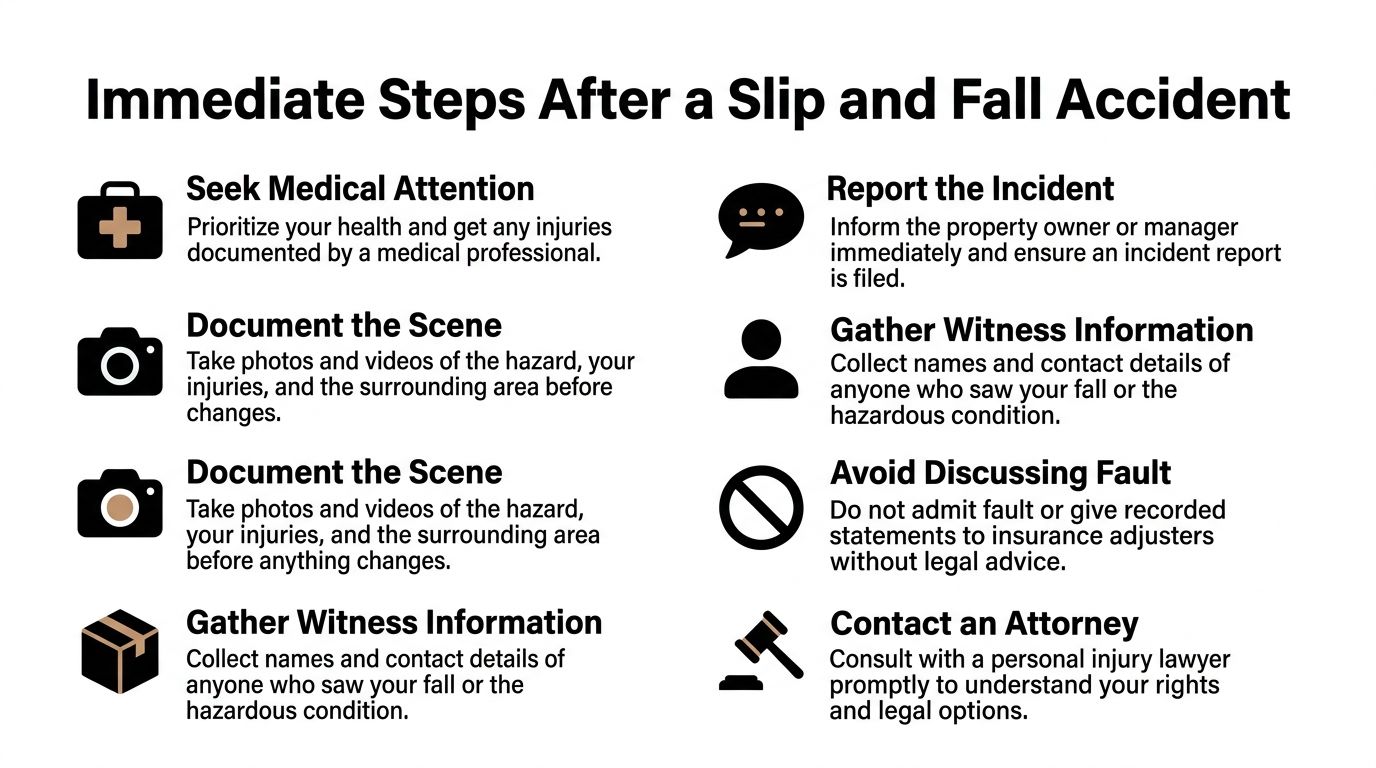
When you're hurt, it helps to focus on a short list of immediate actions. These steps protect your health first, but they also protect your claim.
Start with this checklist.
What you should do right now
Get medical care
Your health comes first. Medical records also document when symptoms began, what body parts were hurt, and what treatment you needed.
Report the incident
Tell the manager, landlord, or property representative what happened and ask for an incident report if one is used at the location.
Photograph everything
Capture the floor, spill, broken railing, lighting, weather conditions, lack of warning signs, and your visible injuries.
Get names and contact information
Witnesses can confirm both the fall and the unsafe condition.
Before you talk further with insurance, keep this in mind.
What to avoid in the first days
Some mistakes are easy to make because they sound harmless.
- Don't minimize your injuries: “I'm probably fine” can come back later when your condition worsens.
- Don't give a recorded statement too soon: The adjuster's job is to protect the insurer.
- Don't throw away evidence: Keep your shoes, clothing, and anything else involved in the fall.
- Don't wait for bills to pile up: Early legal advice can help preserve video, reports, and witness evidence.
Document your damages carefully
In Texas slip and fall claims, you may seek economic damages such as medical bills and lost wages, and non-economic damages such as pain and suffering. Texas does not cap these in most personal injury cases, which is why full documentation matters from the beginning. Chapter 41 of the Texas Civil Practice & Remedies Code also governs punitive damages in more limited situations.
Keep a folder with:
- Medical bills and records
- Proof of missed work
- Mileage and out-of-pocket costs
- Notes about pain, limits, and daily disruption
If your injury later leads to a fatal outcome, the case may shift into a claim for wrongful death compensation. That's another reason not to rely on informal conversations with the insurer as your only plan. If you also want a practical overview of how negotiation usually unfolds, How Houston Accident Settlements Work explains the process from demand through settlement.
Don't Wait to Protect Your Rights Contact Us Today
The biggest mistake in a slip and fall case is assuming there's plenty of time. The legal deadline matters, but evidence usually starts fading much sooner. A cleaned floor, a repaired step, or a lost witness can change the strength of a case fast.
A strong claim usually depends on three things. Acting before the deadline runs out. Preserving proof. Understanding how Texas law handles liability, comparative fault, and damages.
If you're also sorting through a vehicle collision, searching for a Houston car accident lawyer, fighting over an auto insurance claim, or dealing with the loss of a loved one and possible wrongful death compensation, the same principle applies. Early guidance gives you options. Waiting can take them away.
The Law Office of Bryan Fagan, PLLC is one option for evaluating Texas injury claims, including slip and fall and motor vehicle cases. The firm offers free consultations and contingency-fee representation, which means you don't pay unless there is a recovery in your case.
If you were hurt in a slip and fall and need clear answers now, contact The Law Office of Bryan Fagan, PLLC for a free consultation. You'll get straightforward guidance about deadlines, liability, insurance issues, and the next steps to protect your rights. You do not have to handle this alone.