A car crash can change your life in seconds—but you don’t have to face recovery alone. The screech of tires, the violent jolt of impact—it's traumatic enough. But then you discover the driver who hit you has no insurance, and a fresh wave of panic washes over you. How will you pay for your medical bills? Who is going to fix your car?
When you get hit by an uninsured driver, your best bet for getting compensated is usually through your own insurance policy—specifically, your Uninsured/Underinsured Motorist (UM/UIM) coverage. This is the part of your policy designed to step in and protect you when the at-fault driver doesn't have the liability insurance to cover your damages.
The Uninsured Driver Problem on Texas Roads
This isn't some rare, unlucky scenario. It's a daily reality on Texas roads. Our state has one of the highest rates of uninsured drivers in the country, leaving responsible, insured drivers like you holding the bag financially after a crash.
Just How Big is the Problem?
An "uninsured motorist" is anyone driving without the minimum liability insurance required by Texas law. The law is clear: every driver must carry coverage to pay for the damage they cause. Unfortunately, a staggering number of people ignore this rule, putting everyone else in serious danger.
This isn't just a Texas issue; it's a nationwide crisis.
A detailed 2023 study from the Insurance Research Council revealed that 15.4% of all motorists in the United States were uninsured. That means more than one out of every seven drivers sharing the road with you has zero insurance coverage.
That statistic alone is why having your own protection is absolutely non-negotiable.
Your Safety Net: What UM/UIM Coverage Actually Does
Thankfully, there's a powerful tool built for this exact situation: Uninsured/Underinsured Motorist (UM/UIM) coverage. While it's technically optional in Texas, we at The Law Office of Bryan Fagan, PLLC strongly recommend it as part of your auto policy. It’s there to protect you when you’re hit by a driver with no insurance or not enough insurance to cover the mess they've made.
Think of it as your personal safety net. It can cover:
- Medical Bills: From the ambulance ride and hospital stay to surgeries, physical therapy, and any future care you might need.
- Lost Wages: It helps replace the income you lose when you can't work while you're recovering.
- Pain and Suffering: This provides compensation for the physical pain and emotional trauma the accident caused.
- Property Damage: Depending on your policy, it can also cover the repairs to your vehicle.
Trying to file a claim after being hit by an uninsured driver feels complicated and unfair, but you don't have to go through it alone. A skilled Houston car accident lawyer can take over this process for you, handling the insurance company and fighting to get you the full compensation you deserve.
Critical First Steps After the Accident
The moments after a car crash are a blur of adrenaline and confusion. When the other driver admits they don't have insurance, that initial shock quickly turns into anxiety. What you do in these first few minutes is absolutely critical to protecting your health and your ability to get compensated. It's about building the foundation for your entire claim.
First things first: safety. If you can, carefully move your vehicle to the shoulder or a safe spot away from traffic. This simple action can prevent a secondary collision and makes the scene safer for everyone.
Call 911 Immediately
No matter how minor the crash seems, your next move is non-negotiable: call 911. Tell the dispatcher where you are, what happened, and if anyone appears to be injured. Always ask for both police and emergency medical services to be sent to the scene.
Why is this so important? Adrenaline is a powerful pain-masker. You might feel fine, but injuries like whiplash or even internal bleeding often don't show symptoms right away. A police officer will also create an official accident report, which is one of the most powerful pieces of evidence for your auto insurance claim. It’s an unbiased account that often includes a preliminary finding of who was at fault—invaluable when an uninsured driver later tries to change their story.
Gather Essential Information
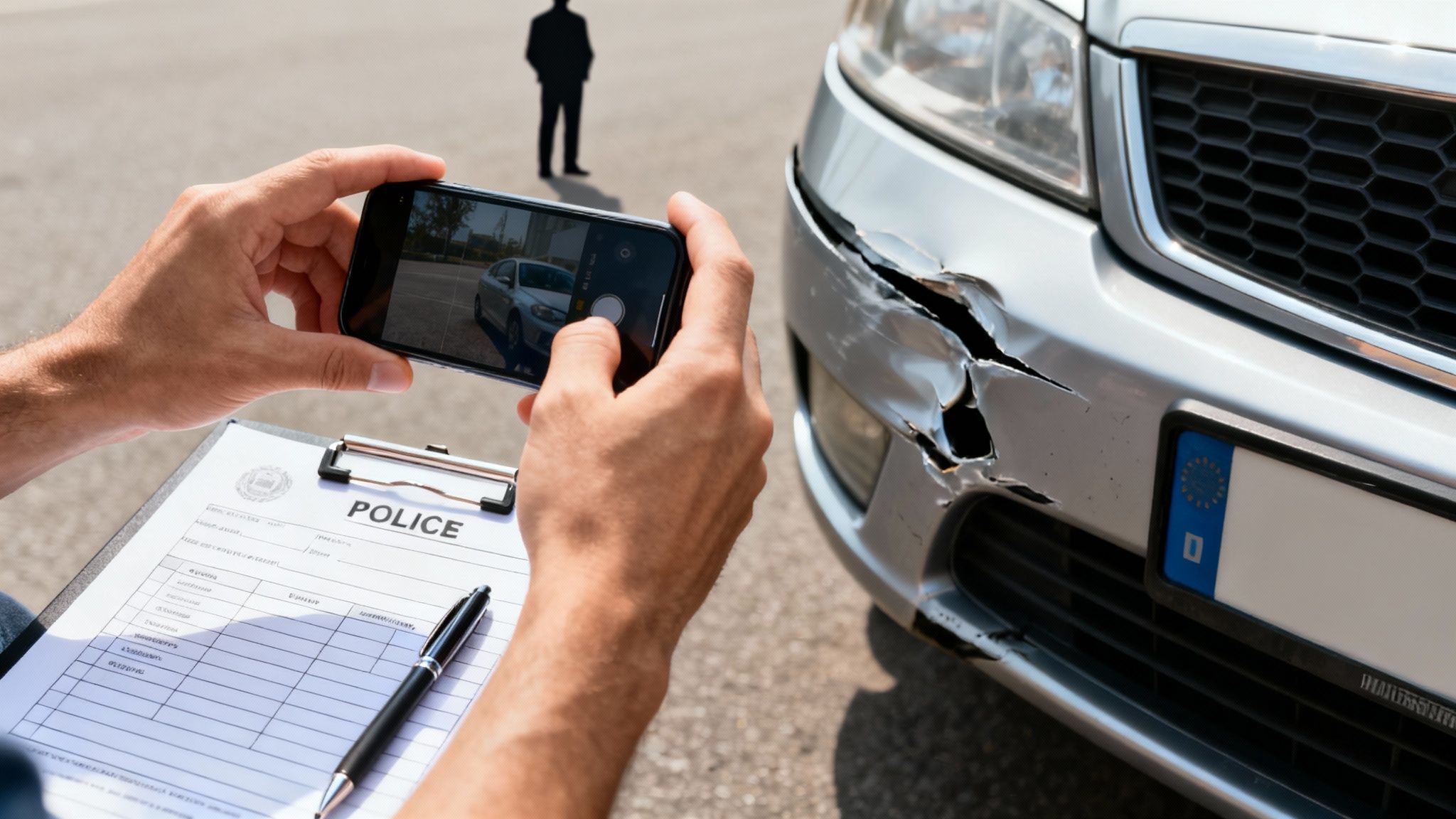
While waiting for the police, and only if it's safe to do so, start documenting everything. The other driver might be apologetic and admit they have no insurance, but you still need their details. Ask to see their driver's license and snap a clear picture of it with your phone.
Here’s a practical, step-by-step checklist of what to gather:
- Driver's Information: Their full name, address, phone number, and driver's license number.
- Vehicle Details: The car’s make, model, color, and license plate number. Get a clear photo of the plate.
- Photos and Videos: Use your phone to paint a picture of the scene. Take shots of the damage to both cars from multiple angles, any skid marks on the road, nearby traffic signs, and the general surroundings.
- Witness Contacts: If anyone stopped to help or saw the accident happen, politely ask for their name and phone number. An independent witness can be incredibly powerful for proving the other driver’s liability.
This journey, from the chaos of the crash to a protected resolution, is something we help clients navigate every single day.
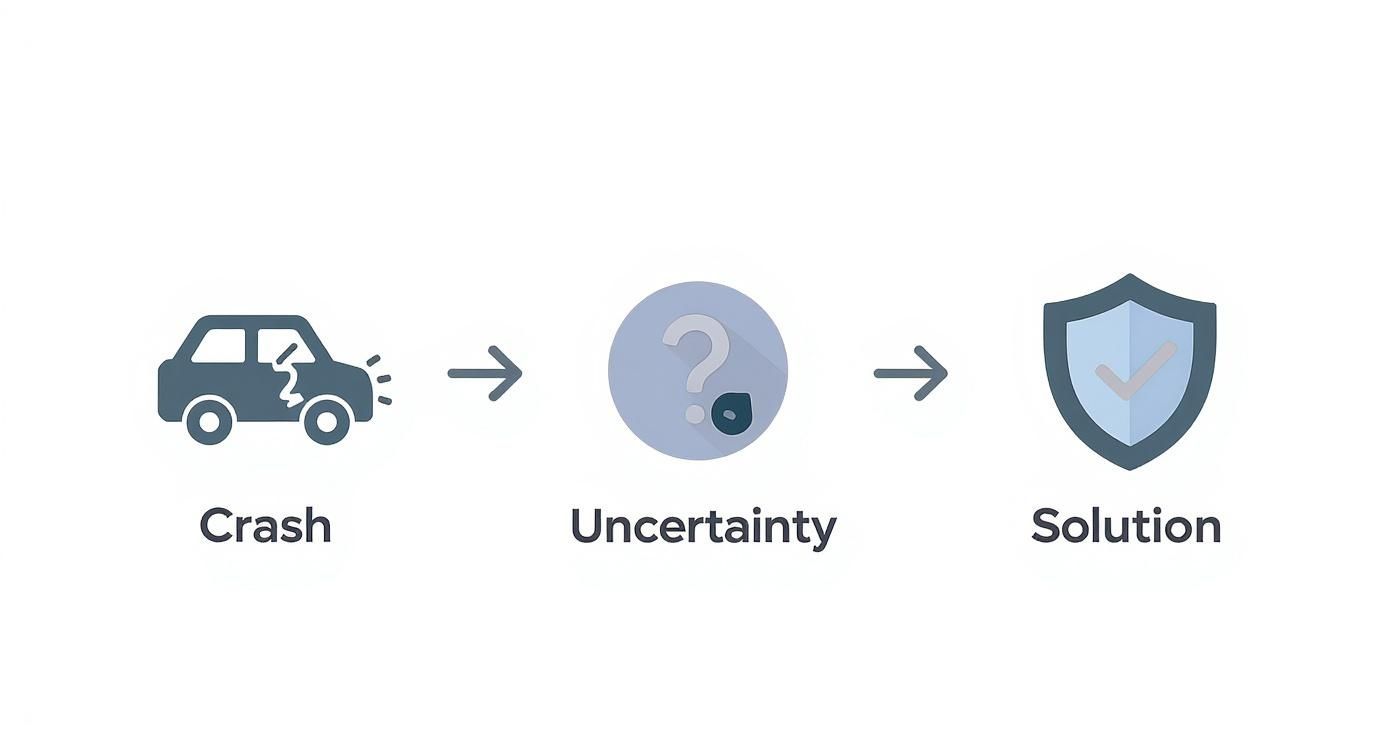
As you can see, it starts with the accident, moves through a period of deep uncertainty, and ends with the protection that a solid legal and insurance strategy provides.
Seek Medical Attention Without Delay
Imagine you were rear-ended on a busy Houston freeway like I-45. You feel shaken up but think you're "fine." Walking away without getting checked out is one of the biggest mistakes you can make. You need to get a medical evaluation right away, either from paramedics at the scene or by going to an urgent care clinic or emergency room.
Delaying medical care is a huge risk. First, you could have hidden injuries that will only get worse without treatment. Second, it gives the insurance company an opening to argue your injuries weren't caused by the crash or aren't as severe as you claim.
Getting checked out immediately creates a clear medical record that links your injuries directly to the accident. This is crucial for proving your damages. These first steps can feel overwhelming, but by staying calm and documenting everything, you are taking back control. Once your immediate health is secure, your next call should be to a qualified Texas injury attorney who can handle the rest.
Filing an Uninsured Motorist (UM/UIM) Claim in Texas
When the driver who hit you doesn’t have insurance, the script flips. Instead of pursuing their policy, you must turn to your own. This is exactly what Uninsured/Underinsured Motorist (UM/UIM) coverage is for—it's the safety net you’ve been paying for, designed for this exact kind of frustrating situation.
Many people are surprised to find that filing a claim with their own insurance company isn't always a friendly, supportive process. You’d think, "They're my insurer, they have my back." But the hard truth is that even your own insurance provider is a business, and their primary goal is to protect their bottom line. That means paying out as little as possible, which can instantly put you on opposite sides of the table.
This is why it’s so critical to understand how to handle a UM/UIM claim. Knowing the steps is the best way to protect your rights and get the compensation you need to recover.
Reporting the Accident to Your Insurer
The first thing you have to do is report the accident to your own insurance company, and you need to do it quickly. When you make that call, stick to the facts. State the date, time, and location of the crash, and let them know the other driver was uninsured.
Whatever you do, don't speculate about your injuries. Avoid saying things like, "I'm okay" or "I feel fine." The adrenaline from a crash can mask serious pain, and some injuries don't show up for days.
Here are a few common traps to sidestep:
- Giving a recorded statement without a lawyer. Adjusters are trained to ask leading questions. Their goal is to get you on record saying something that can be used to downplay your claim later.
- Admitting any fault. Even a simple, polite "I'm sorry" can be twisted and used against you to suggest you were partially to blame.
- Signing any documents or releases. Never sign anything the insurance company sends you without having a Texas injury attorney review it first.
Once you report it, your insurer will open a claim and assign an adjuster. This is where the real work starts. It's now up to you to prove not only how much you've lost but also that the other driver was completely at fault.
Understanding the Compensation You Are Owed
Your UM/UIM policy is designed to step into the shoes of the at-fault driver's insurance. It's supposed to cover your losses, or "damages," which is the legal term for the harm you have suffered. In Texas, these damages are split into two main categories.
Economic Damages are the concrete, calculable financial hits you’ve taken. This includes all your medical bills (past and future), lost wages from time off work, and the money it takes to fix or replace your car.
Non-Economic Damages are for the personal, intangible losses that don't come with a neat price tag. This is compensation for things like physical pain, emotional distress, mental anguish, and the loss of enjoyment of life your injuries have caused.
Proving these damages takes more than just saying you're hurt. It requires detailed documentation—from every medical record and pay stub to a personal journal that shows how the injuries have upended your daily life. An experienced lawyer knows exactly how to gather this evidence and build a compelling case. You can learn more about the specifics of this coverage by reading our detailed guide on what is uninsured motorist coverage.
To make it clearer, let’s look at how your own policy steps in to cover what the at-fault driver’s insurance should have covered.
Understanding Your Coverage: Uninsured Motorist Claim vs. At-Fault Driver Claim
| Type of Damage | Covered by Your UM/UIM Policy? | Covered by At-Fault Driver's Liability Policy? |
|---|---|---|
| Medical Bills (Past & Future) | Yes | Yes |
| Lost Wages & Earning Capacity | Yes | Yes |
| Vehicle Repair/Replacement | Yes (Property Damage portion) | Yes |
| Physical Pain and Suffering | Yes | Yes |
| Mental Anguish & Distress | Yes | Yes |
| Physical Impairment | Yes | Yes |
| Disfigurement | Yes | Yes |
As you can see, your UM/UIM policy is meant to provide the same comprehensive coverage. The key difference is you’re now fighting your own insurer to get it.
What Is Insurance Bad Faith?
Most of the time, UM/UIM claims are handled professionally. But sometimes, an insurance company crosses a line and acts unfairly or dishonestly. This is known as acting in "bad faith." Texas law is very clear: insurers have a duty to treat their policyholders fairly and to investigate and pay legitimate claims in a reasonable amount of time.
Here are some red flags that could point to bad faith:
- Dragging their feet and unreasonably delaying the investigation.
- Denying your claim without giving you a legitimate, fact-based reason.
- Refusing to make a fair settlement offer when it’s obvious the other driver was at fault.
- Misrepresenting what your own policy says or covers.
If you suspect your insurance company is giving you the runaround after you were hit by an uninsured driver, it’s a critical moment to get legal advice. Fighting for the benefits you’ve paid for shouldn't be a battle you wage alone. A Houston car accident lawyer can step in, hold the insurer accountable, and make sure you’re treated fairly.
Who is Liable in a Texas Car Accident?
Even when filing a claim with your own insurance company, getting the compensation you deserve isn't automatic. Before your UM/UIM coverage will pay, you have to prove two things: the other driver was legally at fault (liable), and your losses are real and directly tied to the crash.
It’s a frustrating reality. You did everything right, paid your premiums for this exact situation, and yet the burden of proof still lands on your shoulders. Your insurer essentially steps into the shoes of the at-fault driver's non-existent insurance company, which means they will scrutinize every detail of your claim.
Establishing Negligence Under Texas Law
In Texas, proving fault means showing the other driver was negligent. In plain English, negligence means failing to use reasonable care to avoid hurting others. Every person on the road has a duty to drive safely. When they breach that duty—by speeding, texting while driving, or running a red light—and that failure causes a crash that injures you, they are considered negligent and legally liable.
To build a rock-solid case for liability, you need to gather strong evidence.
- The Official Police Report: This is the foundation of your claim. The officer’s narrative, diagrams, and any citations issued provide a clear, unbiased account of what happened. You can learn more about how to get your Houston accident report in our detailed guide.
- Witness Statements: Independent witnesses who saw the collision are incredibly powerful. Their testimony can back up your version of events.
- Photos and Videos: A picture can be worth thousands of dollars in a car accident case. Photos of vehicle positions, property damage, skid marks, and traffic signals tell a story that words alone cannot.
- Traffic or Dash Cam Footage: If the crash happened near a business or at a major intersection, there might be video evidence. This footage is often the undeniable proof you need to establish negligence.
How Comparative Fault Can Affect Your Claim
Texas operates under a rule called comparative fault, also known as proportionate responsibility. Under Chapter 33 of the Texas Civil Practice & Remedies Code, you can still recover damages even if you were partly to blame for the accident, as long as your share of the fault is 50% or less.
Here's the catch: your total compensation will be reduced by your percentage of fault. If an investigation finds you 51% or more at fault, you get nothing.
Real-World Example: Let's say a Houston driver is rear-ended on I-45. The insurance company might try to argue they braked too suddenly and assign them 10% of the fault. If their total damages are $100,000, their final recovery would be cut by 10%, leaving them with $90,000.
This is exactly where an experienced Texas injury attorney becomes essential. We fight back against these unfair attempts to shift blame and protect your right to full compensation.
Meticulously Documenting Your Damages
Once you've established who was at fault, the focus shifts to proving your damages—the legal term for all the financial, physical, and emotional losses you've suffered. Organization is your best friend here. Start a dedicated folder and keep track of everything.
Economic Damages (Your Financial Losses):
- Medical Records & Bills: Save every document, including the ambulance bill, ER visit, costs for surgery or physical therapy, prescription receipts, and bills from specialists.
- Proof of Lost Wages: You'll need pay stubs and a letter from your employer confirming your pay rate and the specific dates you couldn't work because of your injuries.
- Repair Estimates: Get a few different estimates for your vehicle's damage to establish the fair cost of repairs.
As you go through this process, you'll need a trustworthy shop to handle your vehicle's repairs. For those in the Fort Worth area, you might look into quality auto repair services to get your car back on the road.
Non-Economic Damages (Your Personal Losses):
This category covers the immense personal toll of the accident. It includes things like your physical pain and suffering, mental anguish, and loss of enjoyment of life. Because these damages are subjective, they are often heavily disputed by insurance companies. Keeping a daily journal can be an incredibly powerful tool to document your pain levels, emotional struggles, and the specific ways your injuries have impacted your daily life.
What to Do When Your Insurer Pushes Back
It’s one of the most frustrating moments an accident victim can face. You’ve done everything right—you paid your premiums on time, reported the accident promptly, and provided all the necessary documents. Then you get a settlement offer that feels like a slap in the face. Or worse, a letter flat-out denying your claim.
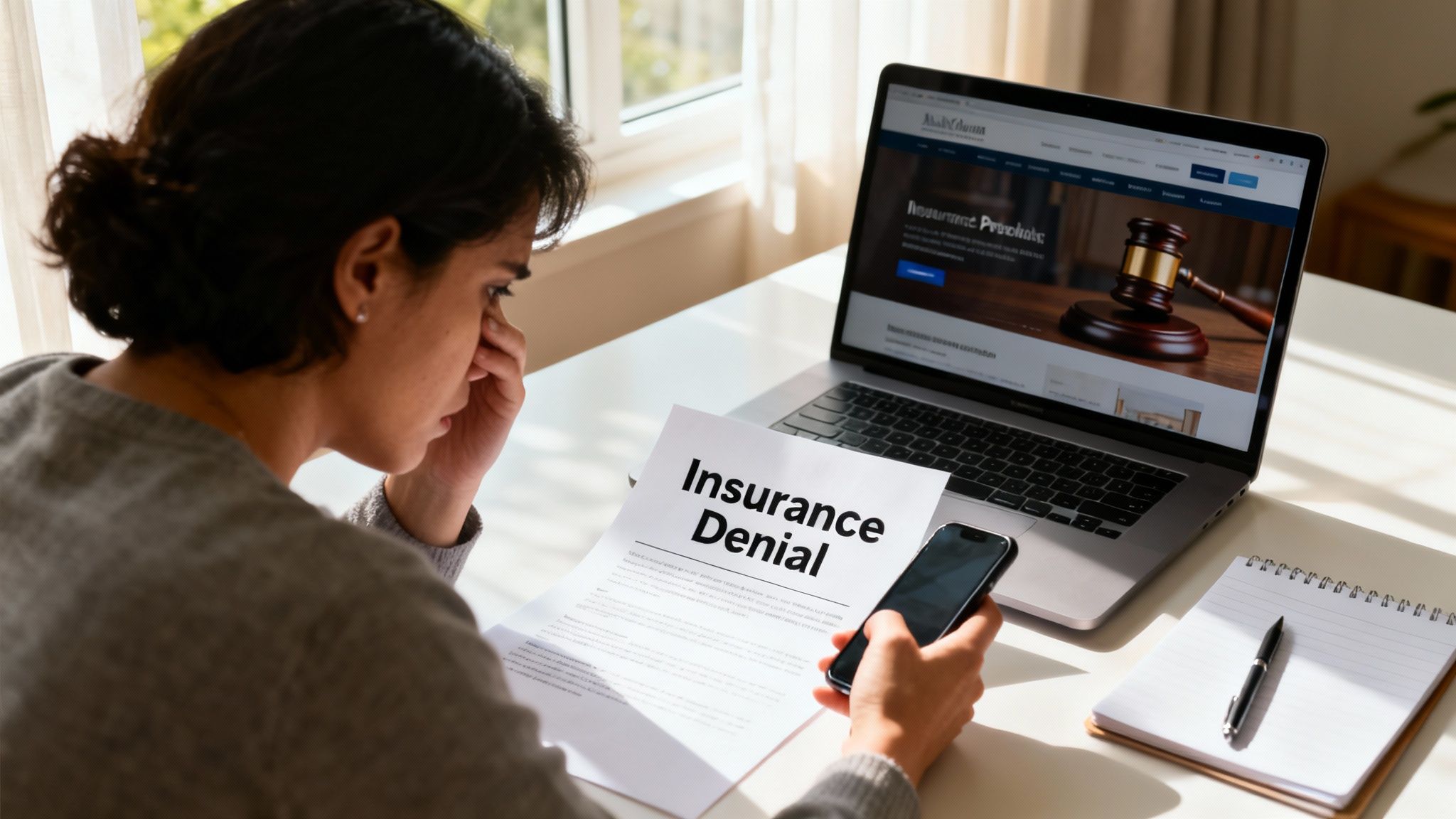
When an uninsured driver hits you, your own insurance company is supposed to be your safety net. But the hard truth is that even your own insurer is a business with a goal to minimize what they pay out. Realizing this can feel like a betrayal, but it’s a reality you must be ready for.
Common Reasons Insurers Give for a Denial
Insurance adjusters are trained to pick apart every piece of a UM/UIM claim. They are actively looking for any reason to reduce the value of your claim or deny it completely.
We see the same arguments come up time and time again:
- Disputing Your Injuries: They’ll often argue your injuries aren't as bad as you claim or try to blame them on a pre-existing condition.
- Questioning Your Medical Care: An adjuster might say your treatment was excessive or not medically necessary to refuse coverage for certain therapies.
- Playing the Blame Game: They will try to use Texas comparative fault rules to argue you were partially responsible for the crash to reduce how much they have to pay.
- Hiding in the Fine Print: Sometimes, they’ll point to a vague exclusion buried deep in your policy, claiming it applies to your situation.
It's critical to remember that an initial denial or a lowball offer is usually just their first move. It’s a negotiation tactic, not the final word.
Responding to a Lowball Offer or Denial
When you get an offer that doesn't begin to cover your damages—or a straight denial—don't panic. The first step should be to ask the adjuster for a detailed explanation of their decision in writing. This forces them to go on the record with their reasoning.
Next, you can prepare a formal demand letter. This is a professionally structured document that lays out the facts, proves the other driver’s fault, details all your economic and non-economic damages with proof, and makes a specific demand for a fair settlement.
A well-crafted demand letter shows the insurer you’re organized, serious, and prepared to fight for what you’re owed. It turns a casual conversation into a formal dispute.
This process can feel like a lot to handle, especially when you’re trying to recover. Thankfully, you don’t have to do it alone. We’ve put together a resource on how to appeal a denied insurance claim that walks you through the steps to challenge their decision effectively.
When Unfair Practices Cross the Line Into Bad Faith
The Texas Insurance Code requires insurance companies to treat their policyholders with good faith and fair dealing. That means they have a legal duty to investigate your claim promptly and pay what they legitimately owe.
When an insurer’s behavior becomes intentionally deceptive or unfair, it can cross the legal line into bad faith.
Examples of insurance bad faith can include:
- Unreasonably delaying your claim without a valid excuse.
- Misrepresenting facts or what your policy actually covers.
- Failing to conduct a thorough and timely investigation.
- Refusing to pay a valid claim when they have no reasonable basis for the denial.
If your insurance company is acting in bad faith, you might be able to file a separate lawsuit against them—not just for the policy benefits you were owed, but for additional damages caused by their dishonest tactics. This is a complex fight where having a skilled Houston car accident lawyer is essential to level the playing field.
Understanding Your Legal Options and Deadlines
When your own insurance company refuses to make a fair offer, it’s easy to feel like you’ve hit a wall. But this is far from the end of the road. You have powerful legal options to compel your insurer to honor the policy you’ve faithfully paid for. Understanding these paths—and the strict deadlines that come with them—is absolutely critical.
You really have two main choices: settle the claim or file a lawsuit. A settlement is an agreement where the insurance company pays you a negotiated amount, and you agree not to sue them. A lawsuit is a formal legal action where you ask a court to award you the damages you’re owed. While most cases settle, it’s often the very real threat of a lawsuit that finally brings an insurer to the table with a serious offer.
The Texas Statute of Limitations
In Texas, your right to take legal action is tied to a strict deadline called the statute of limitations. For personal injury claims from a car accident, this means you have two years from the date of the crash to file a lawsuit.
This is one of the most unforgiving rules in personal injury law. If you miss that two-year window, the court will almost certainly dismiss your case, and you lose your right to recover compensation forever. Insurance companies know this deadline. Sometimes, they’ll intentionally drag out negotiations, hoping you’ll let the date slip by.
What this means for you: The clock starts ticking the moment the crash happens. It's crucial to act decisively. A Texas injury attorney can make sure all legal deadlines are met, preserving your right to fight in court if a fair settlement isn't offered.
Deciding Between Settlement and Lawsuit
Choosing whether to settle or sue is a strategic decision that depends on your specific situation.
-
Settling Your Claim: This is often faster, meaning you get your money sooner. It's also a far less stressful and more private process than a public court battle. The downside? You might have to accept less than what a jury could have awarded.
-
Filing a Lawsuit: This path offers the potential for a much larger recovery, especially if you have significant non-economic damages. It also holds the insurance company fully accountable in a formal legal setting. However, lawsuits are long, expensive, and can be emotionally draining.
Can You Sue the Uninsured Driver Directly?
Technically, yes, you can sue the at-fault driver. But from a practical standpoint, it's usually a dead end.
Someone who can’t afford basic car insurance is highly unlikely to have the money or assets to pay a court judgment. You could go through the entire legal process, win your case, and still never see a single dime. This is exactly why your UM/UIM coverage is often the only realistic path to actually recovering your losses.
In the tragic event that an accident with an uninsured driver results in a death, the legal situation becomes exponentially more complex. This is where understanding the role of a wrongful death expert witness can be vital for holding every responsible party accountable. A skilled attorney can guide your family through these incredibly difficult claims with the compassion and expertise you deserve, helping you seek wrongful death compensation.
Common Questions After Being Hit by an Uninsured Driver
Getting into a wreck is stressful enough. When you find out the other driver has no insurance, a whole new wave of questions and worries crashes down. We hear these same concerns from our clients all the time, so let's clear up some of the most common ones.
What If the At-Fault Driver Fled the Scene?
Yes, you're still covered. Texas law is clear on this: your Uninsured Motorist (UM) coverage is specifically designed for hit-and-run accidents. In the eyes of the law, a "phantom driver" who can't be identified is treated exactly the same as a driver who sticks around but has no insurance.
The key is proving what happened. You must report the accident to the police immediately. Your claim hinges on showing there was actual physical contact between your vehicle and the one that took off. This is where evidence is crucial—the police report, photos of the damage, and any witness statements are the foundation of your claim. A skilled Houston car accident lawyer knows how to package this proof to build a rock-solid case.
Does My UM/UIM Coverage Have a Deductible?
That’s a great question, and the answer depends on which part of your policy is being used.
- Uninsured/Underinsured Motorist Bodily Injury (UMBI): This is the part that covers your medical bills, lost wages, and pain and suffering. In Texas, it almost never has a deductible.
- Uninsured Motorist Property Damage (UMPD): This part pays for your car repairs, and it typically comes with a mandatory $250 deductible.
The best place to find the exact details is on your insurance policy's declaration page. An attorney can review your documents and explain exactly what benefits you have and what, if any, out-of-pocket costs you should expect.
Key Takeaway: Even if you have to pay a small deductible for car repairs, it's a world away from being stuck with the entire bill for a crash you didn't cause.
The Other Driver Gave Me Fake Insurance Information. What Do I Do?
This is a dirty trick, and it’s incredibly frustrating. The moment you discover the insurance card you were handed is worthless, you need to pivot and treat this as an uninsured motorist claim.
First, call your own insurance company and tell them the information was fraudulent. You should also update the police—providing false information after a wreck is a crime. From there, you'll open a claim under your own Uninsured Motorist (UM) coverage. Give your insurer every piece of information you have, including the fake details and the police report number. This is a scenario where getting legal guidance is a very smart move to make sure you're protected.
Will Filing a UM/UIM Claim Make My Insurance Rates Go Up?
This is the number one fear for most drivers, but we can put your mind at ease. Texas law explicitly prohibits an insurance company from raising your premiums or dropping your policy for an accident that wasn't your fault.
A UM/UIM claim, by its very nature, means the other driver was at fault. Therefore, filing one should have no negative impact on your rates. If your insurer tries to penalize you after a not-at-fault claim, you need to call a Texas injury attorney right away. They might be breaking the law.
The moments after being hit by an uninsured driver are overwhelming, but you have rights and you have options. You don't have to face the insurance companies alone. At The Law Office of Bryan Fagan, PLLC, our experienced attorneys are here to answer your questions, handle the legal complexities, and fight for the full compensation you and your family deserve. Contact us today for a free, no-obligation consultation to discuss your case and understand your rights. Visit us at https://houstonaccidentlawyers.net to learn how we can help you on your road to recovery.