A car crash can change your life in seconds—but you don’t have to face recovery alone. When you're hurt, overwhelmed, and trying to figure out how to pay the bills, choosing the right legal partner becomes one of the most important decisions you'll make for your future.
Your First Step After an Accident: Finding the Right Legal Advocate
After a crash on a busy Texas highway, your focus is—and should be—on healing. But while you're recovering, insurance companies are already working. Their goal isn't to protect your rights; it's to protect their profits.
Hiring a personal injury lawyer isn't about starting a fight. It's about leveling the playing field. You need an advocate who can shield you from the insurance adjuster’s tactics and navigate the complexities of Texas law, giving you the space to focus on getting better.
Why Your Choice of Lawyer Matters So Much
The insurance adjuster's job is to pay you as little as possible. They might sound friendly and concerned, but their objective is to get you to accept a quick, lowball offer that saves their company money. A skilled Houston car accident lawyer has seen these tactics thousands of times and knows exactly how to protect your rights.
This is where specialization is non-negotiable. For example, if you were in a multi-car pileup on I-10 in Houston, you don't want a lawyer who dabbles in family law. You need an attorney who lives and breathes Texas personal injury law. They understand how to prove liability (who was legally at fault) and calculate the full scope of your damages—every medical bill, lost paycheck, and ounce of pain and suffering.
The Core Qualities of a Top Texas Injury Attorney
Before you start making calls, it's helpful to have a clear picture of what separates a great lawyer from the rest. Here’s a quick summary of the essentials.
| Attribute | Why It's Critical for Your Case | Real-World Example |
|---|---|---|
| Specialized Experience | They understand the specific laws, tactics, and nuances of Texas accident cases. | A lawyer who only handles car and truck wrecks will know the Federal Motor Carrier Safety Regulations inside and out, which is vital for a commercial truck accident case. |
| Proven Trial Record | Insurance companies are more likely to offer a fair settlement if they know your lawyer isn't afraid to go to court and win. | An attorney who can point to multi-million dollar jury verdicts for past clients has leverage that a "settlement-only" lawyer simply doesn't. |
| Local Courtroom Knowledge | Familiarity with local judges, opposing lawyers, and court procedures provides a home-field advantage. | A Houston-based lawyer will know the tendencies of Harris County judges and how certain arguments play in that specific jurisdiction. |
| Client-Focused Communication | You deserve an advocate who listens, keeps you informed, and treats you with compassion and respect. | Your lawyer should be able to explain complex legal concepts in plain English and return your calls in a timely manner. |
Finding an attorney with these qualities isn't just about winning more money; it's about finding a partner who will guide you through one of the most difficult times of your life. The right lawyer can be the difference between a settlement that barely covers your medical bills and securing the compensation you need to truly rebuild. For more detailed guidance, explore our article on when to hire a car accident lawyer.
Finding a Lawyer With the Right Experience and Focus
When your future is on the line after a serious crash, not just any lawyer will do. The attorney who handled your cousin's divorce or drafted your neighbor's will simply doesn't have the battlefield knowledge needed for a complex Texas injury claim.
Think of it this way: you wouldn't ask your family doctor to perform heart surgery. The same logic applies here. You need a specialist—an attorney who dedicates their practice to Texas personal injury law, specifically car, truck, and wrongful death cases. These lawyers know the insurance companies' playbook and have built careers countering the exact tactics adjusters use to deny or devalue your claim.
Why a Trial-Ready Lawyer Has the Upper Hand
Here’s a secret most people don't know: the vast majority of personal injury cases settle before ever seeing a courtroom. So, does trial experience even matter? Absolutely. In fact, it's one of the most powerful negotiating tools you have.
Insurance companies keep track of which lawyers are afraid of the courtroom and will take a lowball offer to close a file. They also know which lawyers are fighters—the ones who will take a case all the way to a jury and win.
When an insurance adjuster sees a seasoned trial lawyer's name on a claim, their entire approach shifts. They are far more motivated to offer a fair settlement upfront to avoid the risk and expense of battling a proven litigator in court. A lawyer who isn't afraid to go to trial gets better offers for their clients.
Key Questions to Ask in Your Consultation
Your first meeting with a lawyer is really an interview. You’re the one doing the hiring. Don't be timid about asking tough, direct questions to make sure they have the right background for your specific case.
Here are a few questions we recommend asking:
- How many cases like mine have you personally handled? You want someone who has seen this all before, whether it was a messy T-bone wreck, a rear-end collision, or a crash with an uninsured driver.
- What percentage of your practice is dedicated to personal injury? If the answer isn't near 100%, you might be talking to a generalist. Stick with a specialist.
- Can you explain how Texas's "comparative fault" rule might affect my case? This is a great way to test their on-the-spot knowledge. A sharp lawyer will immediately explain that under Chapter 33 of the Texas Civil Practice & Remedies Code, you can still recover damages as long as you're not found to be more than 50% responsible for the accident.
- How many cases have you actually taken to a jury trial? This question tells you if they have the experience and willingness to fight for every penny you deserve.
It’s also smart to ask about how they’re keeping up with modern legal tech, like their strategies for untouchable video conferencing depositions, which have become a non-negotiable part of today's legal landscape.
Real-World Example: A Houston driver rear-ended on I-45 suffers a serious back injury. A general practice lawyer might just focus on the other driver's insurance. But a dedicated Texas injury attorney knows to investigate further. They may discover the at-fault driver was working for a delivery company, which could make the company liable for the crash. This deep-dive investigation can uncover corporate negligence and other sources of compensation, dramatically increasing the value of your case.
Understanding How Your Lawyer Gets Paid: The Contingency Fee Agreement
After a serious accident, the last thing you should worry about is how to afford a good lawyer. The fear of a massive legal bill should never stop you from getting the help you need to protect your rights.
That’s why our firm, like most reputable Texas injury lawyers, operates on a contingency fee basis.
This is a simple and powerful arrangement: we only get paid if we win your case by securing a settlement or a jury verdict. There are no upfront retainers, no hourly bills, and no surprise invoices. Our fee is simply a pre-determined percentage of the total money we recover for you.
How This Puts Us on the Same Team
A contingency fee isn't just a payment method; it creates a true partnership. Since our payment is directly tied to your outcome, we are 100% invested in fighting for the maximum compensation possible. We have every reason to chase down every last dollar you’re owed for your medical treatments, lost wages, and pain and suffering.
This model gives you access to top-tier legal representation without taking on any financial risk. We cover all the upfront costs of building a powerful case—things like hiring expert witnesses, paying court filing fees, and ordering medical records—so you can pour all your energy into your recovery.
The Critical Questions to Ask About Fees and Expenses
While "no fee unless you win" sounds simple, the details matter. A lawyer who is open and transparent about the financial side of things is a lawyer you can trust.
Here are the non-negotiable questions you should ask any attorney you're considering:
- What is your exact contingency fee percentage? Most firms have a standard rate, but you need to hear it and see it in writing.
- How are case expenses handled? These are the costs needed to build your claim, like fees for accident reconstruction experts. Are they paid back from the settlement?
- Is your fee calculated before or after those case expenses are deducted? This might seem like a minor detail, but it can make a significant difference in the final amount that goes into your pocket.
A good lawyer won't hesitate to walk you through the fee agreement, line by line, until you're comfortable. Everything should be spelled out in a clear, written contract before you sign anything. For a deeper dive into this topic, we've put together a complete guide explaining how accident lawyer fees work in Texas.
Real-World Example: Let's say we secure a $100,000 settlement for your case. The case required $10,000 in expenses for expert medical testimony. The attorney's fee is a standard one-third (33.3%).
If the fee is calculated after expenses, the lawyer’s fee would be $30,000 (one-third of the remaining $90,000). That leaves you with $60,000. But if the fee is calculated before expenses, the lawyer’s fee is $33,333 (one-third of the total $100,000). After subtracting the expenses, you'd receive $56,667. This shows why asking the right questions upfront is so critical.
Making The Most Of Your Initial Consultation
That first free consultation is your chance to interview a potential legal partner. It's your opportunity to get a feel for their commitment and decide if they’re the right person to fight for your family's future. Walking into this meeting prepared will give you the clarity you need to make the right choice.
This isn’t about finding just any lawyer; it’s about finding your lawyer. You need to feel heard, respected, and confident in their ability to handle the road ahead.
What to Bring to Your First Meeting
To give an attorney the clearest possible picture of your situation, it helps to bring any documents you have related to the accident. Don't stress if you don't have everything—we can help track down what’s missing.
Try to gather:
- The Police Report: This is often the starting point for a case.
- Photos and Videos: Any pictures you took of the accident scene, vehicles, and your injuries are incredibly powerful.
- Medical Records and Bills: Bring any discharge papers, medical bills, or treatment plans you've received.
- Insurance Correspondence: This includes any letters, emails, or the business card from the adjuster who called you.
- Proof of Lost Wages: A recent pay stub helps a lawyer start calculating the income you’ve lost.
Key Questions That Reveal The Truth
An attorney’s record is important, but it doesn't tell the whole story. Your goal is to understand how they work and what it will be like to partner with them.
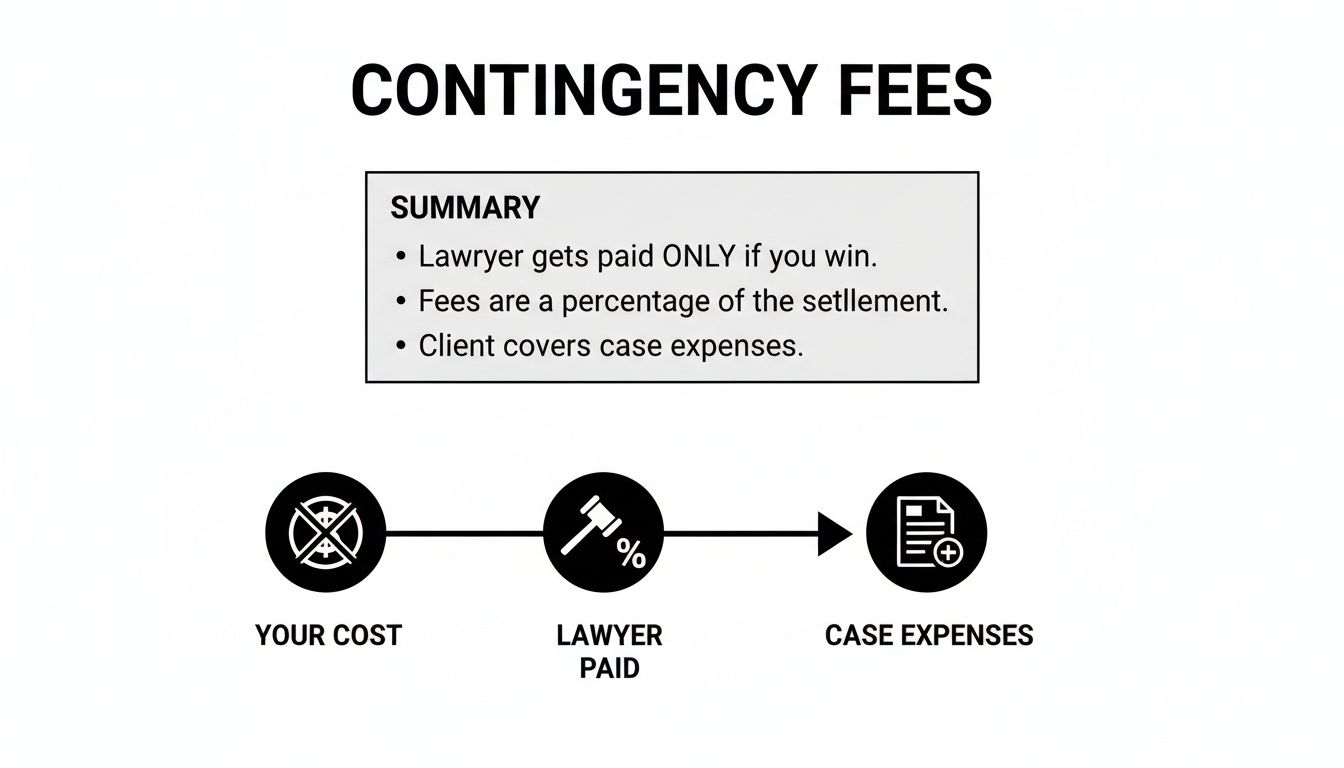
The visual breakdown makes it clear: you face no upfront costs. Legal fees are paid out of a successful settlement, ensuring you can get justice without adding to your financial worries.
To help you get ready, we put together a full list of questions to ask a personal injury attorney during your first meeting. Some of the most critical ones are:
- Who will be my main point of contact? Will you be talking to the senior lawyer you're meeting now, or will your case be passed to a junior associate or paralegal?
- How often can I expect updates on my case? A good firm has a clear communication plan so you’re never left in the dark.
- Based on what you see, what are the biggest strengths and weaknesses of my case? This question tests their honesty. A trustworthy lawyer will give you a candid, realistic assessment, not just what you want to hear.
Your Consultation Preparation Checklist
| Category | What to Bring or Ask |
|---|---|
| Documents | The official police or crash report |
| Photos and videos from the scene | |
| Medical records, bills, and treatment plans | |
| All communications from insurance companies | |
| Pay stubs or proof of lost income | |
| Questions about the Firm | "Who will be my day-to-day contact?" |
| "How often will I receive case updates?" | |
| "Can you explain your fee structure in detail?" | |
| Questions about Your Case | "What are the initial strengths and weaknesses you see?" |
| "What is your honest opinion of my claim's potential?" | |
| "What is the general timeline for a case like this?" |
Having these items and questions ready ensures you leave the consultation with a clear understanding of where you stand.
Red Flags to Watch For During The Consultation
Just as important as knowing what to look for is knowing what to avoid. Your gut instinct is a powerful tool, but there are also tangible warning signs that a lawyer might not have your best interests at heart.
Be wary of any attorney who makes a specific financial guarantee. An experienced lawyer can talk about potential value based on similar cases, but promising a huge payout before a full investigation is unprofessional and a major red flag.
Here are a few other warning signs:
- High-Pressure Tactics: If you feel pushed to sign a contract on the spot, walk away. A reputable attorney will give you the time you need to make an informed decision.
- Vague Answers: If they can't give you a straight answer about their fees, experience, or communication plan, it’s a sign of a lack of transparency.
- A Disorganized Office: A chaotic environment can be a reflection of how they manage their cases. You want a team that is professional and organized.
Choosing your lawyer is one of the most important steps on your road to recovery. Take your time, ask the tough questions, and trust your instincts. The right Texas injury attorney will make you feel empowered, not pressured.
Warning Signs to Watch For When Hiring a Lawyer

Knowing how to pick the right lawyer also means knowing which ones to avoid. Some firms prioritize a high volume of quick, cheap settlements over fighting for what their clients actually deserve. Your future is too important to hand over to someone who just sees you as another case number. Spotting these red flags early can save you from accepting a settlement that's a fraction of what you're owed.
The Unsolicited Contact Trap
Did you get an unexpected call, letter, or even a hospital visit from a lawyer or their "investigator" right after your accident? This is a huge warning sign. This aggressive and unprofessional tactic is often called "ambulance chasing," and it's a giveaway you're dealing with the wrong kind of firm. Reputable attorneys build their practice on trust and results—not by preying on people at their most vulnerable.
Overpromising and Underdelivering
Confidence in a lawyer is a good thing; guarantees are not. A seasoned Texas injury attorney knows that every case is different. They can give you an honest assessment of what your case could be worth, but they can't promise a specific dollar amount, especially in a first meeting.
Be on high alert for lawyers who:
- Guarantee a huge payout: No ethical lawyer can promise a certain outcome before digging into the evidence.
- Claim they "never lose": This is unrealistic and often a misleading sales pitch.
- Pressure you to sign on the spot: A trustworthy lawyer wants you to make an informed decision, not a rushed one.
A lawyer’s job is to give you a realistic, evidence-based assessment of your claim's potential, not to sell you a fantasy. An empty promise of millions of dollars is a clear signal to walk away.
Vague Fee Structures and Poor Communication
Transparency is non-negotiable. If you ask about their contingency fee and how case expenses are handled and the lawyer gets evasive, that's a major red flag. They should be able to explain their fee agreement clearly and be willing to put every detail in writing. Also, pay attention to their communication before you hire them. If they take days to return your first call or seem distracted during your consultation, imagine what it will be like once you're their client.
The Settlement Mill Problem
One of the biggest pitfalls for injured Texans is the "settlement mill." These are high-volume law firms you see on billboards and TV that aim to sign up as many clients as possible. Their business model isn't about fighting for your case's true value; it's about settling cases as fast as possible, often for pennies on the dollar. They almost never take a case to trial, which gives them zero leverage with insurance adjusters. You need a dedicated Houston car accident lawyer who prepares every case as if it's going to trial.
Taking the Next Step to Protect Your Rights
Choosing the right lawyer is the single most important decision you can make for your family's future after a crash. You now have the tools to evaluate an attorney’s experience, understand how they get paid, and spot the red flags that separate a true advocate from someone looking for a quick settlement.
The time to act is now. While you’re focused on healing, the other driver's insurance company has already started building its case to pay you as little as possible—or nothing at all. You need a fighter in your corner to even the odds.
The Clock is Ticking on Your Claim
It's critical to understand that your right to seek justice isn’t unlimited. Texas has a law called the statute of limitations, which is a legal term for a hard deadline to file a lawsuit.
In Texas, you generally have just two years from the date of the accident to file your personal injury claim. If you miss that two-year window, you will almost certainly lose your right to recover a single dollar for your injuries, no matter how catastrophic they are.
This deadline is one of the biggest reasons you can't afford to wait. Evidence disappears, witnesses' memories fade, and every day that passes gives the insurance company more time to strengthen its case against you. Hiring a lawyer right away allows them to preserve crucial evidence and get to work while everything is still fresh.
You Don't Have to Face This Alone
The aftermath of a serious crash can be an incredibly lonely and overwhelming time. You're dealing with physical pain, mounting medical bills, and uncertainty about what comes next. But you do not have to carry that weight by yourself.
The right legal team can take that burden off your shoulders. They handle the aggressive insurance adjusters, manage all the complex deadlines, and fight for your rights so you can focus on the only thing that truly matters: getting better.
At The Law Office of Bryan Fagan, we see the person behind the case file. We know the fear and frustration you're feeling, and we're here to offer more than just legal advice—we provide genuine support and guidance. We listen to your story, understand your fight, and work tirelessly to get you the resources you need to put your life back together.
Your journey to justice starts with one simple, no-risk step. Contact our team today for a free, no-pressure consultation. Let's talk about your case, answer your questions, and show you how a dedicated Houston car accident lawyer can help you get back on the road to recovery.
Common Questions After a Texas Injury Claim
After an accident, your mind is probably racing with questions. It's completely normal. Below are straightforward answers to the most common concerns we hear from families across Texas.
How Much Does a Personal Injury Lawyer Cost?
There are no upfront costs. We work on a contingency fee basis. This means our fee is a percentage of the money we recover for you. If we don’t win your case and get you compensation, you don’t owe us anything for our time. This approach allows everyone to access top-tier legal help without any financial risk.
How Long Do I Have to File a Claim in Texas?
Time is not on your side. The Texas statute of limitations gives you just two years from the date of the incident to file a lawsuit. If you miss that two-year window, you almost certainly lose your right to seek any compensation. That's why it's so important to connect with an experienced car accident lawyer as soon as possible.
Should I Talk to the Other Driver’s Insurance Adjuster?
We strongly advise against it. The other driver’s insurance adjuster is not on your team; their job is to minimize their company's payout. They are trained to ask questions designed to get you to say something that could weaken your auto insurance claim. Politely decline to give a recorded statement and tell them to speak with your attorney.
Many of our clients also ask how long their case might take. While every situation is unique, reviewing a personal injury settlement timeline can provide a general roadmap and help set realistic expectations for the journey ahead.
Your recovery is our priority. The experienced attorneys at The Law Office of Bryan Fagan, PLLC are ready to answer all your questions and fight for the justice you deserve. Contact us today for a free, confidential consultation to discuss your case and learn how we can help. Visit us at https://houstonaccidentlawyers.net.