Skip to content
A car crash can change your life in seconds, but you don't have to face recovery alone.
If you were riding a bus in Houston, driving beside one, or helping a loved one after a violent collision, you may be dealing with pain, paperwork, missed work, and a lot of unanswered questions. Many people don't even know where to start. That's normal. Bus accident cases are more complicated than a typical auto insurance claim because the responsible party may be a private company, a school district, a contractor, or a public transit system like METRO.
That's why the details matter early. The kind of bus involved can change everything, including who you notify, how fast you must act, and what evidence needs to be preserved. A Houston bus accident lawyer should look at those issues right away, because the wrong first step can weaken your position, and in some cases, your claim.
A Bus Crash Can Change Your Life in Seconds But You Are Not Alone
One minute, you're on a routine ride to work, school, or a medical appointment. The next, there's the sound of brakes, bodies thrown forward, shattered glass, and confusion. After a bus crash, many people feel stunned before they feel hurt. Then the calls start. Insurance adjusters, transit representatives, employers, family members. It becomes overwhelming fast.
That reaction is common. A bus accident can leave you with physical injuries, emotional stress, and real fear about what comes next. It can also leave you wondering whether anyone will take your case seriously. They should.

In 2018, the United States saw 234 fatal bus crashes, leading to 295 deaths and 24,000 injuries. These incidents involved school, intercity, and transit buses, showing that accidents can happen on any type of route, according to national bus crash figures cited here.
Your situation is serious, and it is not rare
Those numbers matter for one reason. They confirm that bus collisions are not isolated freak events. They happen in city traffic, on school routes, and on longer commercial trips. When they happen, the injuries are often serious because buses carry many passengers and don't protect occupants the same way passenger vehicles do.
A practical example helps. A Houston rider headed downtown on a morning commute may be tossed from a seat when a transit bus is struck in an intersection. Another person might be rear-ended by a charter bus on I-45. A parent could get a call that a school bus crash sent their child to the hospital. Different facts. Same urgent need for medical care, documentation, and legal guidance.
You don't need to understand the full legal process on day one. You do need to protect your health and your rights.
Hope starts with clear information
The first part of recovery is often getting control back. That starts with knowing that bus accident claims can be pursued, that responsibility may fall on more than one party, and that Texas law gives you a path to seek damages for what you've lost.
If your family is grieving a fatal crash, those same legal rules may also affect a claim for wrongful death compensation. The road ahead may feel heavy right now, but it doesn't stay unclear forever once you know what kind of claim you have.
Who Is Liable in a Houston Bus Accident
Liability means legal responsibility. In plain English, it answers one question: who caused the crash, or who failed to prevent it when they had a duty to act safely?
Bus cases often involve more than one answer. The driver may have made a bad decision. The company may have skipped maintenance. Another motorist may have caused the chain of events. A government agency may be involved if the bus was part of public transit.
What Texas requires you to prove
To win a negligence case in Texas, you must prove four things: the defendant had a duty of care, they breached that duty, this breach directly caused the accident, and you suffered specific damages as a result, as explained in this discussion of Texas negligence elements.
That sounds technical, but it usually comes down to facts like these:
- Duty of care means the driver or company had to act reasonably and safely.
- Breach means they failed to do that, such as unsafe driving or poor vehicle upkeep.
- Causation means that failure led to the crash.
- Damages means you suffered losses, such as medical bills, lost income, or pain.
The list of possible defendants is broader than most people expect
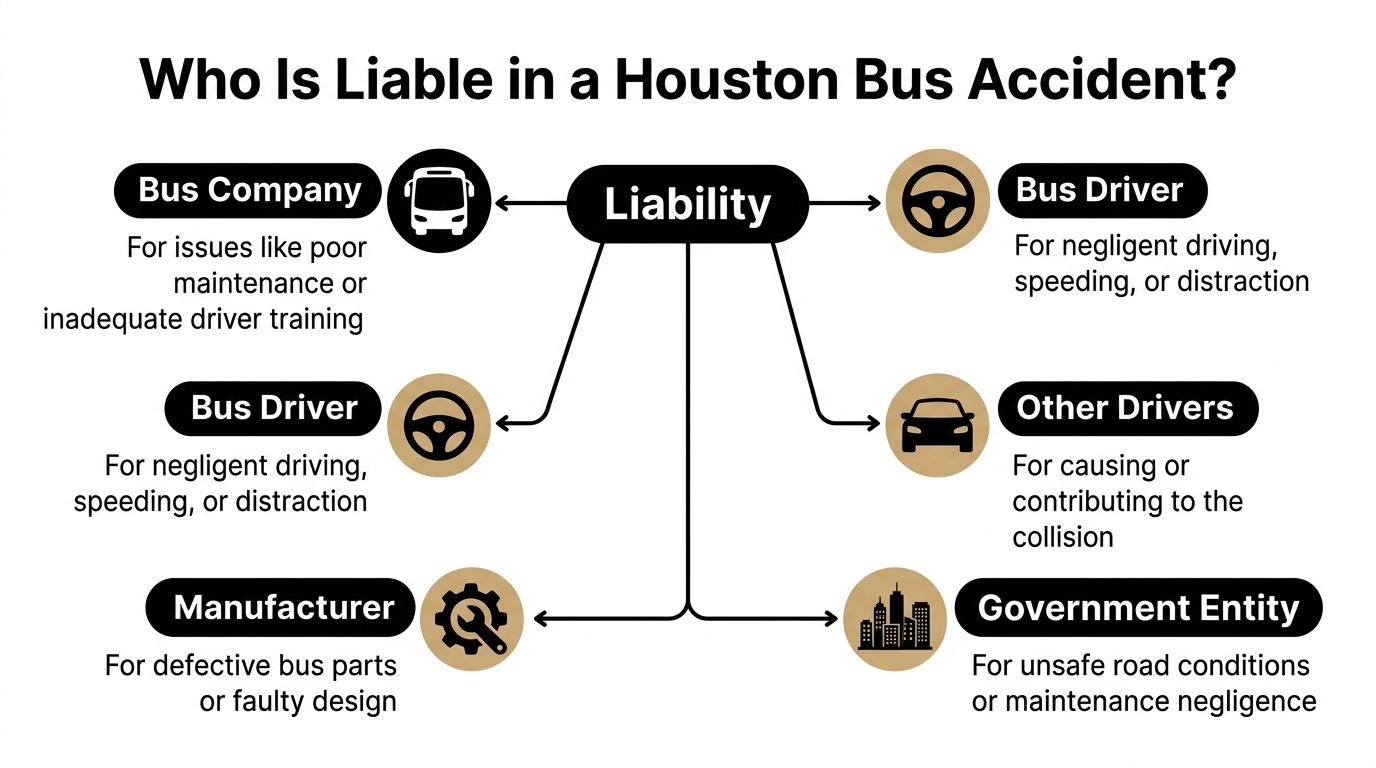
A Houston bus accident lawyer should look beyond the person behind the wheel. Depending on the crash, liability may involve:
- Bus driver for distraction, speeding, unsafe turns, or failure to yield
- Private bus company for negligent hiring, supervision, or maintenance
- Government entity if METRO or another public body operated the bus
- Other driver when a separate vehicle caused or helped cause the collision
- Manufacturer or repair company if faulty parts or bad repairs contributed
A real-world example. A Houston driver rear-ended on I-45 by a commercial shuttle may assume the shuttle driver is the only target. In practice, the claim may also involve the company that owned the vehicle, the contractor that serviced the brakes, and the insurer for another car that pushed the shuttle forward.
Public and private claims do not work the same way
The claims process often causes victims to lose time. If the crash involved METRO or another public transit operator, the claim may trigger special notice rules that do not apply in an ordinary case against a private company. If the bus was privately owned, the process usually looks more like a standard injury case.
That distinction also affects insurance strategy. If you're sorting out available coverage, policy limits often shape settlement discussions. This guide on understanding insurance policy limits after a car accident in Texas helps explain why.
For readers dealing with a collision involving a passenger vehicle rather than a bus passenger injury, Houston Car Accident Lawyer covers representation for car accident victims in Houston and Harris County.
Practical rule: Never assume the crash report lists every responsible party. Early investigation often finds additional sources of liability and insurance.
Navigating Different Types of Texas Bus Accident Claims
The biggest mistake I see in bus cases is treating every bus like it creates the same kind of legal claim. It doesn't. A METRO crash, a private charter crash, and a school bus case may all involve negligence, but the procedure can be very different from the start.
The most urgent difference is this: while you have two years to sue a private bus company, the Texas Tort Claims Act requires you to file a formal notice of claim against a government entity like Houston METRO within 180 days, and sometimes as little as 90 days, or your case can be permanently barred, as described in this explanation of Texas bus claim deadlines.
Texas Bus Accident Claim Differences
| Claim Type | Governing Authority | Initial Deadline | Primary Defendant |
|---|---|---|---|
| METRO or other public transit bus | Texas Tort Claims Act | Notice of claim within 180 days, and sometimes as little as 90 days | Government entity |
| Private charter or shuttle bus | Texas personal injury law | Lawsuit within two years | Private bus company or driver |
| School bus case | Depends on whether the operator is a public entity or private contractor | May involve a shortened notice period if a government body is involved | School district, contractor, driver, or another liable party |
METRO claims need immediate attention
If you were hurt on a Houston METRO bus, hit by one, or injured as a pedestrian in a METRO-related crash, the timeline is short. Before a lawsuit even becomes the main issue, notice requirements may control whether the case survives. That's different from what many people expect after a normal car wreck.
A common problem happens when someone spends months trying to “work things out” with adjusters or waiting to see if treatment improves. That approach can be costly in a public transit case. Delay can turn a valid injury claim into a dismissed one.
Private bus cases usually follow the standard injury path
Private charter buses, tour buses, church buses, airport shuttles, and employer-operated buses usually fall under the ordinary Texas personal injury timeline for filing suit. That doesn't mean you should wait. It means the first legal barrier is usually different.
These claims still require fast evidence work. Driver logs, onboard video, dispatch records, maintenance files, inspection reports, and witness statements can become harder to get if no one moves quickly. That's true whether the collision also involves a broader auto insurance claim or a commercial carrier dispute.
School bus cases can be deceptively complicated
Parents often assume a school bus case is simple because the vehicle is easy to identify. Legally, it may be one of the trickier claims. The bus could be run by a district, a contractor, or a mix of both. That means the right defendant is not always obvious on day one.
If a child was injured, the family should still gather the same practical information:
- Get medical records started early so symptoms are documented
- Request the incident report from the district or responding agency
- Preserve photos and names of witnesses, staff, and other drivers
- Avoid recorded statements before legal counsel reviews the facts
If you don't know whether the bus was public or private, don't guess. Find out immediately, because the filing path may change from the first week.
The Critical Deadlines You Cannot Miss in a Texas Bus Claim
Time matters in every injury case, but bus claims punish delay faster than commonly understood. One deadline controls when a lawsuit must be filed. Another may require action much sooner if a government agency is involved. Missing either one can end the case before the facts are ever fully heard.
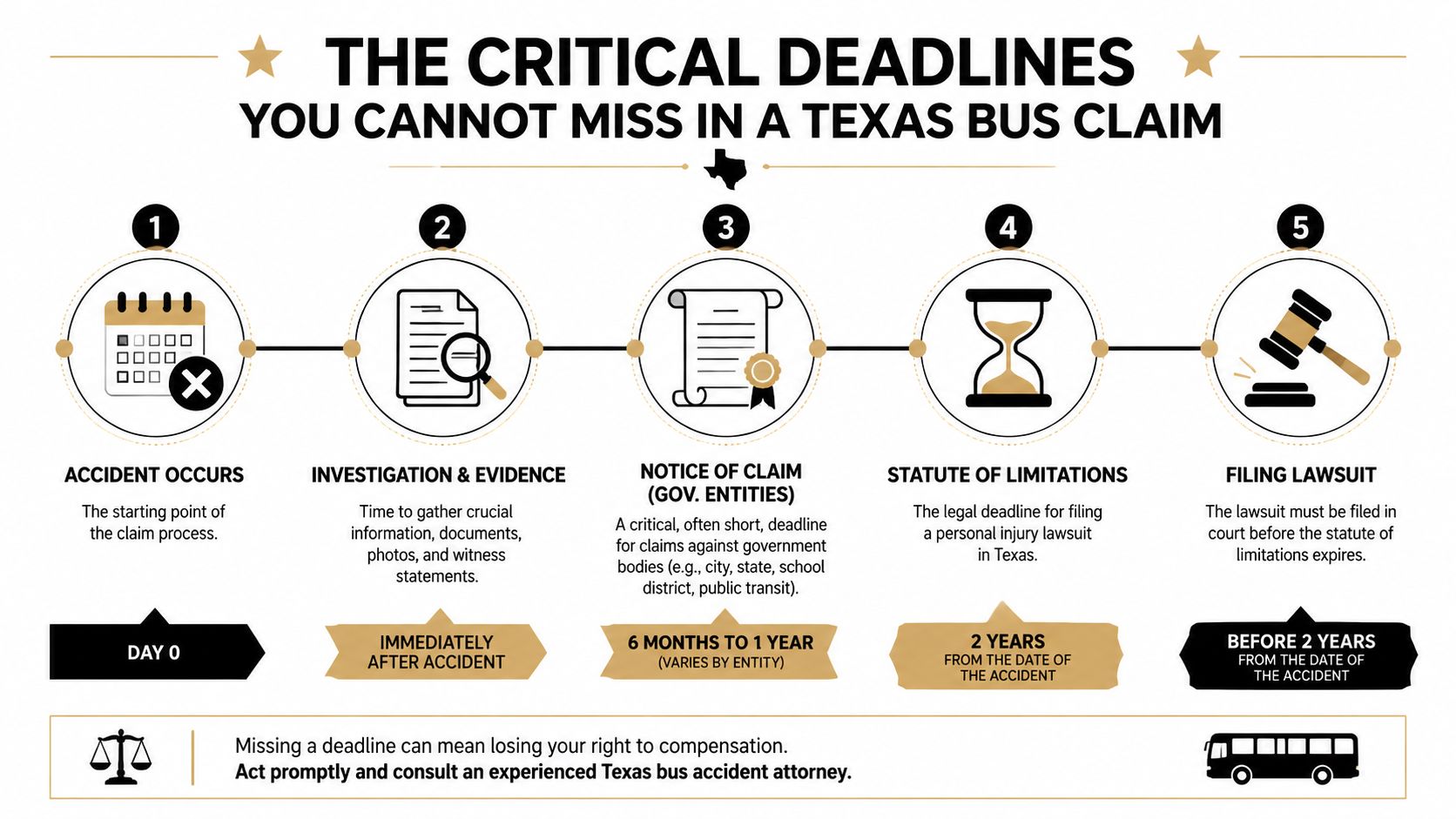
Under Texas Civil Practice and Remedies Code Section 16.003, you have a strict two-year window to file a bus accident lawsuit. For claims against government bodies like Houston METRO, this is preceded by an even stricter notice of claim deadline, often six months or less, as outlined in this overview of Texas bus injury filing limits.
Why waiting hurts more than your legal calendar
Deadlines aren't just technical rules. They affect evidence. Security footage can disappear. Witnesses move or forget details. Vehicle damage gets repaired. Digital records may be overwritten. A lawyer can't recover what no longer exists.
This is especially important when the bus is owned by a public entity. The short notice period can arrive while you are still treating, missing work, and trying to understand your diagnosis. That's why early legal advice matters even if you're not ready to make big decisions.
For a broader look at filing deadlines in injury cases, see this page on statutes of limitations in Texas.
Here's a short video that helps frame why prompt action matters after a crash.
What you should do this week
If the crash just happened, focus on these tasks now:
- Confirm the bus operator. Was it METRO, a school district, or a private company?
- Request medical evaluation. Don't rely on adrenaline to tell you you're fine.
- Preserve your documents. Tickets, discharge papers, photos, employer notes, and receipts all help.
- Get legal advice early. You don't need to wait until treatment ends.
- Do not assume the general two-year rule is enough if a public entity is involved.
The shortest deadline usually controls the case, not the deadline you wish applied.
What Compensation Can You Recover After a Bus Crash
In a personal injury case, damages means the losses the law allows you to recover. Some are financial and easy to identify. Others are personal and harder to measure, but no less real.
After a bus crash, compensation depends on your injuries, the evidence, the defendant, and whether fault is disputed. In some public transit cases, additional limits may affect recovery. In other cases, available insurance and the number of responsible parties shape the practical value of the claim.

The two broad categories of damages
Economic damages are tangible losses. These often include medical bills, lost wages, out-of-pocket expenses, and damage to personal property.
Non-economic damages cover the human impact of the crash. That may include pain, emotional distress, physical limitations, disfigurement, and changes to daily life. If a loved one died, surviving family members may also need legal guidance about wrongful death compensation and related losses.
A simple example. A Houston office worker injured when a bus runs a light may have emergency room bills, follow-up care, missed paychecks, and months of back pain that make normal tasks harder. All of those losses matter, even though not all of them arrive as a bill in the mail.
Comparative fault can reduce what you receive
Texas uses comparative fault, also called proportionate responsibility. That means the defense may argue that you were partly to blame. If they succeed, your compensation can be reduced.
Texas law uses a proportionate responsibility formula. If a jury awards you $100,000 but finds you 20% at fault, your award is reduced by 20% to $80,000. If you are found more than 50% at fault, you recover nothing, according to this discussion of Texas proportionate responsibility law.
That rule comes from Texas Civil Practice and Remedies Code Chapter 33. It matters because insurance companies often try to shift blame early. They may say you were distracted, standing unsafely, failed to use caution, or caused part of the collision if you were driving another vehicle.
What works and what doesn't
Some choices help your claim. Others make it harder.
- Helpful evidence includes timely medical records, photos, witness names, and consistent treatment
- Unhelpful habits include skipping appointments, posting about the crash online, and giving broad recorded statements
- Strong legal framing connects your symptoms to the crash with clear records and credible timelines
- Weak legal framing leaves gaps the insurer can use to argue that your injuries came from something else
A damages claim is not just a stack of bills. It is the story of what the crash changed in your body, your work, and your daily life.
Texas Civil Practice and Remedies Code Chapter 41 also affects certain damages issues in civil cases. In most bus injury claims, the practical starting point is still proving negligence, documenting losses, and defending against unfair fault arguments.
Immediate Steps to Protect Your Rights After a Bus Accident
The hours after a crash are messy. You may be in pain, worried about family, or pressured to answer questions before you've had time to think. A simple checklist helps.
First protect your health
Get medical care as soon as possible. If EMS recommends transport, listen. If you go home first and symptoms build later, seek treatment right away. Bus crash injuries often involve delayed pain in the neck, back, head, shoulders, or knees.
Keep every paper you receive. Discharge instructions, prescriptions, work excuses, and follow-up referrals all help connect the crash to your injuries.
Then protect the evidence
If you can do so safely, gather basic information at the scene or soon after:
- Photograph what you can. The bus number, vehicle damage, intersection, skid marks, and visible injuries matter.
- Identify the operator. METRO, a private charter company, a school district, or a contractor may each trigger different procedures.
- Get witness information. Names and phone numbers are often more useful than long conversations at the scene.
- Ask how the crash was reported. A police report, incident report, or transit report may all exist.
If you need a broader crash checklist, this guide on what to do after car accident is a useful starting point.
Be careful with insurers
Insurance adjusters may sound helpful. Sometimes they are gathering information to limit what gets paid. Don't guess about your injuries. Don't minimize your pain. Don't agree to a recorded statement without understanding who the insurer represents.
A practical example. A Houston driver sideswiped by a bus may tell an adjuster, “I'm probably okay, just sore.” Days later, the driver learns they have a more serious injury. That early statement may still be used to challenge the claim.
Instead, keep it simple. Confirm basic facts, say you are still being evaluated, and get legal advice before discussing fault, medical history, or settlement.
How Our Houston Bus Accident Lawyers Fight for You
A bus case is part injury claim, part investigation, and part deadline management. Good legal work means handling all three at once. That includes identifying the correct defendant, preserving records before they disappear, dealing with insurers, and preparing the case for negotiation or trial if needed.
At The Law Office of Bryan Fagan, PLLC, that work includes reviewing crash reports, securing medical documentation, evaluating liability under Texas Civil Practice and Remedies Code Chapters 33 and 41, and tracking whether the case involves a private carrier or a government entity with special notice rules. If the crash involved a commercial vehicle in addition to the bus, Houston Truck Accident Lawyer covers representation for victims of commercial truck collisions in Houston.
What legal representation should actually do
A Houston bus accident lawyer should make your life easier, not more confusing. In practice, that means:
- Investigating the facts instead of relying only on the initial report
- Handling insurer communication so you don't get boxed into bad statements
- Calculating damages carefully rather than focusing only on current bills
- Watching procedural deadlines closely, especially in public transit claims
- Preparing for litigation if the defense refuses to deal fairly
Frequently Asked Questions
| Question | Answer |
|---|---|
| What does liability mean in my case? | Liability means legal responsibility for causing the crash or your injuries. More than one party may share that responsibility. |
| What is comparative fault? | Comparative fault means your compensation can be reduced if you were partly responsible. If your responsibility is found to be more than half, Texas law bars recovery. |
| What are damages? | Damages are the losses you seek to recover, including financial losses and personal harm such as pain or emotional distress. |
| What is the statute of limitations? | It is the deadline to file a lawsuit. In many private bus cases, that deadline is two years. Public transit claims may require much earlier notice. |
| Do I still have a case if I was partly at fault? | Possibly. Many injured people still have a claim if their share of fault does not exceed the legal bar under Texas law. |
| Should I talk to the insurance company first? | You can report basic facts, but you should be cautious about recorded statements, fault discussions, and early settlement offers. |
| What if my loved one died in the crash? | Your family may have the right to pursue wrongful death compensation. These cases need prompt review because deadlines and evidence issues still apply. |
If you're hurt, overwhelmed, and unsure what applies to your crash, the most useful next step is a legal review of the bus type, the defendant, the deadlines, and the available insurance. That clarity often changes the direction of a case immediately.
If you or someone you love was injured in a bus crash, contact The Law Office of Bryan Fagan, PLLC for a free consultation. You'll get clear information about your rights, what deadlines may apply, how to handle the insurance company, and what your next steps should be. You pay nothing upfront, and contingency-fee representation means you don't pay unless your case results in a recovery.