A car crash can change your life in seconds, but you don’t have to face recovery alone.
You may be reading this after a wreck on I-45, the 610 Loop, or a neighborhood road you drive every day. One moment you were heading home, taking a delivery, or driving a rideshare passenger. The next, your car was spinning, airbags were deploying, and everything felt unreal.
When alcohol is involved, the shock cuts even deeper. People often ask the same questions right away. Who pays for my care? What if the drunk driver has little insurance? What if I was working for Uber, Lyft, DoorDash, or Amazon Flex when this happened?
A drunk driving accident lawyer Houston victims trust should do more than file paperwork. Your lawyer should explain the process in plain English, protect your rights, and help you pursue every available source of compensation. That includes a standard auto insurance claim, a personal injury claim, and in fatal cases, possible wrongful death compensation for surviving family members.
The Devastating Impact of Drunk Driving in Houston
A drunk driving crash often begins with an ordinary night.
A Houston driver might be stopped at a red light near a freeway feeder road when a speeding SUV slams into the rear of the car. A rideshare driver might be taking a passenger home when an impaired driver runs a light. A delivery worker might be finishing one last order when another vehicle drifts across lanes.
Those aren’t rare events in this city. In 2021, Houston experienced 2,766 total collisions involving alcohol-impaired drivers, resulting in 87 fatalities and 176 cases of suspected serious injuries. On average, 182 people die each year in Harris County from drunk driving accidents, which is 43% of all local traffic fatalities, according to Houston drunk driving crash data discussed here.

What those numbers mean for real families
Behind every crash is a chain reaction.
There’s the ambulance ride. The ER visit. The missed paycheck. The child who now needs help getting to school because a parent can’t drive. The spouse who’s suddenly managing medical appointments, insurance calls, and household bills at the same time.
For some families, there’s also grief that never really leaves. In those cases, a Houston car accident lawyer may help the family pursue a civil claim even while the criminal case moves separately.
Practical rule: A criminal DWI case punishes the driver. A civil injury case focuses on your financial recovery.
Alcohol impairment is often worse than people realize
Many readers also want to understand how alcohol interacts with other substances, because impairment doesn’t always come from alcohol alone. If you want a plain-language explanation of the dangerous effects of mixing alcohol and other substances, that resource can help you see why impaired driving situations can become so unpredictable and severe.
If this happened to you, you’re not overreacting by taking it seriously. Your fear, confusion, anger, and exhaustion are normal.
So is needing help.
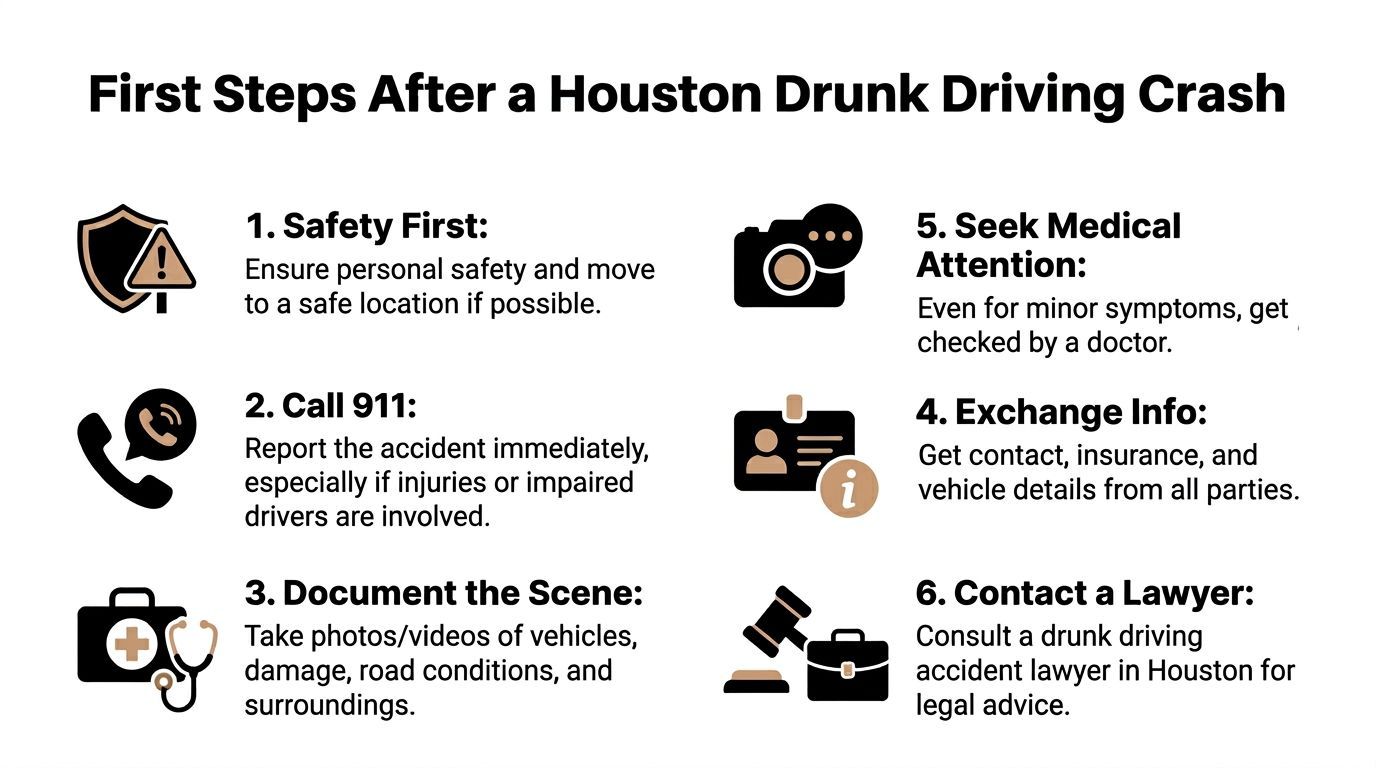
First Steps After a Houston Drunk Driving Crash
The hours after a crash matter. What you do can protect both your health and your claim.
Some people freeze. Others apologize even when they did nothing wrong. Many are in pain but think they should “wait and see.” Try to slow things down and focus on the next right step.
What to do at the scene
Get to safety first.
If you can move safely, get out of traffic and wait in a protected area. If you’re badly hurt, stay where you are and wait for EMS.Call 911 right away.
This is especially important in a suspected drunk driving crash. Police observations, field investigation, and the crash report may become key evidence later.Take photos and video if you can.
Get the cars, license plates, debris, skid marks, traffic lights, nearby businesses, and visible injuries. If the other driver is unsteady, slurring, or behaving erratically, don’t argue with them. Just document what you can safely observe.Collect contact details.
Get the other driver’s name, insurance information, plate number, and vehicle details. If witnesses stopped, ask for their names and phone numbers before they leave.
What to do in the next few hours
A lot of strong cases are weakened by what happens after the tow truck leaves.
- Get medical care the same day. Even if your pain seems minor, adrenaline can hide serious injuries.
- Tell the doctor about every symptom. Headaches, dizziness, numbness, confusion, back pain, and anxiety all matter.
- Start a file. Keep discharge papers, prescriptions, receipts, photos, and work notes in one place.
- Notify your insurer. Report the crash promptly, but keep the discussion basic.
Don’t guess about your injuries. Don’t minimize them. Don’t say, “I’m fine,” if you’re not.
What not to do
Insurance companies pay close attention to early statements.
| Situation | Safer response |
|---|---|
| The other insurer asks for a recorded statement | Say you’re still receiving care and want legal advice first |
| An adjuster asks who caused the crash | Stick to facts, not opinions |
| Someone pressures you to settle fast | Wait until you understand your injuries and coverage options |
A simple example helps. If a Houston driver is rear-ended on I-45 by someone later arrested for DWI, the victim may assume fault is obvious. But if the victim tells an adjuster, “I may have stopped suddenly,” that statement can be used to reduce the claim.
That’s why early caution matters. A Texas injury attorney can often prevent avoidable mistakes before they become expensive ones.
Proving Fault Under Texas Law
Many people think a drunk driver’s arrest automatically ends the civil case. It doesn’t. It helps, but you still have to prove the right things the right way.
Under Texas law, liability means legal responsibility for the harm caused. In a personal injury case, your goal is to show that another party caused the crash and should pay for the losses that followed.
Why negligence per se matters
Texas uses a rule called negligence per se. In plain language, that means if a driver violates a safety law and causes the kind of harm that law was meant to prevent, that violation can serve as conclusive proof of negligence in the civil case. In drunk driving cases, that often means a DWI violation becomes a major shortcut in proving fault, as explained in this discussion of Texas drunk driving negligence rules.
Consider the following.
If a store posts “Wet Floor” signs because spills cause falls, and an employee ignores the policy, that violation tells you a lot about fault. DWI laws work the same way. They exist to prevent impaired drivers from hurting people on the road.
Comparative fault can still reduce a claim
This concept often confuses readers.
Even in a drunk driving case, the defense may still argue that you shared blame. Texas follows a modified comparative negligence system under Texas Civil Practice & Remedies Code Chapter 33. That means your compensation can be reduced by your percentage of fault, and if you’re found 51% or more at fault, you can be barred from recovery.
If you want a fuller plain-English explanation, this guide on comparative fault definition is a useful starting point.
Plain-English legal terms that matter
- Liability means who is legally responsible.
- Comparative fault means blame can be divided between more than one person.
- Damages means the money sought for losses caused by the crash.
- Statute of limitations means the legal deadline for filing suit.
How insurers try to shift blame
They may argue:
- You changed lanes too quickly
- You were distracted
- You stopped short
- Your injuries were pre-existing
- You failed to seek treatment fast enough
A drunk driver can still be clearly at fault, and the defense can still try to cut the value of your case by blaming you for part of what happened.
Texas Civil Practice & Remedies Code Chapter 41 also matters in some serious injury cases because it addresses exemplary damages, which are sometimes called punitive damages. Those damages are treated differently from ordinary compensation and require stronger proof.
This is why evidence matters so much. Police reports, witness statements, vehicle damage, medical records, phone records, app logs, and scene photos often make the difference between a disputed claim and a strong one.
Identifying All Potentially Liable Parties
The drunk driver may not be the only person or business responsible.
That matters because serious injuries can exhaust one driver’s insurance quickly. If a victim has surgery, misses work, and needs months of treatment, a single policy may not cover the full loss.
When a bar or restaurant may share responsibility
Texas recognizes dram shop liability. In simple terms, an alcohol-serving business may be held responsible if it served alcohol to a person who was visibly intoxicated and that person later caused injuries. This overview of dram shop laws explains the concept in more detail.
Under Texas dram shop statutes, establishments that serve alcohol to visibly intoxicated patrons can be held liable for injuries those patrons later cause, and attorneys often use surveillance video and credit card receipts to help prove what happened, as described in this explanation of Texas dram shop evidence.
A common Houston example
A customer spends hours at a sports bar watching a game. Staff continue serving drinks even though the customer is stumbling, loud, and clearly impaired. The customer leaves, gets behind the wheel, and causes a crash a few miles away.
In that situation, a claim might involve more than the driver alone.
Possible defendants can include:
- The drunk driver
- The bar, restaurant, or venue
- An employer, if the at-fault driver was working at the time
- Other drivers, if a chain-reaction crash involved multiple acts of negligence
Why this matters for compensation
More liable parties can mean more insurance coverage.
That doesn’t guarantee recovery. It does mean a careful investigation may uncover additional paths to payment for medical bills, lost income, pain, and long-term care.
This is one reason experienced lawyers send preservation letters quickly. Video footage can be erased. Receipts can disappear. Witnesses can forget details.
A broad investigation often changes the value and strength of a case.
The Rising Complexity of Rideshare and Gig Worker Accidents
This is one of the most misunderstood parts of a drunk driving case in Houston.
If a drunk driver hits your personal vehicle, the insurance path is usually more straightforward. If the crash involves Uber, Lyft, or app-based delivery work, the claim can become layered almost immediately.
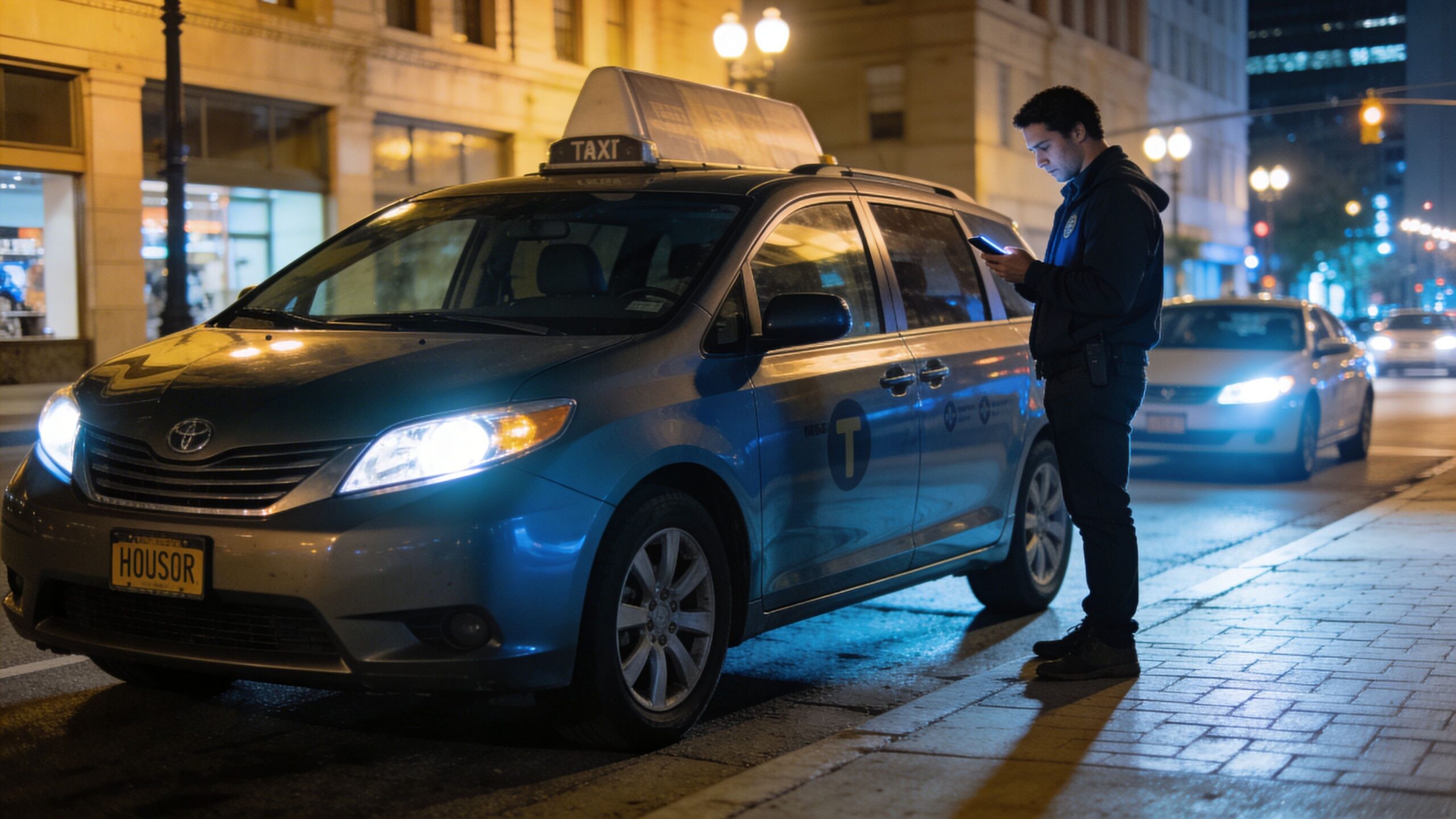
Emerging 2025 data described by this Houston rideshare drunk driving discussion shows a 35% rise in Houston-area drunk driving accidents involving rideshare drivers. The same source notes that Texas rideshare policies can provide up to $1M in coverage during active trips, but these cases often involve layered disputes over who pays and when coverage applies.
Why gig economy crashes are different
Your legal position may change depending on what the app was doing at the time of impact.
A rideshare or delivery case often turns on questions like these:
- Was the app off?
- Was the driver logged in and waiting for a ride or order?
- Was a passenger in the vehicle?
- Was the driver en route to pick someone up?
- Did another insurer deny coverage first?
That’s why many victims benefit from guidance from a Houston car accident lawyer familiar with rideshare cases in Houston, TX.
One crash can trigger multiple insurance claims
Here’s a realistic example.
An Uber driver is transporting a passenger through Midtown. A drunk driver runs a light and hits the Uber. The passenger is injured. The Uber driver is injured. The Uber vehicle owner may have property damage. There may also be a dispute about whether the rideshare driver was speeding or fatigued.
That can lead to claims involving:
| Possible source | What it may cover |
|---|---|
| Drunk driver’s policy | Primary fault-based liability |
| Rideshare company policy | Coverage during certain app periods or active trips |
| Victim’s own UM/UIM policy | Possible help if the at-fault coverage is denied or insufficient |
| Medical payments or PIP coverage | Immediate medical expenses, depending on the policy |
The layered nature of these claims is easier to understand when you see how coverage periods work in practice.
Why these cases stall so often
Each insurer may point to someone else.
The drunk driver’s insurer may dispute injury severity. The rideshare insurer may question whether the app was active. Another carrier may reserve rights while “investigating coverage.” Meanwhile, your medical bills keep arriving.
If you drive for Uber, Lyft, DoorDash, or another app, don’t assume the available policy will pay because the company name is large. In these cases, app screenshots, trip records, time stamps, and phone data can matter as much as the crash report.
What Is Your Drunk Driving Accident Claim Worth
This is one of the first questions people ask, and it’s a fair one.
Your claim’s value depends on your injuries, your medical treatment, your time away from work, your long-term limitations, the available insurance, and the strength of the evidence. In Texas, the money sought in a civil case is called damages.
Economic damages
These are the measurable financial losses.
Examples include:
- Emergency room bills
- Hospital care and follow-up treatment
- Physical therapy
- Prescription costs
- Lost wages from missed work
- Reduced future earning ability
- Vehicle repair or replacement costs
If you missed shifts, used sick days, or can’t return to the same kind of job, those losses belong in the claim too.
Non-economic damages
These are harder to measure, but they are real.
They can include physical pain, emotional distress, mental anguish, disfigurement, impairment, and loss of enjoyment of normal life. If you used to pick up your child, sleep through the night, drive without fear, or work without constant pain, and now you can’t, those losses matter.
A simple example helps. If a Houston delivery driver suffers a back injury, the financial loss may include treatment bills and missed income. The non-economic loss may include daily pain, anxiety in traffic, and the inability to enjoy ordinary routines.
Some losses come with receipts. Others show up in how your body feels, how your mind reacts, and what your life no longer looks like.
Punitive or exemplary damages
In some drunk driving cases, a plaintiff may also seek exemplary damages, often called punitive damages. These are not meant to repay a bill. They are meant to punish especially reckless conduct and deter similar behavior.
Texas Civil Practice & Remedies Code Chapter 41 governs these damages. The legal standard is higher than it is for ordinary compensation, which is why lawyers build these claims carefully.
Wrongful death and survival claims
If a loved one died in a drunk driving crash, the family may have additional civil options.
That can include a wrongful death compensation claim for surviving family members and, in some cases, a survival claim tied to losses the deceased person suffered before death. These are separate from the criminal prosecution.
What raises or lowers case value
A claim often becomes stronger when there is:
- Clear liability
- Consistent medical treatment
- Strong documentation
- Credible witnesses
- Available insurance coverage
A claim may become harder when there are gaps in treatment, conflicting statements, or disputes about who was at fault.
How Our Houston Lawyers Maximize Your Recovery
At 10:30 p.m., a drunk driver runs a light in Houston and slams into an Uber carrying a passenger home from work. The injuries are serious. The legal claim is not just against one driver. It may involve the intoxicated driver’s policy, the rideshare company’s coverage, the Uber driver’s personal policy, and your own uninsured or underinsured coverage. That layered insurance problem is where many claims lose value if no one pins down which policy applies and when.
Our job is to build order out of that confusion early.
A strong drunk driving case is built like a timeline and a map. The timeline shows what happened, minute by minute. The map shows every person, company, and insurance policy that may owe compensation. In rideshare and gig worker crashes, that second part matters more than many people realize, because coverage can change depending on whether the driver was offline, waiting for a ride request, or actively transporting a passenger.
What our lawyers do from the start
We move quickly to secure evidence before it gets harder to find or easier to dispute.
That can include police reports, body camera footage, dispatch records, app status logs, toxicology evidence, 911 calls, witness statements, and scene evidence. In a rideshare or delivery case, we also look for proof showing what the driver was doing in the app at the exact time of the crash. A few minutes can change which insurance carrier is responsible.
We also send preservation requests when business records may disappear. In dram shop claims, that may involve surveillance video or sales records. In gig economy cases, it may involve trip data, driver communications, or electronic logs.
Why insurance issues get complicated fast
Insurance companies rarely line up and volunteer the highest available coverage.
In a standard two-car crash, there is often one main liability policy to evaluate. In a drunk driving crash involving Uber, Lyft, or a delivery driver, the claim can look more like stacked layers. One insurer may argue the driver was off duty. Another may say the app was on but no ride had been accepted. A third may question whether the crash falls under commercial or personal coverage.
That is why careful policy review matters. We read the coverage language, compare it to the app records, and press the carrier whose policy was active at the time of impact.
How we deal with adjusters
Adjusters are trained to protect the company’s money.
They may ask for a recorded statement before you understand the full extent of your injuries. They may focus on prior medical issues, gaps in treatment, or a few words from a rideshare report that seem harmless out of context. In gig driver cases, they may also try to keep the discussion narrow by treating the crash as a simple car wreck instead of a multi-policy claim.
A quick offer can feel like relief. It often works more like a lid placed on a pot before the full cost has surfaced.
How we strengthen the claim’s value
We prepare every case as though a jury may need to understand it.
That means organizing the evidence in a way that is clear and persuasive, not just collecting documents in a file. We connect the crash to the injury, the injury to the treatment, and the treatment to the financial and personal losses that followed. If the crash involved a rideshare or gig driver, we also show how the app status and policy structure fit together, because juries and insurers alike can get lost in that detail if no one explains it plainly.
The Law Office of Bryan Fagan, PLLC handles car, truck, rideshare, insurance, and wrongful death matters tied to serious crashes, including impaired driving cases. For injured people, that coordinated approach matters when fault is clear but coverage is disputed.
Some clients also come to us confused by alcohol-related questions that seem small but can affect how people view impairment and driving decisions, such as can you drink non-alcoholic beer while driving. We focus on the evidence that controls the case, not the side noise insurers sometimes use to distract from it.
A lawyer cannot promise a result. A lawyer can protect your position, preserve the evidence, identify every available source of recovery, and push back when insurers try to treat a layered Houston drunk driving claim like a simple one-policy case.
Your Questions Answered About Houston Drunk Driving Claims
A lot of clients come to this stage with the same concern. They understand a drunk driver caused the wreck, but they still do not know how deadlines, insurance layers, partial fault, and rideshare rules fit together. That confusion is normal, especially in Houston crashes involving Uber, Lyft, or delivery app drivers, where one collision can trigger several policies and several versions of the facts.
How long do I have to file a claim
The statute of limitations is the legal deadline for filing a lawsuit.
In many Texas personal injury and wrongful death cases, the deadline is two years, but some facts can change that analysis. A claim involving a death, a government vehicle, a minor, or a disputed rideshare status may raise questions that a general guide cannot answer with confidence. The safest step is to have a lawyer review the timeline early, before evidence disappears and before a deadline becomes an avoidable problem.
What if the drunk driver has no insurance or not enough insurance
You may still have more than one path to recovery.
Your own policy may include uninsured motorist or underinsured motorist coverage. There may also be a claim against a bar or restaurant under dram shop law, or against a rideshare or delivery company policy if the driver was logged into the app, waiting for a ride, or actively transporting a passenger. That app status matters because coverage can change from one phase of the trip to another, almost like switching tracks on a rail line.
Should I accept the first settlement offer
Not until you know what the case costs you.
Early offers often arrive before your treatment is complete and before your doctors can say whether you will need future care, miss more work, or live with lasting pain. In a rideshare or gig-driver case, a quick offer can also distract from a bigger problem. The insurer may be trying to settle before the correct policy is identified.
Once you sign a release, the case is usually over.
What if I was partly at fault
Partial fault does not automatically defeat a claim.
Texas uses a modified comparative fault system. That means your recovery can be reduced by your share of fault, and in some situations barred if the defense proves your share is too high. Insurers often use this rule aggressively. They may argue you braked late, changed lanes poorly, or should have seen the drunk driver coming. Good evidence matters because it keeps the focus on what caused the crash.
How much does it cost to hire a lawyer
Many injury firms handle these cases on a contingency fee.
That usually means the attorney fee is paid from a recovery, not up front. Ask direct questions before you sign. What percentage applies. Who pays case expenses. What happens if the case does not settle. Clear answers at the start prevent misunderstandings later.
Can I still bring a case if the driver faces criminal charges
Yes.
The criminal case and the civil case are different. Criminal court focuses on punishment for breaking the law. A civil claim focuses on your losses, including medical bills, lost income, pain and suffering, and wrongful death damages if a family member was killed. Even if the criminal case moves slowly or ends in a way that frustrates you, your civil rights may still be strong.
Can confusing alcohol rules affect how people think about fault
Sometimes.
People often make fast assumptions based on labels, packaging, or what they think they saw in a car. That is one reason alcohol-related cases can become distorted by side issues. If you want a practical explanation of one example, this article on can you drink non-alcoholic beer while driving shows why appearances and officer observations can still affect how a traffic stop is viewed. In a civil injury case, we work to separate distractions from the evidence that proves impairment, fault, and damages.
What should I bring to a consultation
Bring whatever you already have.
That may include:
- Crash report information
- Photos and videos
- Insurance letters, emails, or claim numbers
- Medical records or discharge papers
- Proof of missed work or lost income
- Screenshots from Uber, Lyft, DoorDash, Instacart, or other apps
- Ride receipts, trip confirmations, or passenger messages
- Names of witnesses or businesses with security cameras nearby
Do not worry about building a perfect file before you ask for help. A lawyer can help fill in the gaps, request app data, and identify which insurer should be paying.
If you or someone you love was hurt by an impaired driver, a conversation with The Law Office of Bryan Fagan, PLLC can give you a clearer picture of your rights, your deadlines, and your next steps. We offer free consultations for injured drivers, passengers, rideshare workers, delivery workers, and families pursuing wrongful death claims after a fatal crash. You do not have to sort out layered insurance questions and legal deadlines on your own.