A car crash can change your life in seconds—but you don’t have to face recovery alone. When someone else's carelessness leaves you injured, a personal injury claim is your legal right to seek financial compensation for the harm you've suffered. It’s the formal process for demanding that the person who caused the accident, and their insurance company, pay for your medical bills, lost wages, and the pain you’ve been forced to endure.
What a Personal Injury Claim Means for You

Think of a personal injury claim as the official way to hold a negligent person or company accountable for the harm they’ve caused. It isn’t about immediately marching into a courtroom; in reality, the vast majority of these claims are resolved through careful negotiation with the insurance company long before a trial ever becomes necessary.
For instance, imagine a Houston driver is rear-ended on I-45 by someone who was texting and driving. The at-fault driver's recklessness, or negligence, is the direct cause of your injuries and the damage to your vehicle. A personal injury claim is the tool you use to ensure their insurance provider—not you—pays for the consequences of their dangerous choice.
The Purpose of Your Claim
The goal of a personal injury claim is simple: to make you "whole" again in the eyes of the law. This means securing the financial resources needed to cover all your losses and put you back in the position you were in just moments before the accident.
While no amount of money can ever erase the physical pain or emotional trauma of a serious wreck, compensation can lift the crushing financial weight off your shoulders, allowing you to focus on healing.
Your claim is far more than just paperwork. It's a powerful statement that the financial burden of an accident belongs to the person who caused it—not the victim trying to heal.
What Does the Claim Process Involve?
When you file a claim, your Texas injury attorney takes on the fight for you. We handle the legal complexities so you can pour all your energy into what truly matters: your recovery.
Here’s what that typically looks like:
- Building Your Case: We dive deep into the accident, gathering police reports, photos from the scene, and crucial witness statements to build an undeniable record of what happened.
- Tallying the True Costs: We meticulously compile every medical bill, document your lost income, and work to put a fair value on your pain and suffering to calculate the full scope of your damages.
- Fighting the Insurance Company: We take over all communications with the insurance adjuster, pushing back against their inevitable lowball offers to get you the settlement you deserve.
- Protecting Your Rights: We make sure every legal deadline is met, including Texas’s strict two-year statute of limitations, to preserve your right to compensation.
Ultimately, a personal injury claim is your path toward justice and financial stability. If you’ve been hurt in an accident, you have rights that need protecting. Contact The Law Office of Bryan Fagan, PLLC for a free consultation to understand all your options.
The Four Legal Elements You Must Prove

Just because you were hurt in an accident doesn’t automatically mean you have a winning personal injury claim in Texas. To get the compensation you deserve, you and your attorney must prove the other party was legally responsible for your injuries.
This legal responsibility is called liability, and it’s built on four essential pillars: Duty, Breach, Causation, and Damages.
Think of it like building a chair. You need all four legs for it to stand. If even one leg is missing, the whole thing collapses. Your claim is no different—it must solidly prove all four elements to be successful.
Duty of Care
First, you must establish Duty. This is the fundamental legal obligation we all have to act with reasonable care to avoid causing harm to others. This duty changes depending on the situation.
For instance, every driver navigating a busy Houston highway like I-45 has a legal duty to obey traffic laws, pay attention, and operate their vehicle safely. It’s not just good manners; it’s a legal promise they make to every other person on the road. The same goes for a store owner, who has a duty to keep their property reasonably safe for customers.
Breach of Duty
Next, there must be a Breach of that duty. This happens when someone fails to live up to their duty of care. They act carelessly, recklessly, or negligently, creating a hazard for others.
Let’s go back to our driver on I-45. If that driver looks down to send a text, they've just breached their duty to drive safely. By taking their eyes off the road, they failed to act as a reasonably careful person would, putting everyone around them at risk.
Other common examples of a breach include:
- A driver blowing through a red light at a Dallas intersection.
- A grocery store manager ignoring a spilled liquid on an aisle floor.
- A trucking company pushing its drivers to work longer than federal law allows.
In every case, a duty existed, and someone chose to ignore it. That decision is the second critical piece of your claim.
Causation
The third element, Causation, is the bridge connecting the breach of duty directly to your injuries. You must show that the other person’s careless act was the direct cause of the harm you suffered. It boils down to the "but for" test: "But for" their negligence, you wouldn't have been hurt.
Imagine our texting driver on I-45 slams into the car ahead. The act of texting (the Breach) directly caused the collision, which in turn caused the victim's whiplash. There’s a clear, unbroken line from the negligent act to the injury.
In Texas, proving causation is everything. Your Houston car accident lawyer has to establish that the defendant’s negligence was a substantial factor in causing the injury and that the harm would not have happened otherwise.
Damages
Finally, you must prove you suffered Damages. This is the legal term for the real-world harm and losses you experienced as a direct result of the accident. Even if someone was outrageously negligent, there’s no personal injury claim without actual damages.
Damages are the measurable consequences of the incident. This isn’t just about money; it includes both the financial hit and the personal suffering you’ve endured. For the victim in our I-45 crash, damages would include things like:
- The bills from the ambulance ride and emergency room visit.
- Lost wages from time off work needed to recover.
- The cost to repair or replace their damaged car.
- The physical pain and emotional trauma caused by the crash.
These four elements—Duty, Breach, Causation, and Damages—are the heart of what is a personal injury claim. Proving each one is the key to holding the at-fault party accountable and securing the resources you need to heal and move forward with your life.
Common Types of Personal Injury Claims in Texas
When you hear “personal injury,” your mind probably goes straight to a car crash. While car accidents are a huge part of what we do, a personal injury claim can arise from almost any situation where someone else’s carelessness leaves you hurt.
Figuring out where your case fits is the first step. At The Law Office of Bryan Fagan, we've helped countless Texans navigate the aftermath of injuries caused by negligence, and our experience covers a wide range of accident types.
Vehicle-Related Accidents
Texas roads are notoriously busy, and with that traffic comes a constant risk of accidents. Our experienced attorneys can handle every type of vehicle-related incident.
- Car Accidents: A simple trip to the store can turn into a nightmare in seconds. We represent people injured in everything from parking lot bumps to catastrophic pile-ups on I-45, often caused by drunk drivers, distracted texters, or just plain recklessness.
- Truck Accidents: A collision with an 18-wheeler isn't just a bigger car accident—it’s a completely different legal battle. These cases often mean taking on massive trucking corporations and digging into issues like driver fatigue, falsified logbooks, or poor vehicle maintenance.
- Rideshare Accidents: Getting into an Uber or Lyft is built on trust. When that trust is broken by a crash, figuring out who pays can get messy fast, with the driver's insurance and the company's corporate policy both in play. Our team knows exactly how to cut through the confusion and protect your rights.
Premises Liability Incidents
Texas property owners have a legal responsibility to keep their spaces reasonably safe for visitors. When they fail to fix a known hazard and someone gets hurt, it's called "premises liability." A personal injury claim holds them accountable for that failure.
These are some of the most common scenarios we see:
- Slip and Fall Accidents: A spill in a Dallas grocery aisle with no "wet floor" sign is a classic example.
- Negligent Security: An assault happens in a dimly lit apartment parking garage that the landlord knew was a risk but failed to secure.
- Dog Bites: A neighbor’s dog with a known history of aggression gets loose and attacks a child playing nearby.
Many of these injuries happen because of negligence or easily preventable unsafe conditions. Knowing what makes a property unsafe is key to understanding who is at fault.
Other Common Claim Types
Personal injury law extends far beyond crashes and falls. Harm caused by negligence can take many forms, and these cases are every bit as serious and deserving of justice.
We also handle claims involving:
- Product Liability: You're hurt by a product that was designed or made poorly, like a defective airbag that fails to deploy or a food product contaminated during processing.
- Workplace Accidents: While workers' comp is the usual route for on-the-job injuries, you may have a separate personal injury claim if your injury was caused by a negligent third party—not your employer.
- Wrongful Death: This is the most heartbreaking type of case. When you lose a family member because of someone else's negligence, your family can file a wrongful death claim to seek compensation for your profound loss. We approach these cases with the compassion and fierce determination they demand.
No matter how you were hurt, if it wasn't your fault, you have rights. Don’t assume you have to carry this financial and emotional weight by yourself. A skilled Houston car accident lawyer can explain how a personal injury claim works for your specific situation and help you get the justice you deserve.
Navigating the Texas Personal Injury Claim Process
After an accident, the legal road ahead can feel just as confusing and overwhelming as the medical one. Knowing what to expect in a personal injury claim can give you a sense of control, allowing you to focus on what matters most: your recovery.
While every case is unique, the process follows a logical path. It starts the moment you're hurt and ends when your claim is resolved.
The flowchart below breaks down the common journey for different types of claims, whether they stem from a car wreck, a slip and fall, or a dangerous product.
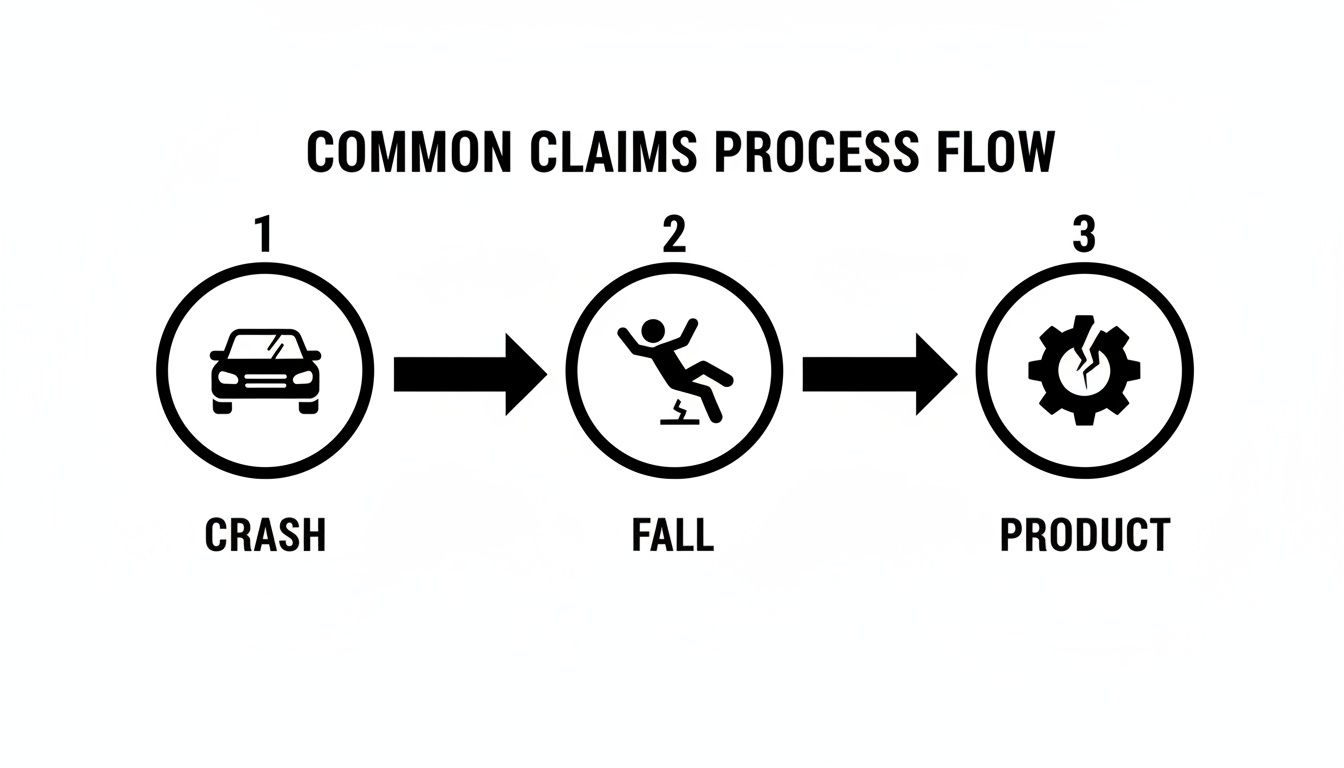
As you can see, the initial cause might differ, but the path to getting compensation often involves the same core stages of investigation, negotiation, and resolution.
Understanding Key Texas Laws That Affect Your Claim
Before we get to the step-by-step process, there are two critical Texas laws you need to know about. Ignoring them can unfortunately destroy your ability to recover any compensation at all.
-
Statute of Limitations: Texas law gives you a strict two-year window to file a lawsuit after an injury. This is called the statute of limitations. If you miss this two-year deadline, a court will almost certainly throw your case out, and you lose your right to seek compensation forever.
-
Comparative Fault (Proportionate Responsibility): What if you were partly at fault for the accident? Texas uses a rule called comparative fault, found in Chapter 33 of the Texas Civil Practice and Remedies Code. This means you can still recover money for your injuries as long as your share of the blame is 50% or less. Your final compensation will be reduced by your percentage of fault. So, if a jury awards you $100,000 but finds you were 20% responsible, you would receive $80,000. However, if you're found 51% or more at fault, you get nothing.
Practical Steps to Filing an Insurance Claim
Knowing the steps involved can take away a lot of the mystery and anxiety. While no two cases are identical, most personal injury claims move through these predictable stages.
-
Seek Immediate Medical Attention: Your health is priority number one. Getting medical care right away not only begins your healing process but also creates a crucial medical record. This official documentation is vital for linking your injuries directly to the accident.
-
Gather and Preserve Evidence: While your lawyer will eventually launch a full investigation, the evidence you can collect at the scene is priceless. Snap photos of everything: the scene, vehicle damage, your visible injuries, and any relevant road signs or conditions. Get contact information for any witnesses who saw what happened.
-
Notify the Insurance Company (Carefully): You’ll need to report the accident to the at-fault party’s insurance provider to open a claim. But be careful. It’s always smart to talk to a Texas injury attorney before giving a recorded statement. Insurance adjusters are trained to ask questions designed to minimize what they have to pay.
-
The Investigation and Negotiation Phase: This is where the heavy lifting happens. Your attorney will gather all your medical records, police reports, and other evidence to build your case. They will calculate your total damages—including medical bills, lost wages, and pain and suffering—and send a formal demand letter to the insurer. The insurance company will usually counter with a lowball offer, and the negotiation begins.
-
Settlement or Lawsuit: The overwhelming majority of cases end with a settlement agreement, where you accept a negotiated sum of money. The process for many car accident injury claims resolves at this stage. However, if the insurance company stubbornly refuses to offer a fair amount, your attorney may advise you to file a lawsuit and take your case to trial, letting a Texas jury decide what you are owed.
What Kind of Compensation Can You Recover?

When you've been hurt by someone else's carelessness, the law allows you to demand financial compensation for your losses. In the legal world, we call this "damages." But this isn't just a legal term—it’s about getting the resources you need to put your life back together after it's been turned upside down.
The goal isn't just to pay a single hospital bill. It's to account for every single way the accident has impacted you, both financially and personally. In Texas, damages are broken down into a few key categories, and understanding them is the first step toward demanding what you’re rightfully owed.
Economic Damages: The Bills You Can Stack Up
This is the most concrete type of compensation. Economic damages cover all the tangible, out-of-pocket costs that you can track with receipts, invoices, and pay stubs. These are the bills that pile up on your kitchen table, causing sleepless nights and incredible stress.
Common examples include:
- Medical Expenses: Every dollar spent on your recovery. This includes the ambulance ride, ER visit, surgeries, follow-up appointments, physical therapy, prescription drugs, and even future medical care you might need.
- Lost Wages: The income you lost while you were unable to work. This also covers any paid time off or sick days you had to burn just to get by.
- Loss of Earning Capacity: If your injury is so severe that you can't return to your old job or have to take a lower-paying one, you can be compensated for that lifetime loss of income.
- Property Damage: The cost to repair or replace your vehicle and any other personal items damaged in the accident.
Non-Economic Damages: The Human Cost
How do you put a price tag on pain? On trauma? On missing out on your life? That's the challenge and the purpose of non-economic damages. These are intended to compensate you for the devastating, non-financial losses that don’t come with a receipt but often hurt the most.
While you can’t bill someone for your suffering, Texas law recognizes that this harm is real and that you deserve to be compensated for it. This is where an experienced Texas injury lawyer becomes so important—they help tell your story and show a jury the true human toll of the accident.
Non-economic damages are an acknowledgment that the worst part of an accident is rarely the dented car—it’s the damage done to your life. They provide financial recovery for the pain and disruption that don't have a price tag.
These damages are meant to cover losses like:
- Pain and Suffering: For the physical pain and discomfort you've endured and may continue to endure for years to come.
- Mental Anguish: Compensation for the fear, anxiety, depression, sleepless nights, or post-traumatic stress disorder (PTSD) that so often follows a traumatic event.
- Physical Impairment: If the injury stops you from enjoying your hobbies, playing with your kids, or even just doing daily chores, you can be compensated for that loss of enjoyment in life.
- Disfigurement: For permanent scars or other physical changes to your appearance that serve as a constant, painful reminder of the accident.
To get a better idea of how these different kinds of losses are valued, you can read our detailed guide on how to calculate damages in a personal injury claim.
Exemplary Damages: Punishing Reckless Behavior
Finally, there’s a special category of damages known as exemplary damages (or punitive damages), which is covered under Chapter 41 of the Texas Civil Practice and Remedies Code. These are different from the others. While economic and non-economic damages are about making you whole, exemplary damages are about punishing the person who hurt you and sending a clear message that their behavior will not be tolerated in our community.
These are not awarded for simple mistakes. Under Texas law, exemplary damages are reserved for the worst of the worst—cases involving gross negligence or malice. Think of a drunk driver who causes a catastrophic crash after multiple prior DWI convictions. A court might award exemplary damages to punish that extreme disregard for human life and deter others from ever doing the same.
Why You Need an Experienced Texas Injury Attorney
After a serious accident, the world can feel like it’s closing in on you. You're trying to recover from your injuries, but instead of focusing on healing, you’re bombarded with phone calls from aggressive insurance adjusters. They’re asking for recorded statements and pushing you to accept a quick settlement—often before you even know the full extent of your injuries.
This isn't a fair fight. You’re in pain and under stress, while the insurance company has a team of professionals whose entire job is to protect their profits. Trying to handle an auto insurance claim alone is a battle you shouldn't have to wage.
Who Is Liable in a Texas Car Accident?
This is where an experienced Texas injury attorney steps in. We do more than just fill out forms; we become your shield and your advocate. We take over all communication with the insurance companies, stopping the harassing phone calls and protecting you from their tactics.
Navigating a personal injury claim in Texas is a complicated process. It involves proving who was at fault, meticulously calculating every dollar of your damages—from medical bills to lost wages and future suffering—and fighting back against the insurance company’s arguments. It requires a deep understanding of Texas law, including the strict two-year statute of limitations and the complex rules of comparative fault.
An attorney levels the playing field. They ensure your story is told, your rights are protected, and your recovery is the number one priority.
At The Law Office of Bryan Fagan, we have dedicated our practice to standing with accident victims across Texas. We’ve seen firsthand how insurance companies operate, and we know what it takes to build a powerful case that they can’t ignore. Our focus is on handling the legal burdens so you can concentrate on what truly matters: getting your life back.
Most importantly, we handle these cases on a contingency fee basis. This is our promise to you: you pay us absolutely nothing unless we win your case. There are no upfront fees and no hidden costs. This approach removes any financial barrier to getting the expert legal help you need.
Your first step is a simple, no-risk conversation. A free consultation with our team can bring clarity and give you the confidence to move forward. Don't let an insurance company dictate the terms of your future. Contact The Law Office of Bryan Fagan today and let us fight for the full recovery you are owed. You can learn more about the role of a personal injury lawyer in our guide.
Common Questions After a Texas Accident
When you're trying to heal after an accident, the last thing you need is more uncertainty. The legal process can feel overwhelming, but getting straight answers can bring a sense of control. We hear these questions every day from Texans just like you, and we're here to provide some clarity.
How Much Does It Cost to Hire a Personal Injury Lawyer?
This is, understandably, the first question on everyone's mind. The good news is that you don't need a single penny to get started.
At The Law Office of Bryan Fagan, we handle personal injury cases on a contingency fee basis.
What does that mean for you? It's simple: you pay absolutely nothing out of your own pocket. We front all the costs of building and fighting your case. Our fee is a percentage of the money we win for you, whether through a settlement or a court verdict. If we don’t recover money for you, you owe us nothing.
This approach ensures that everyone, regardless of their financial situation, can afford top-tier legal representation.
How Long Will My Personal Injury Claim Take?
There’s no magic number here, as every case has its own unique path. A straightforward car wreck with clear fault and minor injuries might wrap up in a few months.
On the other hand, complex claims—like those involving a commercial truck, a dispute over who was at fault, or life-altering injuries—can easily take a year or more to resolve properly.
Our goal is never to grab a quick, lowball offer from an insurance company eager to close your file. We are focused on one thing: securing the maximum compensation you are owed. We’re prepared to invest the time it takes to get that result.
Should I Talk to the Other Party’s Insurance Adjuster?
The answer to this is a firm and absolute No. You should never provide a recorded statement or have a detailed conversation with the other party’s insurance adjuster before you’ve spoken with an attorney.
Remember, their job is to protect their company's profits. They are professionally trained to ask leading questions designed to get you to say something that minimizes your claim or even gets it denied.
Your best move is to politely decline to speak with them and tell them your lawyer will be in touch. This simple action is one of the most powerful steps you can take to protect your rights. Let a skilled Texas injury attorney handle all communications—it's what we're here for.
If you've been injured and don't know where to turn, you don't have to face the insurance companies on your own. The compassionate and experienced team at The Law Office of Bryan Fagan, PLLC is ready to answer your questions in a free, no-pressure consultation. Let us fight for the justice and financial stability you deserve. Contact us today at https://houstonaccidentlawyers.net.