A car crash can change your life in seconds—but you don’t have to face recovery alone. The first step toward protecting your health and your legal rights is to report the car accident properly. This process begins at the scene with a call to law enforcement and creates the official record that is often the most critical piece of evidence in a successful personal injury or insurance claim.
Your First Steps After a Texas Car Accident

In the minutes after a collision, adrenaline is pumping, making it easy to feel disoriented and confused. However, the actions you take right then and there are crucial for your well-being and your rights. Your absolute first priority is safety—for you, your passengers, and everyone else on the road. Once the scene is secure, your focus should shift to creating an official record of what just happened.
A police report provides an objective, third-party account of the incident. Both insurance companies and your attorney will rely heavily on this document to determine liability, which is the legal term for who was at fault for the crash.
Securing the Scene and Ensuring Safety
Imagine you’ve just been in a wreck on a busy Houston highway like I-45. The first thing you need to do is check on everyone involved. If anyone is hurt, call 911 immediately and ask for both police and medical assistance.
Even if injuries seem minor, getting checked out by a paramedic or doctor is essential. Some serious conditions, like internal bleeding or whiplash, don't always show symptoms right away. A medical record from the day of the crash directly links your injuries to the accident, which is vital evidence for your claim.
To keep everyone safe at the scene:
- Move Your Vehicles: If the crash is minor and the cars are drivable, pull over to the shoulder or a nearby safe spot. This helps prevent another accident.
- Turn on Hazard Lights: Use your emergency flashers to make sure other drivers can see you clearly.
- Stay at the Scene: Never leave the scene of an accident, particularly if someone was injured or there’s significant property damage.
The Importance of a Police Report
Under Texas law, you are required to report any crash that results in an injury, death, or apparent property damage of $1,000 or more. When you call the police, an officer will come to the scene to investigate and create an official Texas Peace Officer’s Crash Report (CR-3).
This report isn't just a formality; it’s a foundational piece of evidence. It locks in key details like the date, time, location, driver information, witness statements, and the officer’s initial assessment of who was at fault.
Without that official report, proving the other driver’s negligence becomes much more difficult. Your Houston car accident lawyer will use this document to build your case and fight for fair compensation for your damages—the financial and personal losses you have suffered, such as medical bills, lost wages, and pain and suffering. The initial steps you take to report the accident truly set the stage for your entire recovery journey.
What to Do—and Say—at the Scene of the Crash
In the chaotic moments right after a collision, your mind is racing. It's tough to think clearly, but what you do and say in these first few minutes is vital for protecting your rights. The actions you take at the scene lay the foundation for your auto insurance claim and any potential personal injury case.
Your first priority is always safety. If possible, move your vehicle out of traffic and onto the shoulder. Immediately turn on your hazard lights to warn other drivers. Once you're in a safe spot, call 911. Report the accident and request both police and medical help, even if you think injuries are minor. Adrenaline can easily mask serious pain.
What to Say, and More Importantly, What Not to Say
When you talk to the other driver, keep it brief and stick to the facts. You only need to exchange essential information. It is crucial that you avoid any discussion about who was at fault.
Even a simple, polite apology like, "I'm so sorry this happened," can be twisted by an insurance adjuster and used against you as an admission of guilt.
Crucial Tip: Never admit fault or apologize at the scene. Let the investigating police officer and, later, your attorney determine liability based on the evidence.
Keep your conversation with the other driver professional and to the point. Your only goal is to gather the information you'll need later.
Gathering Critical Information and Evidence
Your smartphone is your most powerful tool for documenting everything. While you're waiting for the police to arrive, start collecting evidence. This information will be invaluable for your Houston car accident lawyer when building your case.
Make sure you document the following:
- Driver and Vehicle Details: Take a clear photo of the other driver's license, their insurance card, and their license plate.
- Photos of the Scene: Get pictures of both vehicles from every angle, making sure to capture all the damage. Also photograph any skid marks, debris on the road, traffic signals, and relevant road conditions like construction zones or poor weather.
- Witness Information: If anyone saw the crash, politely ask for their name and phone number. Independent witness statements can be extremely powerful in proving your case.
This initial documentation can make a massive difference in establishing the facts of the accident, creating a clear picture of what happened before memories fade or evidence is cleared away.
The reality is that accidents happen with devastating frequency on Texas roads. While traffic fatalities have seen a slight decline recently, the numbers are still alarmingly high. For instance, the National Highway Traffic Safety Administration (NHTSA) reported that an estimated 17,140 people died in motor vehicle crashes in the first half of 2025.
Even though this was an 8.2% decrease from the previous year, it’s a stark reminder of the persistent danger on our roadways and why being prepared matters so much. You can learn more about these traffic fatality statistics from the NHTSA. By carefully documenting the scene, you are taking a critical step to protect yourself if you need to file an auto insurance claim or seek wrongful death compensation for a loved one.
Filing the Official Texas Crash Report (CR-2 Blue Form)
Even if the police respond to the crash, there are times you're legally required to file your own report directly with the Texas Department of Transportation (TxDOT). This is done using the Texas Driver’s Crash Report, better known as Form CR-2 or the "Blue Form."
This form is your official, written account of what happened. It’s absolutely critical when law enforcement doesn't create a report, which can happen in minor-looking collisions where drivers just exchange information.
Under Texas law, you must submit a CR-2 if the police do not file a report and the crash resulted in any injury, a death, or property damage that appears to be $1,000 or more. A dented bumper and a broken headlight can easily exceed this amount. Failing to file this form can create significant problems for your insurance claim later.
Who Is Responsible for Filing, and What’s the Deadline?
Every driver involved in the crash is responsible for filing their own report.
You have a strict deadline: the completed CR-2 must be sent to TxDOT within 10 days of the accident. Missing this window could seriously damage your ability to prove what happened, especially if the other driver's story changes.
The CR-2 Blue Form is your side of the story. It locks in your perspective on how the crash unfolded, the damage you observed, and any injuries you sustained. It’s your best defense if the other driver tries to shift the blame later on.
We know these forms and deadlines can feel overwhelming when you're already stressed. To help you focus on what matters most, we've put together a simple decision tree.
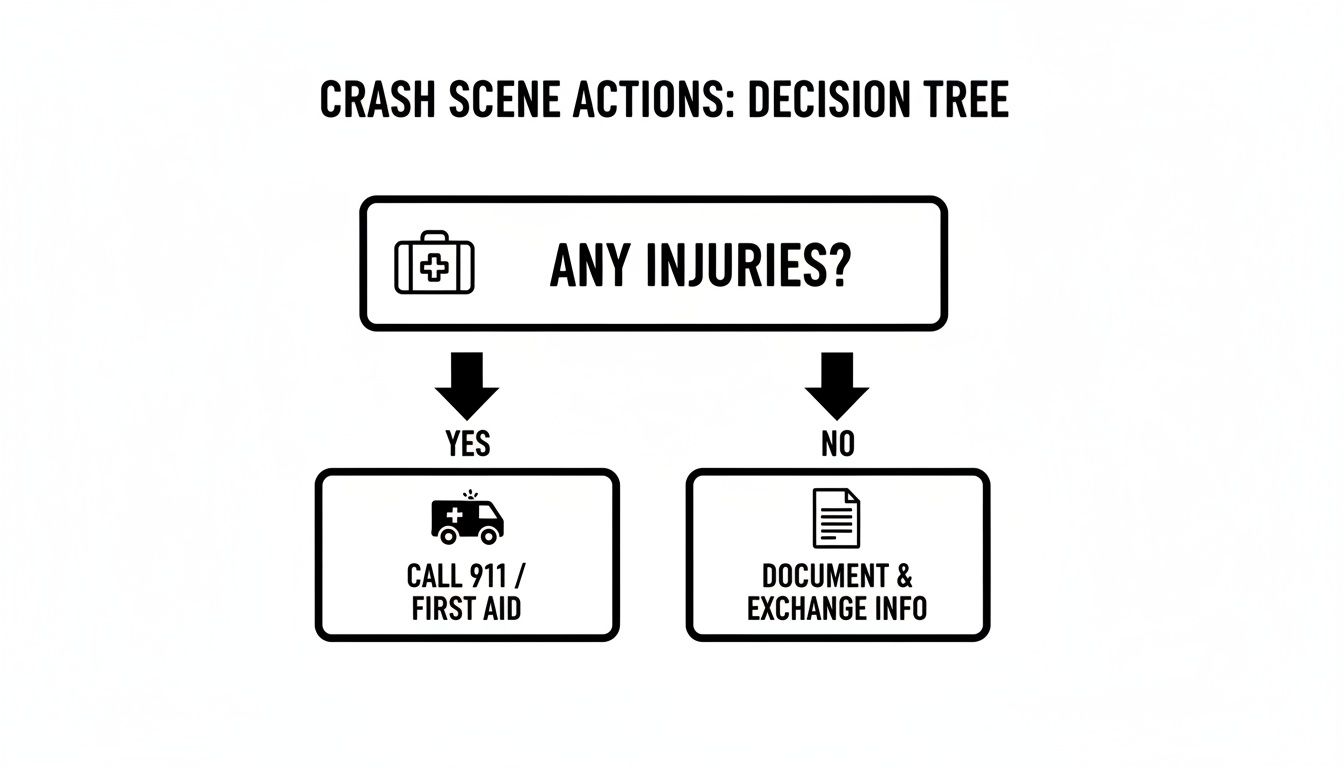
As you can see, your first priority is always safety. But after that, proper documentation—including the police report and your CR-2, if needed—is essential.
To make it even clearer, here's a quick reference guide on when you're required to file the CR-2.
Texas CR-2 (Blue Form) Filing Requirements at a Glance
| Filing Requirement | Details and Deadline |
|---|---|
| Police Did Not File a Report | You must file a CR-2 if the police did not investigate or create an official crash report (a CR-3). |
| Injury or Death | You must file if anyone involved—a driver, passenger, or pedestrian—suffered any kind of injury or was killed. |
| Property Damage Over $1,000 | You must file if the apparent damage to any one person's vehicle or property is $1,000 or more. |
| Deadline | The completed CR-2 must be mailed to TxDOT within 10 days of the date of the crash. |
Remember, filing this form is a legal requirement that protects you and your claim.
How to Complete the Blue Form Accurately
Filling out the CR-2 requires precision. Any mistakes or missing information could be used by an insurance company to weaken your claim.
Here’s what to pay close attention to:
- Location and Time: Be exact. Use cross-streets, highway mile markers, or other landmarks. Note the precise time the crash occurred.
- Vehicle and Driver Information: Collect full names, addresses, driver's license numbers, and insurance details for every person involved.
- Narrative and Diagram: This is your chance to tell your side of the story. Describe what happened clearly and factually. The diagram should show where the vehicles were before, during, and after impact. Stick to the facts and avoid guessing or admitting fault.
If you need help getting the official police report or want to ensure your CR-2 is filled out correctly, our detailed guide on how to get your Houston car accident report can walk you through the process.
An experienced Texas injury attorney can handle all this paperwork for you. We will ensure it’s filed accurately and on time, so you can focus on what really matters: your recovery.
Navigating Your Insurance Claim Notification
After the police have left and you've handled any state-required forms, it's time to notify your insurance company. This is a separate step from filing a police report, and it’s just as important. You should notify your insurer as soon as possible, usually within 24 to 72 hours, to get the claim process started.

When you make that first call, your only goal is to give a clear, factual account of what happened. Stick to the facts. Do not guess, speculate, or admit fault. The insurance adjuster is trained to listen for anything that could give their company a reason to reduce or deny your claim.
Preparing for the Call
A little preparation can make this conversation much smoother and protect your rights. Before you call, gather this information:
- Your Policy Number: Have your insurance card handy.
- Police Report Details: The name of the responding police department and the report number, if you have it.
- The Basics: The exact date, time, and location of the crash.
- Other Driver's Info: Their name, insurance company, and policy number.
- Vehicle Damage: A simple, factual description of the damage to your car.
If you aren't sure about something, it's perfectly fine to say, "I don't know" or "I'm still gathering that information." Sticking to what you know for certain is always the safest approach.
What to Watch Out For
Remember, the insurance company—even your own—is a business focused on its bottom line. Adjusters use specific tactics to minimize payouts.
One of the most common tactics is asking for a recorded statement. You are not legally obligated to give one to the other driver's insurance company. These recordings are often used to find inconsistencies in your story or to get you to say something that could damage your claim later.
Another common tactic is the quick settlement offer. An adjuster might call you just days after the accident with what sounds like a reasonable offer. These initial offers almost never cover the full, long-term costs of your medical care, lost wages, or pain and suffering. Never accept an offer until you understand the true extent of your injuries and have spoken with a Texas injury attorney. If you face issues, knowing how to dispute an insurance claim is a critical skill.
For example, a Houston driver rear-ended on I-45 might accept a quick offer, only to discover weeks later they need spinal surgery. Protecting your rights during this process is everything. For a more detailed walkthrough, our guide on how to report an accident to your insurance company in Texas offers a deeper dive into managing these crucial conversations.
Why Speaking with a Lawyer Levels the Playing Field
After you’ve reported the accident to the police and your insurer, you might feel you've done everything right. But the fight has just begun. The other driver’s insurance company isn’t on your side. Their team of adjusters and lawyers has one goal: protect their profits by paying you as little as possible.
Hiring a Texas injury attorney isn’t about being aggressive—it's about protecting your rights and leveling the playing field. An experienced lawyer becomes your advocate, taking over all communication with the insurance companies. This prevents you from accidentally saying something in a recorded statement that could be used against you. More importantly, it lets you focus on what truly matters: your recovery.
Understanding Complex Texas Laws
Texas personal injury law is full of complex rules and deadlines that insurance adjusters know well and use to their advantage.
One key rule is comparative fault, found in Chapter 33 of the Texas Civil Practice & Remedies Code. This law states that if you are found partially at fault for the crash, your compensation is reduced by your percentage of fault. For example, if you have $100,000 in damages but are found 20% at fault, your award is cut to $80,000. If a jury decides you were 51% or more at fault, you get nothing. Insurers will look for any reason—from claiming you were speeding to saying you didn't brake fast enough—to shift blame and reduce their payout.
Then there’s the statute of limitations. In Texas, you generally have just two years from the date of the accident to file a personal injury lawsuit. While that sounds like a long time, building a strong case takes work. If you miss that deadline, your right to seek compensation in court is lost forever.
Calculating Your True Damages
You can be sure that the insurance company's first settlement offer won't cover your actual losses. An attorney's job is to calculate the full value of your claim, which goes far beyond your initial medical bills.
A proper calculation of damages includes:
- Future Medical Costs: Ongoing physical therapy, future surgeries, or long-term care.
- Lost Earning Capacity: If your injuries prevent you from returning to your job or working at all.
- Pain and Suffering: The immense physical and emotional trauma the crash has caused.
- Property Damage: The full cost to repair or replace your vehicle.
Think about a Dallas family whose lives are turned upside down by a head-on collision with a drunk driver. The human cost is staggering. Globally, road crashes claim around 1.19 million lives each year, with millions more suffering serious injuries. These aren't just statistics; they represent families torn apart. Whether you were in a truck accident, a pedestrian hit in a crosswalk, or a family filing a wrongful death claim, an attorney ensures your total losses are accounted for. You can see more on the global impact of road incidents from the World Population Review.
A skilled attorney does more than file paperwork. They gather evidence, consult with experts, negotiate aggressively with insurers, and prepare your case for trial if a fair settlement cannot be reached. They empower you against powerful insurance corporations.
Ultimately, having a legal professional in your corner provides peace of mind. Knowing an expert is fighting for your best interests allows you to heal without the constant stress of battling an insurance company. If you want to know more about what an attorney handles, our guide on what a car accident lawyer does provides a detailed look into their critical role.
Still Have Questions? We Have Answers.
Going through the aftermath of a car accident is chaotic. Between dealing with vehicle repairs, doctor’s appointments, and a ringing phone, it's easy to feel completely overwhelmed. It's only natural to have questions. Here are some of the most common ones we hear from our clients, along with straightforward answers to give you some clarity.
What If the Other Driver Doesn't Have Insurance?
This is a tough situation, but unfortunately, it’s not uncommon in Texas. If the driver who hit you is uninsured, your first and best option is your own Uninsured/Underinsured Motorist (UM/UIM) coverage. This is an add-on to your policy that protects you when the at-fault driver can’t pay for your damages.
Having an official police report that documents the other driver's lack of insurance is absolutely critical here. From there, a Houston car accident lawyer can help you navigate the process of filing a UM/UIM claim with your own insurance company, making sure you have the right documentation to get the compensation you need.
How Long Do I Have to Report the Crash to My Insurance Company?
While Texas law doesn’t set a hard deadline, your insurance policy almost certainly does. Most policies require you to give them "prompt" or "timely" notice after a crash. If you wait too long, you give the insurance company a reason to question your injuries or even deny your claim entirely.
We always advise our clients to report the accident to their own insurance company within 24 to 72 hours. This gets the ball rolling, creates a clear record, and prevents the insurer from creating unnecessary delays down the road.
Can I Get a Copy of the Official Police Report?
Yes, and you absolutely should. The official Texas Peace Officer’s Crash Report (Form CR-3) is one of the most important documents in your case. It contains the officer’s professional observations, a diagram of the collision, witness information, and often their initial thoughts on who was at fault.
You can usually request a copy online through the Texas Department of Transportation's Crash Report Online Purchase System. Or, your attorney can obtain this for you and use it as the foundation for building your claim.
Do I Have to Give the Other Driver's Insurer a Recorded Statement?
Absolutely not. You are under no legal obligation to give a recorded statement to the other driver’s insurance company. Their adjusters are trained professionals whose job is to save their company money. They will ask leading questions designed to trip you up or get you to say something that undermines your case.
The best response is to politely decline their request. You can simply tell them that you will provide all necessary information through your attorney. This one small step can protect you from having your own words twisted and used against you. It’s always safest to speak with an experienced lawyer before you speak with them.
The moments after a car accident are confusing, but you don't have to find the answers alone. If you have questions about reporting your accident, dealing with insurance companies, or understanding your legal rights, the team at The Law Office of Bryan Fagan, PLLC is here to help. Contact us today for a free, no-obligation consultation to discuss your case and learn how we can fight for the justice and compensation you deserve. Visit us at https://houstonaccidentlawyers.net to get started.