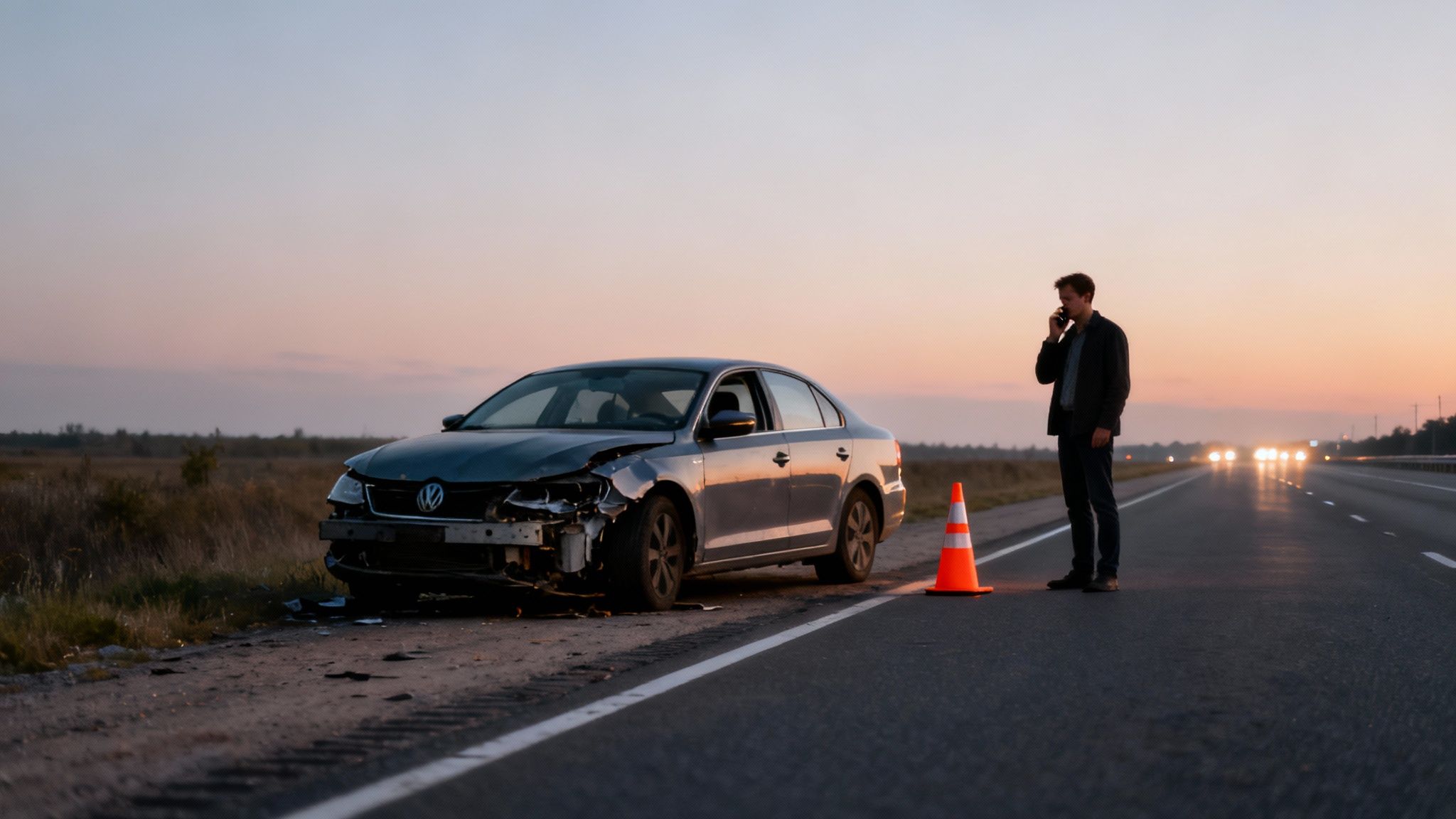
A car crash can change your life in seconds—but you don’t have to face recovery alone. When a drunk driver is to blame, the injustice can feel overwhelming. You're left picking up the pieces, facing injuries, mounting bills, and uncertainty about the future. But in Texas, the driver who hit you might not be the only one responsible for helping you recover.
This is where Texas dram shop laws come into the picture. In plain English, these laws make it possible to hold a bar, restaurant, or another licensed establishment liable for serving alcohol to someone who was already obviously intoxicated—who then goes on to cause a devastating wreck.
Who Is Liable After a Drunk Driving Crash in Texas?
When a drunk driving crash happens, everyone rightfully points the finger at the driver. They made a reckless choice, and they are absolutely at fault. But Texas law digs deeper, asking a critical question: did someone else contribute to this tragedy by irresponsibly profiting from that driver's intoxication? That’s the entire point of dram shop laws. They give you and your family a path to seek justice not just from the individual behind the wheel, but also from the business that kept pouring the drinks.
This is more than just about fairness; it's a practical lifeline. Pursuing a dram shop claim can open up another avenue for compensation, which is incredibly important when you're staring down a mountain of medical bills and can't work. A successful claim can give your family the financial stability needed to focus on what truly matters: healing.
Who Can Be Held Responsible in a Dram Shop Case?
Under the Texas Alcoholic Beverage Code, any business licensed to sell alcohol could potentially share the liability for a drunk driving accident. Liability is a legal term that simply means responsibility. In this case, it’s the legal responsibility for the harm caused. The net of liability is wider than most people think.
A drunk driving tragedy doesn't always start and end with the driver. Sometimes, it starts with a bartender or a store clerk who chose to make another sale instead of cutting someone off. This table breaks down who can be held accountable.
| Party Potentially Liable | Reason for Liability | Example |
|---|---|---|
| Bars and Nightclubs | Over-serving patrons who are clearly intoxicated. This is the classic dram shop scenario. | A bartender continues serving drinks to a customer who is slurring their words and stumbling. |
| Restaurants | Serving alcohol with meals to an obviously intoxicated diner. | A server brings multiple glasses of wine to a patron who is loud, aggressive, and clearly drunk. |
| Convenience or Liquor Stores | Selling packaged alcohol to a person who is visibly impaired at the time of purchase. | A clerk sells a six-pack to someone who stumbles into the store and smells strongly of alcohol. |
| Sporting Venues & Concert Halls | Any large venue selling alcohol for on-site consumption has the same responsibility. | A vendor at a football game sells beer after beer to a fan who can barely stand up straight. |
By holding these establishments accountable, the law encourages them to train their staff to serve alcohol responsibly, which helps keep all of us safer on the roads.
Let’s put this into a real-world example. Imagine a Houston driver is served drink after drink at a popular sports bar, even after they start slurring their speech and knocking things over. They get behind the wheel, drive the wrong way down I-45, and cause a horrific crash. In that situation, the bar that over-served them could be held partially responsible for the injuries and damages that resulted.
An experienced Texas injury attorney knows exactly how to investigate these cases. We dig for evidence like bar tabs, security footage, and witness statements to build a strong claim and ensure every single party that contributed to your suffering is held accountable.
What About a Party at Someone’s House?
It’s just as important to understand who isn’t usually liable. This is where the idea of a "social host" comes into play. Let’s say you go to a friend’s backyard barbecue. An adult guest has way too much to drink and causes a crash on the way home. In Texas, the friend who hosted the party is typically not legally responsible for the damages.
The law draws a sharp line between a licensed, for-profit business and a private citizen hosting a get-together.
But there’s one huge exception. An adult social host can be held liable if they serve or provide alcohol to a minor (anyone under 18), and that minor then causes harm. For example, if a parent allows their teenager’s friends to drink in their home and one of them causes a fatal wreck, that parent can be sued for wrongful death compensation.
This distinction is absolutely critical. A skilled legal team will dig deep to identify every single party that could be at fault. Whether the alcohol was served at a busy sports bar or a quiet suburban home, exploring every avenue for justice is the only way to ensure your family has the resources you need to heal and move forward.
How to Prove a Bar Was Negligent
Simply knowing the driver who hit you was intoxicated isn’t enough to hold an establishment accountable. To win a dram shop case in Texas, you and your attorney have to build a rock-solid case with hard evidence. Proving negligence hinges on two critical things. First, you have to show it was “apparent to the provider” that the person was “obviously intoxicated” and a clear danger to themselves and others. Second, you must prove this over-service was a “proximate cause” of your injuries—in other words, the direct link between the bar’s carelessness and the crash that hurt you.
Establishing Obvious Intoxication
Proving a patron was "obviously intoxicated" is often the biggest hurdle in a dram shop lawsuit. This goes way beyond a blood alcohol content (BAC) number on a police report. Your legal team has to paint a clear picture for the jury, showing that the server saw visible, undeniable signs of drunkenness and kept serving anyway.
Evidence is everything here. We typically build our case using:
- Witness Testimony: What did other people see? Statements from other customers, the driver’s friends, or even former employees of the bar can be incredibly powerful.
- Expert Testimony: We often bring in toxicologists who can explain to a jury what someone would look and act like after a certain number of drinks over a specific time.
- Video Surveillance: Security cameras don’t lie. Footage from inside or outside the bar can provide undeniable proof of stumbling, slurred speech, or other clear signs of impairment.
To build a compelling case, it's crucial to gather and meticulously review statements from everyone involved. This means knowing how to conduct interviews and skillfully be analyzing interview data to pull out the details that tell the true story of the bar's negligence.
This flowchart shows the straight line from a bar's irresponsible service to the legal consequences they face.
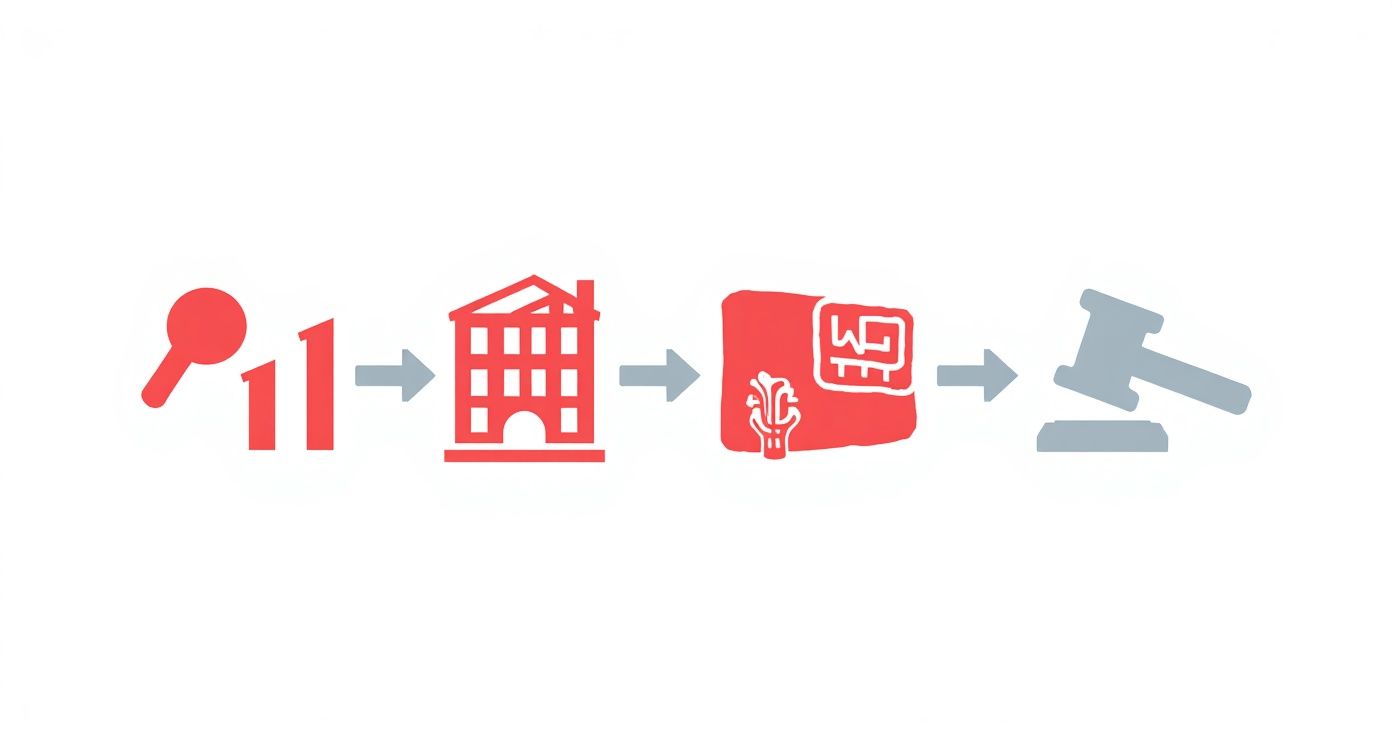
As you can see, when a bar fails to act responsibly, its actions can directly lead to legal accountability for the harm caused by an over-served patron.
Linking the Bar’s Actions to Your Injuries
The second piece of the puzzle is connecting the dots with proximate cause. It’s a legal term, but the idea is simple: we have to show that the bar's decision to keep pouring drinks directly led to the accident. Put another way, "but for" the bar’s negligence, the crash never would have happened.
Think about a driver causing a horrific pile-up on I-10 in Houston. To prove proximate cause against the bar, we have to draw a clear line: the bar over-served the driver, the driver got behind the wheel right after leaving, and their extreme intoxication was the direct reason for the collision that injured you.
Building this link requires an immediate and thorough investigation. A dedicated Texas injury attorney knows to move fast to secure crucial evidence before it vanishes.
This evidence often includes:
- Credit Card Statements and Bar Tabs: Receipts don't just show a total; they create a timeline, showing exactly how many drinks were bought and how quickly.
- Police Reports and Sobriety Test Results: The official accident report is packed with vital information—the driver's BAC, the officer's observations of their behavior, and the results of any field sobriety tests.
- Employee Records: Did the bar even bother to train its staff? We investigate their training procedures (or lack thereof) for responsible alcohol service.
This methodical, evidence-first approach is designed to cut through excuses and hold reckless businesses accountable for the devastating role they play in drunk driving accidents. It’s a critical step toward getting the justice and financial support your family needs to start healing.
What Compensation Can You Claim in a Dram Shop Lawsuit?
When you're hurt in a crash caused by a drunk driver, the road to recovery is more than just physical. It's an emotional and financial battle, too. You're likely dealing with injuries while a mountain of unexpected bills piles up. A successful dram shop lawsuit is a critical tool for getting the financial stability your family needs to heal and move forward.
The legal term for this financial recovery is "damages." Damages refer to the money awarded to you to compensate for all the harm you’ve suffered. This is designed to cover every single loss—from the medical bills flooding your mailbox to the personal pain that doesn't show up on a receipt.
It’s important to remember these laws aren't just about money; they actively make our communities safer. Studies have shown that states with strong dram shop laws see a real drop in alcohol-related traffic fatalities. Holding irresponsible bars and restaurants accountable saves lives. It’s that simple.
Economic Damages: The Tangible Financial Losses
The most straightforward part of any auto insurance claim involves economic damages. These are the concrete, out-of-pocket costs that have a clear dollar amount attached. The goal here is simple: to make you financially "whole" again by reimbursing you for every expense the accident forced upon you.
Your claim can include compensation for:
- Medical Expenses: This covers everything from the ambulance ride and ER visit to surgery, physical therapy, prescription drugs, and any future care you’ll need.
- Lost Wages: If your injuries kept you out of work, you have a right to recover that lost income. This also includes "diminished earning capacity" if you can no longer do the same job or earn the same money as before the crash.
- Property Damage: This is usually for the cost of repairing or replacing your vehicle, but it can also cover other personal property destroyed in the wreck.
Calculating these damages means gathering every single bill, receipt, and pay stub to create a precise financial picture of your losses. To get a better feel for how all these pieces fit together, it helps to understand how much a car accident case is worth.
Non-Economic Damages: The Human Cost of the Crash
Of course, not every loss comes with a price tag. Non-economic damages are meant to compensate you for the immense personal suffering the accident caused. No amount of money can truly undo the trauma, but this compensation is the law’s way of acknowledging the profound human toll you’ve endured.
Common types of non-economic damages include:
- Pain and Suffering: For the physical pain and discomfort you've had to live with.
- Mental Anguish: To address the emotional trauma—like anxiety, depression, fear, or PTSD—that follows such a violent event.
- Loss of Enjoyment of Life: If your injuries stop you from enjoying hobbies, activities, or relationships you once cherished, you can be compensated for that loss.
- Physical Impairment or Disfigurement: Compensation for lasting disabilities, scars, or other permanent physical changes.
Types of Compensation in a Texas Dram Shop Claim
| Type of Damage | What It Covers | Example |
|---|---|---|
| Economic Damages | Direct, calculable financial losses caused by the accident. | Hospital bills, lost paychecks, car repair costs. |
| Non-Economic Damages | Intangible losses related to physical pain and emotional suffering. | Compensation for PTSD, chronic pain, or loss of a hobby. |
| Exemplary Damages | A penalty to punish the establishment for extreme recklessness. | A bar is fined for a history of serving visibly intoxicated patrons. |
Ultimately, a skilled attorney will fight to ensure you receive full and fair compensation for every type of damage you have suffered.
Exemplary Damages: Punishing Gross Negligence
In some rare situations where a bar or restaurant's conduct was particularly outrageous, you might be able to pursue exemplary damages, also known as punitive damages. As laid out in Chapter 41 of the Texas Civil Practice & Remedies Code, these damages aren't about compensating you for a loss. They are meant to punish the defendant for extreme negligence and send a clear message to other establishments that this kind of behavior will not be tolerated.
Most bars and restaurants carry special liability insurance for these exact situations. Knowing the typical restaurant insurance costs can give some insight into the financial protections they have. An experienced Texas injury attorney will investigate every possible source of compensation to ensure your family gets the support you need to rebuild your life.
Navigating Critical Legal Deadlines and Rules
When you're recovering from a serious injury, the last thing on your mind is a legal calendar. But in any Texas personal injury claim, time is everything. Acting fast isn't just a good idea—it's absolutely essential to protect your right to hold the negligent parties accountable.
The single most important deadline is called the statute of limitations. A statute of limitations is a law that sets a strict time limit on your right to file a lawsuit. In most cases, Texas law gives you just two years from the date of the crash to file. If you miss that window, you will likely lose your right to seek compensation forever, no matter how strong your case is. You can get a deeper understanding of these timelines in our guide to the statute of limitations for a Texas car accident.
Understanding Comparative Fault in Texas
Another critical rule that shapes your claim is comparative fault, laid out in Chapter 33 of the Texas Civil Practice & Remedies Code. Comparative fault is a legal rule that divides blame among all responsible parties in an accident. It gives a jury the power to assign a percentage of fault to each person or business involved.
For instance, a jury might look at the facts and decide:
- The drunk driver was 70% at fault for choosing to drive impaired.
- The bar that kept serving them was 30% at fault for its negligence.
This rule is a game-changer. It allows you to recover damages from multiple responsible parties, including the bar or restaurant. Often, these establishments have much larger insurance policies than the individual driver, which can make a huge difference in your ability to get fully compensated. An experienced Texas injury attorney knows how to dig up the evidence needed to prove the bar’s role in the crash, ensuring they pay their fair share.
A Note on Preserving Evidence
Acting quickly isn't just about deadlines—it's about evidence. Security camera footage gets deleted, sometimes in just a few days. Credit card receipts are tossed out, and the memories of key witnesses start to fade. The sooner you get an attorney involved, the faster they can send out legal notices to preserve this crucial evidence before it vanishes forever.
Trying to manage these complex rules and tight deadlines while you're focused on healing is an overwhelming burden. At The Law Office of Bryan Fagan, we take that weight off your shoulders. We know how to build a powerful claim that holds every single negligent party accountable, protecting your rights from start to finish.
Steps to Take After a Drunk Driving Accident
After a traumatic car accident, it’s hard to think clearly. However, the steps you take in the minutes, hours, and days that follow are crucial for protecting both your health and your legal rights.
- Call 911 Immediately: Your first priority is safety. Report the accident and request police and medical assistance. Tell the dispatcher if you suspect the other driver is intoxicated.
- Seek Medical Attention: Even if you feel okay, get a medical evaluation. Some serious injuries, like concussions or internal bleeding, may not have immediate symptoms. A medical record is also vital evidence for your claim.
- Document Everything: If you are able, take photos and videos of the accident scene, vehicle damage, and your injuries. Get the names and contact information of any witnesses.
- Do Not Confront the Driver: If you suspect the other driver is drunk, do not engage with them. Wait for the police to arrive and let them handle the situation.
- Report the Accident to Your Insurer: Notify your own insurance company about the crash, but stick to the basic facts. Do not give a recorded statement or accept a quick settlement offer from the other driver's insurer without speaking to a lawyer first.
- Contact a Houston Car Accident Lawyer: The sooner you get legal advice, the better. An attorney can immediately start investigating, preserving evidence, and handling all communication with the insurance companies on your behalf.
How Our Firm Can Fight for Your Family
Going through the aftermath of a drunk driving crash is completely overwhelming. We know the uncertainty you're dealing with, and we have the experience to build a powerful dram shop claim that gets results. Let us handle the complex legal details so you can focus on the one thing that matters: healing.
Winning a dram shop case requires a deep, practical understanding of Texas law. These laws have a long history, dating back to old English taverns that sold liquor by the "dram"—a small spoonful. After Prohibition ended, states brought these laws back to hold reckless businesses accountable for over-serving, a principle we passionately uphold today. You can learn more about the history of dram shop regulations on larksuite.com.
Here’s how we immediately get to work on your case:
- Immediate Investigation: We move fast to secure crucial evidence. This means getting our hands on security footage, bar tabs, and witness statements before they can be lost or destroyed.
- Expert Collaboration: We bring in toxicologists and other respected experts to scientifically prove the bar or restaurant was negligent when they kept serving an obviously intoxicated person.
- Aggressive Negotiation: Insurance companies will do everything they can to downplay the bar's role and minimize your payout. We fight back, demanding full and fair compensation for everything you've lost.
- Trial-Ready Representation: If the insurance company refuses to offer a fair settlement, we don't back down. Our trial-tested attorneys are always prepared to take your fight to a judge and jury.
Take the First Step Toward Recovery Today
You are not alone in this fight. The Law Office of Bryan Fagan, PLLC is here to provide the compassionate guidance and aggressive representation you need to hold all responsible parties accountable. You deserve justice, and we are ready to help you get it.
Contact a Houston car accident lawyer at The Law Office of Bryan Fagan for a free, confidential consultation. Let us listen to your story, explain your rights in plain English, and show you how we can help you start the journey toward recovery.
Common Questions About Dram Shop Claims
After a crash caused by a drunk driver, you're going to have a lot of questions. Trying to understand the ins and outs of dram shop laws can feel overwhelming, especially when you're already dealing with so much. You don't have to figure this out on your own.
We’ve put together some straightforward answers to the questions we hear most often from our clients. Our goal is to cut through the legal jargon and give you the clarity you need to move forward with confidence.
Can I Sue a Bar If I’m Also Suing the Drunk Driver?
Yes, absolutely. This is one of the most critical parts of a Texas dram shop claim. You have the right to hold every negligent party accountable for the harm they caused. The drunk driver is responsible for their actions, and the bar that illegally over-served them is responsible for theirs. An experienced Houston car accident lawyer will pursue both claims at the same time to give you the best chance at a full and fair recovery.
What If I Was a Passenger with the Drunk Driver?
Being a passenger doesn't change your rights. If you were injured in a wreck while riding with a drunk driver, you can still file a dram shop claim against the bar or restaurant that over-served them. The driver's poor judgment doesn't let the establishment off the hook for its own negligence. Your legal rights as an injured passenger are just as valid as anyone else’s.
How Much Does It Cost to Hire a Lawyer for My Case?
This is a major concern for families who are already facing medical bills and lost income. That’s why at The Law Office of Bryan Fagan, we handle all personal injury and dram shop cases on a contingency fee basis.
Here’s what that means for you:
- You pay zero upfront fees to get us started on your case.
- We cover all the costs of investigating, building, and fighting your case.
- We only get paid if we win a settlement or verdict for you.
This approach takes the financial risk completely off your shoulders. It allows you to get top-tier legal help without worrying about the cost, and it ensures our goals are perfectly aligned with yours—getting you the best possible outcome.
If you have more questions or you’re ready to talk about your case, the team at The Law Office of Bryan Fagan, PLLC is ready to listen. Contact us today for a free, no-pressure consultation to learn about your rights and how we can fight for you and your family. Visit us at https://houstonaccidentlawyers.net to get started.