A car crash can change your life in seconds—but you don’t have to face recovery alone. When your child is involved, the fear and uncertainty can be overwhelming. Under Texas law, all children younger than 8 years old must ride in an appropriate child safety seat system unless they are taller than 4 feet 9 inches.
These aren't just traffic rules; they are life-saving measures proven to protect children in a collision. Understanding them is the first step toward keeping your family safe and protecting your legal rights after an accident.
Why Following Texas Car Seat Regulations Is Crucial
As a parent, your most important job is keeping your children safe. That responsibility intensifies the moment you get on the road. The texas regulations on car seats were created with one critical goal: preventing devastating injuries when a wreck happens. Using the right car seat dramatically cuts the risk of serious or fatal harm for infants and toddlers.
Think of a car seat as custom-fitted armor for your child. Just like a helmet protects a cyclist's head, a car seat is engineered to absorb and distribute the immense forces of a crash, shielding your child's small, developing body from catastrophic harm.
Following these laws is essential for several reasons:
- It ensures your child is restrained in a way that fits their specific size and weight.
- It prevents a premature switch to adult seat belts, which can cause severe internal injuries to small bodies in a crash.
- It sets a legal standard that helps hold a negligent driver accountable when their actions hurt your child.
A Quick Guide to Texas Requirements
Figuring out the specific rules can feel overwhelming, especially for new parents. To make it easier, we've put together a simple breakdown of the minimum legal requirements in Texas.
It’s important to remember that these are just the legal minimums. Safety experts almost always recommend keeping your child in each stage for as long as possible, right up until they hit the seat's maximum height and weight limits.
Texas Car Seat Requirements At a Glance
Here’s a quick-reference table to help you understand the basics at each stage.
| Stage | Child's Age & Size (Best Practice) | Texas Legal Requirement |
|---|---|---|
| Rear-Facing Seat | Birth until age 2-4 (or max height/weight) | From birth until at least age 1 and 20 lbs |
| Forward-Facing Seat | After outgrowing rear-facing seat until approx. age 5+ | Children who have outgrown rear-facing seats |
| Booster Seat | After outgrowing forward-facing seat until 4'9" tall | Children under age 8 who are not yet 4'9" tall |
| Adult Seat Belt | Once the seat belt fits properly (typically ages 8-12) | Children age 8 or older OR who are 4'9" or taller |
This table covers the essentials for child passenger seats, but what about other vehicle safety accessories? Understanding the broader vehicle laws is also crucial for ensuring everyone's safety on the road. For example, if you're wondering about seat belt modifications, you can learn more by reading this guide: Are Seat Belt Extenders Legal? A Definitive Safety Guide.
Navigating the Four Stages of Child Passenger Safety
Picking the right car seat is one of the most critical decisions you'll make for your child's safety. Each stage is specifically engineered to protect their tiny, developing frame during a crash.
Following these stages isn't just about checking a legal box; it's about providing life-saving protection when it matters most. Moving your child to the next stage too soon can leave them dangerously vulnerable to serious injuries in an accident. The evolution of Texas car seat laws reflects a much deeper understanding of this science. While only a handful of states even had child restraint laws back in 1978, by 2010, all 50 states had enacted some form of legislation.
Texas was right there, adopting comprehensive rules that require children under eight to be in a safety seat unless they are taller than 4 feet 9 inches. This decision tree infographic is a great visual for breaking down the Texas regulations based on a child's age and size.
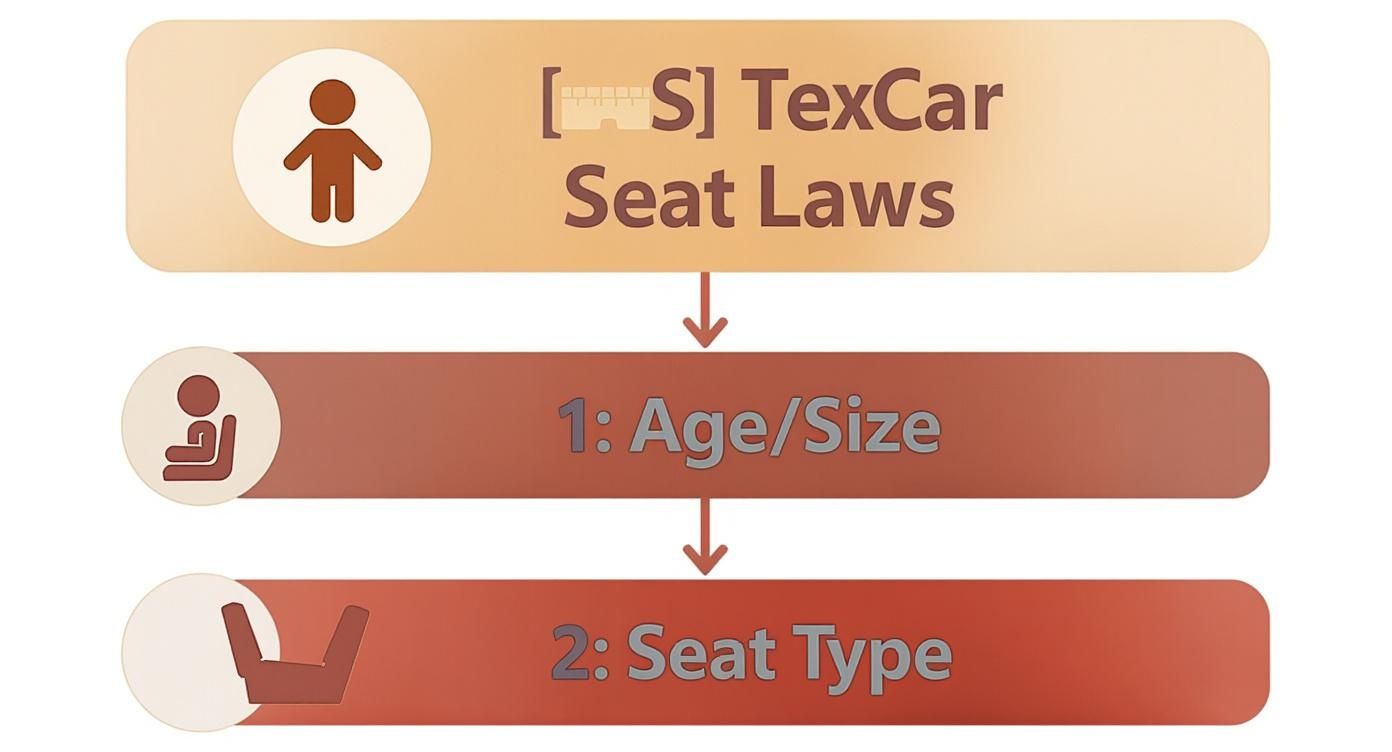
As you can see, the law provides a clear path from rear-facing seats all the way to booster seats, making sure your child is in the right kind of restraint for every step of their growth.
Stage 1: Rear-Facing Car Seats
This is, without a doubt, the safest way for infants and toddlers to ride. In a collision, a rear-facing seat acts like a protective cradle for the head, neck, and spine. It distributes those immense crash forces across the entire seat shell, shielding your child's incredibly fragile neck and spinal cord from devastating injury.
The gold standard, recommended by the American Academy of Pediatrics, is to keep your child in a rear-facing seat for as long as you possibly can—until they hit the maximum weight or height limit set by the car seat's manufacturer. For most kids, this means staying rear-facing until age two or even longer.
For a deeper dive, understanding how long children should stay rear-facing is absolutely critical for their safety.
Stage 2: Forward-Facing Harness Seats
Once your child has officially outgrown their rear-facing seat, it’s time to switch to a forward-facing seat with a five-point harness. This harness system is a game-changer because it secures your child at their shoulders and hips—the strongest parts of their body.
In a crash, that harness drastically limits how far they can move forward. It prevents them from being thrown and hitting the inside of the car. For instance, if a Houston driver is rear-ended on I-45, that harness keeps their child securely in place, minimizing the risk of severe head and chest injuries.
Stage 3: Booster Seats
After they've outgrown the forward-facing harness, school-aged kids are ready for a booster seat. A booster's job is simple but absolutely vital: it "boosts" the child up so the car's adult seat belt fits them correctly.
So, what does a proper fit look like?
- The lap belt lies snugly across their upper thighs, not their stomach.
- The shoulder belt crosses their chest and shoulder, not their neck or face.
Without a booster, an adult seat belt can ride up on a child’s abdomen. In a wreck, that can cause catastrophic internal organ damage or spinal injuries.
Stage 4: Adult Seat Belts
Finally, your child can graduate to an adult seat belt, but only when they can pass the five-step test. This usually happens somewhere between ages 8 and 12. This means they're tall enough to sit with their back flat against the vehicle seat, have their knees bend comfortably at the edge, and have the seat belt positioned correctly across their thighs and chest—all at the same time.
Common Car Seat Mistakes and How to Avoid Them
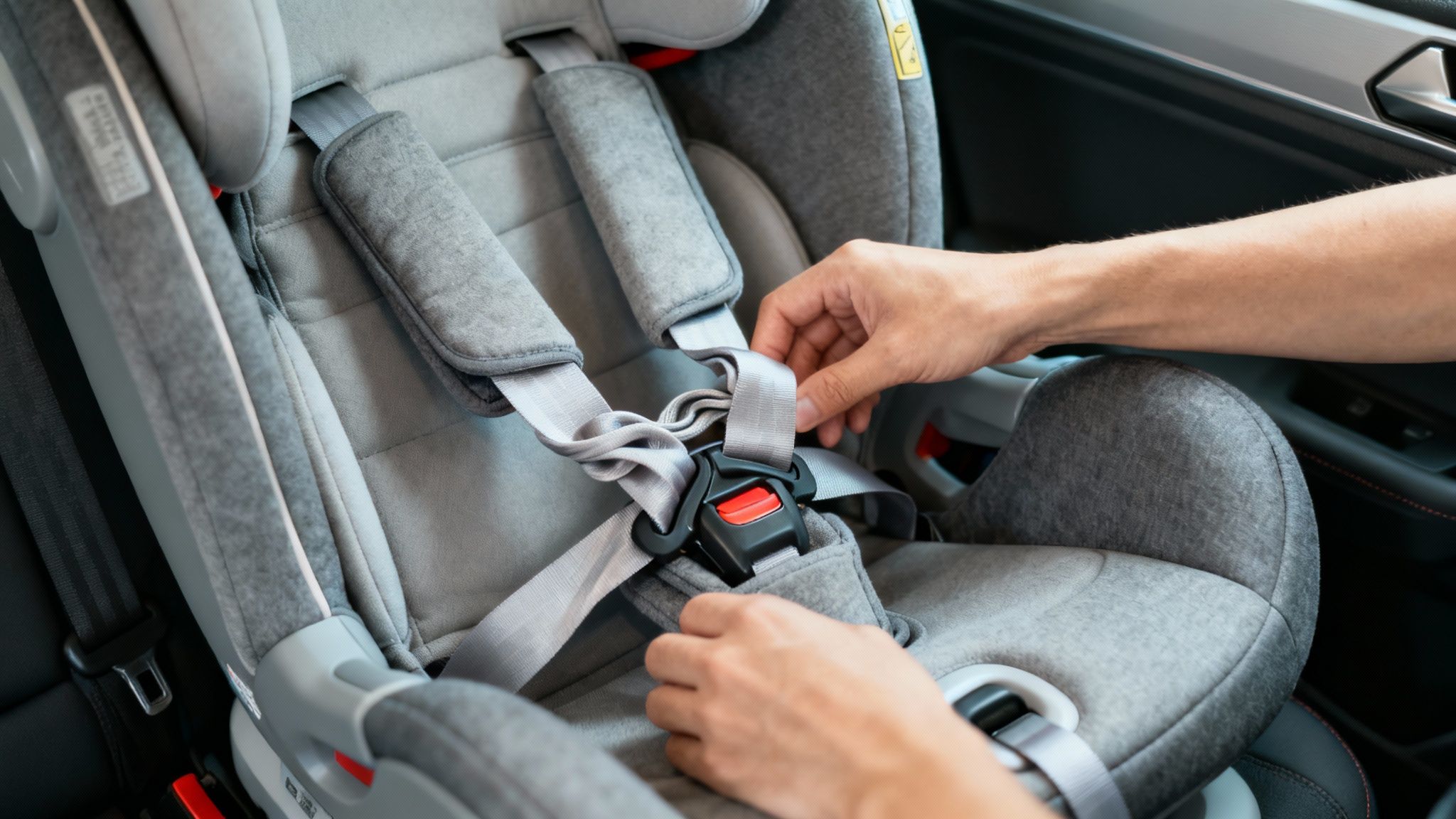
Even the most careful parents can make a mistake with a car seat. The manuals can be confusing, and in the rush of daily life, it's easy for small oversights to create big safety risks. You are not alone in trying to get it right.
The first step to keeping your child safe is knowing what the most common errors are. Despite strong texas regulations on car seats, misuse is still a huge problem. National data reveals a shocking statistic: nearly half—an alarming 46%—of all car seats are used incorrectly. You can dig into the findings from the National Highway Traffic Safety Administration yourself.
This isn't about placing blame. It's about giving you the power to protect your child. Once you can spot these pitfalls, you can fix them and feel confident your child is as safe as possible on every drive.
Loose Car Seat Installation
One of the most frequent—and dangerous—mistakes is a car seat that isn't buckled in tightly enough. If the seat is loose, it can move way too much during a crash, which dramatically increases the risk of your child hitting the inside of the car.
Picture a Houston parent quickly installing a new seat before hitting the Katy Freeway. It feels secure, but is it really? There’s a simple test to find out:
Grab the car seat at the belt path (where the seat belt or LATCH strap runs through) and give it a good tug side-to-side and front-to-back. The seat should not budge more than one inch in any direction. If it does, you need to pull those straps tighter.
Incorrect Harness Height and Tightness
Your child's harness straps are their first line of defense in a collision. If the harness is at the wrong height or isn't snug enough, your child could be thrown from the seat in a serious crash.
- For rear-facing seats: The harness straps should be positioned at or just below your child’s shoulders.
- For forward-facing seats: The harness straps should be at or just above your child’s shoulders.
After you've got the height right, check the tightness with the "pinch test." Buckle your child in and try to pinch a horizontal bit of the harness strap at their collarbone. If you can grab any extra webbing, it's too loose. Tighten it until it's snug against their body.
Using an Expired or Damaged Car Seat
It surprises many parents, but car seats have expiration dates, typically six to ten years after they are made. Over time, plastic weakens and safety standards improve. Never use a seat that's past its expiration date or, just as importantly, one that's been in a moderate to severe crash—even if it looks perfectly fine.
The intense forces of an accident can cause tiny, invisible stress fractures that compromise the seat's ability to protect your child. If you've been in a wreck, replacing the car seat is non-negotiable. A Houston car accident lawyer can help make sure the cost of a new seat is included in your auto insurance claim.
Turning a Child Forward-Facing Too Soon
While Texas law says a child can be turned forward-facing after their first birthday, every safety expert will tell you to keep them rear-facing for as long as possible. A rear-facing seat gives far better protection to a toddler's fragile head, neck, and spine.
The safest move is to wait until your child hits the maximum height or weight limit for their rear-facing car seat. For many kids, this means they'll stay rear-facing until they're two, three, or even four years old.
Getting Professional Help
The best way to know your child's car seat is installed correctly is to have a professional check your work. Certified Child Passenger Safety (CPS) Technicians are trained to spot these common mistakes and show you how to fix them. They offer free inspections all over Texas, giving you the ultimate peace of mind.
Legal Consequences for Violating Car Seat Laws
While your child's safety is always the priority, it’s also important to know that failing to follow texas regulations on car seats can lead to legal and financial consequences. These laws aren’t just suggestions; they’re designed to protect the most vulnerable passengers on our roads.
If you are pulled over and your child is not properly restrained, you could face fines from $25 to $250, plus court costs. You can learn more about the specifics of Texas car seat requirements here.
How Non-Compliance Affects Your Car Accident Claim
The fallout from ignoring car seat laws can go far beyond a traffic ticket if you get into a wreck. If your child is hurt in a crash caused by another driver's negligence, the at-fault driver's insurance company will look for any reason to reduce their payout.
Liability is the legal term for responsibility. When another driver is at fault, they are liable for the harm they caused. But insurance companies often try to shift that blame.
Imagine you're in a T-bone collision in Dallas because another driver ran a red light. If your child wasn't in the correct booster seat, the other driver's insurance adjuster could argue that your actions contributed to your child’s injuries. This is a legal defense in Texas known as comparative fault.
Under this rule (found in Texas Civil Practice & Remedies Code, Chapter 33), if you are found partially at fault for an injury, your financial compensation can be reduced by your percentage of blame. So, if a court decides you were 15% at fault for not using the right car seat, your settlement is reduced by that amount.
An experienced Texas injury attorney can fight back against these unfair tactics, but it shows how following safety laws also protects your family’s legal rights. You also need to be aware of the strict deadlines for filing a claim; you can read more about the Texas statute of limitations for car accidents to make sure you don't miss your window.
What to Do If Your Child Is Injured in a Car Accident

It’s a scenario no parent ever wants to imagine: your child, hurt in a car wreck. If the unthinkable happens, knowing what to do is critical. Even if you’ve followed all texas regulations on car seats perfectly, a negligent driver can change your family’s life in an instant.
Your first priority at the scene is your child’s health. Call 911 immediately and ensure your child gets a medical evaluation, even if they seem fine. The adrenaline rush after a crash can easily hide serious injuries, and some conditions like concussions or internal bruising may not show symptoms for hours or days.
Once your child is receiving medical care, your focus can shift to documenting the situation. If you’re able, take pictures of the accident scene, the damage to both cars, and any visible injuries. Exchange insurance information with the other driver, but do not discuss who was at fault or apologize. Every piece of evidence helps build the foundation for a personal injury claim.
Understanding Your Child’s Injury Claim
When a child is injured, their legal claim seeks compensation for their specific losses, which are legally referred to as damages. In plain English, damages are the total cost of the injury, both financial and emotional. The goal is to help make your child and your family "whole" again.
This can include:
- Medical Expenses: This covers everything from the ambulance ride and ER visit to ongoing physical therapy, future surgeries, and prescriptions.
- Pain and Suffering: This is compensation for the physical pain and emotional trauma your child has been forced to endure.
- Future Costs: If the injury is severe, this can include compensation for long-term medical needs, a loss of future earning capacity, or a permanent disability.
Trying to figure out all these costs can feel overwhelming, especially when your main focus is your child's recovery. Our guide on who pays medical bills after a car accident can give you some initial clarity on this often confusing process.
How Following Car Seat Laws Protects Your Claim
Being able to prove that you followed all Texas car seat laws is a powerful tool. When an insurance company sees your child was properly restrained, it makes it much harder for them to shift the blame onto you using comparative fault rules.
Showing you did everything right strengthens your position that the other driver’s negligence was the sole cause of the harm.
It’s also crucial to be aware of the statute of limitations, which is the legal deadline for filing a lawsuit. In Texas, you generally have two years from the date of the accident. While this deadline is often extended for a minor, you should never wait. An experienced Houston car accident lawyer can protect your rights and handle all the legal burdens, letting you focus completely on your child's healing.
How a Car Accident Lawyer Can Help Your Family
When your child is hurt in a crash, the last thing you should be doing is wrestling with insurance adjusters. Your focus needs to be on your child's recovery. That’s where a dedicated Houston car accident lawyer becomes your family’s strongest advocate.
From day one, we take over all communication with the insurance companies. We know their tactics and how to counter them to protect your rights. We immediately get to work gathering critical evidence—the police report, witness statements, and traffic camera footage—to build an ironclad case proving the other driver’s liability.
Calculating and Fighting for Your Family's Full Compensation
Our team collaborates with medical experts to fully grasp the extent of your child's injuries. This isn't just about the bills you have today; it's about calculating the total damages, which includes future therapy, ongoing medical needs, and the very real emotional pain and suffering your child has endured. We fight to make sure every single cost is accounted for so your family gets the fair compensation you deserve.
We know you're probably wondering if you should hire a car accident lawyer and may be worried about the cost.
We work on a contingency fee basis. That means you pay absolutely nothing unless we win your case. This gives your family access to expert legal help without any upfront financial burden.
Having a strong legal advocate in your corner levels the playing field against massive insurance corporations and lets you focus on what matters most—your family.
Answering Your Top Questions About Texas Car Seat Laws
It’s completely normal to have questions when trying to get the details of texas regulations on car seats just right. Let's clear up a few of the most common concerns parents in Texas run into.
Can My Child Ride in the Front Seat in Texas?
While Texas law doesn’t specify an age for riding up front, safety experts are unified on this: the back seat is always the safest spot for any child under 13 years old.
The reason is critical: a front-seat airbag deploys with explosive force, which can cause severe or even fatal injuries to a child's smaller frame during a crash.
What if My Back Seat Only Has Lap Belts?
This scenario comes up more often in older cars. Booster seats absolutely require both a lap and a shoulder belt to work correctly. If your back seat only has lap belts, you cannot use a booster seat there.
The solution? Your child should stay in a forward-facing car seat with a five-point harness. Many of these seats are specifically designed to be installed correctly with just a lap belt. Always double-check your car seat manual.
Do I Need to Replace a Car Seat After an Accident?
In almost every case, yes. The National Highway Traffic Safety Administration (NHTSA) recommends replacement after any moderate to severe crash.
Even if the seat looks fine, a collision unleashes immense forces that can create hidden stress fractures. These invisible cracks can compromise the seat's ability to protect your child in a future accident. Your auto insurance policy should cover the cost of a new one, and a Texas injury attorney can make sure that expense is included in your claim.
A car accident can throw your family's life into turmoil, leaving you with physical, emotional, and financial burdens you never asked for. At The Law Office of Bryan Fagan, PLLC, we are here to lift that weight off your shoulders.
If another driver's negligence injured your child, you don't have to face the aftermath alone. Contact us for a free, no-pressure consultation to understand your rights and legal options. Let our compassionate team fight for the justice and recovery your family deserves.
Get Your Free Case Review with The Law Office of Bryan Fagan, PLLC