A Texas truck crash often sets off two timelines at once.
Yours starts with pain, confusion, medical care, missed work, and worried family members. The trucking company’s timeline often starts just as fast, with people focused on protecting the company, gathering records, and shaping what the evidence will show.
If an 18-wheeler hit you on I-10, I-45, or another Texas road, it helps to understand one hard truth early. A trucking accident lawsuit is a time-sensitive case from the first day. It is not handled like an ordinary car wreck claim because the injuries are often more serious, the insurance coverage is larger, and more than one business may share responsibility.
That changes everything.
A truck case works a lot like trying to save security footage after a store incident. If no one asks for it quickly, the recording may be erased or recorded over. In a trucking case, the same problem can affect black box data, driver logs, dispatch records, dash camera video, maintenance files, and drug or alcohol testing results.
You may be hearing from adjusters while still trying to understand your diagnosis. Meanwhile, the other side may already be building its defense. That is why early legal help matters so much in a trucking accident lawsuit. It gives you someone to protect evidence, identify every responsible party, and make sure your side of the story is not buried before the case begins.
If you are looking for answers after a Texas truck wreck, start here. The first days matter, and quick action can help level the playing field.
The Unseen Battle After a Texas Truck Crash
A Houston driver is rear-ended by a tractor-trailer in stop-and-go traffic. His pickup spins, airbags deploy, and he wakes up in the hospital with a fractured shoulder and a head injury. His family thinks the next step is to wait for the police report and then call the insurance company.
But while that family is trying to understand what happened, another process has already started.
Trucking companies often send investigators to the scene within minutes or hours to gather black box data, driver logs, witness statements, and other evidence before victims can act, as described in this discussion of unique challenges in truck accident litigation. That is the hidden struggle in many trucking cases. It is a race to preserve the truth.
Why this race matters
A trucking company’s response team is not there to help you understand your rights. Its job is to protect the company.
That can mean gathering facts that help the defense. It can also mean that valuable records are controlled by the other side from the very beginning. If no one steps in quickly for you, critical information can disappear, be overwritten, or become harder to prove later. Lawyers call that spoliation, which means evidence was lost, destroyed, or altered.
Practical takeaway: If you are physically able, or if a family member can help, get legal advice quickly after a truck crash. Early action can protect evidence before it is gone.
What many families do not realize
After a regular car wreck, people usually think in terms of insurance cards and repair estimates. After a truck wreck, your case may involve:
- Company records that are not publicly available
- Electronic driving data stored by the truck
- Maintenance history for the tractor and trailer
- Internal dispatch communications showing deadlines or pressure on the driver
That is why many injured people feel overwhelmed. They are not imagining it. These cases are complicated by design.
Texas law gives you the right to pursue compensation when someone else’s negligence caused your injuries. In plain English, negligence means someone failed to use reasonable care and caused harm. A lawsuit may be necessary when the insurer denies fault, shifts blame, or refuses to pay the full value of your losses.
The good news is that confusion at the start does not mean you have a weak case. It usually means you need a clear plan.
Who Is Legally Responsible for a Truck Wreck?
In a normal two-car collision, the question often sounds simple. Which driver caused the crash?
In a trucking accident lawsuit, that question is much broader. More than one person or business may share fault.
Liability means legal responsibility for the harm caused. If a party’s conduct helped cause the crash, that party may owe damages.
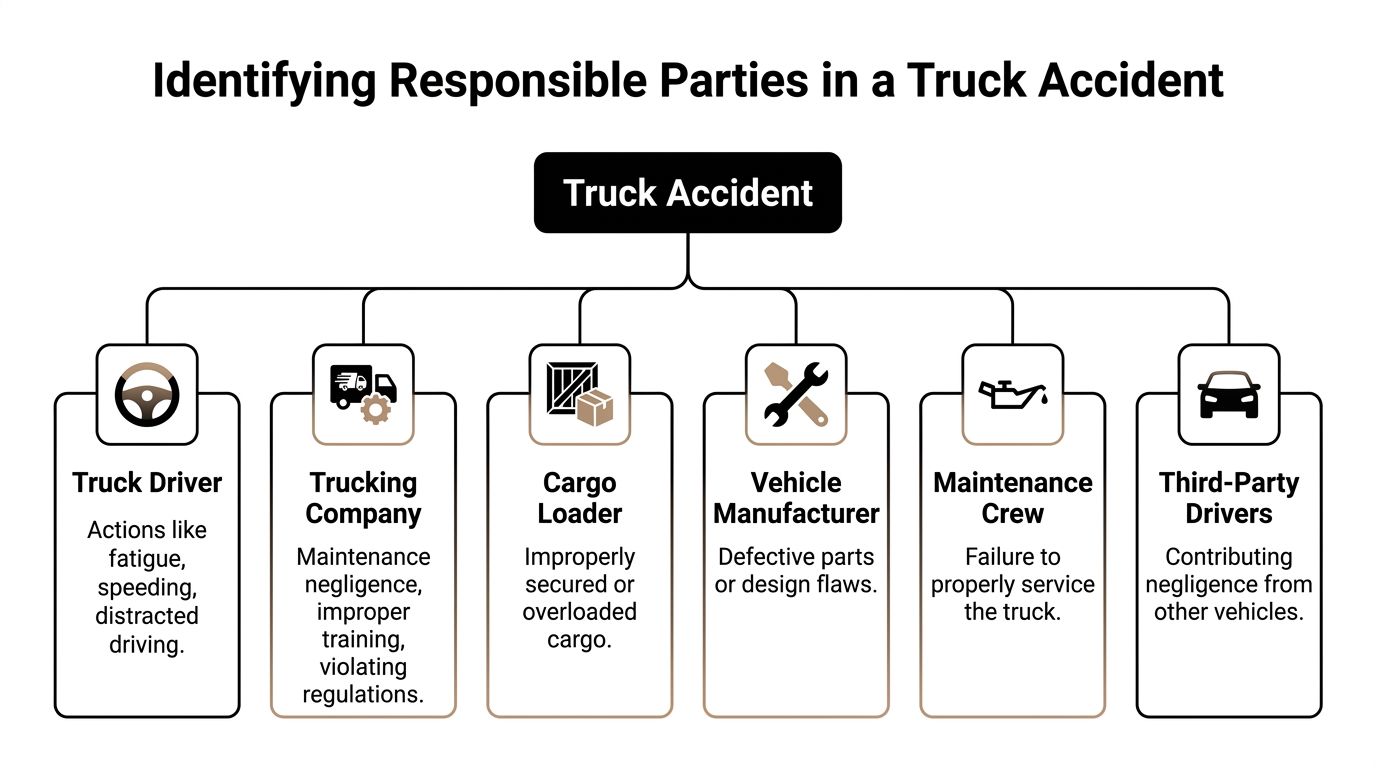
The driver is not always the only defendant
Take a multi-vehicle crash on a Houston freeway. A truck driver brakes late and slams into traffic. At first glance, the driver looks like the only problem.
After investigation, the facts may show something larger:
- The driver may have been speeding or distracted.
- The trucking company may have pushed an unsafe delivery schedule.
- A maintenance vendor may have failed to fix brake issues.
- A cargo company may have loaded the trailer improperly.
- A parts manufacturer may have supplied a defective component.
- Another driver may also have contributed to the chain reaction.
That is why truck cases are built differently from many ordinary auto insurance claims.
Common parties in a trucking accident lawsuit
Here is how fault often breaks down in plain terms:
| Party | How they may be responsible |
|---|---|
| Truck driver | Unsafe driving, distraction, fatigue, bad lane changes, following too closely |
| Trucking company | Poor hiring, weak training, unsafe policies, failure to monitor drivers |
| Maintenance company | Missed inspections or bad repair work |
| Cargo loader | Unbalanced, unsecured, or overloaded cargo |
| Manufacturer | Defective brakes, tires, underride protection, or other parts |
| Third-party driver | Actions that helped trigger or worsen the wreck |
If you are trying to sort out insurance after a crash, this guide on understanding liability insurance coverage gives helpful background on what liability coverage is meant to pay for and why coverage disputes happen.
Texas comparative fault can change your case value
Texas follows modified comparative negligence under Chapter 33 of the Texas Civil Practice & Remedies Code. You may also hear it called comparative fault.
The rule is straightforward. If you are 50% or less at fault, you can still recover damages. If you are 51% or more at fault, you cannot recover compensation, as explained in Justia’s discussion of truck accident fault rules.
That point confuses many people, so here is a simple example.
A real-world Texas example
Suppose a Dallas driver changes lanes without enough room. A commercial truck driver, who is also speeding and following too closely, cannot stop in time and causes a major collision.
A jury could decide both drivers share blame. If the injured person is found partly at fault, any recovery can be reduced by that percentage. But if the injured person crosses the 51% line, recovery is barred.
This is one reason trucking insurers work hard to push blame onto the injured person.
Key point: In Texas truck cases, proving the truck driver’s and company’s share of fault is often just as important as proving that a crash happened.
Where Chapters 33 and 41 fit in
Chapter 33 deals with proportionate responsibility, which means how fault is divided. Chapter 41 deals with exemplary damages, sometimes called punitive damages, in rare cases involving especially serious misconduct.
You do not need to memorize either chapter. You only need to understand what they mean for you. In Texas, who is responsible and how much each party is responsible can shape the outcome of your case from day one.
Federal and Texas Trucking Regulations You Should Know
Commercial trucks do not follow the same basic rules as ordinary passenger cars. They operate under a layer of federal safety regulations that can become central evidence in a trucking accident lawsuit.
When a truck company breaks a safety rule and that violation helps cause a crash, that can support negligence per se. In plain English, that means the rule violation itself can serve as strong proof of negligence.
Hours of service rules and driver fatigue
One of the most important rules involves driver fatigue.
Federal Hours-of-Service rules under 49 CFR §395 limit commercial drivers to 11 hours of driving within a 14-hour on-duty period, and violations are often proven through Electronic Logging Device data, according to this overview of truck accident liability in Texas.
That matters because fatigue cases are not always obvious from the outside. A tired truck driver may not look impaired in the way a drunk driver does. But delayed braking, drifting between lanes, and poor judgment can all appear in the crash evidence.
A Dallas example
Suppose a truck hits stopped traffic outside Dallas late at night. The driver says he was alert and did nothing wrong.
Then the log data shows he had already exceeded the legal driving window. That kind of record can strongly support the injured person’s case. It turns a vague suspicion into documented misconduct.
Maintenance rules matter too
The truck itself must also be kept in safe operating condition. Federal maintenance rules require regular inspections and repairs.
A company that skips repairs, ignores warning signs, or lets unsafe equipment stay on the road may be liable when mechanical failure contributes to a wreck.
This can be important in cases involving:
- Brake problems
- Tire failures
- Lighting issues
- Steering defects
- Trailer equipment problems
Interstate and intrastate confusion
Readers often ask whether the truck was crossing state lines or only operating inside Texas. That can affect which rules and records matter most.
If you want a plain-language explanation of that distinction, this article on interstate vs intrastate trucking is a helpful starting point.
Why regulation violations carry so much weight
A truck crash case often turns on records that show the company knew the rule and broke it anyway.
That is different from a general argument like, “The driver should have been more careful.” Instead, the case may become, “The carrier violated a specific safety rule and someone got hurt because of it.”
Here are a few examples of how that works:
- Log violations: Suggest fatigue or pressure to meet deadlines.
- Missed inspections: Suggest the truck should not have been on the road.
- Faulty repairs: Suggest the company placed business needs over safety.
Tip for injured families: Save every document you receive, including towing records, discharge papers, photos, and insurer letters. Those items can help your attorney match the crash timeline to the trucking company’s records.
Texas law still controls your injury claim
Federal regulations help prove the safety violation. Texas law controls how your personal injury case moves through court and how damages are awarded.
That includes Chapter 33 on shared fault and Chapter 41 on exemplary damages in exceptional cases. Most claims focus on proving liability and recovering compensation for losses. But when conduct is especially dangerous, those rules can become important.
How to Prove Your Case With Critical Evidence
A truck crash case can start slipping away within hours.
While you are in the ER, at home in pain, or trying to figure out how to get your car back, the trucking company may already have people working the scene, calling witnesses, reviewing driver records, and securing the truck. Their goal is simple. Control the story early. Your goal is to protect the evidence before that story hardens into the version everyone repeats.
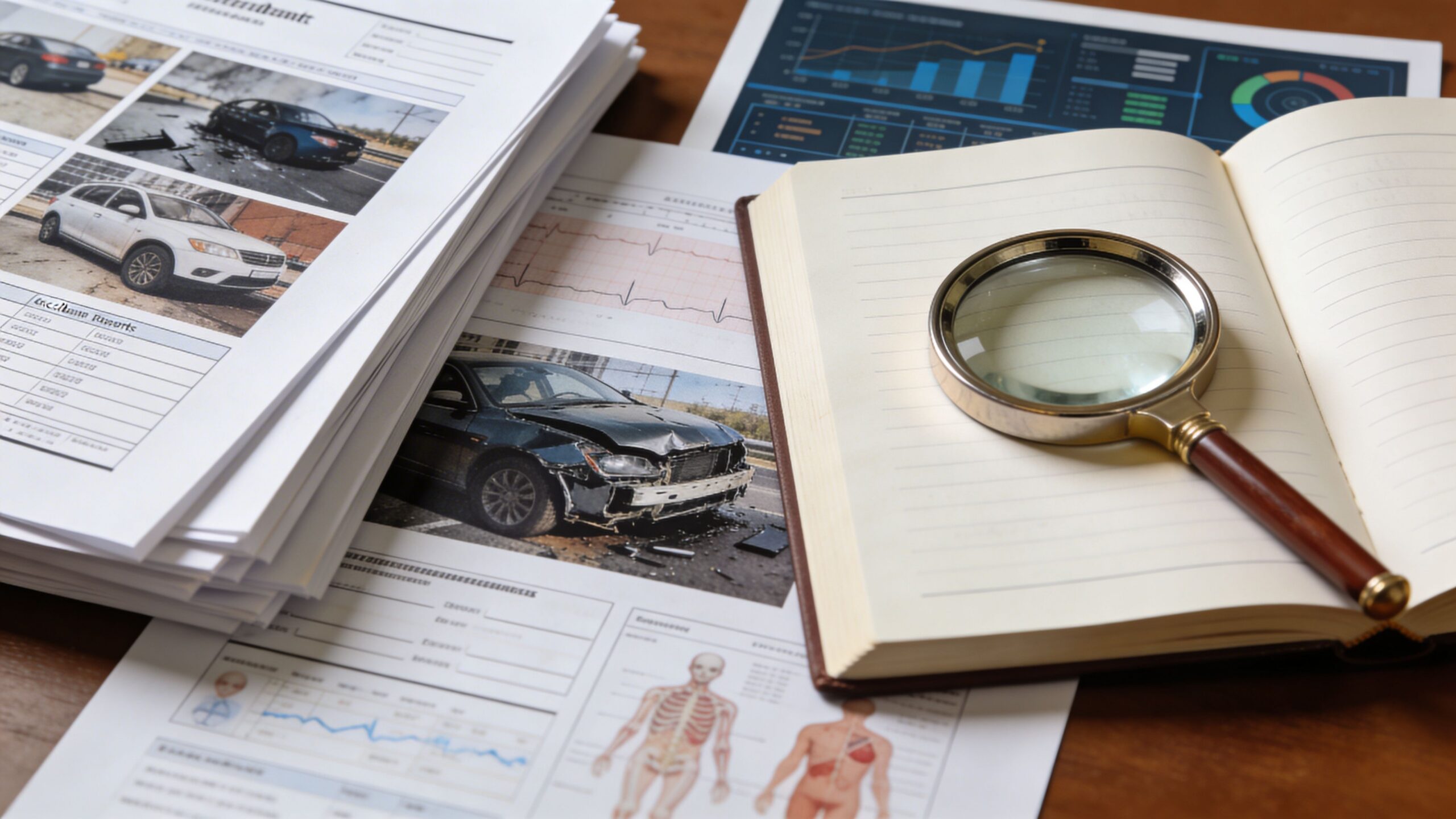
The black box can anchor the timeline
A commercial truck often carries electronic data that works like a flight recorder for the last moments before impact. Lawyers and investigators often call it the black box, though it may be part of an Event Data Recorder or another onboard system.
That data may show:
- Speed before impact
- Brake use
- Throttle position
- Steering input
- Engine activity
- Other timing details from the seconds before the crash
An outside witness may forget. A driver may give a different account later. Electronic data can help pin the timeline down.
That matters in real cases. If a trucking company says the driver reacted appropriately, a data download may show no braking until the final instant. If the company says your car cut in front of the truck, steering and speed data may point in the opposite direction. As explained in this article on truck crash investigation, preserving that information early can shape the entire case.
Why speed matters so much after the wreck
Some evidence does not sit on a shelf waiting for you.
Electronic records can be overwritten. Video can be deleted. Paper records can be lost, misplaced, or filtered through the company before anyone outside sees them. In serious Texas truck cases, this creates a race against time from day one.
A lawyer can step in quickly and demand preservation before those gaps appear. That is one reason injured families often seek help early. Fast action can protect the pieces needed to prove fault and, later, explain how truck accident settlements are calculated in Texas.
What a spoliation letter does
A spoliation letter is a formal notice telling the trucking company and related parties to preserve evidence tied to the crash.
You can picture it as a legal freeze order in plain English. It tells the company, "Do not destroy, overwrite, repair, or discard the materials connected to this wreck."
That letter often demands preservation of:
- Black box and onboard electronic data
- Driver logs and electronic logging records
- Dashcam footage or inward-facing video
- Maintenance, inspection, and repair files
- Driver qualification, hiring, and training records
- Dispatch messages and trip communications
- GPS and telematics data
- Post-crash inspection materials
Without that notice, a company may later argue that missing records were deleted through routine business practices. That argument is much harder to fight after the evidence is gone.
What you and your family can save now
You do not need to become your own investigator. You do need to keep what is already in your hands.
Start with the basics:
- Scene photos: Damage, skid marks, debris, weather, roadway layout, and visible injuries
- Witness names and contact details: Memories fade fast
- Medical records: ER papers, imaging reports, prescriptions, discharge instructions, and follow-up care notes
- Insurance communications: Voicemails, emails, letters, claim numbers, and text messages
- Towing and storage records: These can help track where the vehicles went and when
Small items can end up carrying real weight. A timestamp on a phone photo or a voicemail from an adjuster can help your lawyer compare your timeline to the trucking company's version.
What your legal team usually works to obtain
Your lawyer can pursue evidence that individuals usually cannot access on their own.
That often includes:
- Truck data downloads
- Driver logbooks and electronic logging device records
- Personnel and qualification files
- Drug and alcohol testing records when legally available
- Maintenance histories and repair invoices
- Dispatch instructions and internal communications
- Surveillance footage from nearby businesses or traffic cameras
- Cargo and loading records when weight or shifting freight may have played a role
A strong case usually comes from these pieces lining up. One record may show fatigue. Another may show a rushed delivery schedule. Another may show poor maintenance. Together, they can explain why the crash happened.
A Texas example
Suppose a family in Fort Worth is hit by a semi during a lane-change collision. The trucking insurer quickly claims the smaller vehicle drifted into the truck.
Then other evidence starts to surface.
The truck's electronic data shows the rig was traveling too fast for traffic. Steering input reflects a sharp movement from the truck's lane just before impact. A nearby business camera captures the lane departure. Dispatch records show pressure to stay on schedule. What looked like a swearing contest begins to look like a documented safety failure.
That is how truck cases are often proved. One piece supports the next until the full picture becomes hard to deny.
Mistakes that can hurt the evidence
A few early decisions can make proof harder than it needs to be.
Try to avoid:
- Giving a recorded statement before you understand your rights
- Repairing, selling, or disposing of your vehicle too soon
- Posting detailed comments about the crash on social media
- Assuming the police report contains every important fact
- Waiting too long to ask for legal help while the company builds its defense
An attorney from a firm like The Law Office of Bryan Fagan, PLLC can coordinate the preservation process and push quickly for the records that matter most. In many truck wreck cases, that early work is what helps an injured person catch up to the response team on the other side.
What Is Your Truck Accident Claim Worth in Texas?
This is one of the first questions clients ask, and for good reason. Medical bills begin immediately. Paychecks may stop. Life can feel unstable quickly.
What damages means in plain English
Damages are the losses the law allows you to recover.
They usually fall into two broad categories.
Economic damages
These are the financial losses you can often document with bills, records, or pay information.
Examples include:
- Medical treatment
- Physical therapy
- Lost wages
- Reduced future earning ability
- Property damage
- Future care needs
Non-economic damages
These losses are real, even though they do not come with a receipt.
Examples include:
- Physical pain
- Mental anguish
- Emotional distress
- Disfigurement
- Physical impairment
- Loss of enjoyment of daily life
A simple way to think about it is this. Economic damages pay for what the injury costs you on paper. Non-economic damages address how the injury changes your life.
What settlement ranges can look like
While every case is unique, 2025 data shows truck accident settlements often fall in these ranges: minor injuries at $50,000 to $150,000, moderate injuries requiring surgery at $150,000 to $500,000, severe brain or spinal cord injuries exceeding $2 million, and wrongful death claims often at $1 million to $5 million or more, according to this 2025 settlement overview.
Those figures are not guarantees. They are only context. A case with strong evidence and severe harm may be worth far more than a case with limited damages or disputed fault.
If you want a broader look at how lawyers evaluate case value, this page on truck accident settlements can help.
Why truck cases are often high stakes
Federal law requires many trucking companies to carry liability insurance between $750,000 and $5 million, according to reporting that summarizes FMCSA insurance requirements and truck settlement values. That is much higher than the minimum coverage many drivers carry on personal vehicles.
Larger policies can mean more compensation is available. They also mean the defense has strong incentives to fight hard.
Chapter 41 and exemplary damages
Texas Chapter 41 governs exemplary damages. These are not awarded in every case.
They are meant to punish especially serious wrongdoing, not just ordinary negligence. In a truck case, they may become relevant if the evidence shows extreme misconduct. Your lawyer can tell you whether that issue belongs in your case.
Key point: Claim value is not just about the crash. It is about the full human effect of the injury on your health, work, family life, and future.
Navigating the Texas Truck Accident Lawsuit Process
Many injured people fear the lawsuit process because they do not know what comes next. The legal system feels unfamiliar when you are already dealing with pain and uncertainty.
It helps to think of a trucking accident lawsuit as a road with several stages. Not every case travels the same distance, but most follow the same general route.

Stage one starts before a lawsuit is filed
The first phase is usually investigation and claim development.
That often includes collecting records, identifying all responsible parties, reviewing medical treatment, and sending preservation demands. Insurance negotiations may begin during this phase, but serious truck cases usually require much more than a simple claim form.
A person searching for guidance may start with a truck accidents lawyer resource to understand what legal representation looks like in these cases.
Stage two is filing the lawsuit
If the insurer will not resolve the claim fairly, the next step is filing suit.
A lawsuit does not mean you are going to trial tomorrow. It means the court process is now open, deadlines begin to run, and both sides must follow formal legal rules.
This is also where one deadline becomes critical.
The statute of limitations
The statute of limitations is the legal deadline to file your lawsuit.
In most Texas injury cases, that deadline is generally a specific period from the date of the accident. If you miss it, you can lose the right to pursue compensation.
That is one reason delay is dangerous. Waiting can hurt evidence and can also threaten your legal deadline.
Stage three is discovery
Discovery is the formal evidence exchange process.
During this stage, each side can request documents, send written questions, take depositions, and examine the facts under oath. In truck cases, discovery often reveals the records that matter most.
A typical discovery phase may involve:
- The driver’s logs and training records
- Company safety policies
- Inspection and maintenance records
- Video, electronic data, and internal communications
- Medical evidence about your injuries
If you are anxious about the courtroom side of a case, this guide on how to prepare for trial gives a useful overview of practical preparation steps.
Here is a short explainer that helps many clients visualize how legal cases move:
Stage four is negotiation and possible settlement
Most injury cases resolve before trial. Settlement discussions can happen more than once, and they often become more serious after discovery clarifies the evidence.
A settlement can provide certainty and avoid the stress of trial. But accepting one too early can leave money on the table if the full extent of your injuries is not yet known.
Stage five is trial if needed
If the defense denies responsibility or refuses to pay fair compensation, the case may go to trial.
At trial, a judge or jury decides disputed issues such as fault, damages, and in some cases the share of responsibility assigned to each party under Chapter 33.
A simple example of the full process
Suppose a San Antonio family is hit by a commercial truck. The trucking company disputes fault. Their lawyer investigates, preserves records, and files suit before the deadline. Discovery shows missing maintenance steps and unsafe driving behavior. The insurer increases its offer after depositions. If the offer still does not reflect the family’s losses, the case can proceed to trial.
That process can feel long, but it is often how serious truck injury cases are properly built.
Practical reminder: A lawsuit is not only about filing papers. It is about building proof, protecting your rights, and making sure the defense cannot define the facts unchallenged.
Common Questions About Truck Accident Lawsuits
Do I have a case if the truck driver was not ticketed?
Yes, possibly.
A traffic ticket can help, but it is not required. Civil injury cases use a different process and a different standard than traffic enforcement. A trucking accident lawsuit may succeed based on records, witness statements, electronic data, maintenance history, and other proof even if no citation was issued.
What if the insurance company says I was partly at fault?
That is common in Texas truck cases.
Under Chapter 33, your recovery can be reduced if you share fault, and you are barred only if you are more than half responsible. That is why the evidence matters so much. The defense may try to frame your actions as the main cause of the crash. Your lawyer’s job is to challenge that narrative with facts.
Should I talk to the trucking company’s insurer?
Be careful.
You should report the collision to your own insurer as required by your policy. But when the trucking company’s insurer asks for a recorded statement or pushes you to discuss fault, it is wise to slow down and get legal advice first. Early statements can be used later to limit or deny your claim.
What if my loved one died in the crash?
You may have a wrongful death claim.
Wrongful death compensation can include losses connected to the death of a family member caused by negligence. These cases are emotionally difficult, and they often involve both legal and practical decisions while the family is still grieving. A careful legal review can help you understand who may bring the claim and what damages may be available.
Will my case definitely go to court?
Not necessarily.
Many truck cases settle before trial. But a fair settlement often happens only after the injured person shows readiness to prove the case in court. In that sense, strong trial preparation can improve settlement discussions even when no trial occurs.
How much does it cost to hire a Texas injury attorney?
Many personal injury firms handle truck cases on a contingency fee basis, which means the fee is paid from a recovery rather than upfront. You should always ask exactly how fees and case expenses work before signing anything.
What should I do today if the crash just happened?
Focus on the basics:
- Get medical care and follow up with treatment.
- Preserve documents and photos.
- Limit direct conversations with the trucking insurer.
- Seek legal advice quickly so evidence can be protected.
- Write down what you remember before details fade.
The central lesson in every trucking accident lawsuit is the same. The case often begins long before you feel ready. While you are trying to recover, the trucking company may already be working to protect itself. Acting early helps level the field.
If you or someone you love was hurt in a truck crash, The Law Office of Bryan Fagan, PLLC can help you understand your rights, protect critical evidence, and evaluate your options in a free consultation. You do not have to sort through liability, comparative fault, insurance pressure, and wrongful death compensation questions on your own. A clear legal plan can help you move forward.