
A car crash can change your life in seconds—but you don’t have to face recovery alone. One moment you're driving, the next you're dealing with pain, confusion, and a stack of medical bills that seems to grow by the day. If you're going through this, you need to understand your rights and the steps to take to get a fair whiplash injury settlement here in Texas.
This guide is your roadmap to getting back on your feet financially while you focus on what really matters—healing.
Your Guide to a Fair Texas Whiplash Settlement

You are not alone in this. We're going to break down what whiplash actually is, how insurance companies in Texas put a number on these claims, and when an experienced Houston car accident lawyer can step in to protect your rights. Whiplash claims fall under the wider umbrella of personal injury law, and knowing the basics can make all the difference in your recovery.
Here’s what you’ll learn:
- How to figure out the true value of your claim.
- The right way to document your injuries and all related costs.
- How to see through the tactics insurance companies use to offer a low settlement.
- What it takes to fight for the full compensation you are owed.
What Whiplash Really Is—And Why It Matters For Your Claim
Most people think whiplash is just a sore neck, but it’s so much more than that. It’s a serious soft tissue injury that happens when a car crash—especially a rear-end collision on a packed Houston road like I-45 or the 610 Loop—violently snaps your head back and forth.
While neck pain and stiffness are often the first signs, the real trouble with whiplash is that many symptoms don't show up right away. Headaches, dizziness, blurred vision, and even memory problems can surface days or weeks later. This is exactly why you need to see a doctor immediately after an accident, even if you feel fine.
Getting checked out creates an official record that links your injuries directly to the crash. Those medical records, doctor’s notes, and diagnostic scans become the bedrock of your claim. They are your best defense when an insurance company tries to argue your pain isn't real or isn't from the accident. With over 840,000 whiplash injuries happening across the country each year, having solid proof is the only way to make sure your case is taken seriously. To see what that proof can be worth, you can read the full research about average whiplash settlements here.
Who Is Liable for a Texas Whiplash Injury?
When it comes to getting a fair settlement for a whiplash injury in Texas, it’s all about understanding what the insurance company is actually paying for. The final number is a combination of two distinct types of “damages,” which are the losses you suffered because of someone else's carelessness. In legal terms, this carelessness is called "negligence," and proving it is the key to holding the at-fault driver responsible.
The Two Pillars of a Whiplash Claim
First, you have economic damages. Think of these as the black-and-white, provable costs. They’re the tangible expenses that you can track with receipts, pay stubs, and invoices. This includes things like:
- Hospital and doctor bills
- Physical therapy sessions
- Prescription medications
- Wages you lost from being unable to work
The second, and often much larger, part of your settlement is non-economic damages. This is where we account for the human cost of the accident. There’s no receipt for the physical pain, the sleepless nights, the emotional distress, or the frustration of not being able to enjoy your life the way you used to.
We take a much deeper dive into how this crucial part of your claim is valued in our guide on how to calculate pain and suffering damages.
This flowchart helps visualize how everything—from the moment of impact to the evidence you gather—builds toward the final value of your claim.
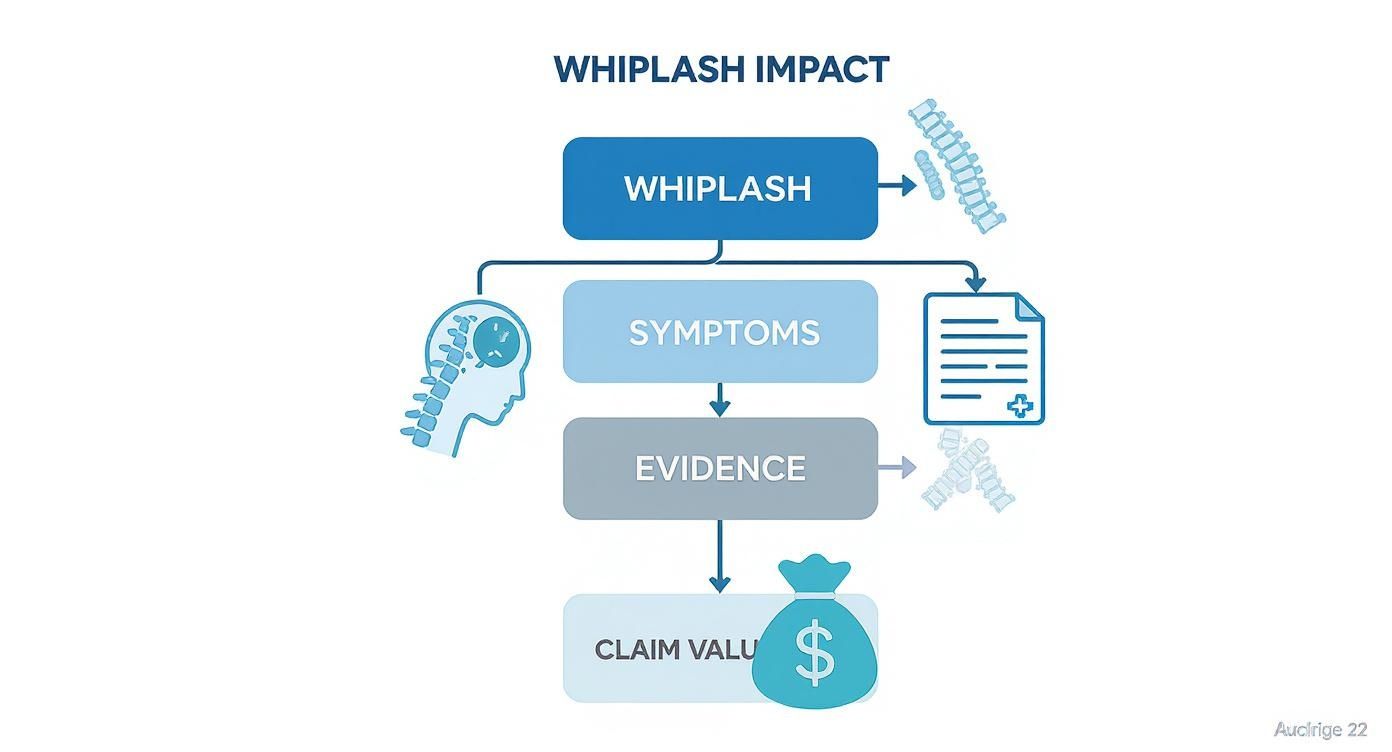
As the diagram shows, solid medical evidence is the foundation of a strong claim. It directly proves the extent of your injuries and justifies a higher settlement value. While every case is different, it’s not uncommon for severe whiplash cases that require surgery or long-term care to result in settlements well over $100,000—and sometimes significantly more.
Whiplash Injury Settlement Ranges by Severity
To give you a clearer picture, here’s a look at how different levels of whiplash severity can impact potential settlement ranges. Keep in mind, these are national averages and not a guarantee of what your specific case is worth.
Whiplash Injury Settlement Ranges by Severity
| Injury Severity Level | Common Characteristics | Typical Settlement Range (National Average) |
|---|---|---|
| Minor Whiplash (Grade 1) | Mild pain, stiffness, symptoms resolve in a few weeks with minimal treatment. | $10,000 – $20,000 |
| Moderate Whiplash (Grade 2) | Neck muscle spasms, limited range of motion, symptoms last for months, requires physical therapy. | $20,000 – $75,000 |
| Severe Whiplash (Grade 3-4) | Significant pain, neurological symptoms (numbness, tingling), potential disc damage, requires extensive medical treatment or surgery. | $75,000 – $100,000+ |
These figures are just a starting point. Your final settlement will depend on the unique facts of your accident, the strength of your evidence, and the skill of your legal representation.
Steps to File an Insurance Claim in Texas
Navigating the road from accident to settlement can feel confusing and overwhelming, especially when you’re dealing with pain. The key is to take deliberate, well-documented steps from day one to build the strongest possible foundation for your whiplash injury settlement.
Your absolute first priority is your health. Seek medical attention immediately after the crash, even if you feel okay—adrenalin can mask serious injuries. After that, get a copy of the official police report and notify your own insurance company. Just be careful: avoid giving a recorded statement to any insurer until you’ve spoken with a Texas injury attorney.
From here on out, documentation is your best friend. Start a dedicated file and track everything: every medical bill, every prescription receipt, and photos of your injuries. It’s also a great idea to keep a simple journal detailing your daily pain levels, limitations, and the ways the injury impacts your life.
Following your doctor’s orders is non-negotiable. If they recommend physical therapy, you need to go. This not only aids your recovery but also shows the insurance company the severity of your injuries. In fact, you’ll find that understanding how physical therapy can increase your settlement is a critical piece of the puzzle.
Finally, remember the clock is ticking. Texas law includes a strict statute of limitations, which is a deadline for filing a lawsuit. Under Texas Civil Practice and Remedies Code § 16.003, you generally have only two years from the date of the crash to file a personal injury claim. This is a hard deadline you cannot afford to miss.
How to Deal With Insurance Companies After a Crash
Let’s be clear: the insurance adjuster is not your friend. Their job is to protect their company's profits, which means paying you as little as possible for your whiplash injury settlement. They have a playbook of tactics designed to chip away at the value of your claim.
They might suggest your pain is from a pre-existing condition, question whether you really needed that MRI, or dangle a quick, lowball offer hoping you’ll take it before you even know how serious your injuries are. It happens all the time.
For example, a Houston driver rear-ended on I-45 may be told by an adjuster that an old sports injury is the real source of their neck pain, not the crash. A good Texas injury lawyer knows how to shut that down immediately by presenting your complete medical history and showing a clear line from the accident to your current pain.
Anticipating these moves and knowing how to counter them is half the battle. While national data shows typical whiplash payouts fall between $7,500 and $50,000, a weak case can leave you with nothing. A strong one ensures you're treated fairly. You can learn more about these negotiation strategies in our detailed guide.
How a Lawyer Can Maximize Your Whiplash Settlement

Trying to handle a whiplash claim on your own is like stepping into the ring with a professional fighter. Insurance companies have teams of adjusters and lawyers whose entire job is to minimize what they pay you. Hiring an experienced Houston car accident lawyer from The Law Office of Bryan Fagan, PLLC, is about leveling that playing field.
From day one, we take over all communication with the insurance company. This immediately shields you from their pressure tactics and lets you focus completely on your recovery. While you're healing, our team gets to work building your case—launching a full investigation, gathering every piece of critical evidence, and consulting with medical experts to calculate the true cost of your damages, including future treatments and lost earning potential.
We then go to the negotiating table ready to secure the maximum whiplash injury settlement you deserve. And because we work on a contingency fee basis, you pay absolutely nothing unless we win your case. It’s our promise to you. For others in the legal field interested in the business side of things, you can explore strategies for attorney lead generation and law firm growth.
Your Whiplash Claim Questions, Answered
How Long Does a Whiplash Settlement Take in Texas?
Every case moves at its own pace. A straightforward claim, where the other driver’s liability is clear and your injuries are minor, might wrap up in just a few months.
But if your injuries are serious, need ongoing treatment, or the insurance company starts fighting you on who's to blame, it could easily take a year or more to get the whiplash injury settlement you deserve. Patience and persistence are key.
Should I Accept the First Offer from the Insurance Company?
Almost never. Think of the first offer as a test. The insurance adjuster is throwing out a low number to see if you'll accept it and go away cheaply. This initial offer almost never covers the full scope of your future medical bills, lost income, and the real toll of your pain and suffering.
What if I Was Partially at Fault for the Accident?
Texas has what's called a "modified comparative fault" rule, also known as proportionate responsibility (Texas Civil Practice & Remedies Code, Chapter 33). Here’s the bottom line: as long as you are 50% or less responsible for the crash, you can still recover money.
However, your final settlement will be reduced by your percentage of fault. If you're found to be 20% at fault, your settlement is cut by 20%. This is exactly why proving the other driver's liability is so critical.
Can I Get a Settlement if My Symptoms Were Delayed?
Absolutely. It's incredibly common for whiplash symptoms to sneak up on you days or even weeks after a car wreck. One day you feel fine, the next you can barely turn your head.
This is why getting checked out by a doctor right after the crash is so important. It creates a medical record that connects your delayed pain directly back to the accident, making it much harder for the insurance company to argue your injuries aren't related.
You have been through enough. You deserve clear, honest answers and a legal team that will fight for your rights. The team at The Law Office of Bryan Fagan, PLLC is here to provide the guidance and aggressive representation you need to move forward.
Contact us today for a free, no-obligation consultation to talk about your auto insurance claim and find out how we can fight for the compensation you deserve. Visit us online at https://houstonaccidentlawyers.net to get started.