A car crash can change your life in seconds — but you don’t have to face recovery alone. A car accident injury settlement is the formal agreement you reach with an insurance company, closing the book on your claim without ever stepping into a courtroom. But a fair settlement isn't just about covering your immediate medical bills. It’s about securing financial compensation for every single loss—from future surgeries and lost wages to the real, human impact the crash has had on your life.
Who Is Liable in a Texas Car Accident?
When someone else’s negligence is to blame for your injuries, Texas law says you have the right to demand compensation for the harm they caused. This compensation, which lawyers call damages, is the entire point of a personal injury claim.

The goal here isn't to win a lottery; it's to be made "whole" again, at least financially. It’s a way to acknowledge the massive personal toll the accident took on you. We're not just talking about the ambulance bill or the first ER visit. A truly fair settlement looks at the big picture. It has to account for the full scope of your recovery journey, including everything from months of physical therapy to the income you lost because you couldn't work. On top of that, it must factor in the physical pain and emotional trauma you’ve been forced to endure.
The Role of Negligence in Texas Law
Before a single dollar of a car accident settlement ever changes hands, one critical question has to be answered: Who caused the crash? The core legal concept here is negligence. In plain English, negligence means someone failed to act with reasonable care, and that failure caused you harm. Every person on a Texas road has a duty to drive safely. When they breach that duty—by texting, speeding, or driving drunk—and cause an accident, they have been negligent. This makes them legally responsible, or liable, for all the injuries and damage that follows.
For example, imagine a Houston driver rear-ended on I-45 because the person behind them was looking at their phone instead of the road. That distracted driver was negligent, and proving this is the first, most important step to getting your settlement.
How Your Own Actions Can Affect Your Settlement
What happens if the other driver’s insurance company turns around and says you were partly to blame? Texas has a specific rule for this exact scenario. It’s called modified comparative fault, and you can find it in Chapter 33 of the Texas Civil Practice and Remedies Code.
This rule means your final settlement can be reduced by your percentage of fault. But there’s a massive catch.
Under Texas's 51% bar rule, you can only recover damages if you are found to be 50% or less at fault for the accident. If your share of the blame hits 51% or more, you are completely barred from recovering any money at all.
Let's break that down. Say someone runs a red light and T-bones your car, but evidence shows you were going five miles over the speed limit. A jury might decide the other driver was 90% at fault, but you were 10% to blame. If your total damages were $100,000, your 10% share of fault would reduce your award by $10,000, leaving you with a $90,000 settlement.
This is exactly why insurance adjusters fight to shift as much blame onto you as they can. Every percentage point they pin on you saves their company money. An experienced Texas injury attorney from The Law Office of Bryan Fagan, PLLC knows how to fight back against these tactics, protecting your right to a full and fair settlement. We can help you navigate the complexities of your auto insurance claim and protect your recovery.
Calculating the True Value of Your Claim

How do you really put a number on everything you’ve lost after a wreck? This is one of the toughest questions we tackle in a car accident injury settlement. The answer isn't just about adding up receipts. It’s about understanding the total, true impact the crash has had on your life—financially, physically, and emotionally. To figure out a fair settlement, Texas law breaks down your losses, or damages, into a few key categories.
Economic Damages: The Tangible Costs
Economic damages are the most straightforward part of the equation. Think of these as any loss that comes with a price tag or a paper trail. They are the real, verifiable expenses you’ve been stuck with because someone else was negligent.
These costs go way beyond the first emergency room bill. A solid claim has to account for every single related expense.
- Medical Treatment: This covers it all—the ambulance ride, hospital stay, surgeries, prescriptions, and follow-up visits with specialists.
- Future Medical Needs: A serious injury often requires long-term care. This could be future physical therapy, ongoing medications, or even more surgeries down the road.
- Lost Wages: You are absolutely entitled to compensation for every single hour of work you missed while trying to recover.
- Loss of Earning Capacity: If your injuries stop you from returning to your old job or limit your ability to earn a living in the future, that financial loss must be calculated and included.
- Property Damage: This is simply the cost to repair or replace your vehicle and any personal belongings that were damaged in the crash.
It’s critical to keep meticulous records of every bill, receipt, and pay stub. This includes all medical expenses, even diagnostic imaging. For instance, many modern clinics use advanced systems to provide these services, and you can find a complete guide on teleradiology services to understand how they work.
Non-Economic Damages: The Human Cost
While economic damages cover your financial setbacks, non-economic damages are about the profound, personal impact of the crash. These losses are intangible, meaning they don’t come with a receipt, but they are just as real—and often, far more devastating.
Under Texas law, you have the right to seek compensation for the human toll of an accident. This includes your physical suffering, emotional distress, and the loss of your ability to enjoy life the way you used to.
Examples of non-economic damages include:
- Pain and Suffering: This compensates you for the actual physical pain and discomfort you've had to endure because of your injuries.
- Mental Anguish: This covers the emotional trauma from the accident, like anxiety, depression, fear, or even PTSD.
- Physical Impairment: If you've suffered a permanent disability, like loss of mobility or chronic pain, this is a major component of your claim.
- Disfigurement: Compensation for permanent scarring or other visible injuries that change your appearance.
- Loss of Consortium: In some cases, a spouse can claim damages for the loss of companionship and support resulting from their partner's injuries.
A construction worker in Houston injured in a T-bone collision on the 610 Loop faces more than just medical bills. If he can no longer lift heavy materials, his career is over. If the chronic pain keeps him from playing with his kids, that loss of enjoyment is a very real, compensable damage. An experienced Houston car accident lawyer knows how to build a case that shows the true extent of your suffering. To get a better idea of what your specific claim might include, you can learn more about what your car accident might be worth in our related guide.
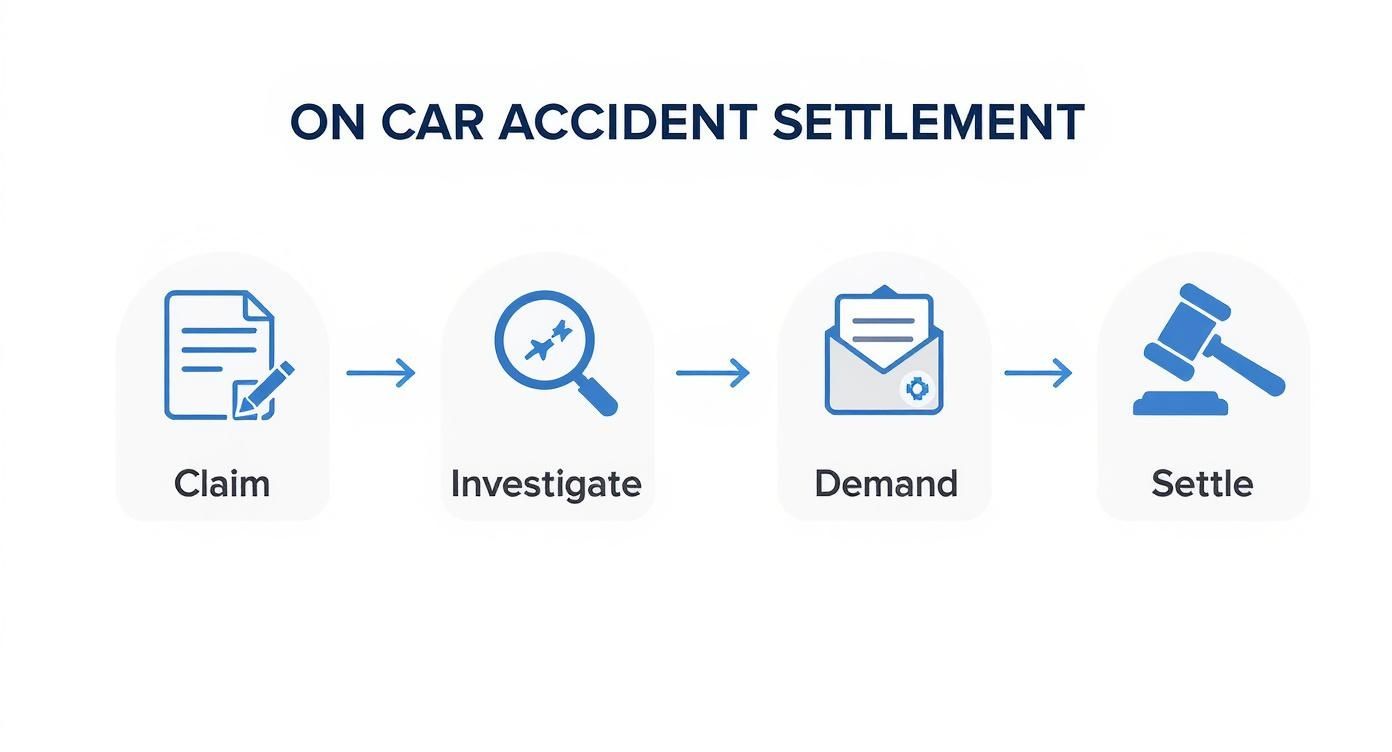
Steps to File an Insurance Claim
The road from the chaos of a car crash to getting a fair car accident injury settlement can feel incredibly long and confusing. Think of this process as a clear roadmap—once you understand each step, you can move forward with confidence, knowing your rights are protected.
Step 1: Take Immediate Action After the Crash
The moments after a crash are a blur, but what you do next is critical for both your health and your legal rights.
- Seek Immediate Medical Attention: Your well-being comes first. Even if you think you’re fine, adrenaline can hide serious injuries. Getting checked by a doctor creates an official medical record that links your injuries to the accident—a vital piece of evidence.
- Report the Accident: Always call 911. A police officer will create an official, impartial report that details the facts of the crash. This document is invaluable for proving liability.
- Gather Information: If you're able, get the other driver’s name, contact info, and insurance details. Ask witnesses for their contact information. Use your phone to take pictures of the vehicle damage, the accident scene, and any visible injuries.
Step 2: File the Claim and Build Your Case
This is where every detail counts. You'll formally open your claim and begin gathering every piece of evidence needed to prove the other driver's fault and the true cost of your losses.
The insurance adjuster’s job is simple: protect their company’s profits by paying you as little as possible. Your goal is to build a case so strong that they can't deny the full value of what you’ve lost.
Here’s what happens during this phase:
- Notify the Insurance Company: You or your attorney will file a formal auto insurance claim with the at-fault driver's insurance provider.
- The Investigation: The insurance company will assign an adjuster to investigate. They will review the police report, look at the vehicle damage, and try to get a recorded statement from you. Never give a recorded statement without your lawyer present.
- Compile Evidence: Your legal team will collect all necessary documents, including medical bills, treatment records, and proof of lost income.
Step 3: The Demand Letter and Negotiations
Once you’ve reached "maximum medical improvement"—the point where your doctor says you’ve recovered as much as you're going to—your attorney will calculate the total value of your claim. They will then send a demand letter to the insurance company. This comprehensive legal document lays out the facts, proves the other driver's liability, details all of your damages, and demands a specific amount to settle the case.
The demand letter kicks off negotiations. The adjuster will almost always respond with a lowball counteroffer. This back-and-forth is normal, but it's also where an experienced attorney's skill is invaluable. They know the tactics adjusters use and how to fight for the compensation you deserve. Recent data on average car accident settlement amounts and timelines show that every case is different, but having a professional negotiator on your side makes a significant difference.
If negotiations stall, the final step is to file a lawsuit. The good news is that most personal injury cases settle long before they see a courtroom. At The Law Office of Bryan Fagan, PLLC, our team is ready to fight for you at every stage.
How Insurance Companies Try to Lower Your Settlement
Right after a serious car accident, you're at your most vulnerable. Unfortunately, this is when the at-fault driver's insurance company often swoops in, not to help, but to protect their own bottom line. Their goal is simple: pay you the smallest car accident injury settlement possible. Knowing their playbook is the first step to protecting yourself.
From the moment you file, the insurance company is looking for ways to poke holes in your case.
The Quick Lowball Offer
One of their favorite moves is the quick, lowball settlement offer. An adjuster might call days after the crash with a seemingly decent offer to "get this all behind you." Don't fall for it. They're betting that you're stressed and unaware of the full extent of your future costs. If you accept that early offer, you sign away your right to seek another dime, even if you later need surgery.
Using Your Words Against You
An adjuster will almost certainly ask for a recorded statement about what happened. You should never agree to this without your lawyer present. It’s not a friendly chat; it's a carefully planned interrogation. Questions are phrased to trick you into saying something they can use to pin blame on you or minimize your injuries. A simple, polite "I'm doing okay" can be twisted in a report to mean you weren't seriously hurt. Knowing how to handle insurance adjusters is crucial.
Disputing Your Medical Treatment
Another aggressive tactic is to challenge your medical care. The insurance company might argue that your treatments were excessive, that you waited too long to see a doctor, or that your injuries were pre-existing.
An insurance company's attempt to deny legitimate medical claims is a clear sign that you need an experienced advocate to fight for you. Your focus should be on healing, not justifying every doctor's visit to an adjuster.
An experienced Texas injury attorney from The Law Office of Bryan Fagan, PLLC, knows how to shut these tactics down. We will gather the medical records and evidence needed to prove the full value of your claim and ensure you aren't taken advantage of.
Why a Houston Car Accident Lawyer Is Your Best Ally
Trying to recover after a car accident is chaotic enough. You're dealing with pain, stress, and mounting medical bills. The last thing you need is a fight with an insurance corporation whose primary job is to protect its own profits. This is why having a dedicated Houston car accident lawyer is so critical. They level the playing field.
Building a Powerful Case for Maximum Compensation
An experienced attorney knows precisely what it takes to build a rock-solid claim in Texas. They take charge of all the critical details, freeing you up to focus on your recovery.
Here’s what that looks like in action:
- Proving Liability: Your lawyer dives deep into the evidence. They'll collect police reports, track down witnesses, and bring in experts if needed to prove the other driver was at fault.
- Calculating True Damages: They don't just look at today's bills. They team up with medical and financial experts to figure out the full, long-term cost of your injuries, including future surgeries and lost earning capacity.
- Negotiating Aggressively: A skilled Texas injury attorney is fluent in the tactics insurance adjusters use. They won’t be pushed around by lowball offers and will negotiate from a position of strength.
Your number one job should be getting better. Let a legal professional navigate the complexities of Texas negligence laws and the insurance claim process. It's the best way to make sure your rights are protected from start to finish.
The value a good lawyer brings is undeniable. If you're still wondering if you need help, it's worth taking a closer look at when you should hire a car accident lawyer in our detailed guide. The compassionate team at The Law Office of Bryan Fagan, PLLC, is ready to stand with you.
Common Questions About Texas Injury Claims
Navigating the aftermath of a car wreck brings up a lot of questions. It's completely normal to feel unsure about what to do next. Below, we've answered some of the most common concerns we hear from accident victims across Texas.
How Long Do I Have to File a Car Accident Claim in Texas?
In Texas, the clock starts ticking the moment the accident happens. You generally have two years from that date to file a personal injury lawsuit. This deadline is known as the statute of limitations, and it is incredibly strict. If you miss that two-year window, you lose your right to seek compensation forever. That's why it's so important to contact a Houston car accident lawyer well before time runs out.
What if the Other Driver Was Uninsured or Underinsured?
It’s a nightmare scenario: the driver who hit you either has no insurance or a policy that’s not enough to cover your bills. This is where your own Uninsured/Underinsured Motorist (UM/UIM) coverage can be a lifesaver. This optional coverage steps in to pay for your losses when the at-fault driver can’t. An experienced Texas injury attorney can help you file a claim with your own insurance company and fight to make sure they pay you what you're rightfully owed.
Don't assume your own insurance company will make things easy. A UM/UIM claim can be just as tough as dealing with the other driver's insurer. Having a lawyer in your corner is essential.
Will I Owe Taxes on My Car Accident Settlement?
For the most part, you can breathe a sigh of relief. The IRS says that money you receive for physical injuries, medical bills, or property damage is not considered taxable income. However, portions of your settlement specifically for lost wages or punitive damages (which are meant to punish the defendant, as detailed in Chapter 41 of the Texas Civil Practice & Remedies Code) may be taxed. It's always a good idea to review the details with your attorney.
Don't let legal worries add to your stress. The dedicated attorneys at The Law Office of Bryan Fagan, PLLC are here to give you the clarity and guidance you need. We offer a free, no-obligation consultation to talk about your case, explain your rights, and show you exactly how we'll fight for the full compensation you deserve. Contact us today to take the first step toward recovery. Visit us at https://houstonaccidentlawyers.net.