A car crash can change your life in seconds—but you don’t have to face recovery alone. After a wreck involving a large truck, you'll hear many technical terms. One of the most important is gross vehicle weight (GVW). Understanding this concept is critical for your personal injury claim.
The GVW is the total weight of a vehicle at a specific moment—including the truck itself, all its cargo, fuel, and the driver. It's a critical piece of evidence that can determine who is at fault for your injuries. If you've been hurt, knowing how a truck's weight contributed to the crash is the first step toward getting the justice you deserve.
Your Life Changed in Seconds After a Truck Crash
The shock and confusion after a serious truck accident are overwhelming. One moment you're driving down a Texas highway like I-45, and the next, you're piecing together the devastating aftermath. It's critical to understand that the weight of the truck that hit you is one of the most powerful facts in your case.
Think about those massive semi-trucks you see on I-10 near Houston. When fully loaded, they can legally weigh up to 80,000 pounds—that's 40 tons. This staggering weight, the gross vehicle weight (GVW), dictates everything from the driver's licensing requirements to the federal safety rules the trucking company must follow.
For accident victims in Texas, understanding the GVW is key to proving liability, or legal fault. Any truck operating over a certain weight is bound by strict federal and state regulations. When those rules are broken, catastrophic collisions are often the result.
This is why proving a truck was overweight is so powerful. It can establish clear negligence—a failure to use reasonable care—which is the foundation of every Texas personal injury case.
This guide will break down what GVW means in simple terms and show you how it can be used to hold a negligent trucking company accountable for your injuries. We want to empower you with the knowledge to protect your rights. If you've been injured, an experienced semi-truck accident lawyer can investigate every critical detail and fight for the compensation you need to heal.
Understanding Key Vehicle Weight Terms After a Texas Crash
After a devastating truck accident, you’ll hear a lot of technical jargon from investigators, insurance adjusters, and lawyers. These terms might seem confusing, but they are the bedrock of proving what happened and who was at fault.
To build a strong case and protect your rights, you need to know exactly what they mean. Let's explain the weight-related terms that will be central to your claim in plain English.
Gross Vehicle Weight Rating (GVWR)
Think of the Gross Vehicle Weight Rating (GVWR) as the manufacturer's promise of safety. It's a non-negotiable weight limit set by the company that built the truck.
The GVWR is the absolute maximum a vehicle can safely weigh, including the truck itself, fuel, the driver, and all of its cargo. It’s not the truck’s actual weight at any given moment—it's the safety line that should never be crossed. This number is usually found on a sticker inside the driver's side door.
Gross Vehicle Weight (GVW)
The Gross Vehicle Weight (GVW) is what the truck actually weighed at the moment of the crash. This is the real-time number, including the driver, a full tank of fuel, and the specific load it was hauling down the highway.
This number is one of the most critical pieces of evidence in a truck accident investigation. If the GVW is higher than the GVWR, the truck was overloaded—and dangerously out of compliance.
An overloaded truck is an unsafe truck. Exceeding the GVWR can cause brake failure, tire blowouts, and make the vehicle much harder to control, directly contributing to devastating accidents. An experienced Houston car accident lawyer can use this fact to prove negligence.
The gross vehicle weight isn't just one number; it's the sum of several parts. Each component adds to the total, and investigators must account for all of them to determine if the truck was operating within safe legal limits.
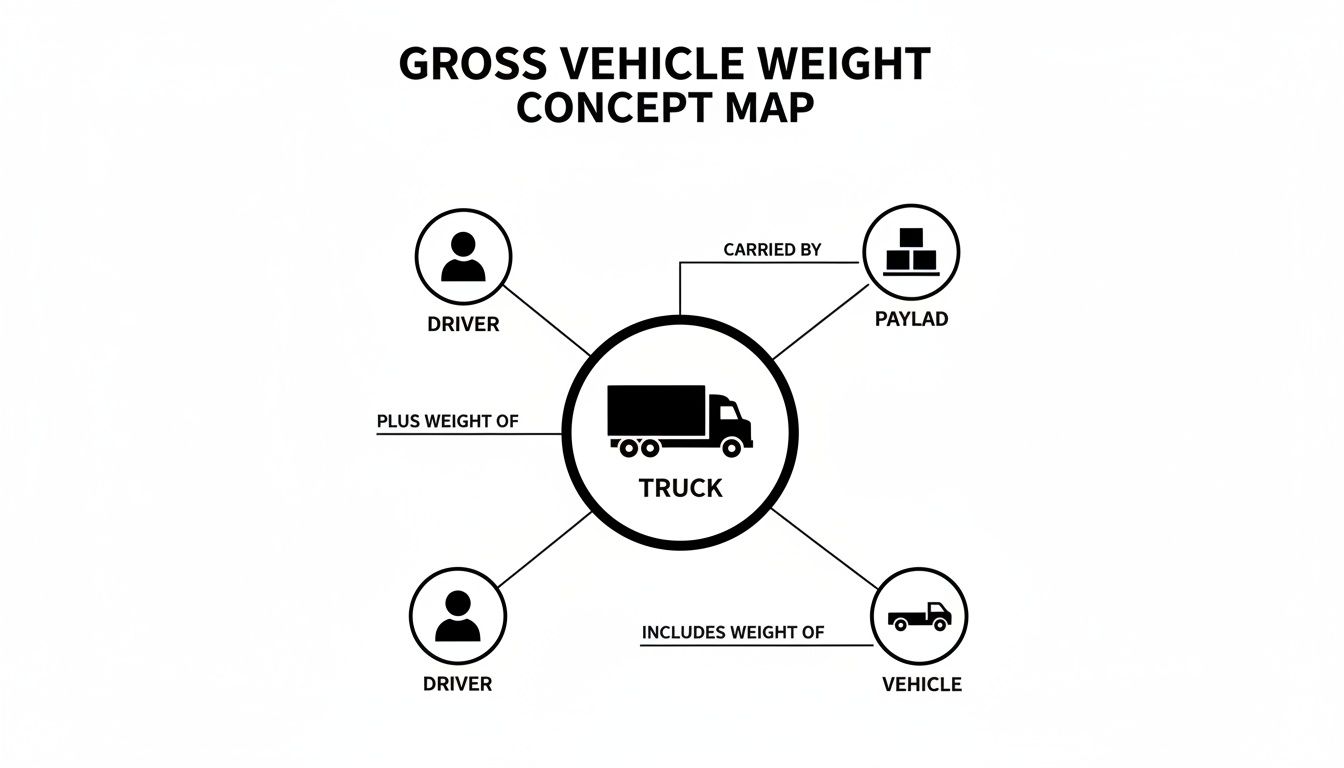
As you can see, every element—from the driver to the cargo—plays a role in the final calculation that determines whether the truck was safe or a disaster waiting to happen.
A Quick Guide to Vehicle Weight Terminology
Use this simple reference to understand the key differences between various vehicle weight measurements and why they matter for your case.
| Term | What It Means in Plain English | Why It Matters for Your Accident Claim |
|---|---|---|
| Gross Vehicle Weight Rating (GVWR) | The manufacturer's maximum safe weight limit for the truck and its load. | Proves the trucking company knew the safety limits and whether they were ignored. |
| Gross Vehicle Weight (GVW) | The truck's actual weight at the time of the accident. | Shows if the truck was overloaded, creating an unsafe condition that can establish negligence. |
| Gross Combination Weight Rating (GCWR) | The maximum safe weight for a truck plus its trailer. | Applies to semi-trucks and other combination vehicles, establishing a clear safety standard for the entire rig. |
| Payload | The weight of just the cargo being hauled. | Helps calculate the total GVW and can reveal if the shipper or trucking company loaded the truck improperly. |
Understanding these distinctions is the first step in holding a negligent trucking company accountable. An experienced attorney will know exactly how to use this data to build a powerful argument for liability.
Other Important Terms
You may also hear a few other key phrases as your case develops.
- Gross Combination Weight Rating (GCWR): This is for rigs pulling trailers, like a semi-truck. It’s the maximum safe weight of the truck, the trailer, and all the cargo combined.
- Payload: This is just a simple term for the weight of the cargo itself.
- Maximum Authorised Mass (MAM): This is another term related to vehicle weight limits. To fully grasp what gross vehicle weight entails, it's helpful to understand related terms like Maximum Authorised Mass (MAM), which dictates the maximum operating weight for different vehicle categories.
These numbers aren't just suggestions. They are legal limits. A skilled Texas injury attorney will immediately seek this information to find out if a weight violation caused your injuries and prove it.
Who is Liable When a Truck’s Weight Causes a Crash?
In Texas, determining who is legally responsible, or liable, for a crash is the most important part of your injury claim. When a truck's weight is a factor, the rules become much stricter. The heavier the truck, the more devastating the crash, and the higher the standard of care the trucking company must follow.
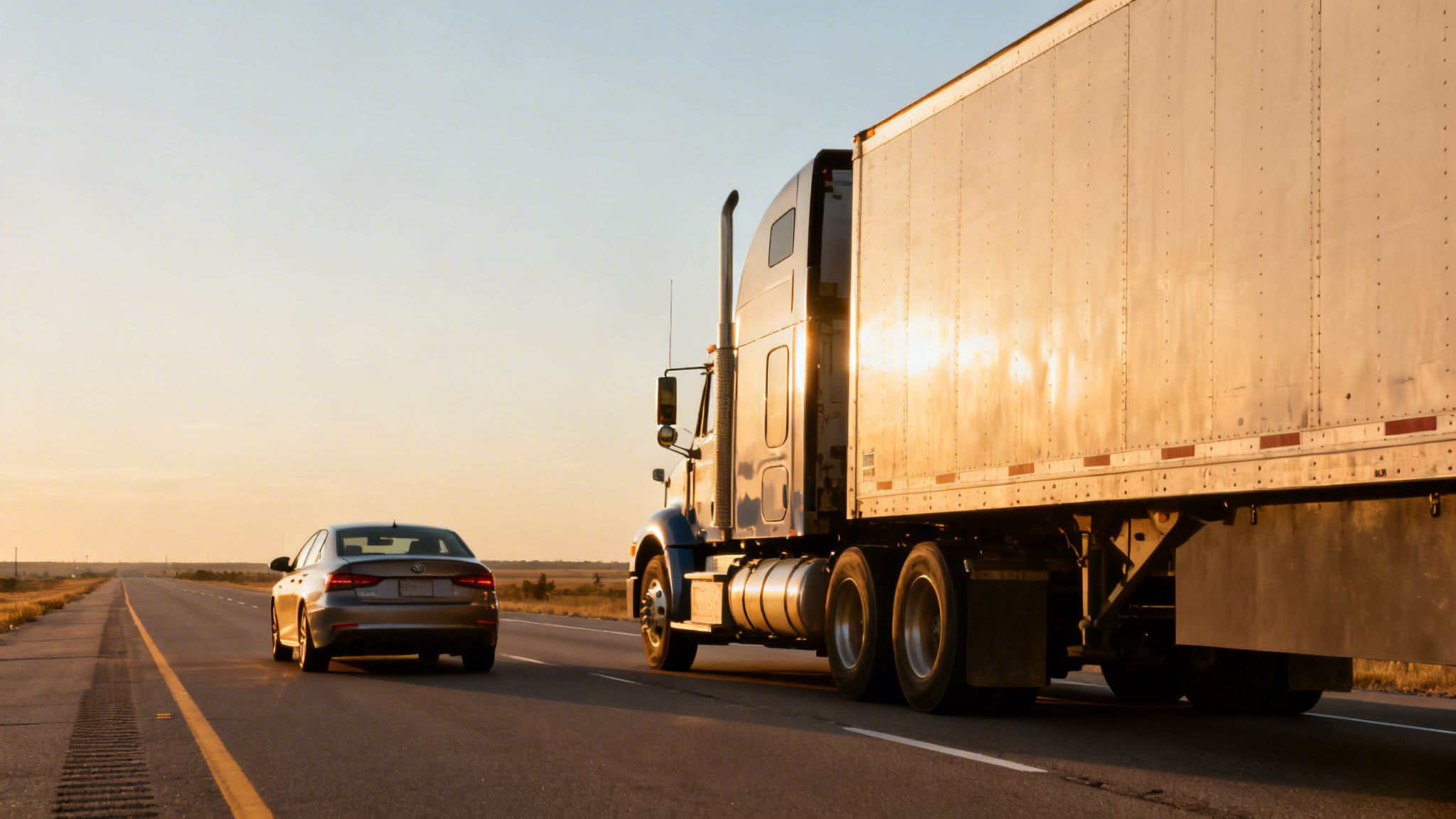
It all comes down to simple physics. A heavy vehicle moving at speed builds up an incredible amount of momentum. It takes much longer to stop and hits with exponentially more force. That’s why a minor collision with another sedan can be a fender-bender, but the same crash with a loaded commercial truck can be a life-altering tragedy.
How Weight Establishes Negligence
The moment a truck's weight crosses a certain threshold, its legal status changes. When the Gross Vehicle Weight (GVW) goes above state or federal limits, it is officially a commercial motor vehicle. This means the driver and their company are held to a much higher standard of care, including strict safety rules from the Federal Motor Carrier Safety Administration (FMCSA).
If the truck that hit you was overloaded beyond its Gross Vehicle Weight Rating (GVWR), that’s a game-changer for your case. An overloaded truck is fundamentally unsafe. It’s harder to steer, harder to brake, and more likely to lose control. Proving the truck was operating over its legal weight limit is powerful proof of negligence and can become the foundation of a successful Texas truck accident claim.
The Growing Danger of Heavier Vehicles
This problem isn't limited to 18-wheelers. Everyday passenger vehicles are getting bigger and heavier, making our roads more dangerous.
For example, a Houston driver rear-ended on I-45 by a new-model pickup truck may suffer severe injuries. The impact feels far worse than you’d expect, and there’s a reason for that. Many of today’s pickups are 25% heavier than the same models from just two decades ago. In 2021, the average weight of a new vehicle sold in the U.S. was nearly 4,300 pounds, and this upward trend makes every collision more violent.
A vehicle that is just 13% heavier carries 13% more momentum. That extra force is what turns a simple rear-end bump on a San Antonio freeway into a case of severe whiplash or a traumatic brain injury.
This is why understanding gross vehicle weight is so important, no matter what kind of vehicle caused your crash.
Connecting Weight to Your Damages
Because wrecks involving heavier vehicles cause more severe injuries, they also lead to much higher damages—the legal term for the financial compensation you can recover for your losses. This includes money for:
- Medical Bills: From the ambulance and emergency room to surgeries, physical therapy, and any future care you might need.
- Lost Wages: For all the income you lost while out of work and for any diminished earning capacity in the future.
- Pain and Suffering: For the physical pain, emotional trauma, and loss of quality of life the accident caused you and your family. If a loved one was killed, you may be able to seek wrongful death compensation.
When we can prove that a truck’s excessive weight played a role in the crash, it builds a powerful argument for the maximum compensation you need to cover these staggering costs. A skilled Houston car accident lawyer will dig for the evidence—inspecting logbooks, weight receipts, and the truck itself—to build an undeniable case that holds the negligent driver and their company fully accountable.
Proving Negligence with Gross Vehicle Weight Evidence
After a truck crash, proving the other driver or their company was at fault is everything. This is the foundation of your entire injury claim. In a complex truck accident case, having an experienced Houston lawyer who understands the industry makes all the difference. At The Law Office of Bryan Fagan, PLLC, we know exactly how to use a truck's weight against the company to build a powerful case for negligence.
Our investigation starts the second you hire us. We move fast to preserve the critical evidence that trucking companies often try to "lose" or destroy. This goes far beyond simply getting a police report; we launch a full-scale dive into the trucking company's operations and records.
Building Your Case with Hard Evidence
An overloaded truck is a giant red flag that the company chose to chase profits at the expense of public safety. Our legal team uses specific legal tools to cut through the excuses and establish liability—the legal term for who is at fault.
Here’s the kind of evidence we immediately go after to prove a gross vehicle weight violation:
- The Truck’s "Black Box": We move to secure data from the truck's Electronic Data Recorder (EDR). This device gives us a second-by-second account of the truck’s speed, braking, and other critical data right before impact.
- Weigh Station Records: These official logs are gold. They show the truck’s documented weight at different points on its route. Any discrepancies can be damning evidence.
- Bills of Lading and Fuel Receipts: These documents create a paper trail. They detail the cargo’s weight and map out the truck’s journey, which helps us calculate its true weight at the time of the wreck.
- Driver Logs and Company Records: We subpoena and scrutinize these records for any signs of pressure from the company to overload trucks, falsify logs, or cut corners on safety.
This mountain of evidence is how we prove the trucking company was negligent. Under Texas's comparative fault rules (Texas Civil Practice & Remedies Code, Chapter 33), this is essential. To recover any money for your injuries, you must prove the other party was more than 50% at fault. Showing a commercial truck was illegally overloaded can decisively shift that blame onto the trucking company.
Holding All Negligent Parties Accountable
When a truck is overweight, the driver isn't always the only one to blame. The trucking company—and sometimes even the cargo shipper—can be held directly liable. Understanding strict federal guidelines, like the FMCSA insurance requirements, is pivotal in establishing liability and ensuring your claim is valued correctly when a crash involves weight violations.
For example, imagine a commercial truck on I-45 in Houston is found to be 5,000 pounds over its GVWR after causing a multi-car pileup. By obtaining the bill of lading and weigh station records, your attorney can prove the company knew it was dispatching an unsafe, overloaded vehicle. This is the exact type of hard evidence needed to hold them financially accountable for your damages—your medical bills, lost wages, and pain and suffering. After an accident, it is vital to know how to get a copy of your Houston police accident report as it contains the initial details that guide our investigation.
Common Scenarios Involving Overweight Vehicles in Texas
The laws dictating a truck's gross vehicle weight aren't just technical details—they're safety rules meant to protect you. When a trucking company or driver prioritizes profits over your safety by overloading a rig, they're putting a dangerously unpredictable weapon on the road.
These aren't rare occurrences. They happen every day on Texas roads. Understanding how these situations unfold can help you recognize when a truck’s weight may have been the real cause of your crash.
Catastrophic Equipment Failure
It’s a scene that plays out far too often on busy Dallas-Fort Worth freeways like I-35. An 18-wheeler, secretly overloaded by thousands of pounds, is barreling down the highway. Every component of that truck—its brakes, tires, and suspension—is groaning under a strain it was never designed to handle.
Suddenly, traffic slows. The driver stomps on the brakes, but they're overheated. The pads and rotors, pushed past their limits by the excess weight, simply give out. The truck becomes an 80,000-pound battering ram that plows into the cars ahead. In a case like this, proving the truck was illegally overweight is direct evidence of negligence. It shows the company put a vehicle on the road that was physically incapable of stopping safely.
The extra weight on an overloaded truck significantly increases the distance it needs to come to a complete stop. This is a critical factor our legal team investigates to establish liability in highway pileups.
High-Impact Intersection Crashes
Think about the commercial delivery vans you see rushing through Houston neighborhoods. A driver, running late, has his van loaded far beyond its Gross Vehicle Weight Rating (GVWR). He approaches an intersection and the light turns red. He hits the brakes, but the overloaded chassis pushes forward, its momentum too great to overcome. The van sails through the red light and T-bones a family’s car. By getting the van’s weight records, a skilled Texas injury attorney can connect the dots from the company's pressure for speed to the overloaded van that couldn't stop in time.
Disproportionate Damage from Heavier Pickups
The physics of vehicle weight don’t just apply to commercial trucks. We see the dangerous effects in everyday accidents involving popular consumer vehicles. Picture a modern, heavy-duty pickup truck rear-ending a small sedan in San Antonio traffic. Because new trucks are so much heavier than the cars they share the road with, the force of the collision is devastating for the smaller vehicle.
The sedan’s occupants might suffer severe whiplash and back injuries, while the truck driver walks away with a dented bumper. While the pickup isn’t a commercial rig, its high gross vehicle weight is a crucial factor in explaining the severity of the crash and the extent of your damages. It becomes a key piece of evidence that justifies your need for significant compensation in your auto insurance claim.
Steps to Take After an Accident with a Heavy Vehicle
The moments after a crash with a large truck are chaotic and disorienting. What you do next is absolutely critical, both for your physical safety and for protecting your legal rights.
Your first priority is always your safety. If you are able to, move your vehicle to a safe spot away from traffic and check on anyone else involved.
Immediate Steps to Protect Your Rights
Once you're out of harm's way, it’s time to start gathering the information that will become the foundation of your personal injury claim. Every detail matters, especially when a commercial vehicle is involved.
Here is a practical, step-by-step guide on what to do right after the crash:
- Call 911. This is non-negotiable. A police report creates an official, unbiased record of the accident, which is vital for proving what happened.
- Seek Medical Attention. Even if you feel okay, you must see a doctor. Adrenaline can easily mask serious injuries like whiplash or internal bleeding. A medical record creates a direct link between your injuries and the crash itself, which is crucial for your claim.
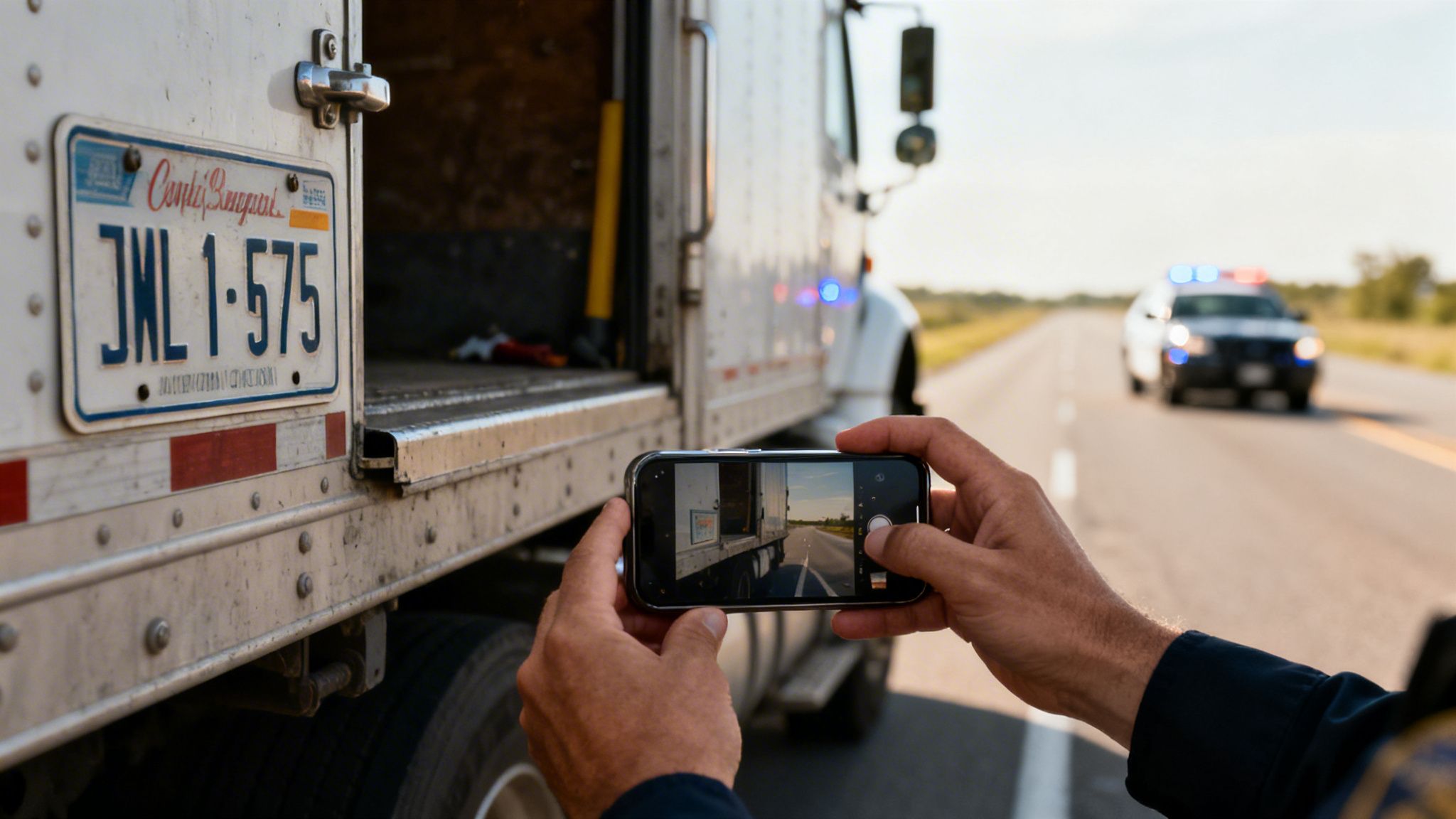
- Document Everything. If you can, use your phone to take pictures of the entire scene. Get photos of the damage to all vehicles, the road conditions, any visible injuries, and the truck's license plate and DOT number. Crucially, try to photograph the gross vehicle weight sticker, which is usually inside the driver's side door jamb.
- Gather Information. Exchange insurance and contact details with the truck driver. Be sure to get the names and phone numbers of any witnesses who saw what happened.
Why You Need a Lawyer Right Away
You can be sure the trucking company’s insurance adjuster will be calling you. It is essential that you do not speak with them or sign any documents before you have consulted a Texas injury attorney. Their only job is to minimize their company's payout, not to make sure you're taken care of.
In Texas, the statute of limitations—the legal deadline to file a lawsuit—is generally two years from the date of the accident for personal injury claims. But critical evidence like a truck's weight records or the driver's logs can be legally destroyed by the trucking company in just weeks.
Contacting an attorney as soon as possible is the single most important step you can take. A lawyer can immediately send a legal demand that forces the trucking company to preserve all evidence, including crucial data about the truck’s gross vehicle weight. This one move can make or break your case, protecting your right to seek full and fair compensation.
Frequently Asked Questions About Gross Vehicle Weight
When you're recovering from a crash involving a heavy vehicle, the legal questions can feel overwhelming. Here are plain-English answers to common concerns about vehicle weight and how it directly impacts your case.
How Can I Prove a Truck Was Overloaded in My Accident?
Proving a truck was dangerously overloaded requires immediate action by a skilled legal team. Trucking companies and their insurers will not voluntarily hand over evidence that proves their own negligence.
An experienced truck accident attorney knows exactly what to demand. Using legal tools like subpoenas, we can force them to produce critical documents, including:
- Weigh station logs that show the truck’s recorded weight along its route.
- The bill of lading, which is the receipt for the cargo and details its precise weight.
- Data from the truck's "black box," or Electronic Data Recorder (EDR).
- The driver’s hours-of-service logs and even their fuel receipts.
When we compare this data to the truck’s official Gross Vehicle Weight Rating (GVWR), we can build an undeniable case that a dangerous weight violation occurred and caused your injuries.
Does Gross Vehicle Weight Matter if I Was Hit by a Pickup?
Yes, absolutely. While a pickup truck isn't an 80,000-pound semi-truck, its weight is a huge factor in an accident claim, especially with today's models.
Newer heavy-duty pickups and large SUVs are far heavier than the vehicles of a decade ago. That extra mass dramatically increases the force of impact in a collision. This fact helps explain why your injuries might be so severe and is essential for proving the full extent of your damages to the insurance company.
What Damages Can I Claim if an Overweight Truck Hit Me?
If you were injured by a negligent driver in an overloaded vehicle, Texas law gives you the right to demand compensation for all of your losses. These damages fall into two main categories.
Economic Damages: This is compensation for every financial loss that has a clear dollar amount. It includes past and future medical bills, lost income from being unable to work, and the cost to repair or replace your vehicle.
Non-Economic Damages: This compensates you for the immense human cost of the crash. It covers your physical pain and suffering, emotional distress, mental anguish, and any permanent impairment or disfigurement. If you tragically lost a family member, you may also be entitled to wrongful death compensation.
Proving the truck was overloaded is powerful evidence that strengthens your claim and helps you secure the maximum compensation you deserve under Texas law (specifically Chapter 41 of the Texas Civil Practice & Remedies Code).
The aftermath of a serious truck accident is confusing and stressful, but you don't have to navigate it alone. The legal system is complex, and trucking companies have powerful insurance teams whose only job is to protect their bottom line. An experienced Houston car accident lawyer can level the playing field, fight for your rights, and make sure you are treated fairly.
Contact The Law Office of Bryan Fagan, PLLC today for a free, no-obligation consultation to discuss your case. We’ll listen to your story with compassion, explain your rights in plain English, and show you how we can help you on the road to recovery. Visit us at https://houstonaccidentlawyers.net.