A car crash can change your life in seconds — but you don’t have to face recovery alone. When another driver's carelessness leaves you with a wrecked vehicle and a mountain of questions, the path forward can seem overwhelming. This guide is here to give you clear, straightforward answers about your rights and what comes next.
We’ll start by explaining what property damage liability (PDL) coverage is in plain English. Think of it as the insurance the at-fault driver is required to have to pay for repairs to your car and anything else of yours they damaged. Understanding this coverage is the first step toward putting the pieces back together, and we’re here to walk you through it.
Understanding Property Damage Liability Coverage in Texas
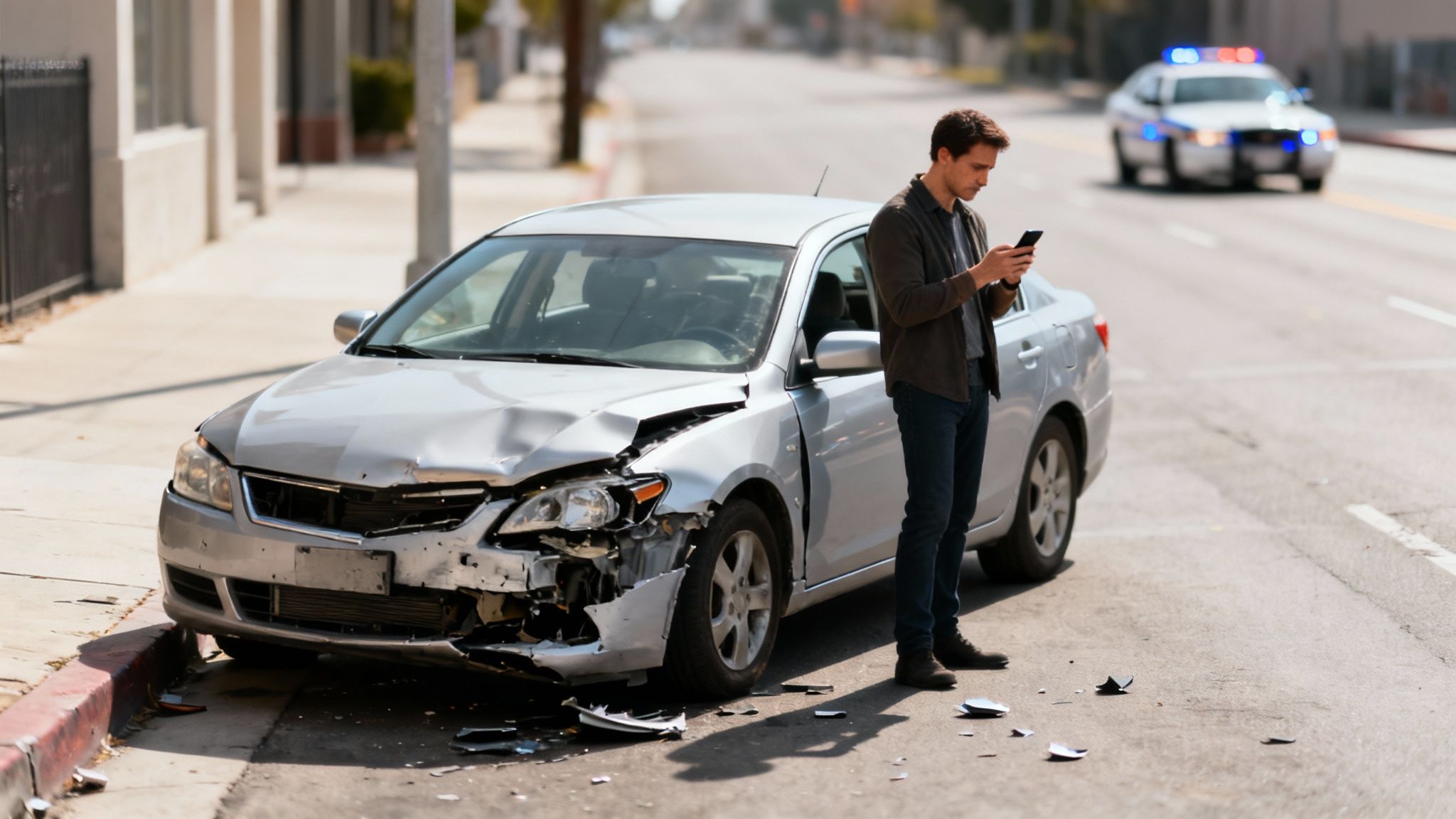
When another driver’s mistake leaves your car crumpled and your life in disarray, their insurance is supposed to make things right. In Texas, every driver is legally required to carry insurance to cover the damage they cause. This is where property damage liability coverage comes into the picture.
Simply put, PDL is the part of the at-fault driver’s auto insurance that pays to fix or replace the property you own that they damaged. It’s mandatory in Texas for a good reason—it protects innocent victims like you from having to pay out-of-pocket for someone else’s negligence.
What Does PDL Cover?
This coverage isn't just for your car. It applies to a wide range of your property. For example, let's say a Houston driver rear-ended you on I-45, pushing your car through a fence in your front yard. Their PDL coverage should pay for:
- Repairs to your vehicle: This covers everything from a simple dented bumper to the full value if your car is declared a total loss.
- Damage to other property: This could be your broken fence, a flattened mailbox, a laptop that was in the trunk, or even damage to a building.
It’s critical to remember that the other driver's PDL coverage is there to help you. It pays for your damages, not theirs. That’s why liability is the key word—it covers the financial obligations they are now responsible for after causing the wreck.
To make it even clearer, here's a quick breakdown of how property damage liability fits in with other common coverages.
What Property Damage Liability Covers at a Glance
| Coverage Type | What It Covers For You | What It Covers For Others |
|---|---|---|
| Property Damage Liability | Nothing. This coverage does not pay for your own property damage. | Repairs to their vehicle and other damaged property (fences, mailboxes, etc.). |
| Collision Coverage | Repairs to your own vehicle after an accident, regardless of who is at fault. | Nothing. |
| Bodily Injury Liability | Nothing. This does not cover your own medical bills. | Medical bills, lost wages, and pain and suffering for people they injure. |
This table shows how different policies work together. The at-fault driver's liability insurance is your first line of financial recovery after a crash.
What It Doesn't Cover
It’s just as important to know what PDL won't pay for. The at-fault driver’s property damage liability coverage will not touch your medical bills or lost wages.
Those losses—known as damages in legal terms—are handled by a completely separate part of their insurance called bodily injury liability coverage. A skilled Houston car accident lawyer can help you pursue claims under both coverages to make sure every single one of your losses is accounted for.
Why Texas Minimum Coverage Is Often Not Enough
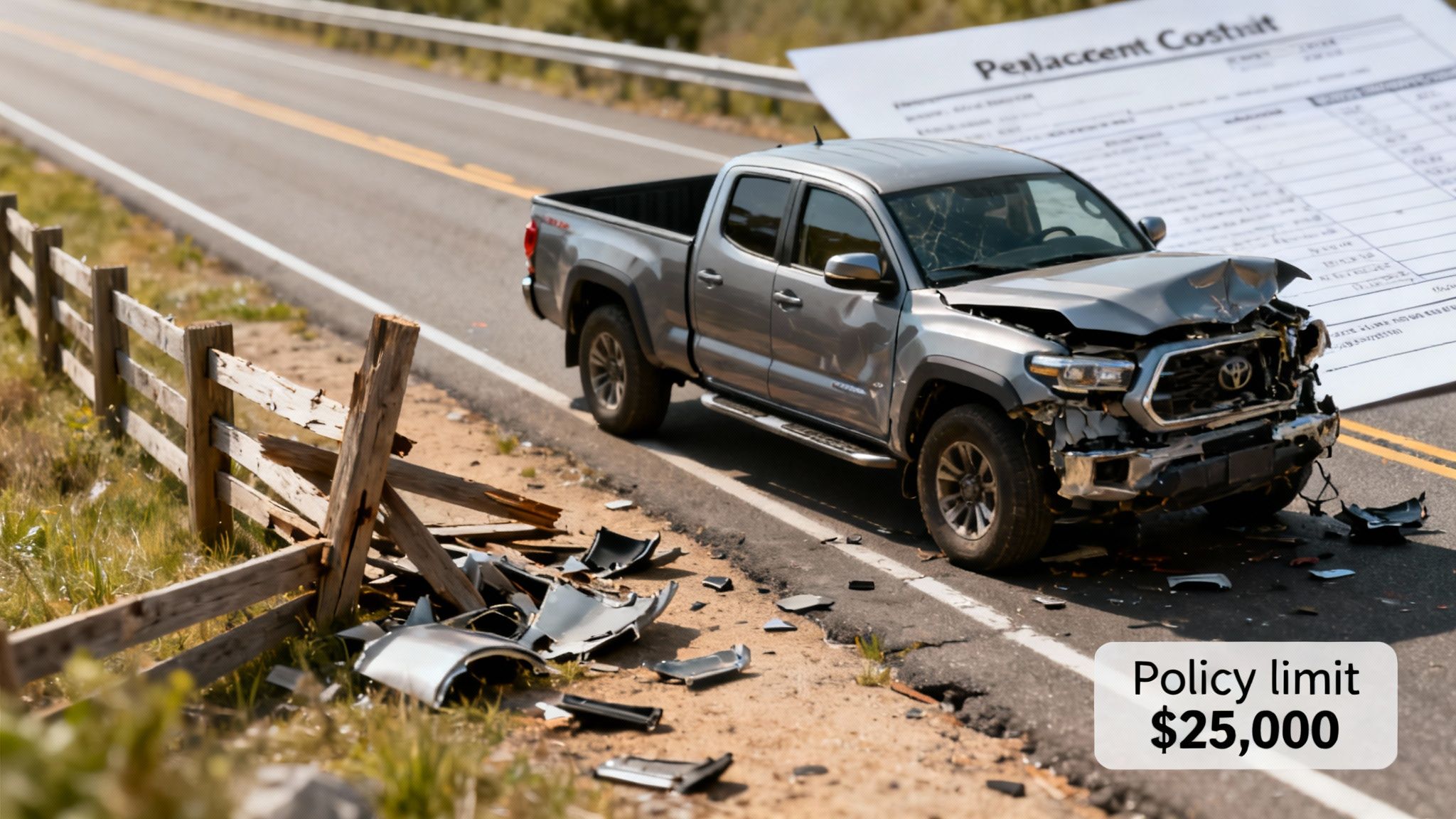
Here in Texas, every driver is legally required to carry a basic liability insurance policy, often called a "30/60/25" plan. That last number—$25,000—is the maximum amount an at-fault driver's insurance will pay for property damage they cause. On paper, $25,000 might seem like a lot of money.
In the real world, it can disappear in an instant.
Imagine you're driving your new SUV down the Gulf Freeway, and another driver slams into you, totaling your vehicle. With the average price of a new car soaring past $40,000, that driver's $25,000 policy doesn't even come close to covering your loss. You are left on the hook for the remaining $15,000 or more, all because of someone else's mistake.
The Dangers Of Minimum Limits
This isn't just bad luck; it's a dangerous gap between what Texas law requires and what accidents actually cost. The reality is that state-mandated minimums haven’t kept pace with the climbing price of modern vehicles and the high-tech, expensive repairs they require.
The entire point of property damage liability coverage is to make you whole again. When the at-fault driver's policy is too low, you are left carrying the financial burden of their mistake—the very thing the law is supposed to prevent.
This problem is a serious concern for families across the state. In a multi-car pile-up, which is common on busy Houston highways, a single driver with minimum coverage can cause tens of thousands of dollars in damage, far exceeding their policy limits and leaving multiple victims with no clear path to getting their vehicles fixed.
What Happens When The Costs Exceed The Coverage?
When the at-fault driver's insurance runs out, you have options, but they aren't always easy. If you carry collision coverage on your own policy, you can use it to cover the repairs, though you'll have to pay your deductible first. Your other main option is to file a lawsuit directly against the negligent driver to recover the difference.
This is where having an experienced Houston car accident lawyer in your corner becomes critical. An attorney can dig into the details of the accident and help you explore every available avenue for recovering the full amount you're owed. We know how to navigate the complexities of your auto insurance claim and can map out the best next steps. For a deeper dive, read our guide on understanding insurance policy limits after a car accident in Texas.
We will fight to make sure you don't end up paying for a crash you didn't cause.
Who Is Liable in a Texas Car Accident?
Knowing what insurance should cover is only half the battle. The other crucial piece is figuring out how Texas law decides who was at fault for the crash in the first place. This is where the legal concept of liability—a plain-English term for legal responsibility or fault—comes into play. In Texas, your right to get paid for your damaged property depends entirely on proving the other driver was negligent.
Negligence simply means someone failed to act with reasonable care, like a driver who was texting instead of watching the road. To get your property damage claim paid, you have to show that their carelessness was the direct cause of the crash. It sounds simple, but insurance companies often try to shift the blame onto you to avoid paying. That’s why understanding Texas fault laws is so critical for protecting your rights.
The 51% Fault Rule: A Game-Changer in Texas
Texas operates under a rule called modified comparative fault, also known as proportionate responsibility. You can find it in Chapter 33 of the Texas Civil Practice & Remedies Code, and it has a massive impact on whether you can recover money for your damaged vehicle.
Here’s what it means for you:
- The 51% Bar: You can only receive compensation if you are found to be 50% or less at fault for the accident. If a jury decides you were 51% or more to blame, you get nothing.
- Reduced Payout: Your compensation is reduced by your percentage of fault. If you're found even a little bit to blame, you won't get the full amount.
This rule is a powerful tool for insurance adjusters. They know that every single percentage point of fault they can pin on you directly reduces how much they have to pay.
Imagine a driver in San Antonio makes an unsafe lane change and smashes into your car, causing $20,000 in damage. The other driver’s insurance adjuster might claim you were going just a few miles over the speed limit. They’ll use that to assign you 10% of the fault. Under Texas's comparative fault rule, your $20,000 award would be slashed by that 10% ($2,000), leaving you with only $18,000 for repairs.
This isn't just a hypothetical situation; it's a standard tactic used every day to undervalue claims. An insurer will seize on any excuse to push some of the responsibility back on you.
Having a skilled Houston car accident lawyer in your corner is your best defense against these unfair blame games. We go to work gathering all the evidence—police reports, witness statements, accident reconstruction data—to build a powerful case showing the other driver was at fault. Our job is to protect your rights and fight for the full compensation you deserve.
Steps to File an Insurance Claim in Texas
What you do in the moments after a car crash can make or break your property damage claim. The evidence you gather and the steps you take lay the groundwork for holding the other driver financially accountable. Protecting your rights starts right at the scene.
Your first move should be to document everything. Use your phone to take pictures and videos of the damage to both vehicles, their positions, and the surrounding area. Get shots of skid marks, traffic signs, and anything else that helps tell the story of what happened. You should also obtain a copy of the official police report; it’s a critical piece of evidence. You can learn more in our guide on how to report a car accident.
Practical Steps for a Successful Claim
- Report the Crash: Notify your own insurance company, even if you weren't at fault. Then, you must file a claim with the at-fault driver's insurer. This activates their property damage liability coverage to pay for your repairs.
- Get Independent Estimates: Get repair estimates from a body shop that you trust. Don’t just go with the insurance company's "preferred" shop. Their preferred vendors often have the insurer's best interests in mind, which can mean cutting corners to save money. An independent mechanic works for you.
- Be Careful with Adjusters: Avoid giving a recorded statement to any insurance adjuster without talking to an attorney first. Adjusters are trained to ask tricky questions designed to get you to accidentally admit some fault. They will use your own words against you to reduce your payout under Texas's comparative fault rules.
Protecting your claim is crucial. How much fault they pin on you directly cuts down the money you can recover for your damages.

As you can see, if you're found to be 50% or less at fault, your final award gets reduced by that exact percentage. Every detail in your claim truly matters. With parts and labor costs soaring, you must be meticulous to ensure you get what you're owed to get your vehicle back on the road.
When You Need A Houston Car Accident Lawyer
While some simple property damage claims are resolved easily, many turn into a frustrating fight you shouldn't have to wage alone. If the at-fault driver's insurance company is refusing to do the right thing, it’s time to call in a professional.
You need a lawyer on your side the moment an insurer denies liability, gives you a lowball settlement offer that won't cover your repairs, or tries to pin the blame on you. These are classic tactics adjusters use to protect their profits—and they always come at your expense.
How a Texas Injury Attorney Can Help
A Houston car accident lawyer becomes absolutely essential when the challenges get more complex. What if the driver who hit you has no insurance at all? Or what if their policy limits are too low to cover the damage to your vehicle? An experienced attorney knows how to uncover other paths to compensation you might not even know exist.
For instance, your own policy likely has uninsured/underinsured motorist (UM/UIM) coverage that can step in and bridge the gap. We can help you navigate that often-confusing claims process and deal with the insurance companies for you.
You don't have to take on a powerful insurance company by yourself. Having a skilled advocate levels the playing field and sends a clear message that you will not be pushed around or shortchanged.
Your focus should be on getting your vehicle fixed and putting this stressful event behind you. Let us handle the legal battle. The Law Office of Bryan Fagan, PLLC is here to fight for the full and fair compensation you are owed, whether it's for property damage, medical bills, or wrongful death compensation for a lost loved one.
Contact us today for a free, no-obligation consultation to go over your case and understand your rights.
Your Questions About Property Damage Claims Answered
When you're trying to get your life back together after a wreck, the last thing you need is a confusing insurance process. Here are some straightforward answers to the questions we hear most often from accident victims dealing with property damage claims in Texas.
What If The Other Driver's Insurance Isn't Enough To Cover My Repairs?
This happens more often than you'd think, especially since Texas only requires drivers to carry a bare-minimum amount of coverage. If the at-fault driver's property damage liability runs out before your car is fixed, you still have options.
First, you can turn to your own policy and use your collision coverage, if you have it. You'll have to pay your deductible, but then your insurance company will step in and fight to get that money back from the at-fault driver and their insurer.
The other option is to file a lawsuit directly against the driver who caused the crash to cover the remaining repair costs. A Houston car accident lawyer can help you figure out which strategy gives you the best chance at getting the compensation you need.
Does The Insurance Company Get To Pick My Repair Shop?
Absolutely not. In Texas, the law is clear: you have the right to take your vehicle to any repair shop you choose. The other driver's insurance adjuster might push you toward one of their "preferred" shops, but you are under no obligation to go there.
Always get an estimate from a mechanic you know and trust. An independent body shop is working for you, not the insurance company. They're far more likely to give you an honest, thorough assessment of what it will really take to get your car back on the road safely.
How Long Do I Have To File A Property Damage Claim In Texas?
The official deadline, known as the statute of limitations, gives you two years from the date of the accident to file a lawsuit for property damage in Texas. But you should never wait that long.
Statute of Limitations: This is the legal time limit to file a lawsuit. In Texas, for most personal injury and property damage cases, it is two years.
It's absolutely critical to report the crash and start the insurance claim as soon as possible. Moving quickly helps preserve evidence, puts you in a much stronger negotiating position, and makes sure you don’t accidentally miss a key deadline. If you wait, you risk losing your right to recover the money you deserve.
Dealing with insurance companies and repair shops after an accident can feel like a full-time job. You don't have to handle it alone. For a free, confidential consultation to discuss your case, contact the experienced Houston personal injury attorneys at The Law Office of Bryan Fagan, PLLC today. Let us fight to get you the full compensation you are owed. https://houstonaccidentlawyers.net