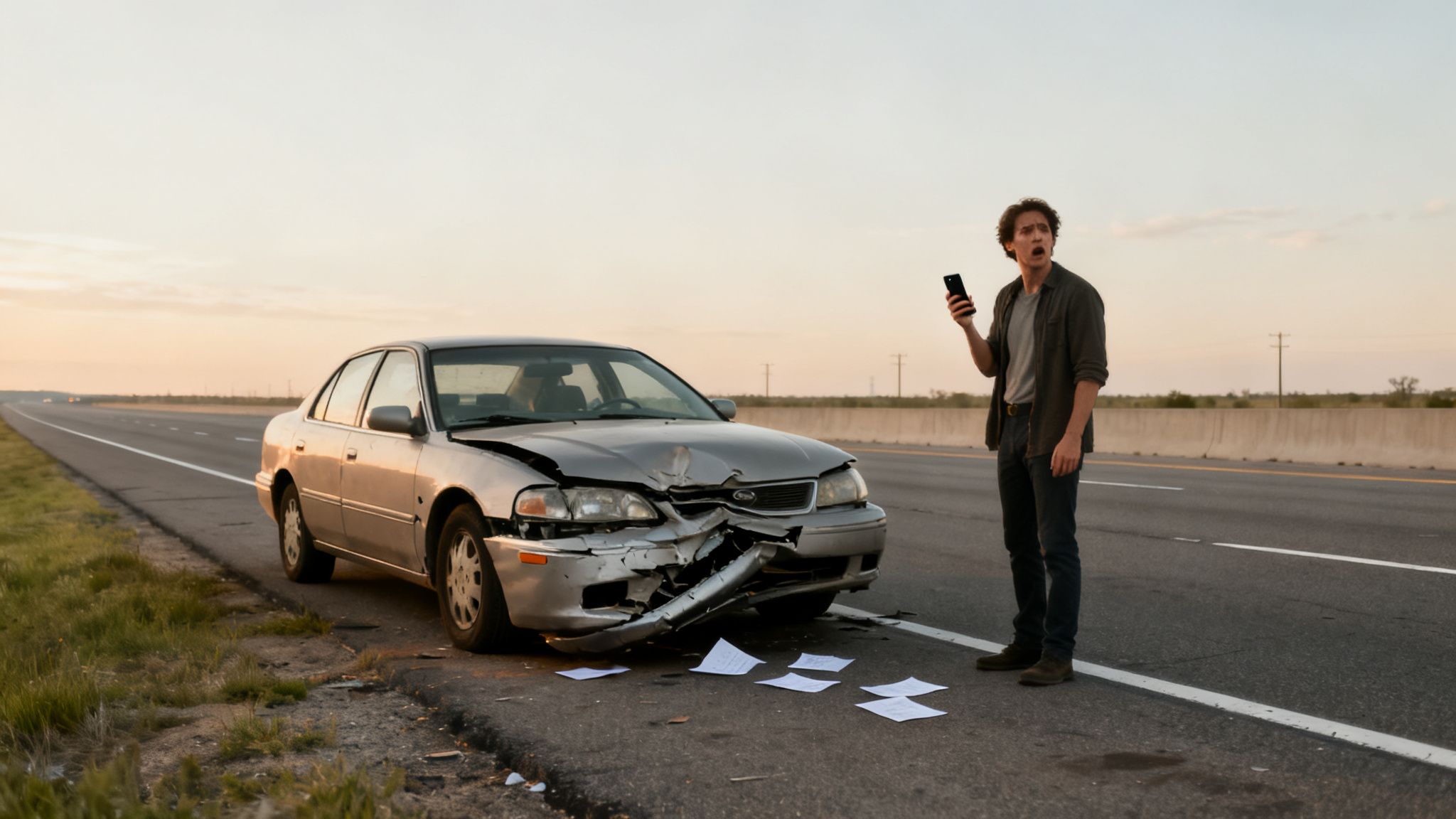
A car crash can change your life in seconds—but you don’t have to face recovery alone. When you learn the other driver was on their phone, the shock and pain are mixed with a deep sense of injustice. Under cell phone driving laws in Texas, that driver didn't just make a mistake—they broke the law, and their reckless choice is the direct cause of your injuries.
Your Life Upended by a Distracted Driver: What Comes Next
One moment, you are driving. The next, you are surrounded by the chaos of a car accident. If this is where you find yourself, this guide is for you. We created it to be a clear, straightforward map to help you understand your rights and take the first critical steps toward recovery after being hit by a distracted driver.
We will explain exactly how the state's strict cell phone laws directly strengthen your personal injury case. More importantly, we will show you how to hold the responsible driver accountable. You do not have to go through this alone.
Your Path to Justice Begins with Understanding Your Rights
Getting justice starts with knowing the law is on your side. In Texas, a driver who causes a crash while texting or using their phone illegally is considered negligent. This fact becomes the foundation of your claim for compensation.
Here’s a breakdown of what that really means for you in plain English:
- Liability: This means the distracted driver is legally and financially responsible for the harm they caused. Their violation of traffic safety laws is powerful evidence of their fault.
- Damages: You have the right to seek financial recovery for everything you have lost. This includes medical bills and car repairs, but it also covers lost wages from time off work and even compensation for your physical pain and emotional suffering.
- Statute of Limitations: This is the legal deadline for filing a lawsuit. In Texas, you generally have only two years from the date of the accident to file a personal injury claim. Acting quickly is crucial to protect your rights.
You don't have to navigate this complicated process by yourself. We have seen firsthand the lifelong consequences of distracted driving and are here to help you put the pieces back together.
At The Law Office of Bryan Fagan, PLLC, our compassionate Houston car accident lawyers are dedicated to ensuring victims like you get the support and compensation they rightfully deserve. Your first step is to simply understand your rights, and we are here to guide you every step of the way.
How the Texas Texting Ban Proves Liability
When a driver staring at their phone crashes into you, their choice is not just irresponsible—it's illegal. The core of your personal injury claim starts with a crucial piece of legislation: Texas House Bill 62. This is the law that banned texting while driving across the entire state, and it’s a powerful tool for proving the other driver was at fault.
This statewide ban makes it illegal for any driver to use a phone or similar device to read, write, or send an electronic message while their vehicle is moving. This covers everything from texts and emails to social media updates. Proving the other driver broke this law is a critical first step in establishing their liability—their legal and financial responsibility for the harm they caused you.
What Exactly Does the Law Prohibit?
The law’s language is specific, targeting the actions that pull a driver's eyes and mind away from the road. The term "electronic message" is defined broadly to include nearly every form of modern communication. For example, imagine a Houston driver rear-ended on I-45 because the other driver glanced down to check a Facebook notification. That driver has broken this law. Their illegal act is the direct cause of your injuries and strengthens your case for compensation.
That violation becomes powerful evidence. It clearly shows the driver failed in their most basic duty to operate their vehicle safely. While they might face a ticket and fines, that is separate from the compensation you are owed for your injuries. The violation itself, however, is a key piece of your claim.
A Law Born from Tragedy
It was countless tragedies caused by distracted drivers that finally pushed Texas lawmakers to take action. On June 6, 2017, Governor Greg Abbott signed House Bill 62 into law, making it a statewide misdemeanor to text and drive.
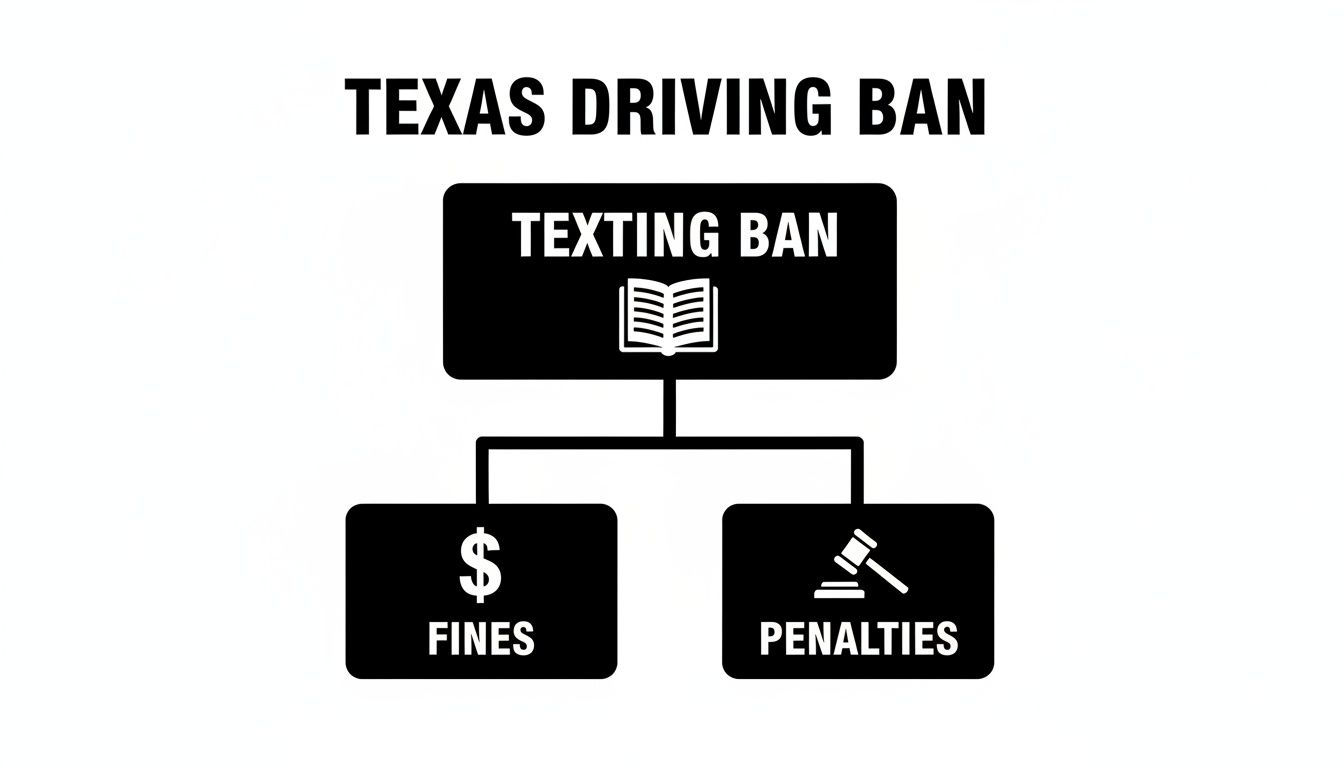
The ban officially took effect on September 1, 2017. Fines start at $25-$99 for a first offense and jump to $100-$200 for repeat offenders. You can review the details of how Texas cell phone laws were enacted on sutliffstout.com.
When a driver violates a traffic safety law like the texting ban, it often creates a clear path to proving negligence. This legal concept, known as negligence per se, means the driver's actions are considered automatically negligent because they broke a law designed to prevent the exact type of harm you suffered.
How This Ban Strengthens Your Claim
The existence of this law makes proving fault in your car accident case much more straightforward. Before the statewide ban, showing a driver was distracted was a tougher battle. Now, a skilled Houston car accident lawyer has several tools to prove the other driver was texting:
- Police Reports: The investigating officer might note their suspicion of cell phone use in the accident report or even issue a citation for violating the texting ban.
- Witness Statements: Other drivers or pedestrians who saw the crash may have noticed the at-fault driver looking down at their phone.
- Cell Phone Records: This is often the most powerful tool. Through the legal process, your attorney can subpoena the other driver's cell phone records. These records show the exact time of texts, calls, and data usage, creating a timeline that proves they were distracted at the moment of impact.
This evidence builds a solid case demonstrating a clear breach of the driver's duty of care. When you've been injured, understanding how cell phone driving laws in Texas work in your favor is the first step toward securing the justice and compensation you deserve.
When The Cell Phone Rules Get Even Stricter
The statewide texting ban is the minimum standard for driver safety in Texas. The law recognizes that some situations are too risky for any level of distraction. For certain drivers and in sensitive areas like school zones, the rules become much tougher.
Understanding these stricter laws is especially important if your accident involved a young driver or happened near a school. When a driver breaks one of these specific rules, their negligence becomes much easier to prove, which strengthens your path to fair compensation.
Heightened Rules for Young Drivers
For any driver under the age of 18, the law is simple and absolute: all use of a wireless communication device is illegal while driving.
This is a total ban. A teen driver cannot legally send a text, make a handheld call, or use a hands-free device. It does not matter if the car is moving or stopped at a red light—the ban is always in effect. The reason is that young drivers are already at a much higher risk for a crash due to inexperience. Adding a phone to the mix multiplies that danger.
If a teen driver using their phone in any way caused your crash, they broke a specific law designed to prevent that exact kind of tragedy.
Driving in a School Zone
The rules also tighten significantly in active school zones, and this time, they apply to every driver, no matter their age.
When the yellow lights on a school zone sign are flashing, it is illegal to use a handheld cell phone for any reason. This includes making or taking phone calls. The goal is to protect children when they are most vulnerable. A driver fumbling with a phone is far less likely to see a child in a crosswalk or react to a stopped school bus.
For example, if a driver is on a handheld call in a San Antonio school zone and hits a pedestrian, their violation of this specific law is powerful evidence of their negligence. They showed a blatant disregard for the extra care required in a protected area.
Texas did not create these targeted laws in a vacuum. Before the statewide ban, over 100 Texas cities had already passed their own local ordinances. Now, teens under 18 face the toughest restrictions under Transportation Code 545.424, which bans all wireless use, while school zones prohibit handheld use for everyone. You can discover more about how these safety laws evolved over time.
Special Regulations for Commercial and Bus Drivers
When you drive for a living, the rules get even heavier. Both federal and Texas laws impose strict cell phone restrictions on people operating commercial vehicles like 18-wheelers and school buses.
- Commercial Truck Drivers: Federal law forbids commercial drivers from holding, dialing, or even reaching for a handheld mobile phone while driving. A violation can lead to large fines and provides very strong grounds for a truck accident claim.
- School Bus Drivers: Anyone driving a school bus with a minor on board is completely banned from using a cell phone. This zero-tolerance policy exists to ensure their undivided attention is on protecting their young passengers.
If you were hurt in a wreck with a professional driver, proving they broke one of these rules can become the cornerstone of your case. A skilled Texas injury attorney will know to investigate logbooks, company policies, and cell phone records to establish this critical breach of duty.
To make things clearer, here’s a quick breakdown of the different rules in play across Texas.
Texas Cell Phone Driving Rules at a Glance
| Driver/Situation | Texting/Emailing | Handheld Phone Calls | Hands-Free Use |
|---|---|---|---|
| Most Adult Drivers | Banned | Permitted (unless in a school/construction zone) | Permitted |
| Drivers Under 18 | Banned | Banned | Banned |
| All Drivers in School Zones | Banned | Banned | Permitted |
| School Bus Drivers | Banned | Banned | Banned |
| Commercial Truck Drivers | Banned | Banned | Permitted (with limitations) |
As you can see, what is legal for one driver in one location can be illegal for another. Knowing these distinctions is crucial after a crash.
How a Cell Phone Violation Establishes Negligence
When a driver breaks one of the cell phone driving laws in Texas and causes a crash, it's not just a traffic ticket for them—it's the cornerstone of your personal injury claim. That violation is the key to holding the distracted driver accountable for the harm they’ve caused you.
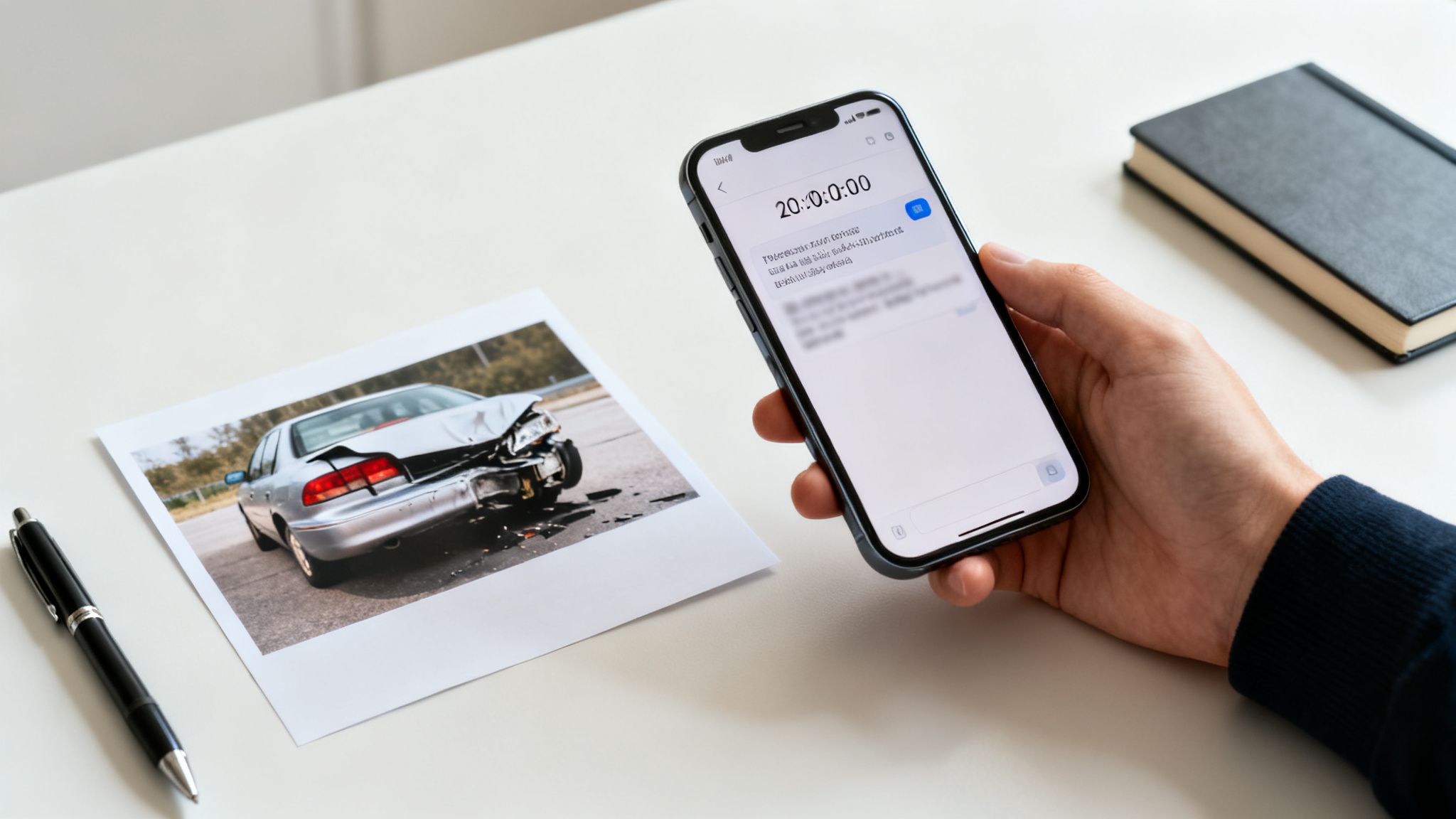
Understanding how this works legally is the first step toward getting justice. It all comes down to a legal concept called negligence.
Using the Law to Prove Fault
In Texas, every person behind the wheel has a duty to drive safely and avoid hurting others. When someone decides to text, take a handheld call in a school zone, or use their phone illegally, they have breached that duty. This failure to act with reasonable care is negligence.
Proving negligence is the foundation of any car accident claim. When the other driver was breaking a safety law, your case gets much stronger.
This is thanks to a legal shortcut known as negligence per se. In plain English, this rule says that if a driver broke a safety law (like the texting ban) and that act caused the kind of harm the law was designed to prevent (a car crash), the driver is automatically considered negligent. Their illegal act is the proof.
What does this mean for you? If you can show the other driver was texting when they slammed into your car on a Houston freeway, their negligence is essentially a given. Your focus can then shift to proving the full extent of your injuries and other damages.
Building Your Case with Strong Evidence
While the law gives you a head start, you still need solid evidence. A skilled Texas injury attorney knows exactly what to look for and how to get it. Crucial evidence in a distracted driving case often includes:
- Police Accident Report: An officer might note their suspicion of cell phone use or issue a citation at the scene.
- Witness Testimony: Other drivers or pedestrians might have seen the at-fault driver staring at their phone. Their statements can be incredibly convincing.
- The Driver’s Own Admission: Sometimes, a driver will admit to being on their phone after a crash. Any admission noted by police or witnesses is a valuable piece of the puzzle.
- Cell Phone Records: This is often the smoking gun. Your attorney can legally demand (subpoena) the other driver’s cell phone records. These records provide a precise timeline of calls, texts, and data use that can be lined up with the exact time of the crash.
In more complex cases, proving negligence might require more advanced tools. For instance, specialized forensic video analysis software can be used to examine traffic camera or dashcam footage, helping to pinpoint a driver's cell phone use. This evidence paints a clear picture of negligence for the insurance company—or a jury.
What if You Were Partially at Fault? The Texas Comparative Fault Rule
Do not be surprised if the insurance company tries to blame you. It’s a common tactic to reduce their payout. They might claim you stopped too suddenly or weren’t paying enough attention. This absolutely does not mean your case is over.
Texas operates under a modified comparative fault rule, found in Chapter 33 of the Texas Civil Practice & Remedies Code. Here’s what it means for your claim:
- You can still recover damages as long as you are found to be 50% or less to blame for the accident.
- Your total compensation is reduced by your percentage of fault. For example, if you have $100,000 in damages but are found 10% at fault, you would recover $90,000.
- If you are found to be 51% or more at fault, however, you are barred from recovering any compensation at all.
This rule makes it critical to have an experienced Houston car accident lawyer fighting for you. We work to minimize any fault wrongly assigned to you, protecting your right to the full and fair compensation you are owed. Never let an insurance adjuster convince you that you don't have a case just because they claim you share some of the blame.
What Compensation Can You Recover After the Crash?
After a crash with a distracted driver, figuring out what your claim is really worth is the first step toward putting your life back together. In legal terms, the money you can recover is called damages. It is a careful calculation of everything you've lost—and everything you stand to lose in the future—because another driver wasn't paying attention.
Imagine a Houston family whose main provider is rear-ended on the Gulf Freeway. Suddenly, they are buried under hospital bills, their car is totaled, and they are facing weeks of lost paychecks. Fighting for fair compensation is about making sure your family can survive and recover from a disaster you did not cause.
Economic Damages: The Tangible Costs
The most straightforward part of your claim covers the clear, measurable financial losses. These are the bills, receipts, and costs that have a definite price tag. A good attorney will gather every invoice and paystub to build a solid case for these expenses.
Common economic damages include:
- Medical Bills: This covers the ambulance ride, ER visits, surgeries, hospital stays, physical therapy, and prescriptions.
- Future Medical Care: If your injuries mean long-term treatment or ongoing care, the projected cost for that future treatment is included.
- Lost Wages: You have a right to be paid back for every dollar of income you lost while you were out of work recovering.
- Loss of Earning Capacity: If your injuries are permanent and stop you from returning to your old job, you can claim damages for that lost future income.
- Property Damage: This is the cost to repair or replace your vehicle and any other personal items destroyed in the crash.
Non-Economic Damages: The Human Cost
Not every loss shows up on a spreadsheet. A serious accident takes a massive emotional and physical toll, and Texas law recognizes that you deserve to be compensated for that suffering. These are called non-economic damages.
They do not have a neat price tag, but they are just as real—and often far more devastating—than the financial losses.
These damages are meant to compensate for the human impact of the crash. They address the pain, trauma, and disruption forced on your life because someone else decided their phone was more important than the road.
Examples of non-economic damages include:
- Pain and Suffering: Compensation for the physical pain and discomfort your injuries have caused.
- Mental Anguish: This covers the emotional trauma—anxiety, depression, fear, and even post-traumatic stress disorder (PTSD)—that often follows a violent wreck.
- Physical Impairment or Disfigurement: Compensation for permanent physical limitations or for scars and other visible injuries.
- Loss of Consortium: This applies if your injuries have deeply damaged your relationship with your spouse.
Learning more about how a fair auto accident settlement is put together can give you a clearer picture of what your claim is truly worth.
Punitive Damages: Punishing Extreme Recklessness
In rare cases, when the at-fault driver's actions were shockingly reckless, you might be able to seek punitive damages. These are not about paying you back for your losses. They exist to punish the wrongdoer and send a clear message that this kind of behavior will not be tolerated.
Under Chapter 41 of the Texas Civil Practice & Remedies Code, punitive damages (also called exemplary damages) are only awarded if you can prove with "clear and convincing evidence" that the harm was caused by fraud, malice, or gross negligence. A driver who knew texting was dangerous but did it anyway, causing a catastrophic injury or a wrongful death, could face these damages. An experienced Houston car accident lawyer can tell you if the facts of your case meet this high standard.
Practical Steps to Take After an Accident With a Distracted Driver
The moments after a car crash are a blur of chaos and pain. It’s hard to think straight. But what you do right after an accident involving a distracted driver can make a significant difference for your health and your ability to get fair compensation. Knowing the right steps can protect your legal rights from the very beginning.
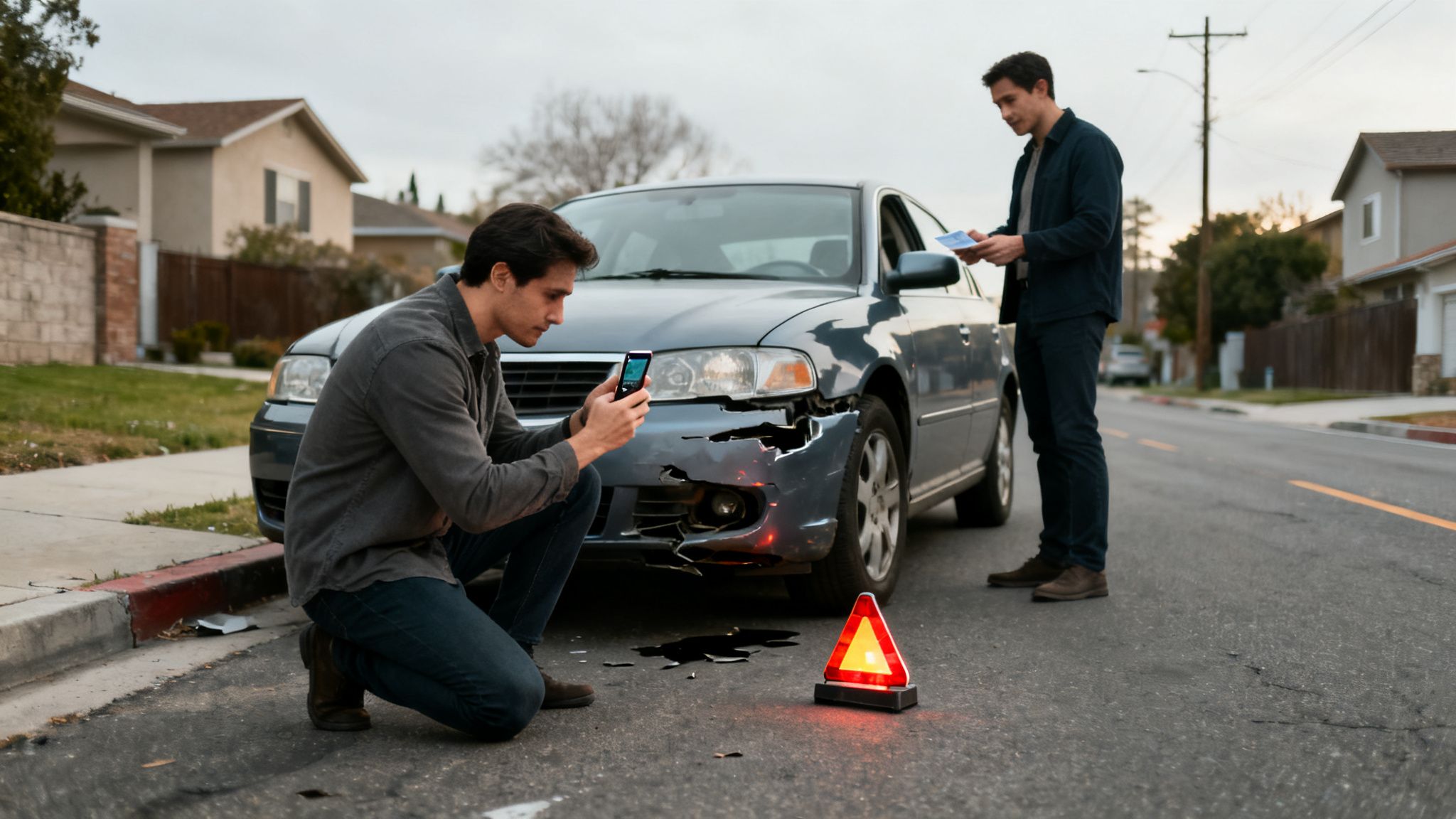
Your first priority is always your safety. If you can, move to a safe location away from traffic. Once you are out of harm's way, you can start taking these practical steps to protect your claim.
Secure the Scene and Gather Evidence
The proof you gather at the crash scene is invaluable. If you are physically able to, use your smartphone to document everything. This evidence will become the foundation of your auto insurance claim and any personal injury case you might need to file.
Here is a quick checklist of steps to file an insurance claim:
- Photos and Videos: Take pictures of both cars from every angle. Get photos of the license plates, skid marks on the road, traffic signs, and any visible injuries.
- Witness Information: If anyone saw the accident, get their name and phone number. An independent witness who can confirm the other driver was distracted is a powerful asset for your claim.
- Driver Details: Exchange insurance and contact information with the other driver. Stick to the facts and avoid apologizing or arguing about who was at fault.
- Police Report: Always call 911. A police report creates an official record of the incident. Be sure to tell the officer exactly what you saw—especially if you noticed the other driver was on their phone.
Seek Medical Attention and Report the Crash
Even if you think you feel fine, you must see a doctor as soon as possible. The adrenaline after a crash can mask serious injuries like whiplash or internal bleeding. Getting immediate medical care creates a clear link between the crash and your injuries, which is vital for your claim.
Next, report the accident to your own insurance company. Give them the basic facts, but do not give a recorded statement to the other driver’s insurance adjuster. Their goal is to find reasons to pay you as little as possible. Politely decline their request and let them know your attorney will be in touch.
In Texas, the clock starts ticking immediately. The statute of limitations for most personal injury claims is just two years from the date of the accident. If you miss this deadline, you will lose your right to seek compensation forever.
This strict time limit is why you cannot afford to wait. Evidence gets lost, memories fade, and your legal rights can expire. For a more detailed walkthrough, you can learn more about what to do after a car accident in our comprehensive guide.
The single most important step you can take is to contact an experienced Houston car accident lawyer right away. We can preserve critical evidence, take over all communication with the insurance companies, and ensure every deadline is met. This lets you focus on what truly matters: your recovery.
Common Questions About Distracted Driving Claims in Texas
When you're recovering from a car accident, you likely have many questions. The legal world can feel confusing, especially when you should be focused on healing. We’ve answered some of the most common concerns we hear from people hit by distracted drivers in Texas.
Getting clear answers can give you the confidence you need to protect your rights and get your life back on track.
Can I File a Claim if the Driver Was Using a Hands-Free Device?
Yes, you can. While cell phone driving laws in Texas allow adult drivers to use hands-free devices, that does not excuse them from causing a crash. Legal does not always mean safe.
The real issue is cognitive distraction. A driver can be staring ahead with both hands on the wheel but be so lost in a conversation that they are not truly seeing the road. An experienced Texas injury attorney knows how to investigate a crash to prove that even though the driver followed one rule, their mental distraction made them negligent and responsible for your injuries.
What if the Police Report Doesn’t Mention Cell Phone Use?
Do not worry. A police report is just a starting point and not the final word. Officers arrive after the fact and rarely witness the distraction themselves, so their initial report might not tell the whole story.
This is where a good lawyer comes in. We have the legal authority to subpoena the other driver’s cell phone records. These records provide a second-by-second timeline of calls, texts, and data usage. By lining that data up with the exact time of the crash, we can often find the hard proof needed to make your auto insurance claim undeniable.
Crucial Takeaway: Never accept the insurance company's first settlement offer without talking to a car accident lawyer first. Their initial offer is almost always a lowball amount meant to close your case as quickly and cheaply as possible. It rarely considers what you’ll actually need for future medical care, lost wages, and the true cost of your pain and suffering.
How Long Do I Have to File a Lawsuit in Texas?
This is a critical question. In Texas, the statute of limitations for most personal injury claims is two years from the date of the accident. This deadline is incredibly strict.
If you miss that two-year window, you will almost certainly lose your right to seek compensation forever. That is why it is so important to act quickly. Getting an attorney involved early ensures that evidence is saved, paperwork is filed correctly, and every legal deadline is met, protecting your right to fight for the justice you deserve.
Navigating the aftermath of a distracted driving accident is a challenge, but you do not have to do it alone. At The Law Office of Bryan Fagan, PLLC, our experienced and compassionate Houston car accident lawyers are here to answer your questions and fight for the full compensation you deserve. We understand what you are going through, and we are here to help you move forward with confidence. Contact us today for a free, no-pressure consultation to discuss your case. Visit us at https://houstonaccidentlawyers.net.